
Quiet ankle self-care for menopause acupressure at PULSE TCM

Insights · Women's Health · Women's Health

2 DIY acupressure points for menopause symptoms

Hot flushes, night sweats, mood swings, and sleep that frays can sit with Kidney yin or yang deficiency. Two classic points support daily self-care while you decide on clinic care.

In brief

In TCM, menopause symptoms often map to Kidney yin and/or yang deficiency, sometimes with Liver stagnation, Blood stasis, or phlegm. Two educational self-press points are Tai Xi (KD3) at the inner ankle and San Yin Jiao (SP6) above the inner ankle bone. Gentle pressure for one to three minutes a day is a common habit. Avoid strong SP6 pressure in pregnancy unless a physician advises it. Persistent or severe symptoms need a personalised consult.

01 · Patterns

Kidney yin and yang in menopause

Kidney Yin · Kidney Yang · Liver Qi

Hot flushes, night sweats, mood swings, frayed sleep, and irregular cycles in perimenopause often map in TCM to Kidney yin and/or yang deficiency, sometimes with Liver stagnation, Blood stasis, or phlegm. In Singapore, late nights, long air-conditioning, and stacked iced drinks can drain yin or weaken yang fire even in a hot climate. Severity still varies with constitution and past medical history.

Kidney yin vs yang in menopause
Pattern Typical signs Food and habits
Kidney yin deficiencyHeat and dryness signs; evening flushes are common.
  • Night sweats, warmer extremities, backache
  • Dry mouth; heat that rises toward evening
  • Sleep before 11 pm
  • Less pepper, chilli, ginger, garlic
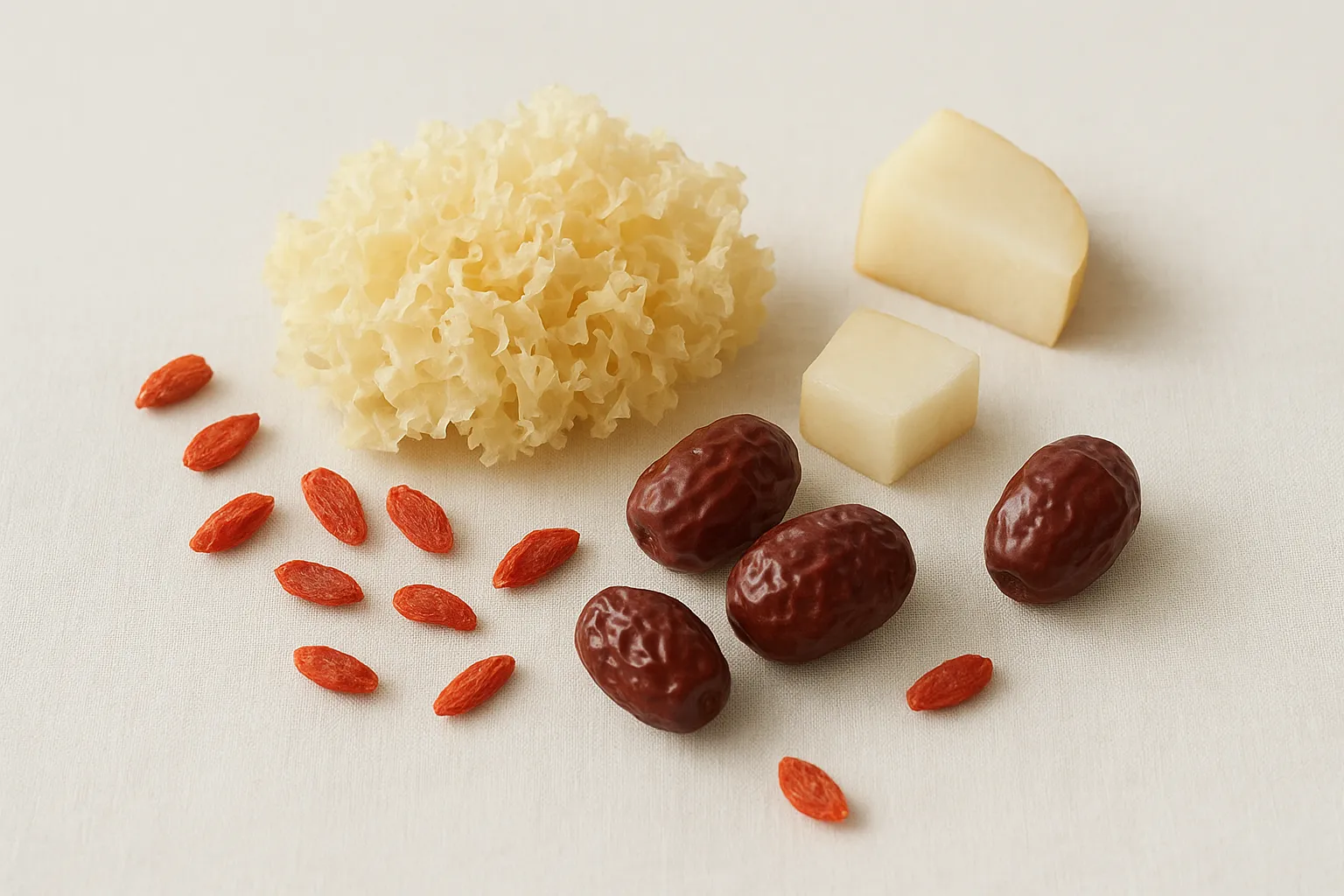
  • Favour eggs, duck, scallop, watermelon, strawberry, white fungus
  • Herbs often discussed: lily bulb, wolfberry, mai dong, American ginseng (ask before self-prescribing)
Kidney yang deficiencyCold and damp signs with weak fire; flushes can still appear.
  • Water retention, lethargy, frequent urination
  • Episodes of chills and hot flushes; cold limbs
  • Less crab, oyster, pear, beer, green tea
  • Favour mutton, beef, prawn, walnut, ginger
  • Cover the lower back and feet in air-conditioned rooms

02 · Self-press

Two DIY points for menopause comfort

Gentle daily pressure at Tai Xi (KD3) and San Yin Jiao (SP6) for one to three minutes is a common educational habit for Kidney-linked menopause patterns.

Pregnancy caution

Avoid strong San Yin Jiao (SP6) pressure in pregnancy unless a physician has advised it. Ease off if pressure feels sharp, numb, or wrong.

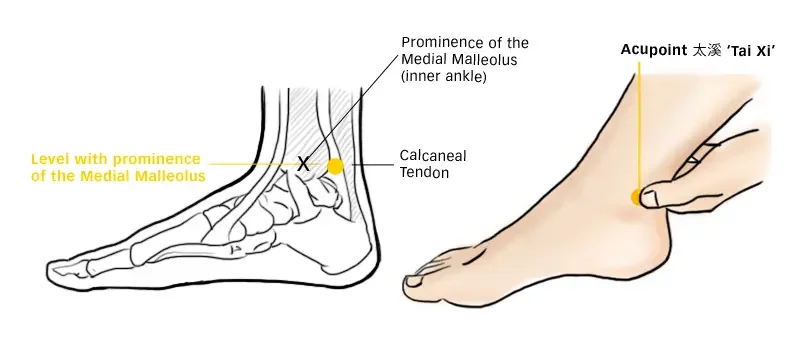
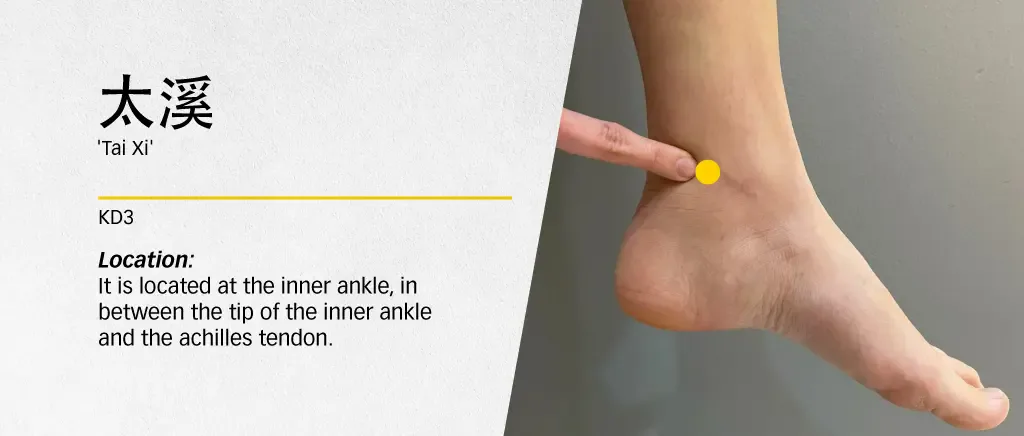
Diagram locating Tai Xi KD3 between inner ankle and Achilles tendon

Tai Xi (KD3 · 太溪)

Great Stream · Kidney channel

At the midpoint between the prominence of the medial malleolus and the calcaneal tendon. Press here to nourish the Kidney and help clear heat.

Press Tai Xi (KD3)
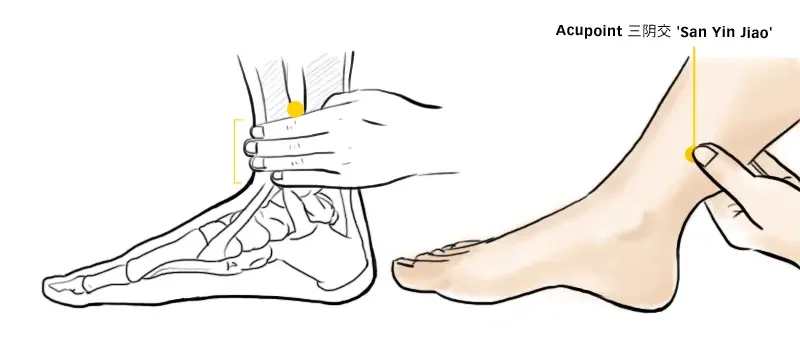
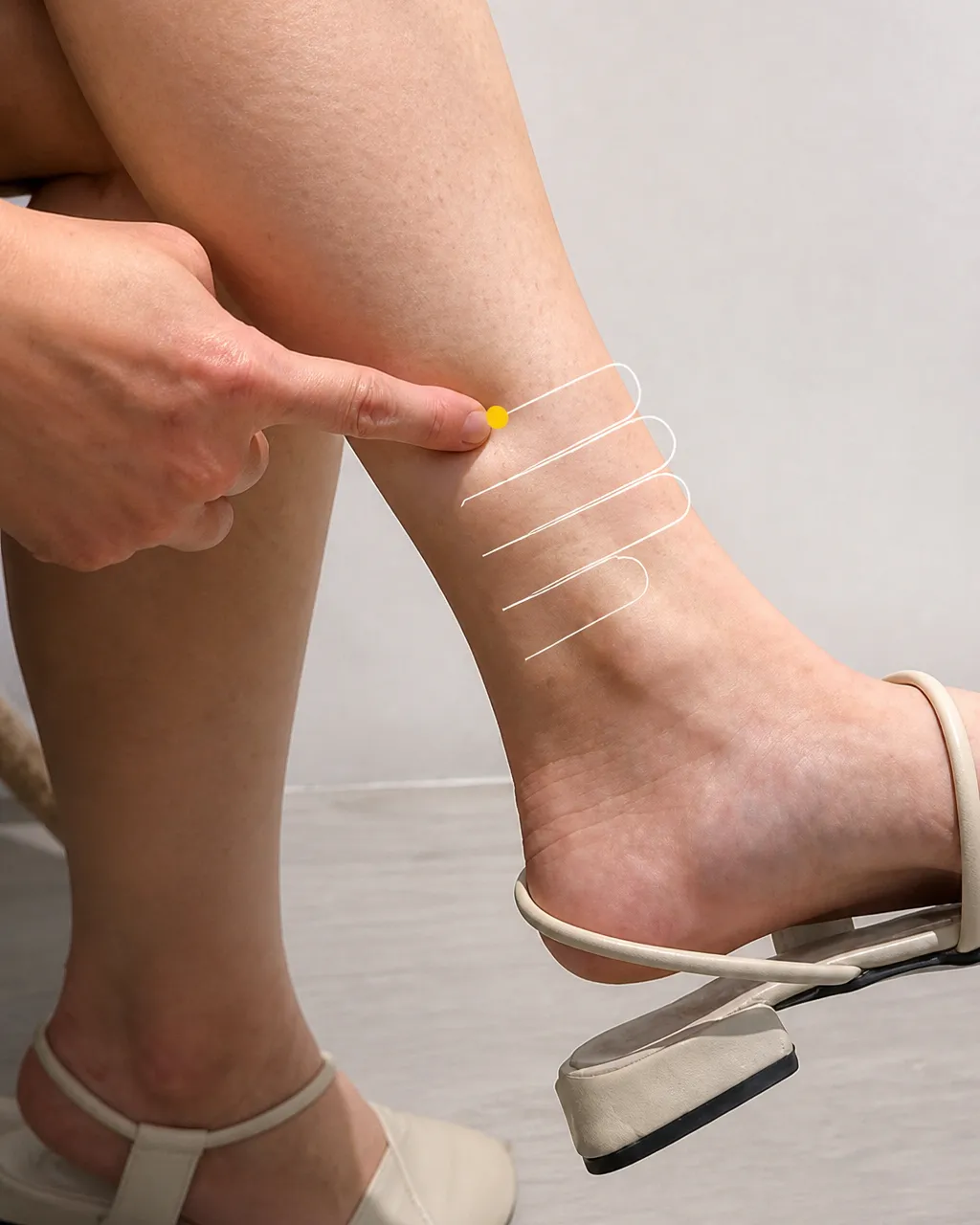
Diagram locating San Yin Jiao SP6 four finger-widths above the inner ankle

San Yin Jiao (SP6 · 三阴交)

Three Yin Intersection · Liver · Spleen · Kidney

About four finger-widths above the medial malleolus, just behind the tibia. A classic gynaecological point that also calms for sleep.

Press San Yin Jiao (SP6)

03 · Clinic

How TCM supports menopause at PULSE

When symptoms are acutely troubling or DIY pressure is not enough, a physician names your yin or yang pattern and builds a plan. Acupuncture can settle channel flow and ease flush, sleep, and mood clusters. Customised herbal prescriptions nourish yin, warm yang, or move stagnant Liver Qi as the picture requires. Menopause can last several years; weekly care across a few cycles lets the pattern be reassessed rather than chasing single symptoms.

Women's Health programme

When to book a women’s health consult

Bring your symptom timeline and any hormone reports. We will name the pattern in plain language and decide whether acupuncture, herbs, or lifestyle shifts belong in your plan.

Dr Sim Beng Joo

Clinically reviewed

Reviewed by Sim Beng Joo

Advisor (Science & Strategy) / Consultant Physician · TCMPB T1303003A

MOH-licensed TCM physician and biomedical scientist, with clinical work in digestion, pain, sleep or fatigue, and women's health patterns.

View full profile

Educational information based on clinical experience and TCM principles. Not a substitute for personalised consultation, hormone therapy decisions, or urgent attention. Speak with your physician before combining self-press with HRT or starting new care in pregnancy. Seek urgent care for severe fatigue, heavy irregular bleeding, or acute illness.

FAQs

Menopause acupressure questions

Common questions before a first women’s health visit for menopause symptoms.

How long does it take for acupressure to relieve menopause symptoms?

Some people feel immediate relaxation after stimulating points such as SP6 (San Yin Jiao). TCM self-care is cumulative. For chronic menopausal symptoms such as hot flushes or insomnia, daily DIY acupressure for about four to twelve weeks is a common educational cadence before judging longer-term change. It does not replace clinic care when symptoms stay severe.

Are there any side effects to using acupressure for menopause?

Acupressure is a non-invasive DIY method. A slight dull ache or de-qi sensation at the point can mean the point is waking. Avoid pressure that bruises. Pregnant women should avoid strong SP6 pressure; the point is classically used to influence labour.

Can I combine acupressure with Hormone Replacement Therapy (HRT)?

Yes, TCM approaches such as acupressure and acupuncture are often used as complementary care alongside HRT when your physician agrees. HRT replaces hormones; acupressure aims to support Kidney yin and yang patterns and may help with comfort. Always ask your physician before combining treatments or changing medication doses.

What is the best time of day to perform acupressure for hot flashes?

For night sweats or insomnia linked with Kidney yin deficiency, evening self-press (ideally before 11 pm) is a common habit. It aligns with settling for sleep and calming the nervous system before bed.

When should I see a TCM physician instead of doing DIY acupressure?

If menopause symptoms are acutely troubling, persistent, or clearly reducing quality of life (for example severe fatigue or heavy irregular bleeding), DIY pressure alone may not be enough. A physician can name your body constitution and prescribe herbal medicine or clinical acupuncture that is stronger than home pressure.

How does Kidney Yin deficiency differ from Kidney Yang deficiency in menopause?

Kidney yin deficiency often shows as heat signs: hot flushes, night sweats, and a dry mouth. Kidney yang deficiency leans toward cold signs: cold limbs, water retention (oedema), and frequent urination. Naming the pattern helps decide whether cooling yin-nourishing foods (such as white fungus) or warming foods (such as ginger and walnuts) fit better.

References

Selected sources

  1. National Center for Complementary and Integrative Health. Traditional Chinese medicine: What you need to know. 2019. https://www.nccih.nih.gov/health/traditional-chinese-medicine-what-you-need-to-know/
  2. World Health Organization. Traditional, complementary and integrative medicine. 2019. https://www.who.int/health-topics/traditional-complementary-and-integrative-medicine
  3. Ministry of Health Singapore. TCM practitioners (Healthcare Professional Portal). https://hpp.moh.gov.sg/tcm-practitioners/

Next step

Ready for a menopause pattern read?

Bring your symptom timeline and any hormone reports. We will name yin or yang patterns in plain language and decide what belongs in your plan.

Hours
Most clinics daily 11:00 AM – 8:00 PM
Care
Physician-led consultation