Digestion & appetite
Often read as spleen qi still learning to transform food and fluids.
- Weak or picky appetite
- Bloating & abdominal discomfort
- Constipation or irregular stools
- Mild nausea after meals

From $80 · MOH-registered
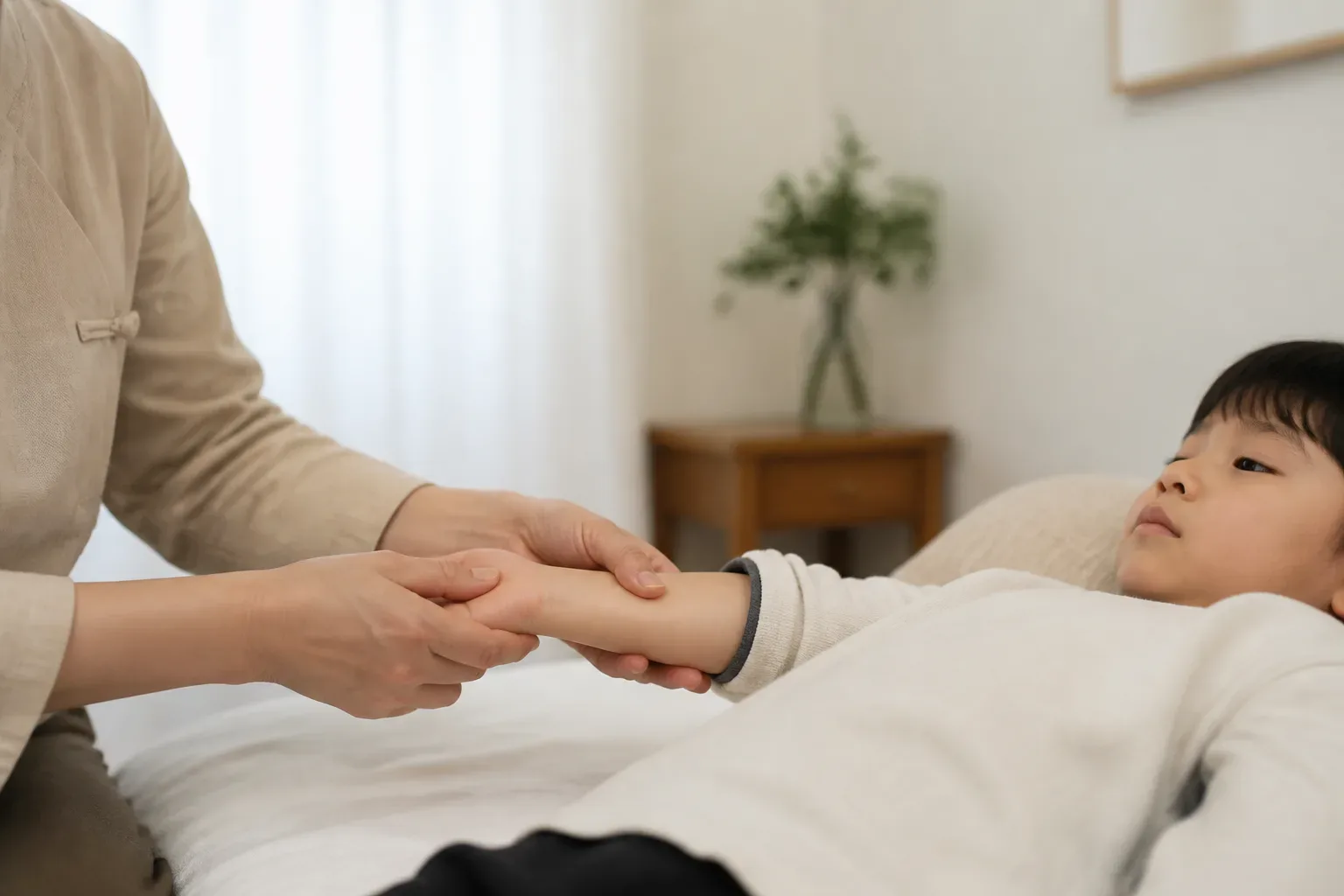
Physician-led paediatric care after consultation. Paediatric Tuina is the usual hands-on start for younger children, explained in plain language and TCM terms.
In brief
Paediatric TCM at PULSE adapts Chinese medicine for developing bodies. After consultation, physicians often start with paediatric Tuina (xiao er tui na 小儿推拿): gentle, non-invasive strokes on paediatric hand and arm pathways, with herbal formulas and food therapy when the pattern fits. Care supports appetite, digestion, mild respiratory patterns, sleep ease, and constitution, and complements Western paediatric care. Tuina from $80 across 15 Singapore clinics.
Whole-person care
In TCM, children's organs and defensive qi are still maturing. That can show up as easier colds, picky appetite, or restless nights, not as a failure of parenting.
Classical language often points to an immature spleen (digestion and transformation) and lung (wei qi 卫气, the body's surface defence). We translate those patterns into what you see at home: appetite, stools, coughs, sleep, and energy across seasons. MOH-registered physicians assess pulse and tongue with a child's age in mind, then choose paediatric Tuina, herbs, and dietary guidance when they belong. Care stays process-led, calm, and coordinated with your paediatrician when needed. Named strokes and gentle home press habits are covered in our paediatric Tuina guide.
Read the paediatric Tuina guide


Coordinated with Heartland Rehab & PULSE Allied Health when plans need both. Explore integrative care
Common concerns
Physicians treat patterns, not disease labels alone. The concerns below are common clinic entry points and are not exhaustive. Care is complementary under physician guidance.
In TCM we often read recurring coughs, weak appetite, or restless sleep as imbalances in spleen, lung, or kidney qi while those systems are still developing. Your physician will name the pattern in plain language so care stays specific to your child.
Often read as spleen qi still learning to transform food and fluids.
Often tied to lung wei qi 卫气, the body's surface defence, while it is still maturing.
Restlessness can show when yin and shen are unsettled in a developing system.
Heat, damp, or wind patterns may show on the skin as itch or flare.
Seek Western paediatric or emergency care first for high fever, breathing difficulty, dehydration, injury, or a sudden change in alertness.
Care for growing bodies
Age and constitution shape the plan. Younger children usually begin with specialised paediatric Tuina. Herbs and dietary therapy join when the pattern needs them; other techniques are used selectively.
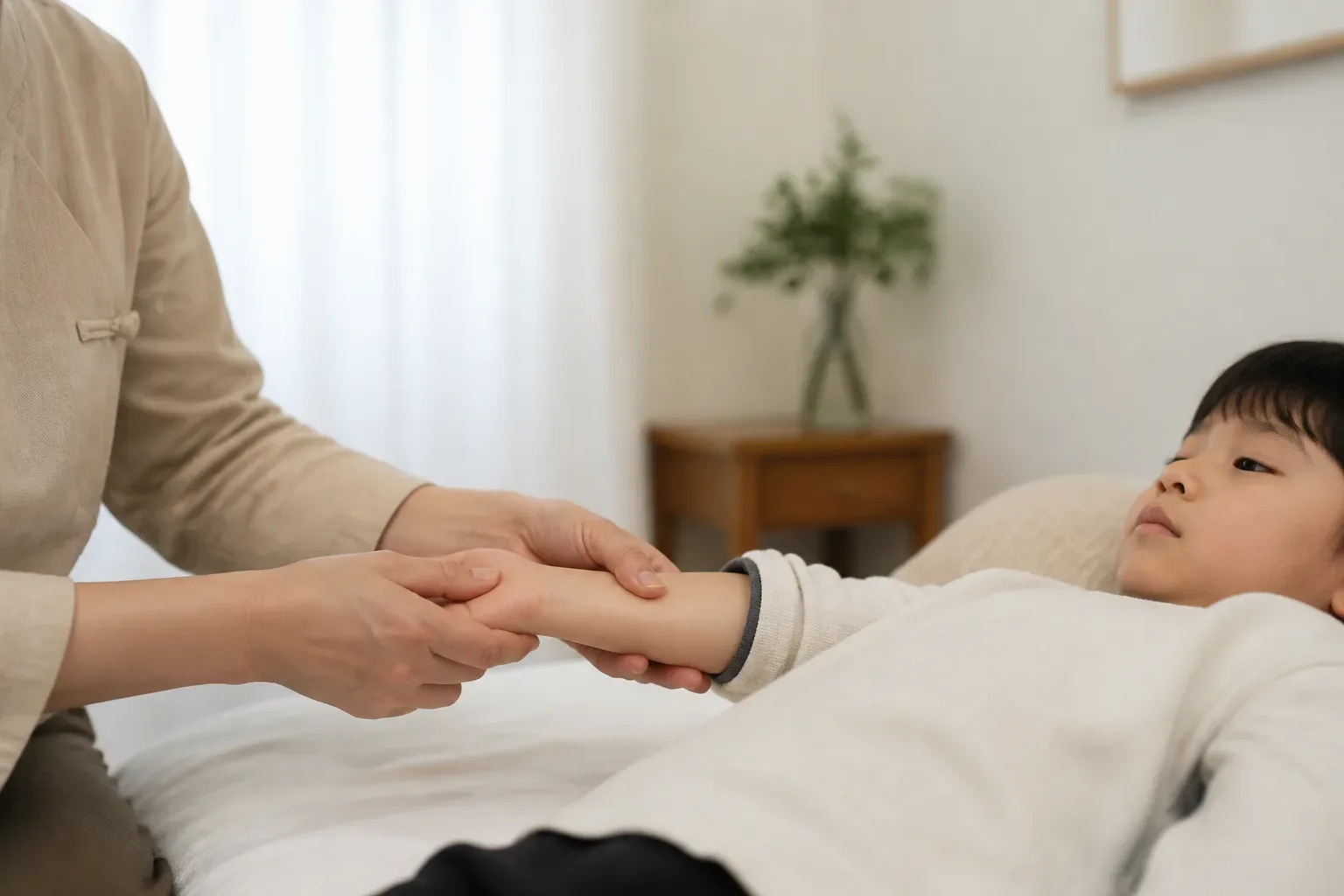
A specialised, gentle variant of Tuina for infants and children. Light, rhythmic strokes on paediatric hand and arm pathways (xue wei 穴位), plus limbs and trunk when needed, while channels are still developing.
Why it's used
Non-invasive and usually well accepted, suited to growing constitutions without bitter medicine when Tuina alone is enough.
Often for
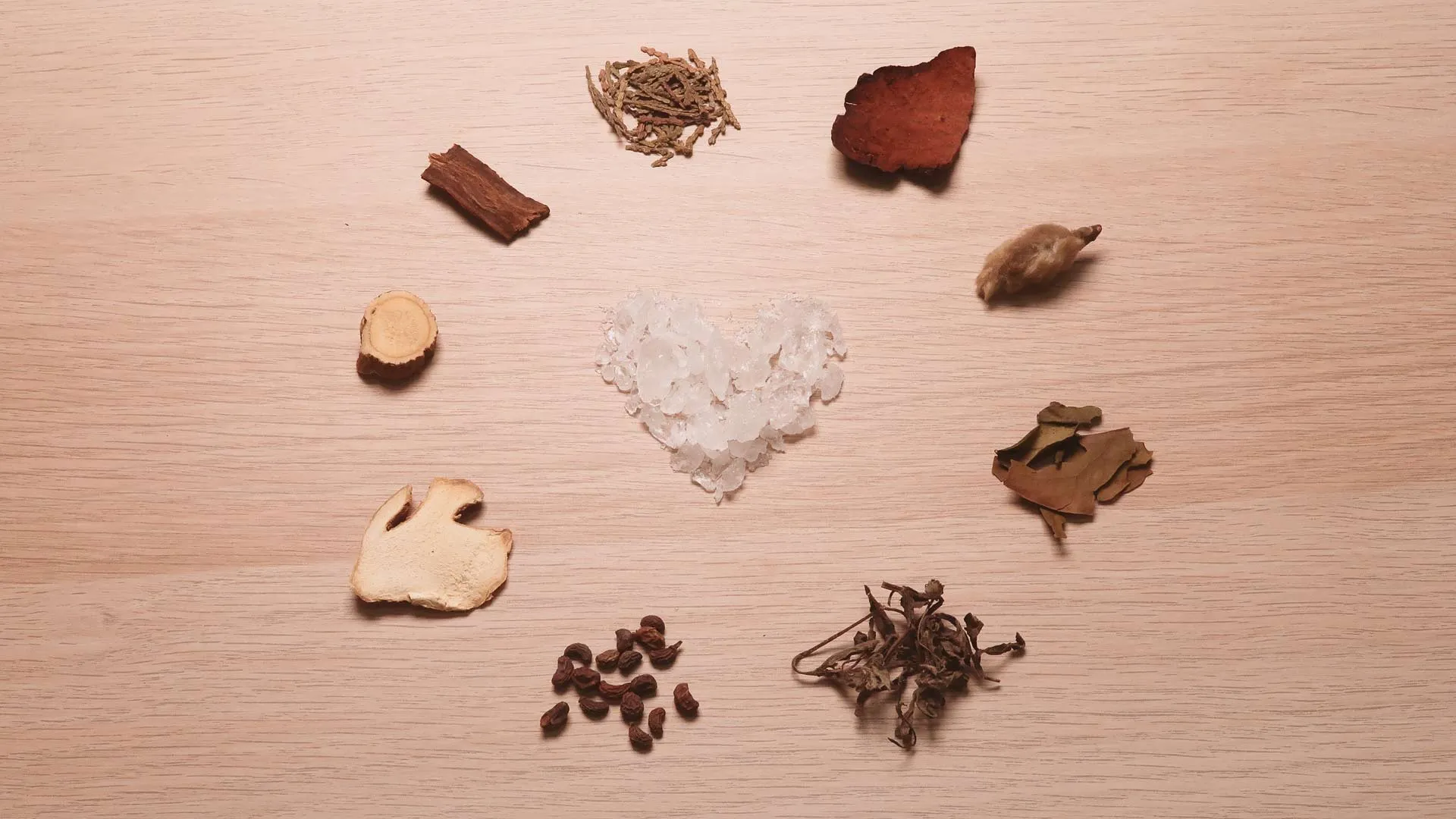
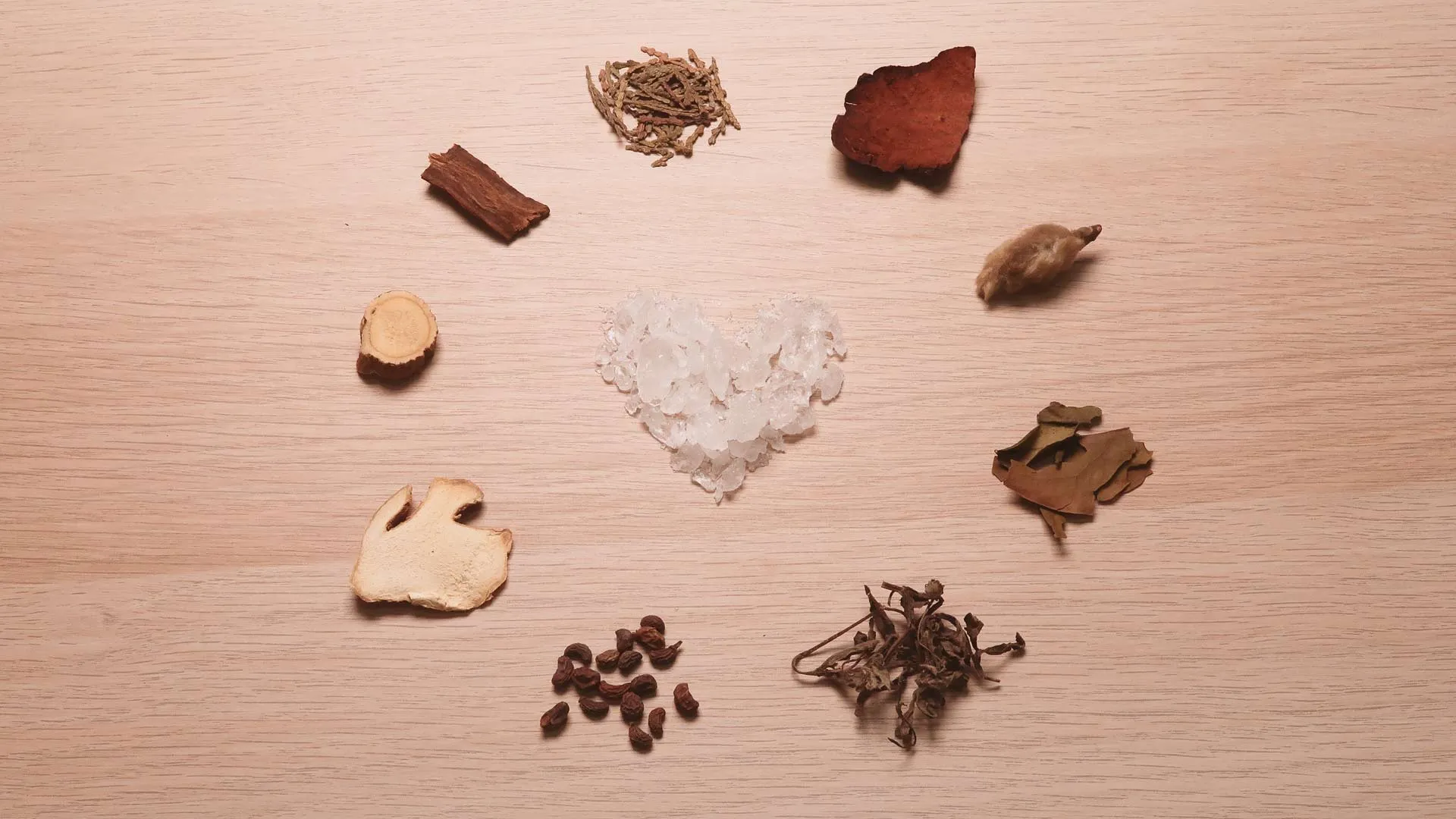
Personalised Chinese herbal formulas written for a child's pattern after pulse and tongue reading.
Why it's used
Supports digestion, immunity, sleep ease, or skin patterns from within when hands-on care alone is not enough.
How it's delivered
Usually concentrated extract granules mixed in warm water; dose and taste adjusted for age. Sachets or other gentle formats when suitable. Share all current medicines at consultation.
Often for
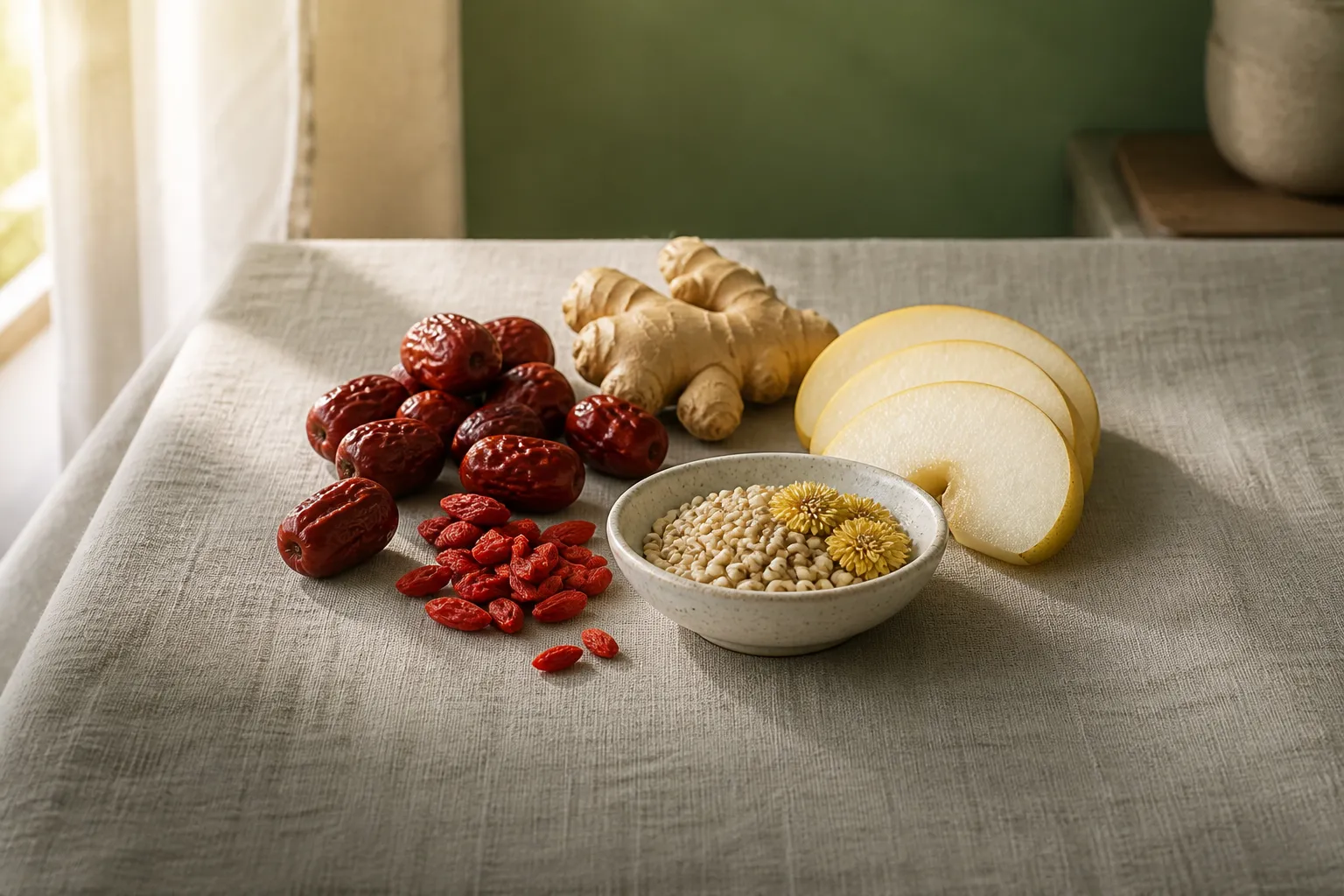
Food as medicine: simple meal and snack guidance matched to the child's TCM pattern and season, not a retail meal plan.
Why it's used
Children's digestion is still maturing; daily food rhythm often shapes appetite, stools, and how often mild colds return.
How it's delivered
Physician advice on warming or cooling foods, meal timing, and what to ease back on (for example frequent snacking that burdens the spleen).
Often for
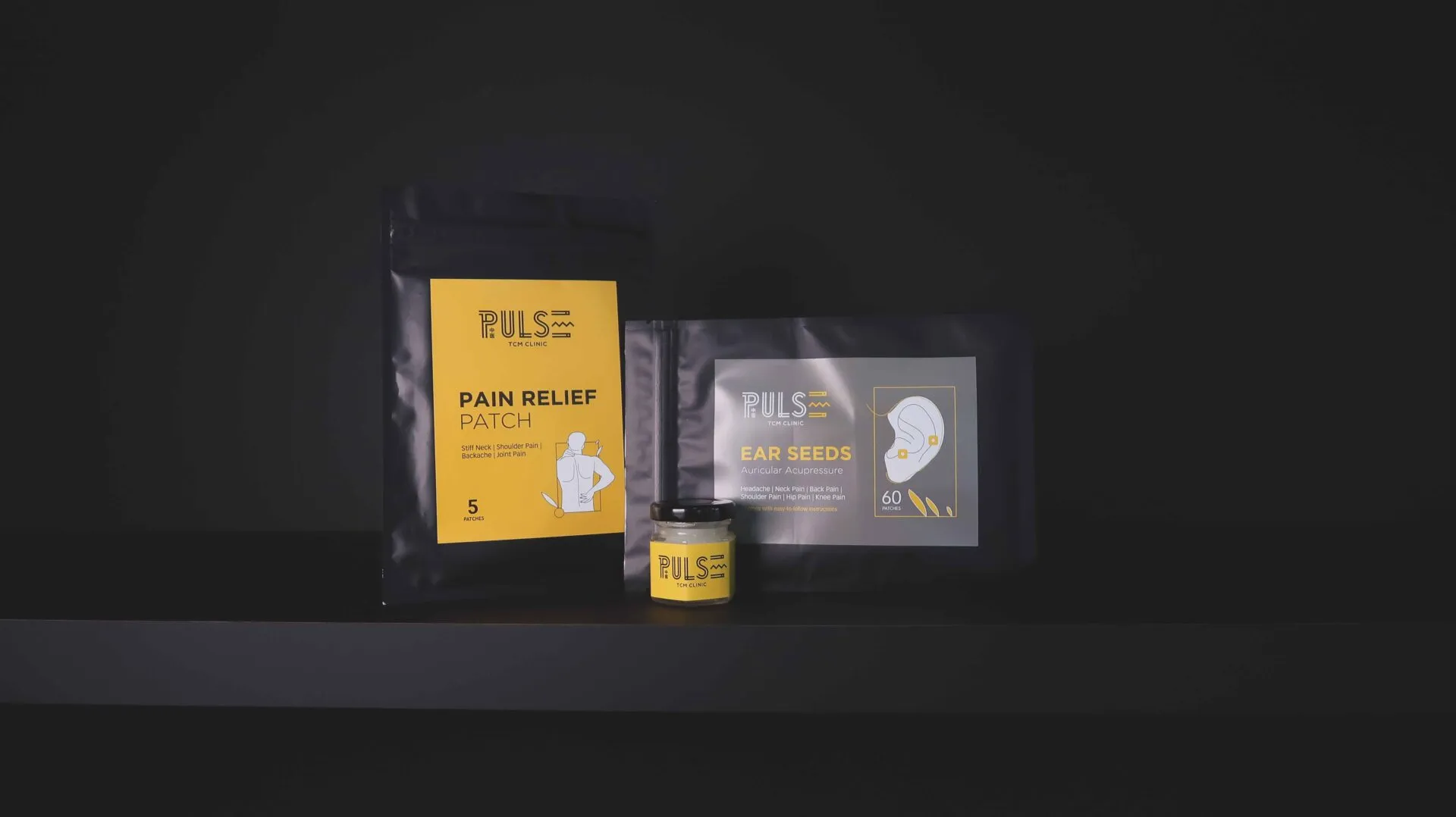
Used selectively when the pattern and age fit. Your physician explains options before any adjunct is added.
Herbal patches (san fu 三伏 / san jiu 三九)
Medicated patches on back acupoints during the hottest or coldest seasonal windows, as preventive support for recurring respiratory patterns such as allergic rhinitis or asthma under guidance.
For older children
Standard clinic acupuncture is uncommon in younger kids. Older children or teenagers may occasionally receive it for specific, persistent patterns when they can cooperate.
Paediatric Tuina is our usual hands-on start for infants and younger children. Herbal formulas and shi liao 食疗 (food therapy) support digestion and immunity from the inside when indicated. For technique detail and home press habits, see our paediatric Tuina guide. For a Woodleigh-centred wellness ritual with named body-zone mixes, see our Children's Wellness Experience. Adult therapeutic Tuina for musculoskeletal pain is covered on our Tuina massage page.
How it works
Classical TCM framing and what clinic practice describes, side by side, with a short evidence sketch below. Named strokes, session feel, and home press habits sit in our paediatric Tuina guide.
A TCM perspective
Children's channels and defensive qi are still forming. Gentle strokes on paediatric points aim to move qi and blood, settle the spleen and lung systems, and support digestion, breathing ease, and calm without bitter medicine when Tuina alone is enough.
A clinical perspective
Light rhythmic pressure can ease guarded belly or chest wall tension, encourage circulation, and give a calm sensory routine many children accept more readily than strong oral medicines. Sessions are short and paced to attention span.
A plain summary of early and local evidence, not a promise of outcome for every child.
How it feels
Paediatric Tuina should feel gentle and tolerable. A parent can stay close. We pause or change technique if your child is distressed.
Your visit
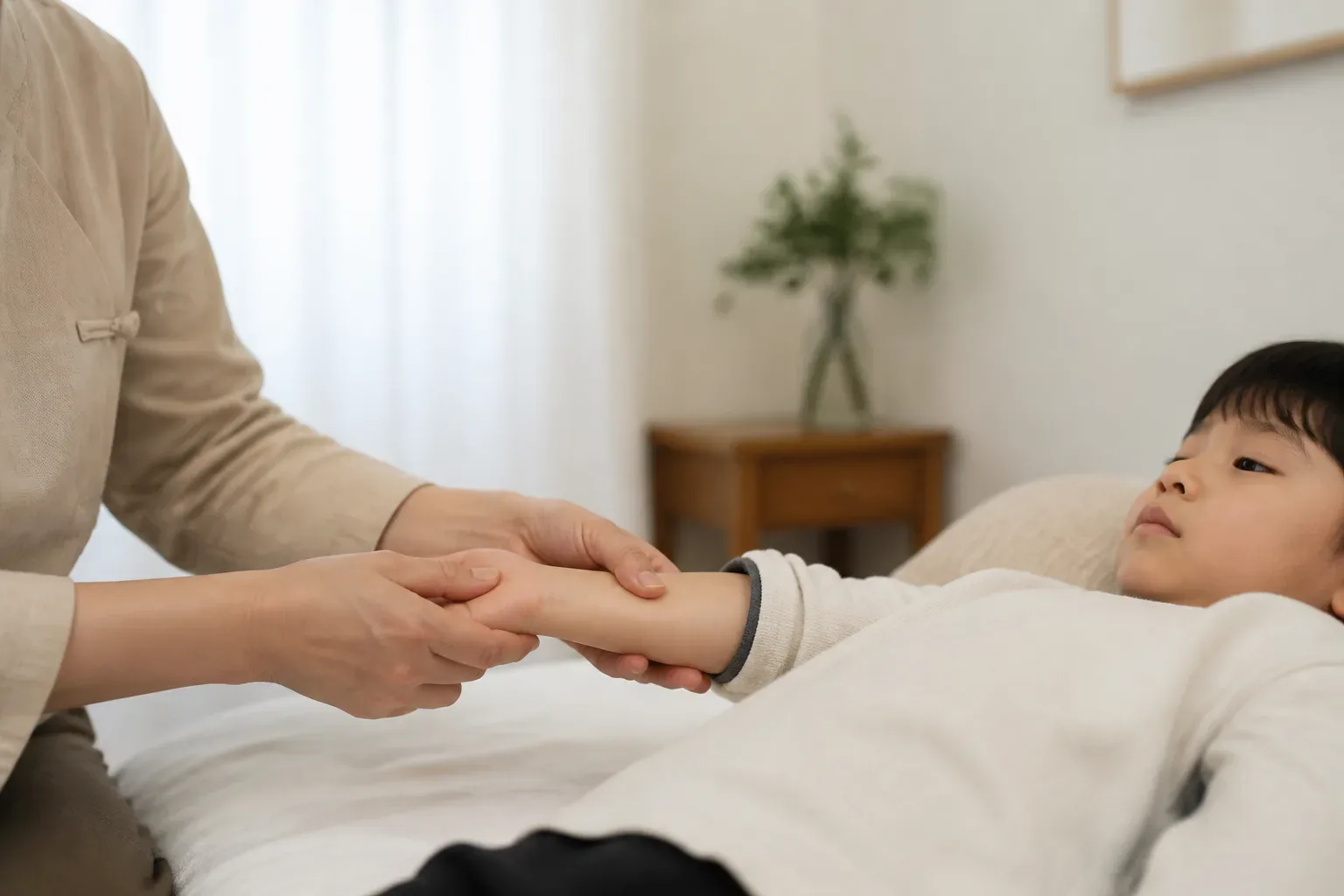
Consultation first. Paediatric Tuina only when it fits your child's plan.
Share history, medicines, specialist notes, appetite, sleep, and bowel patterns. First visits usually take 45–60 minutes so we are not rushed.
Pulse and tongue reading suited to age guide whether paediatric Tuina, herbs, or both belong.
Tuina often starts on the hands and limbs, then head, trunk, and legs. Sessions typically last 15–30 minutes depending on age and cooperation.
Leave with clear next steps, home rhythm tips when useful, and when to return to your paediatrician. Mild tiredness after a session can settle the same day.
Comfort & safety
Paediatric Tuina should feel light and tolerable. We stop or change technique if your child is distressed. TCM does not replace emergency or specialist paediatric care for acute illness.
TCMPB-registered under MOH. English and Mandarin so parents and children can follow each step.
Unhurried consults. Pressure and technique adjusted to age, cooperation, and comfort.
Pulse and tongue reading shape whether Tuina, herbs, or both belong that day.
Clear Tuina starting price; coordination with Western paediatric care when your child's plan needs both.
Physicians
TCMPB-registered under MOH. Bilingual teams across the network.
Paediatric Tuina is quiet work. I watch how the child settles on the table, then choose strokes for the spleen and lung patterns we see, without rushing a body that is still learning balance.
Parents often arrive after weeks of picky eating or mild coughs that keep returning. We start with gentle hands-on care, explain the pattern in plain words, and only add herbs when they clearly fit.
Parent stories
Charges
Indicated price is for Tuina therapy. Not inclusive of GST or a TCM consultation (from $40). Herbal formulas are quoted after prescription. Your physician confirms the recommended plan after assessing your child.
Full charges
Locations
Private treatment rooms islandwide, near MRT, with bilingual teams and consistent hygiene standards.
FAQs
Age bands, herbs, food therapy, sessions, safety, and how pricing works.
Paediatric TCM is Chinese medicine adapted for children. After consultation, we often start with paediatric Tuina for younger children, and may add herbal formulas and dietary guidance when the pattern fits. It supports constitution and common childhood patterns alongside Western paediatric care.
Paediatric Tuina (xiao er tui na 小儿推拿) is gentle TCM bodywork using light rhythmic strokes on paediatric hand and arm pathways and related points. It does not rely on bitter medicine. Sessions are usually 15–30 minutes after diagnosis. For named strokes and home press habits, see our <a href="/insights/paediatric-tuina/">paediatric Tuina guide</a>.
Paediatric Tuina is typically suited to children around 6 months to 7 years, and sometimes older when a lighter approach is preferred. Your physician advises case by case.
Yes, when a physician judges herbs appropriate. Formulas and dose are adjusted for age, often as granules mixed in warm water. Share all Western medicines so timing and contraindications stay clear.
Shi liao 食疗 is food-as-medicine guidance matched to your child's pattern: meal timing, warming or cooling foods, and what to ease back on. It supports clinic care between visits and is not a substitute for medical nutrition advice when a specialist dietitian is needed. For the general adult and clinic framework of shi liao and yao shan, see our Dietary Therapy page.
It depends on the pattern. Some acute digestive or mild respiratory concerns settle over a short course; constitution support may need weekly visits for several weeks. Your physician outlines a realistic plan after the first assessment.
When performed by a registered TCM physician with age-appropriate pressure, paediatric Tuina is generally well tolerated. It is not for emergencies or replacing specialist care. Stop the session if your child is distressed and seek Western care for red-flag symptoms.
Common entry points include weak appetite, bloating, mild cough or congestion, restless sleep, and eczema-pattern comfort. Care is pattern-based and complementary. Acute or severe illness needs Western paediatric assessment first. A fuller parent-facing walkthrough is on our <a href="/insights/paediatric-tuina/">paediatric Tuina guide</a>.
Paediatric Tuina starts from $80. This does not include GST or a TCM consultation (from $40). Herbs are quoted after prescription. Your physician confirms the plan during consultation.
Sources & page citations
Clinically reviewed
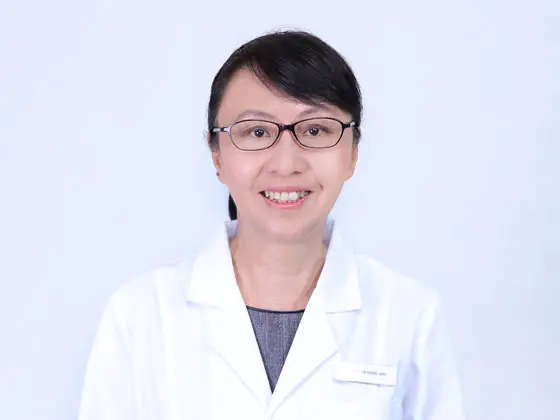
Advisor (Science & Strategy) / Consultant Physician · TCMPB T1303003A
MOH-licensed TCM physician and biomedical scientist, with clinical work in digestion, pain, and sleep or fatigue.
View full profileEducational information based on clinical experience and TCM principles. Not a substitute for personalised consultation or paediatric medical care. Speak with your child's healthcare providers before starting new treatments. Paediatric TCM complements (and does not replace) urgent, emergency, or specialist Western care.
Book
Tell us about your child. We will match you with a suitable physician and clinic. Paediatric Tuina from $80.