Regulating the body for quieter nights in Singapore’s always-on lifestyle.

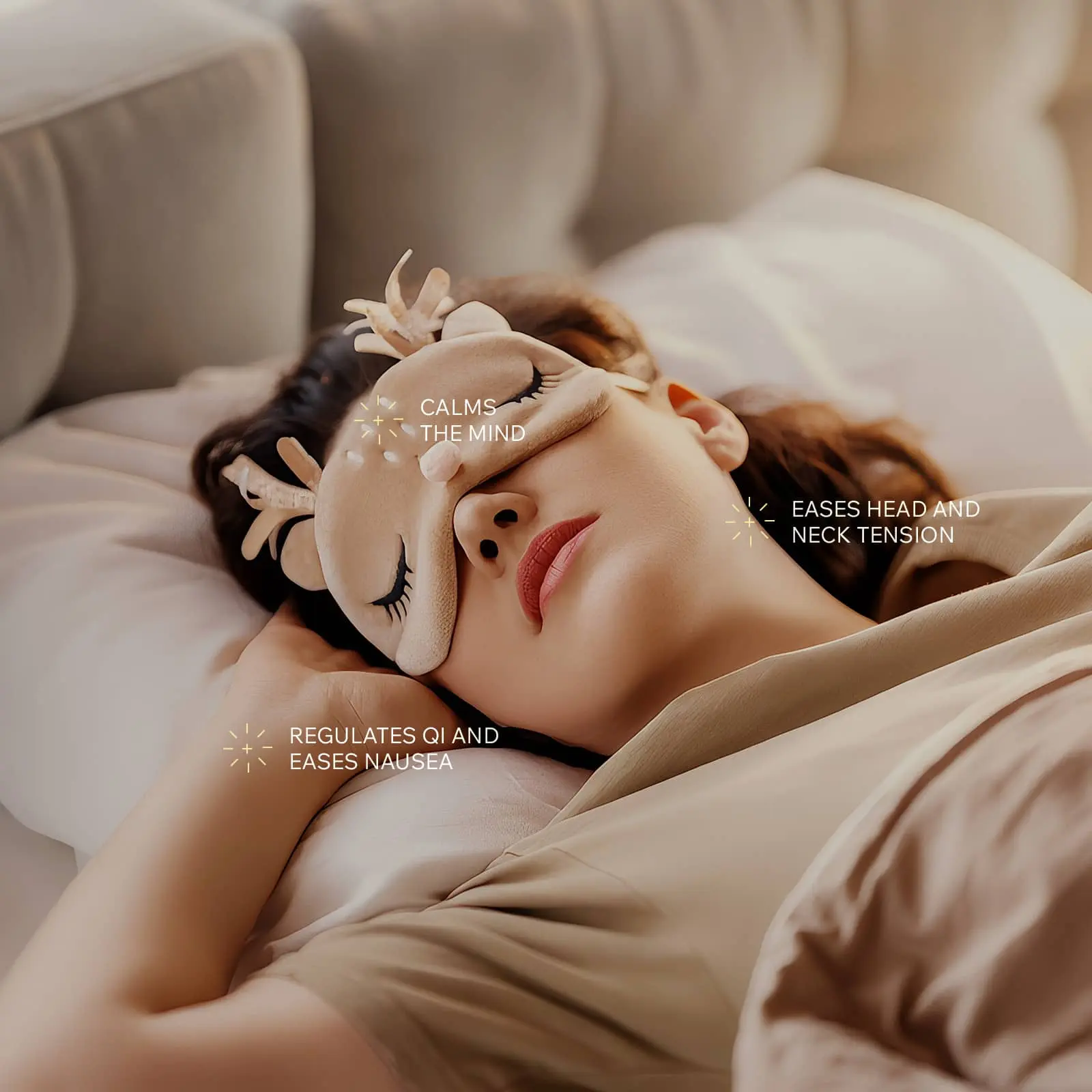
Physician-led · MOH-registered
Sleep more deeply. Ease chronic tension. Rebuild resilience after burnout.
In brief
The Sleep & Stress programme at PULSE TCM is physician-led care for disrupted sleep, racing thoughts, body tension, and burnout patterns. Plans may combine clinical acupuncture and safety-regulated herbal medication after consultation. Care complements, rather than replaces, therapy, psychiatry, or prescribed medication.
The programme
In TCM, sleep, stress, and emotional balance reflect internal harmony. We view sleep disruption and chronic stress not as isolated symptoms, but as signs of disharmony within the Heart, Liver, and Spleen systems, often influenced by stagnant qi and Blood deficiency.
Your physician names patterns in plain language, then builds a plan around the principle of calming the Heart to settle the mind (Shen). Smooth Liver qi may ease irritability and difficulty falling asleep. A nourished Heart supports restful sleep and clearer thinking. Addressing Heat or Dampness can help restlessness, mental fatigue, and light, broken sleep. At PULSE, MOH-registered physicians also refer to Western or mental-health care when acute distress or specialist support comes first.
How care unfolds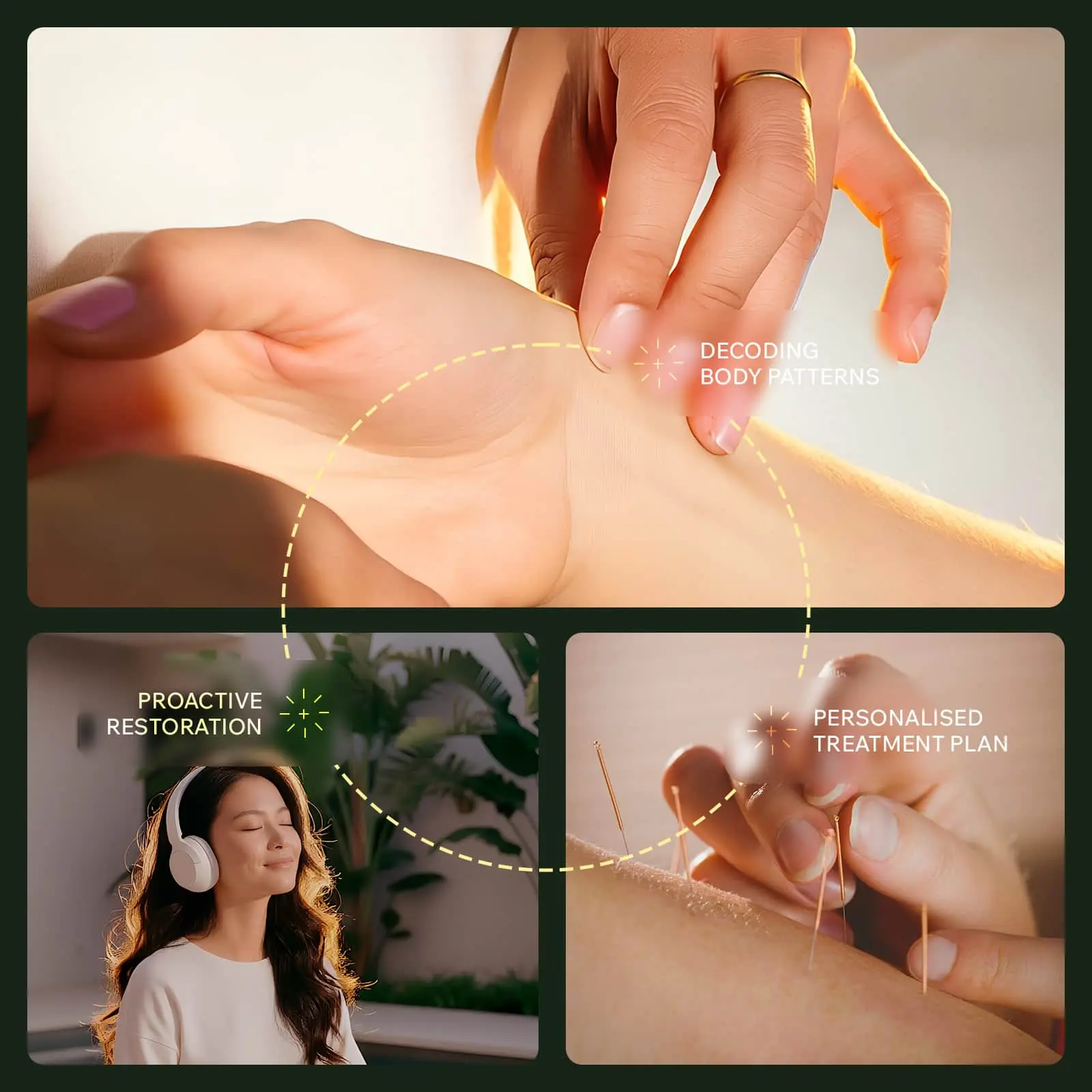
Care pathways
Three common entry points. Your assessment may name a different mix of patterns and goals.
Regulating the body for quieter nights in Singapore’s always-on lifestyle.


Rebuilding energy and resilience when you feel tired but wired.
* Stress and burnout chips describe complementary support under physician guidance. This programme is not a substitute for therapy or psychiatric care. Seek urgent help for severe mood change, panic, or thoughts of self-harm.
Approach to healing
Your physician recommends a combination based on your assessment. Not every visit uses every modality.
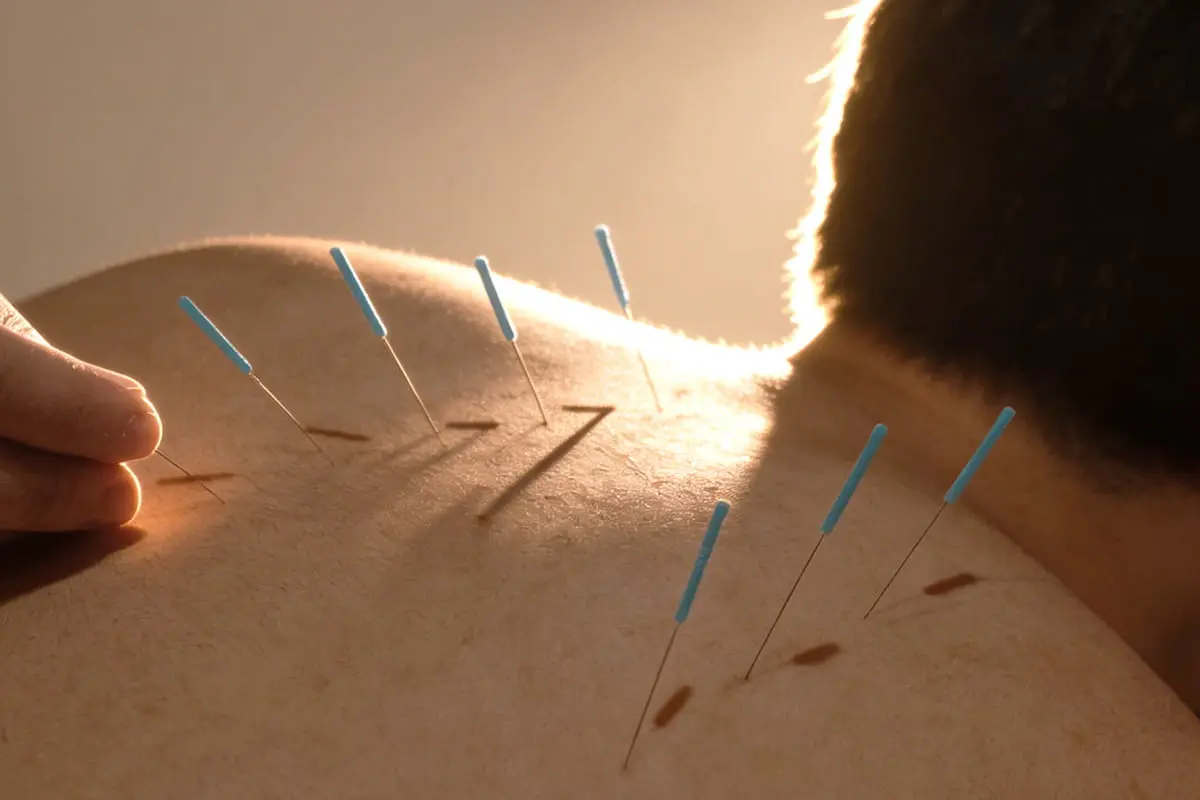
Targeted needling to help regulate the nervous system and the body’s response to stress. Stimulating selected meridian and scalp points may ease physical tension, quiet an overactive mind, and support deeper rest when that fits your pattern.
Acupuncture treatment
Bespoke herbal formulas prescribed to nourish the Heart, soothe Liver qi, and address your constitutional pattern. Safety-regulated prescriptions may support restlessness, mental fatigue, and disrupted sleep between visits when indicated.
Chinese herbal medicineClinical acupuncture is a common foundation. Customised herbal medication joins when indicated to support calm between sessions.
What to expect
Your sleep and stress needs are unique, and your care should be too. The phases below are a general guide. Session count, frequency, and pace are customised after your initial clinical assessment.
Settle an overactive mind and body. Target acupuncture points to ease immediate stress signals, racing thoughts, and sleep disturbance. Focus: nervous-system regulation and acute stress symptoms. Many people notice improved sleep quality, less physical tension, and a calmer mind within the first few weeks.
Once acute signals settle, shift toward organ-system patterns such as qi stagnation and Blood deficiency. Care nourishes the Heart and Liver systems to steady mood and energy. Focus: emotional stability and clearer concentration. Irritability and brain fog often ease as the pattern shifts.
Reinforce your foundation through continued support and vital qi nourishment so balance is easier to sustain under lifestyle pressure. Focus: longer-term resilience. Goal: steadier stress tolerance, more consistent energy, and a renewed sense of everyday wellbeing.
Tailored acupuncture plans designed to support nervous-system regulation and the body’s natural rhythm after assessment.
Care looks past surface symptoms toward qi imbalance and physical tension that feed chronic stress and broken sleep.
Clinical acupuncture with personalised herbal medication when indicated, adjusted as sleep and stress tolerance improve.
Pulse, tongue, and the Four Examinations name Heart, Liver, and Spleen patterns in plain language before treatment begins.
Physicians
TCMPB-registered under MOH. Several physicians work with sleep, fatigue, concentration, pain, and internal medicine relevant to this pathway.

Advisor / Consultant Physician
Gastrointestinal Syndromes · Pain Management · Sleep / Fatigue

Consultant Physician
TCM Oncology · Pain Management · Gynecology

TCM Physician
Pain Management · Sports Injuries · Gynaecology

TCM Physician
Gynaecological Issues · Women’s Health · Digestive Issues

TCM Physician
Pain & Injury · Dry eye · Internal Medicine

TCM Physician
Eye Conditions · Internal Medicine · Pain Management

TCM Physician
Facial Beauty Acupuncture · Facial Nerve · Cosmetology
Sleep and stress often travel together with fatigue and poor concentration. Naming whether the Heart, Liver, or Spleen pattern is leading lets us settle the system without chasing symptoms alone.
Many people arrive already on Western sleep or mental-health medication. I design TCM as complementary support, and I never advise stopping prescribed care without the prescribing doctor’s guidance.

Limited-time offer
Promotion
First-timer bundle for the TCM × PSYCH Insomnia programme: physician consultation with acupuncture or herbal prescription, one psychotherapy session, and AŌRA Joy or Calm. Exclusive of GST.
$328 U.P. $400++
Insomnia programme details
Locations
Private treatment rooms islandwide, near MRT, with bilingual teams and consistent hygiene standards.
Quick answers
Three frequent questions. Full answers sit further down the page.
FAQs
Timelines, burnout, Western medicines, sensation, herbs, and when this pathway fits.
Many patients notice improvements in sleep quality, energy, and stress tolerance within 3 to 6 sessions. Because TCM addresses root patterns rather than only suppressing symptoms, longer-standing patterns often need about 6 to 12 weeks of consistent care for more sustained balance. Your physician sets a realistic pace; results vary.
From a TCM perspective, burnout and chronic fatigue often reflect qi and Blood deficiency, depleted Kidney essence, or prolonged Liver qi stagnation. Acupuncture may help regulate the nervous system and ease tension, while customised herbal medication supports recovery from the inside when indicated. Suitability is confirmed after consultation.
Yes. TCM can sit as complementary care beside existing medication and may help with side effects such as grogginess or digestive discomfort. We never advise stopping prescribed medication without your prescribing doctor’s supervision. Herbal prescriptions are tailored to work harmoniously with your current plan, usually with about a two-hour gap unless your physician advises otherwise.
Most patients describe acupuncture as deeply relaxing, and many fall asleep during sessions. We use sterile, single-use, ultra-fine needles. Sensations vary but are generally mild, with a calming, grounding feel during and after treatment for many people.
Acupuncture works most effectively when supported internally when that fits your pattern. Customised herbal formulas may extend benefits between sessions by nourishing the Heart, soothing Liver qi, and addressing your constitutional pattern. Many patients find herbs help maintain calmer days and steadier energy between visits.
No. Our programme is complementary, not a substitute. If you already see a mental-health professional, TCM can work alongside that care. If symptoms are severe, including persistent low mood, panic attacks, or thoughts of self-harm, we recommend appropriate mental-health support, and our physicians can help point you toward suitable practitioners.
If you experience persistent stress, sleep disruption, mental fatigue, tension headaches, irritability, or burnout, and want a root-pattern approach rather than only symptom management, this pathway may suit you. When sleep anxiety, habits, or behavioural loops are central and you want CBT-I psychotherapy beside TCM, ask about the TCM × PSYCH Insomnia programme. The best next step is an initial consultation so your physician can assess your constitution and recommend whether this programme fits.
Use the online booking form, WhatsApp, or phone. Select Insomnia (or Mental health / Fatigue as relevant) as the concern and Sleep & Stress Management as the service interest when prompted.
Sources & page citations
Clinically reviewed
Advisor (Science & Strategy) / Consultant Physician · TCMPB T1303003A
MOH-licensed TCM physician and biomedical scientist, with clinical work spanning gastrointestinal syndromes, pain management, and sleep, fatigue, or concentration patterns.
View full profileEducational information based on clinical experience and TCM principles. Not a substitute for personalised consultation. Speak with your healthcare provider before starting new treatments. TCM complements (and does not replace) therapy, psychiatry, or urgent Western medical care. If you have persistent low mood, panic attacks, or thoughts of self-harm, seek appropriate mental-health support promptly.
Book
Tell us what feels hardest right now, falling asleep, staying asleep, daytime tension, or burnout. We will match you with the right physician and clinic.