
Supporting the barrier against environmental change, cold air-conditioning, and seasonal bugs.


Physician-led · MOH-registered
Fortify Wei Qi. Support recovery and daily energy from the pattern outward.
In brief
The Immunity and Vitality programme at PULSE TCM is physician-led care for patterns that leave you catching every bug, lingering after illness, or running on empty. Plans address Wei Qi (defensive energy) and Lung-Spleen balance with acupuncture, moxibustion, cupping, gua sha, and herbs after consultation. Care complements, and does not replace, urgent Western medicine.
The programme
Feeling vulnerable to seasonal bugs, chronically fatigued, or still recovering from a stubborn illness? This pathway looks at internal balance first, then builds a personalised TCM plan after consultation.
Conventional care often focuses on pathogens after you fall ill. In TCM, we also ask whether Wei Qi (defensive energy), Lung, and Spleen networks are steady enough to meet environmental stress. When qi, Yin, and Yang drift out of rhythm, people often notice frequent colds, slow recovery, daytime lethargy, or lingering cough and brain fog. Your physician names the pattern in plain language, then chooses modalities that warm Yang, clear residual dampness or heat, or tonify where reserves run low. At PULSE, MOH-registered physicians refer to Western care first for high fever, acute contagious infection, or specialist respiratory review.
How care unfolds
Care pathways
Three common entry points. Your assessment may name a different mix of patterns and goals.
Supporting the barrier against environmental change, cold air-conditioning, and seasonal bugs.

Clearing stubborn, lingering symptoms so you can return toward your baseline health.

Recharging energy reserves depleted by prolonged stress and poor sleep.
* Immunity and vitality care is adjunctive under physician guidance. Seek urgent medical care for high fever, acute contagious infection, severe asthma flare, or unexplained systemic illness.
Approach to healing
Your physician recommends a combination based on your assessment. Not every visit uses every modality.

Targeted meridian points after consultation, used to regulate nervous system tone, ease internal inflammation load, and support defensive energy when they fit your pattern.
Acupuncture treatment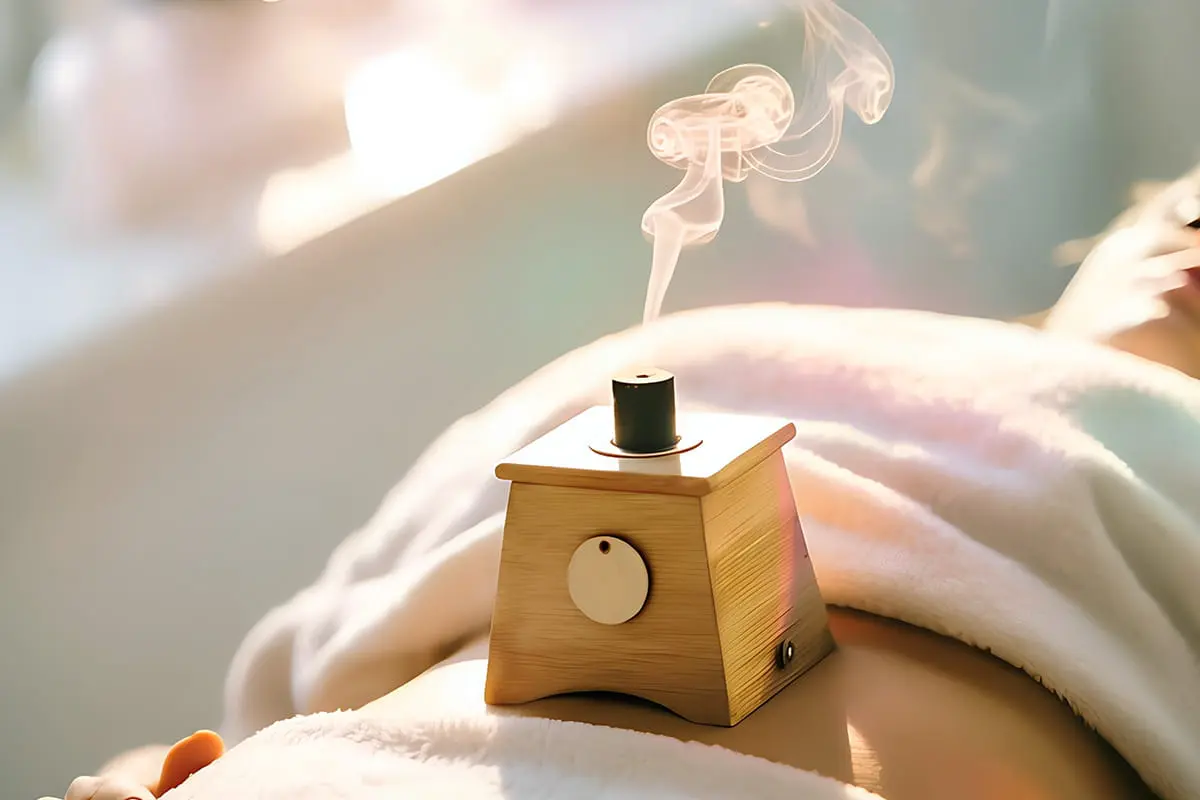
Deep-penetrating heat applied to warm Yang energy and dispel internal cold when low resistance and cold sensitivity feature in your pattern.
Moxibustion treatment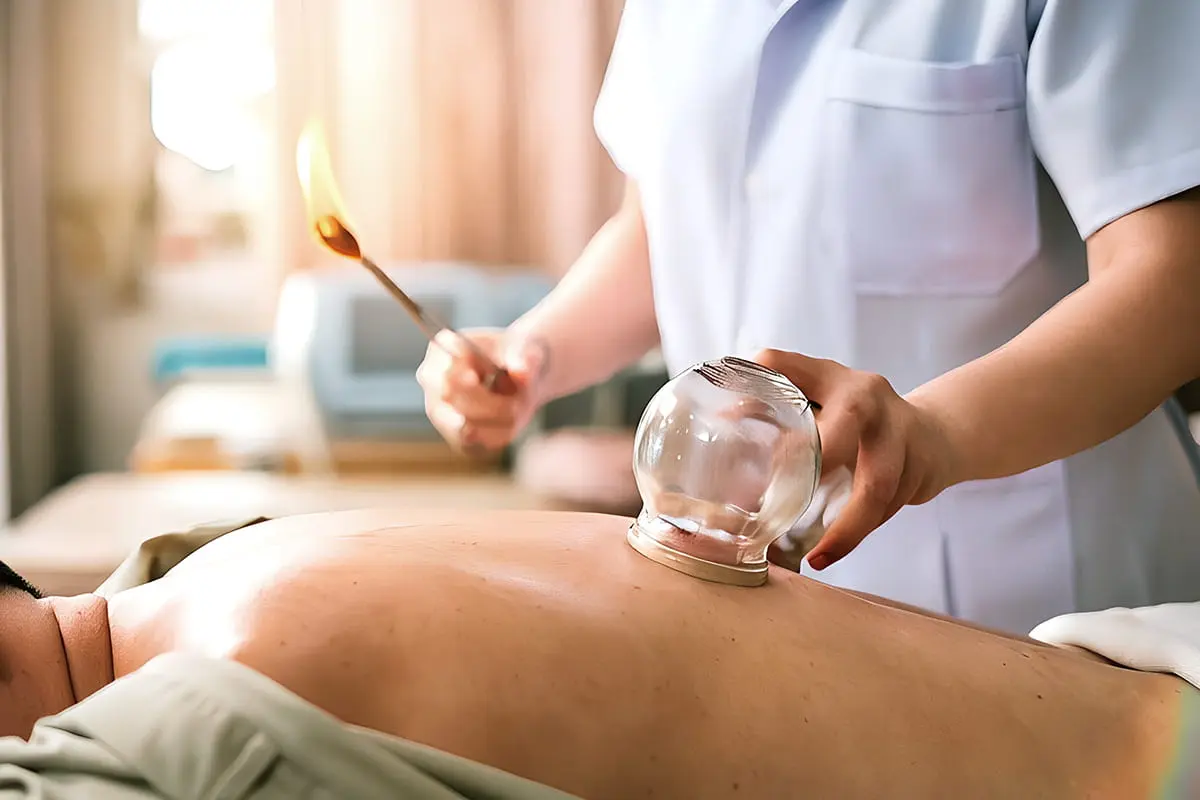
Localised suction to support circulation and ease respiratory congestion or stagnation when that fits your assessment. Not used on every visit.
Cupping treatment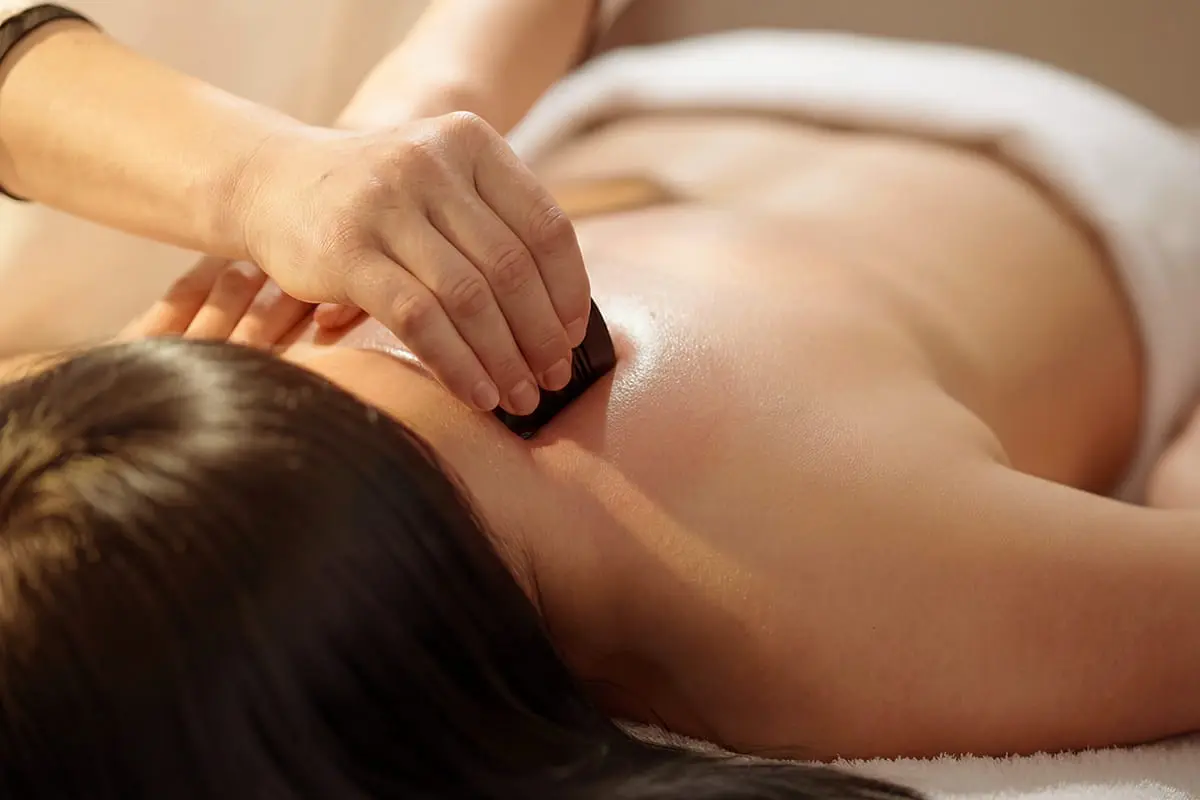
Scraping along selected channels, often the upper back, to release lingering pathogenic heat and support microcirculation when seasonal allergy or heat patterns are present.
Gua sha treatment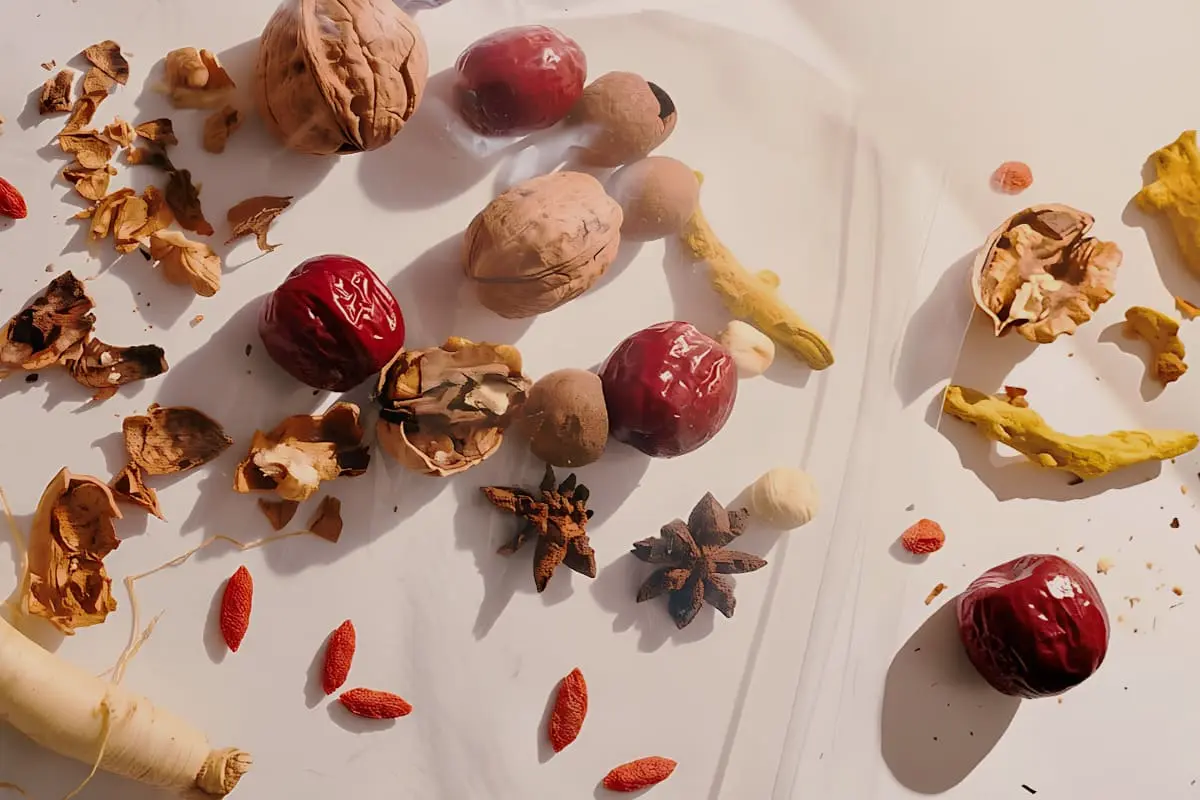
Custom-blended, safety-regulated formulas to replenish depleted qi reserves and support longer post-illness recovery when your physician includes them.
Chinese herbal medicineAcupuncture is a common foundation. Moxibustion, cupping, and gua sha may warm Yang or clear residual heat when indicated. Herbal formulas join after consultation.
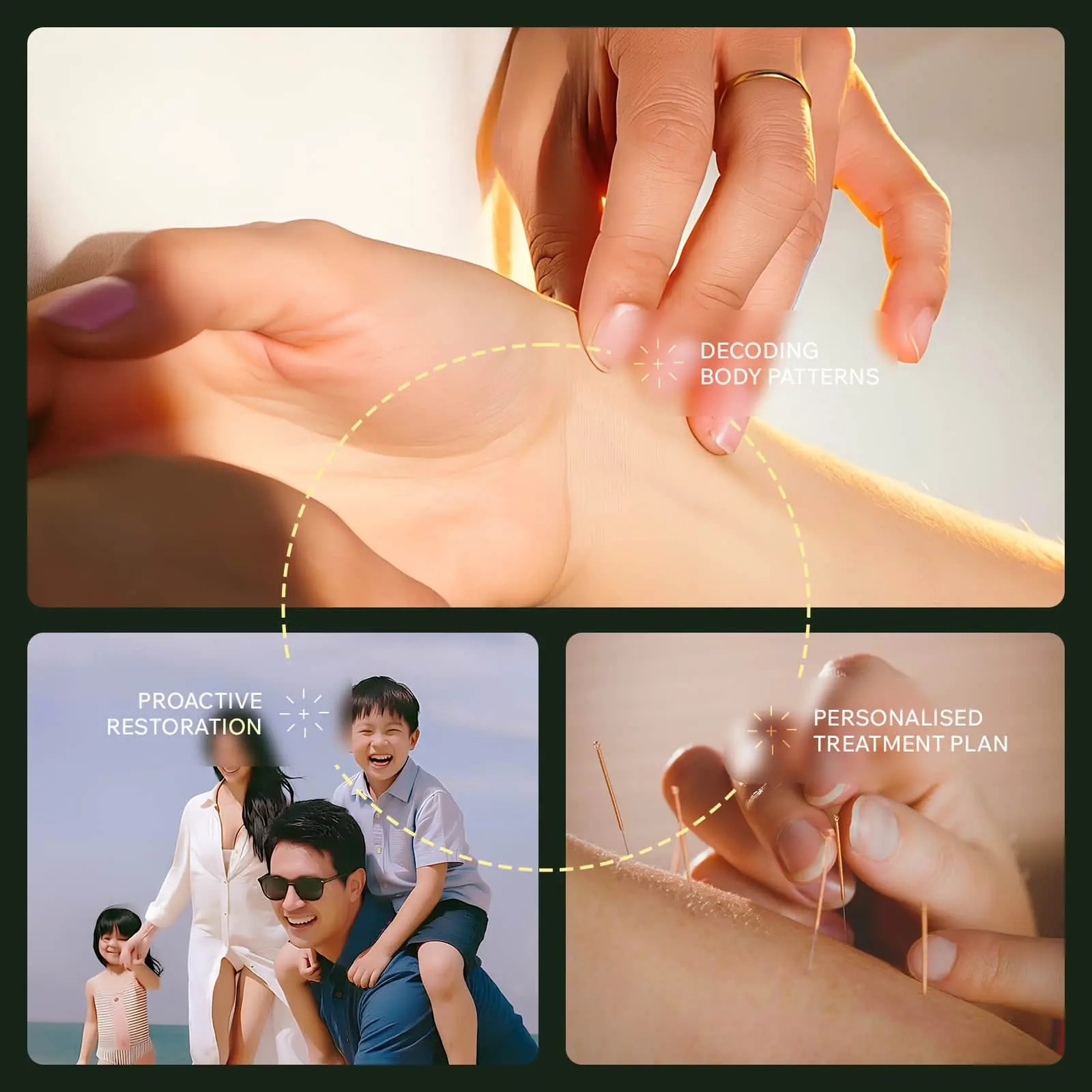
Your recovery roadmap
Building longer-term resistance is a journey of consistency. The phases below are a general guide. Session count, frequency, and pace are customised after your initial clinical assessment.
Identify your constitution and address immediate vulnerabilities. Targeted acupuncture with safety-regulated herbs may lower acute internal inflammation load and reset baseline defences. Focus: rebalance Wei Qi and stabilise immediate energy reserves. Frequency: once or twice weekly, physician-advised. Many people notice less air-conditioning sensitivity and a gradual lift in morning sluggishness.
Deepen care once baseline defences are steadier. Work often focuses on Lung and Spleen function to clear lingering post-viral fog and build more durable daily energy. Focus: cultivate vital energy, clear deep-seated dampness, and ease chronic fatigue. Frequency: once weekly or fortnightly. Goals include steadier energy, clearer focus, and faster bounce-back from seasonal bugs.
Protect and lock in gains with preventive rhythm. Treatments shift toward seasonal tune-ups so resistance stays steadier year-round. Focus: sustain metabolic harmony and fortify the immune shield. Frequency: often once a month, physician-advised. Aim: fewer sick days and more consistent daily vitality.
TCMPB-registered under MOH. English and Mandarin care across the network.
Pulse, tongue, and the Four Examinations name Wei Qi or Lung-Spleen disharmony in plain language.
Local meridian work sits beside internal regulation, not as a one-off surface fix.
Plans evolve as energy and resistance shift; referral when urgent Western care is safer first.
Physicians
TCMPB-registered under MOH. Several physicians work with internal medicine, fatigue, digestion, and related patterns relevant to this pathway.

Advisor / Consultant Physician
Gastrointestinal Syndromes · Pain Management · Sleep / Fatigue

Consultant Physician
TCM Oncology · Pain Management · Gynecology

TCM Physician
Pain Management · Sports Injuries · Gynaecology

TCM Physician
Gynaecological Issues · Women’s Health · Digestive Issues

TCM Physician
Pain & Injury · Dry eye · Internal Medicine

TCM Physician
Eye Conditions · Internal Medicine · Pain Management

TCM Physician
Facial Beauty Acupuncture · Facial Nerve · Cosmetology
Low resistance often mirrors sleep, digestion, and residual dampness as much as the latest bug. Naming Wei Qi early helps us support recovery without promising a one-size timeline.
Post-illness fog and daytime lethargy belong in the same conversation as Lung and Spleen patterns. I look at what is still lingering before choosing acupuncture, moxa, or herbs.
Patient stories

Limited-time offer
Promotion
First-timer bundle for the TCM × PSYCH Insomnia programme: physician consultation with acupuncture or herbal prescription, one psychotherapy session, and AŌRA Joy or Calm. Exclusive of GST.
$328 U.P. $400++
Insomnia programme details
Locations
Private treatment rooms islandwide, near MRT, with bilingual teams and consistent hygiene standards.
FAQs
Suitability, air-conditioning colds, session count, safety, allergies, fever, and Western medicines.
It suits people with low resistance to infections, frequent colds or flus, persistent daytime lethargy, or those seeking natural support to clear lingering post-viral fatigue and brain fog. Your physician confirms fit after assessment.
Often this points to deficiency in Wei Qi (defensive energy). Care may focus on warming meridians and building that protective barrier so the body adapts better to temperature shifts. Results vary by constitution.
Care usually runs across Foundation, Vitality, and Maintenance. Many people start with about 6 to 8 sessions across the first two stages to stabilise immunity, then move toward monthly tune-ups. Exact timelines depend on your pattern and are set after the first visit.
Yes. Care is delivered by MOH-registered physicians under TCMPB guidelines. We use single-use, sterile, disposable acupuncture needles and safety-regulated herbal medicine when herbs are prescribed.
Targeted acupuncture and personalised herbal formulas may help rebalance Lung and Spleen networks and lower reactivity to environmental triggers for some people. This is complementary support; keep specialist asthma or allergy plans in place and seek urgent care for severe breathing distress.
If you have an active high fever or an acute contagious infection, consult our physicians first and seek conventional care when needed. Herbal medication is often preferred in the acute stage; acupuncture is usually introduced as you stabilise.
Physicians design TCM plans to complement your current routine. Share all medicines and supplements at consultation. We usually advise about a two-hour gap between Western medicine or supplements and TCM herbs.
Sources & page citations
Clinically reviewed
Advisor (Science & Strategy) / Consultant Physician · TCMPB T1303003A
MOH-licensed TCM physician and biomedical scientist, with clinical work spanning digestion, pain, sleep or fatigue, and related internal patterns that often sit beside low resistance and vitality concerns.
View full profileEducational information based on clinical experience and TCM principles. Not a substitute for personalised consultation. Speak with your healthcare provider before starting new treatments. TCM complements (and does not replace) urgent or specialist Western medical care, including high fever, acute contagious infection, severe asthma flare, or unexplained systemic illness.
Book
Tell us what you are noticing, frequent colds, post-viral fatigue, allergies, or low daily energy. We will match you with the right physician and clinic.