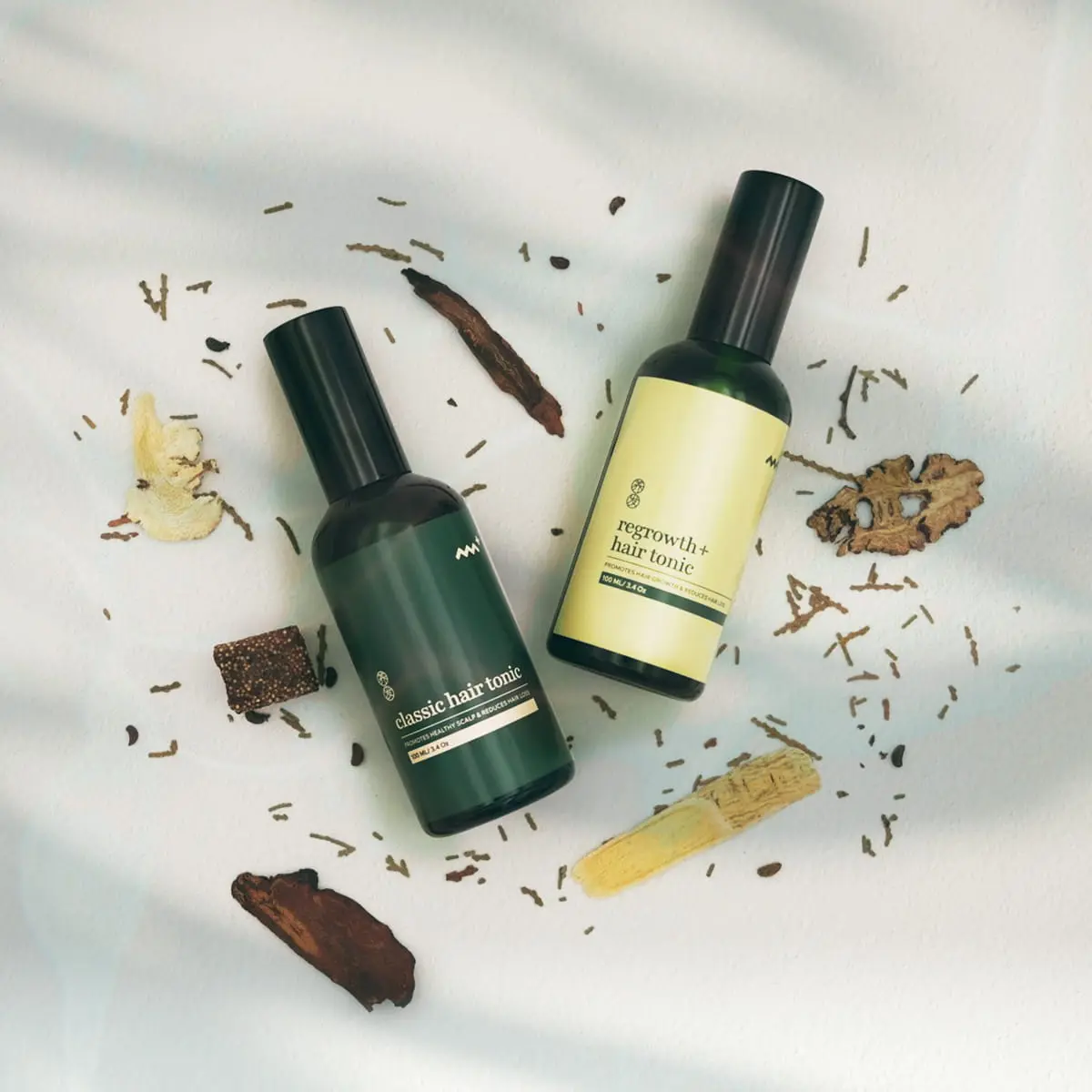
Dried TCM botanicals and PULSE hair tonic bottles for scalp care

Insights · Hair Loss

Botanical hair tonic: a breakdown of PULSE Hair Tonic

Ten botanicals for scalp and follicle support when the pattern fits. See who it is for, how each herb works, and how to apply it safely.

In brief

PULSE Hair Tonic concentrates herbal actives with smoothing oils for scalp comfort and follicle nourishment when the formula matches your pattern. TCM links hair to the Kidney and Liver: essence and Blood (精血) feed the scalp. Ten botanicals cover follicle support, circulation, colour, cooling, itch, damp-heat oil control, and delivery. Classic and Regrowth+ share that family; match the bottle after a pattern read, not from the label alone.

Organ frame

Hair health starts with Kidney and Liver

Chinese herbs have long been used for premature greying, fall, and a weakened scalp surface. Topical tonics sit with that organ logic rather than treating the scalp as an isolated strip of skin.

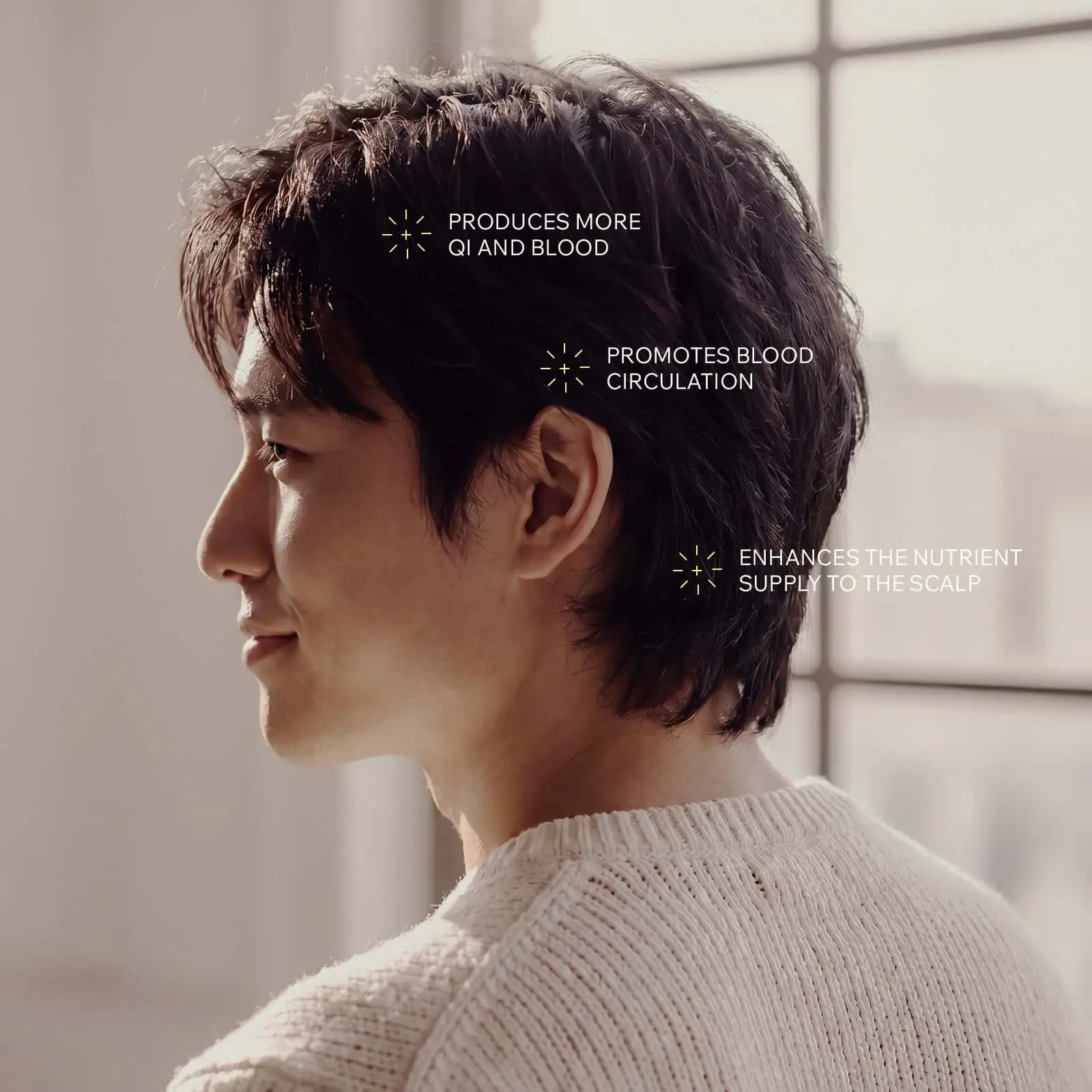
In TCM, hair health is closely tied to the Kidney and Liver. Strengthening those systems helps produce essence and Blood (精血) that nourish the scalp and support growth. PULSE Hair Tonic concentrates a family of herbal actives with smoothing oils for scalp comfort and follicle resilience when the product matches your pattern. Classic and Regrowth+ share that botanical family; a physician matches the bottle to oily, dry, or sensitive scalp rather than treating every thinning picture the same.
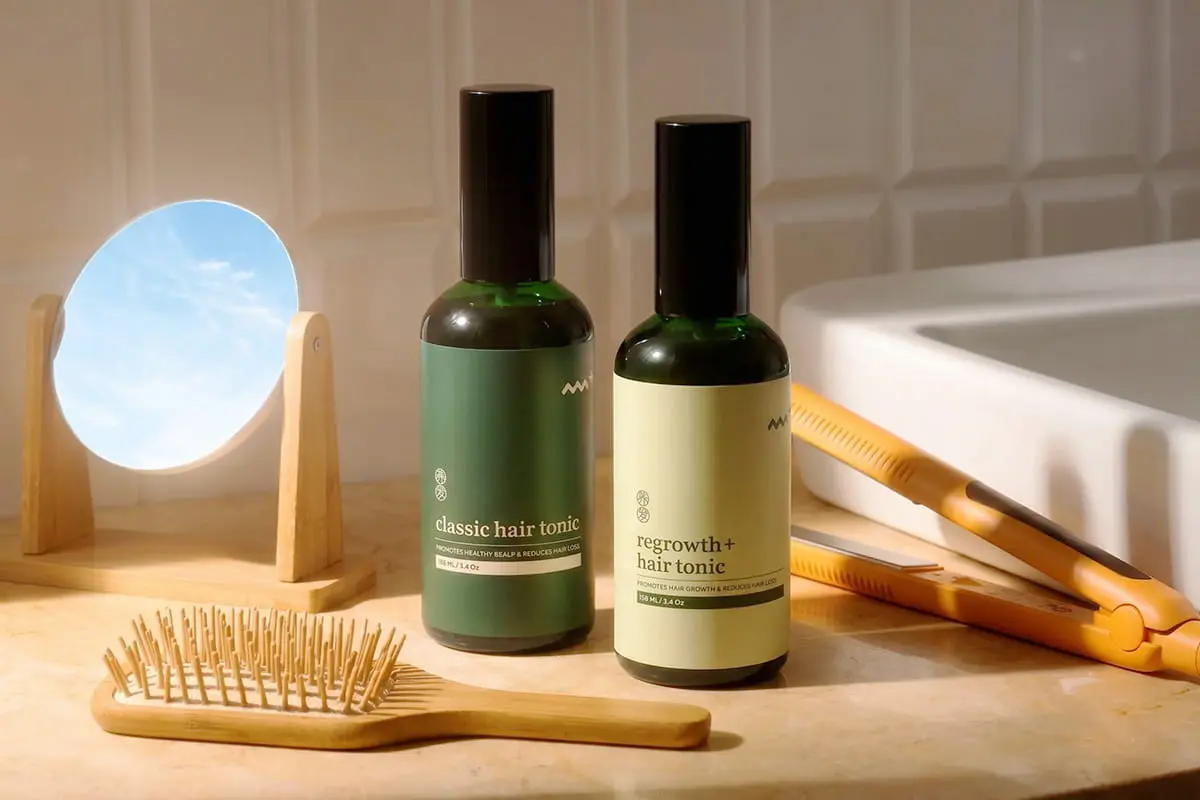

PULSE Classic and regrowth hair tonics with TCM botanicals

Decide

Who this tonic picture fits

Use this as a map, not a self-diagnosis. A physician still names the leading pattern before topical care sits beside acupuncture or internal herbs.

1. Early greying with thinning

Colour fades early, strands feel brittle, or fall sits with lower-back ache, night heat, or tiredness that rest does not lift. Kidney-Liver colour and follicle support may be in view.

2. Oily, flaky, or muggy scalp

Extra oil, flake, and itch in humid weather, often with sticky stools or facial oiliness. Damp-heat clearing (Ku Shen and cooling allies) often matters as much as follicle tonics.

3. Itch that drives scratching

Scratching threatens follicles and delays the growth cycle. Warming anti-itch support such as Gan Jiang can calm the surface while pattern care works underneath.

4. When to skip self-selection

Sudden total loss, infectious scalp disease, scarring alopecia, open or broken scalp skin, pregnancy, or a complex medicine list. Seek medical or dermatology review for red flags, and ask a physician before any tonic in those cases.

Formula map

Ten botanicals in the tonic

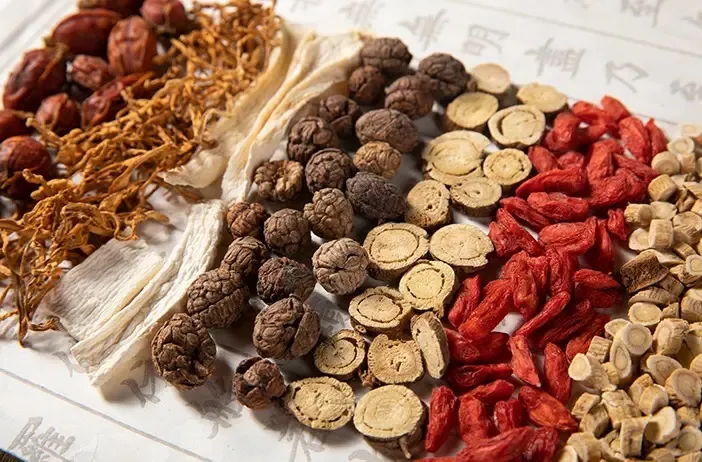
Each herb earns one primary job in the blend. Delivery herbs help the concentrate reach the scalp surface; smoothing oils spread it evenly.

PULSE Hair Tonic botanical roll-up
Herb Primary role in the formula
He Shou Wu (何首乌, Fallopia multiflora) Tonify Kidney and Liver; revitalise follicles; support colour when greying arrives early.
Sang Ji Sheng (桑寄生, Taxillus chinensis) Tonify Kidney and Liver; support follicle nourishment and growth.
Nu Zhen Zi (女贞子, Ligustrum lucidum) Tonify Kidney and Liver; aid circulation and restore shine with colour allies.
Mo Han Lian (墨旱莲, Eclipta prostrata) Tonify Kidney and Liver; cool Blood and ease inflammatory scalp load.
Ce Bai Ye (侧柏叶, Platycladus orientalis) Tonify Kidney and Liver; support colour and cooling on a stressed scalp.
Dan Shen (丹参, Salvia miltiorrhiza) Promote Blood circulation to the scalp; cool inflammatory load.
Ku Shen (苦参, Sophora flavescens) Clear damp-heat; help control excess oil and flake that clog pores.
Gan Jiang (干姜, Zingiber officinale) Ease scalp itch with warming anti-itch and anti-microbial support.
Bing Pian (冰片, borneol / Dryobalanops aromatica) Enhance scalp permeability so actives reach the surface layers.
Xin Yi (辛夷, Magnolia liliiflora) Support delivery and medicinal effect of the herbal blend.

High-intent stories

Three scalp pictures the herbs often meet

The full job list sits in the table. These three stories are the ones people search for most: colour, oil, and itch.

1. Colour and premature greying

He Shou Wu is traditionally used as a longevity tonic herb against early greying. With Ce Bai Ye and Nu Zhen Zi, the blend may support darker tone and shine when Kidney-Liver colour loss is part of the picture. Companion signs may include brittle strands, lower-back weakness, or night sweating.

2. Damp-heat oil and flake

Damp-heat can raise oil, clog pores, and sit with flake patterns that resemble seborrheic dermatitis. Ku Shen clears heat and damp; Mo Han Lian, Dan Shen, and Ce Bai Ye cool inflammatory load. In humid Singapore climates this job often matters as much as follicle tonics.

3. Itch and scratch damage

Gan Jiang brings warming anti-itch support when scratching threatens the follicle. Ease itch first so the scalp can rest while Blood, Jing, or damp-heat care works underneath. Dan Shen and Nu Zhen Zi also help when stagnation slows local microcirculation.

Use

How to use a botanical hair tonic

Topical tonics support the scalp surface. They are not a substitute for prescribed internal herbs or dermatology care.

  • Clean scalp first. Apply to clean, towel-dried scalp unless your physician or the label directs otherwise.
  • Part and press. Part the hair, apply along thinning or itchy zones, and massage gently so the concentrate reaches the skin, not only the shaft.
  • Follow the label or clinic plan. Frequency and amount come from the product directions or your physician. Do not invent a stronger dose to speed results.
  • Patch test. Try a small area first if your skin reacts easily. Stop and seek advice if redness, burning, or swelling spreads.
  • Skip broken skin. Do not apply on open cuts, infected patches, or active weeping scalp disease without medical clearance.
  • Pregnancy and medicines. Ask before use in pregnancy, while breastfeeding, or on a complex medicine list. Tonics are topical; they still need a pattern match.
PULSE Classic and Regrowth hair tonics for pattern-matched scalp care

Clinic and shop

Tonics beside programme care

Topical tonics sit with the same Qi-Blood and follicle logic as clinic care. They do not replace a pattern read.

Shop Classic and Regrowth+ on P:TTERN · Hair Loss programme

In-house tonics and the Hair Loss programme share scalp acupuncture, pattern herbs, and topical support when indicated. For the broader Blood, Jing, Liver Qi, and Damp-Heat map, see Chinese medicine for hair loss. Chinese herbal medicine remains prescription-led for internal formulas.

When to book for hair and scalp care

If fall is accelerating, density is thinning, the scalp is oily or itchy, or greying arrives early with other Kidney-Liver signs, a physician can name the pattern and decide whether tonics, acupuncture, or herbs belong in your plan.

Dr Sim Beng Joo

Clinically reviewed

Reviewed by Sim Beng Joo

Advisor (Science & Strategy) / Consultant Physician · TCMPB T1303003A

MOH-licensed TCM physician and biomedical scientist, with clinical work in digestion, pain, sleep or fatigue, and constitution patterns that show as scalp and follicle load.

View full profile

Educational information based on clinical experience and TCM principles. Not a substitute for personalised consultation, medical care, or urgent attention. Speak with your physician before starting herbs, scalp tonics, or new self-care in pregnancy or with a chronic condition. Seek medical review for sudden total hair loss, infectious scalp disease, or scarring alopecia. TCM complements dermatology and does not replace it. Outcomes vary with constitution and pattern match.

FAQs

Questions, answered

Herbs in the tonic, who it fits, how to apply, oily or itchy scalp, and when to book.

What herbs are in PULSE Hair Tonic?

The formula draws on ten botanicals: He Shou Wu, Sang Ji Sheng, Nu Zhen Zi, Mo Han Lian, Ce Bai Ye, Dan Shen, Ku Shen, Gan Jiang, Bing Pian (borneol), and Xin Yi. Together they support follicles, circulation, colour, cooling, itch relief, damp-heat oil control, and delivery when matched to your scalp pattern.

Who is a botanical hair tonic for?

It most often fits early greying with thinning, an oily or flaky scalp in humid weather, or itch that drives scratching. Skip self-selection for sudden total loss, infection, scarring alopecia, broken skin, pregnancy, or a complex medicine list until a physician or dermatologist advises.

Why does TCM link hair tonics to the Kidney and Liver?

TCM teaches that hair health depends on Kidney and Liver function. Those systems help produce essence and Blood (精血) that nourish the scalp and support growth. Topical tonics sit with that organ logic rather than treating the scalp as an isolated surface.

What does He Shou Wu do in a hair tonic?

He Shou Wu (何首乌, Fallopia multiflora) is used as a longevity tonic herb that may support follicle revitalising and help with premature greying when the pattern fits. In the formula it often works with Ce Bai Ye and Nu Zhen Zi for colour and shine support.

Can a botanical hair tonic help an oily or itchy scalp?

When damp-heat sits on the scalp, Ku Shen may help clear heat and damp that raise oil and flake. Gan Jiang is used for itch. Cooling herbs such as Mo Han Lian, Dan Shen, and Ce Bai Ye may ease inflammatory scalp load. A physician still names whether that picture fits you.

How do I use PULSE Hair Tonic?

Apply to a clean, towel-dried scalp, part the hair so the concentrate reaches the skin, and follow the label or your physician’s plan. Patch test if your skin reacts easily. Do not apply on broken or infected skin, and ask before use in pregnancy or on a complex medicine list.

Is PULSE Hair Tonic a substitute for a TCM consult?

No. Tonics support scalp comfort and follicle nourishment when the product matches your pattern. They do not replace pulse and tongue assessment, prescribed internal herbs, or dermatology care for infection, scarring, or sudden total loss.

Where can I get PULSE Hair Tonic in Singapore?

Shop Classic and Regrowth+ tonics on P:TTERN, and ask about in-house tonics inside the Hair Loss programme at PULSE TCM clinics. Bring scalp itch, oil, colour change, and fall timing so a physician can match topical care to your pattern.

References

Selected sources

  1. National Center for Complementary and Integrative Health. Traditional Chinese medicine: What you need to know. 2019. https://www.nccih.nih.gov/health/traditional-chinese-medicine-what-you-need-to-know/
  2. Ministry of Health Singapore. TCM practitioners (Healthcare Professional Portal). https://hpp.moh.gov.sg/tcm-practitioners/
  3. World Health Organization. Traditional, complementary and integrative medicine. https://www.who.int/health-topics/traditional-complementary-and-integrative-medicine
  4. Liang Y, Yuan J, Shazada NE, Jiang J, Wu J. Traditional Chinese Medicine Treatment for Androgenetic Alopecia Based on Animal Experiments: A Systematic Review and Meta-Analysis. Evid Based Complement Alternat Med. 2022;2022:2588608. https://doi.org/10.1155/2022/2588608

Next step

Ready for a scalp and hair pattern read?

Bring how long the fall or thinning has lasted, scalp itch or oiliness, greying timing, medicines you already use, and any dermatology notes. We will name the pattern in plain language and decide whether tonics belong in your plan.

Hours
Most clinics daily 11:00 AM – 8:00 PM
Care
Physician-led consultation