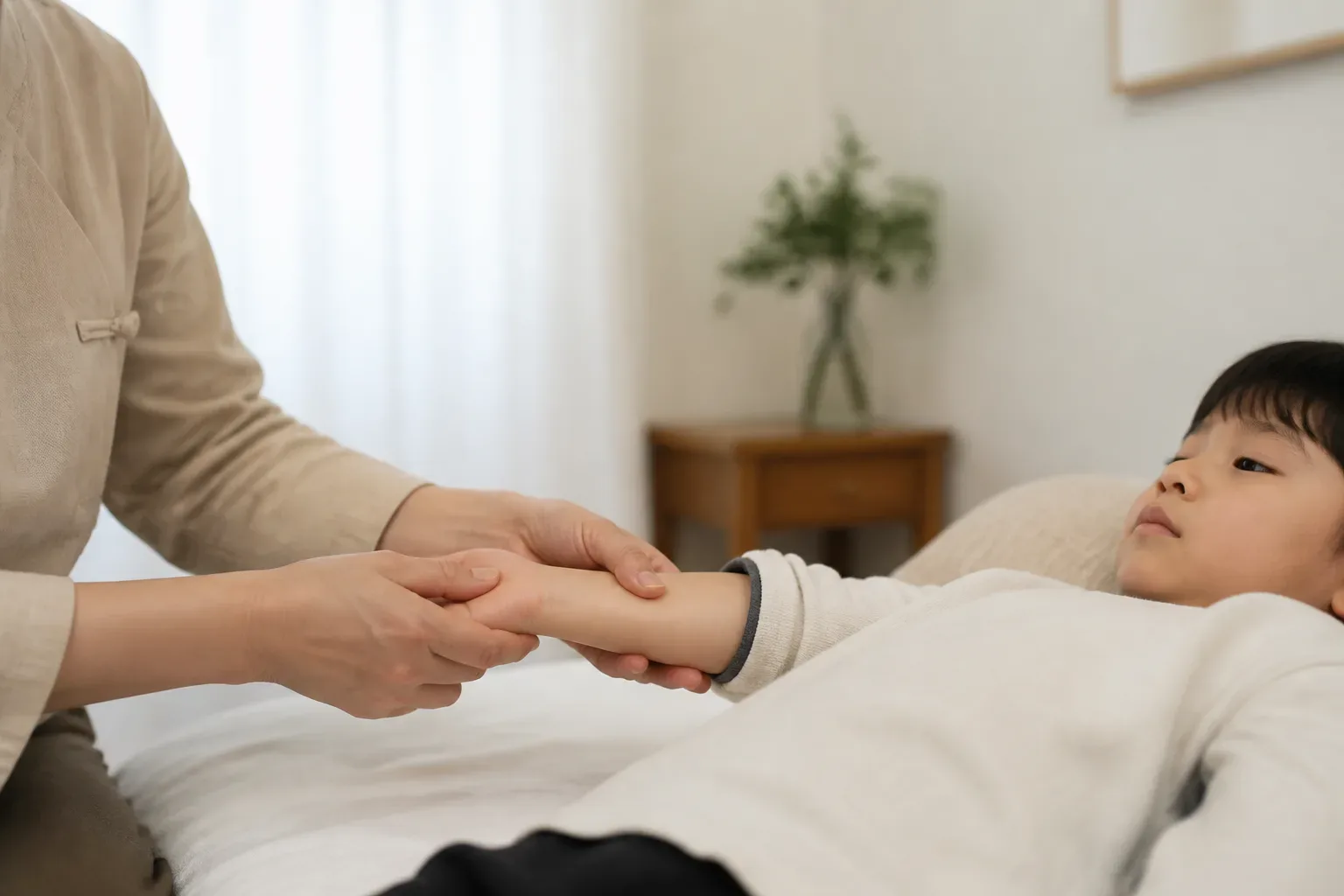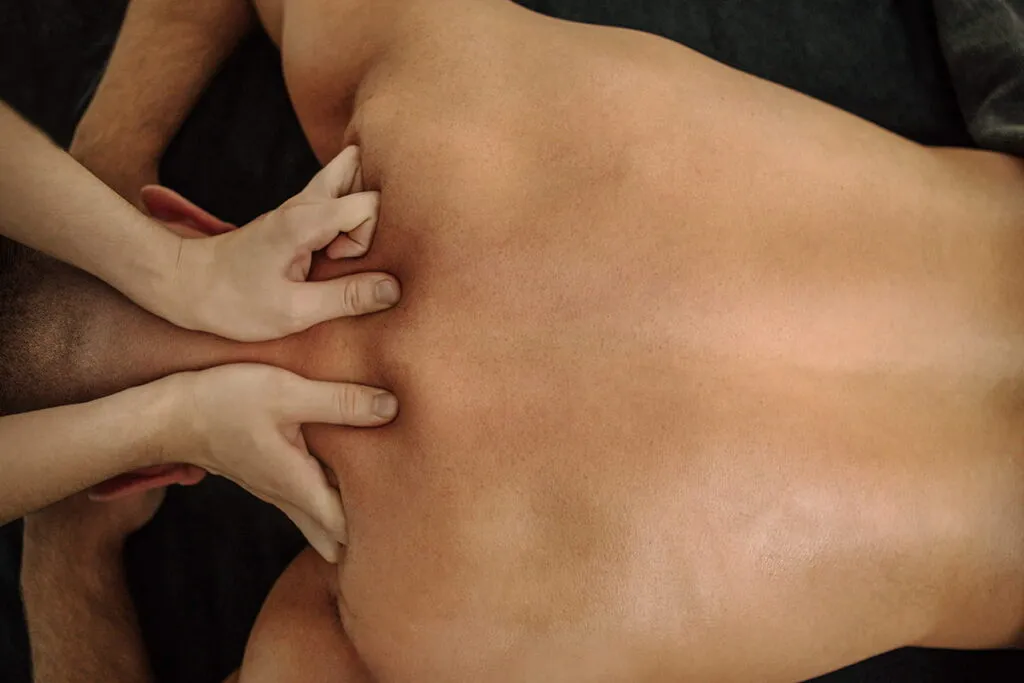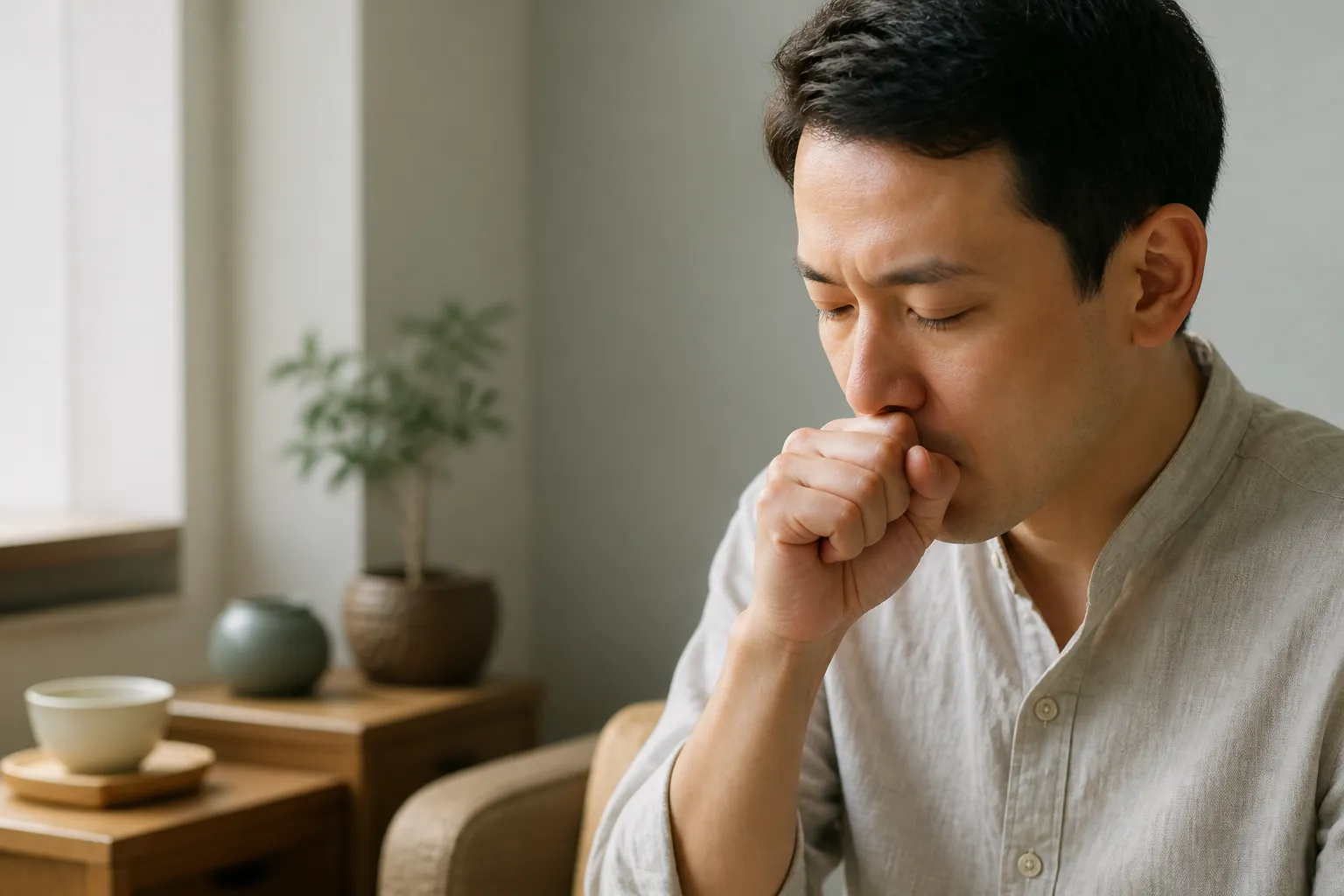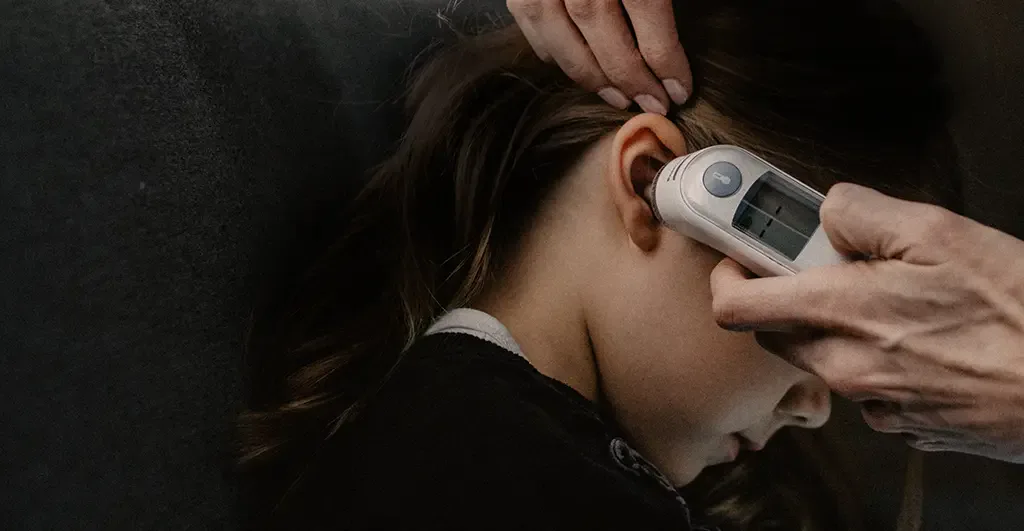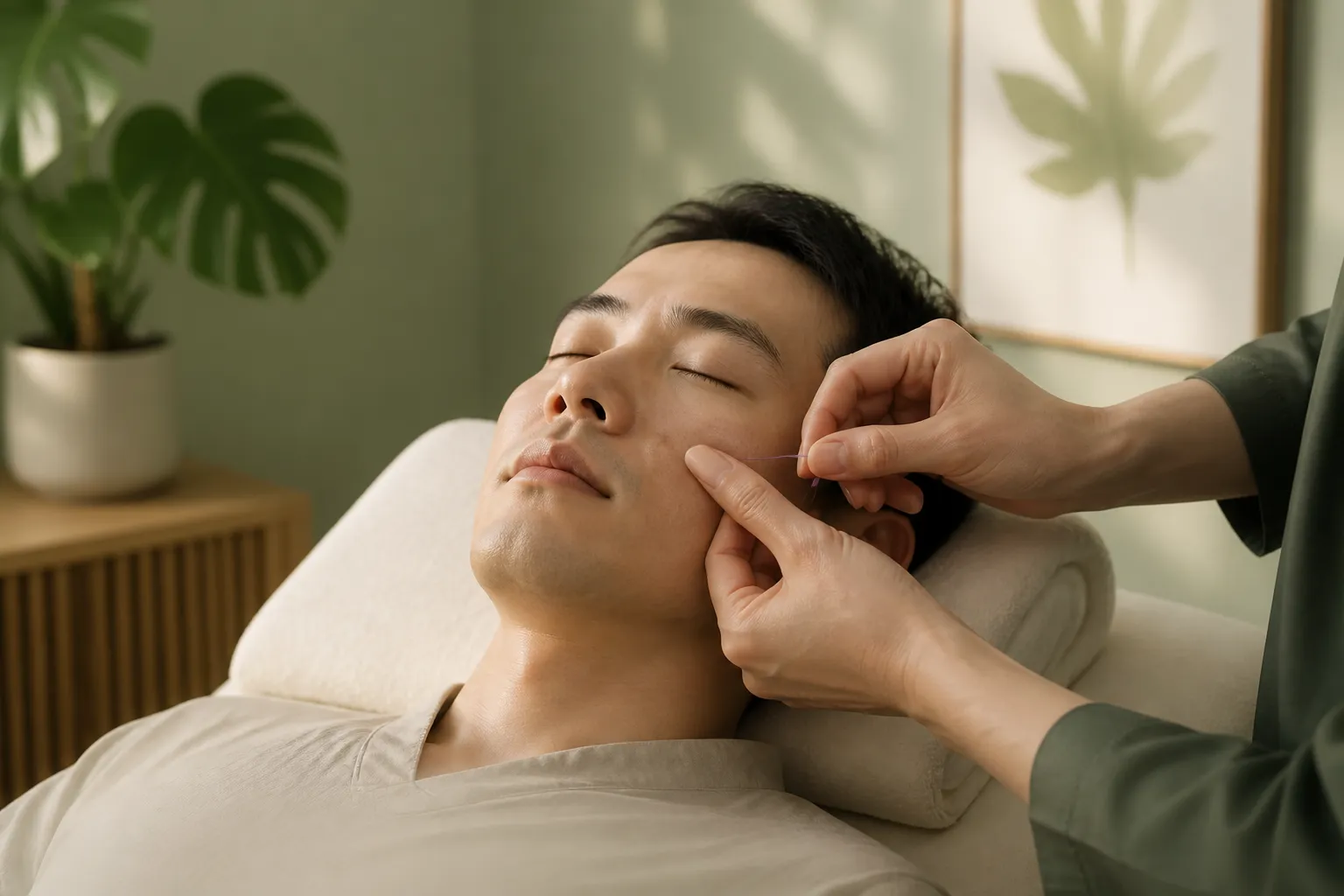
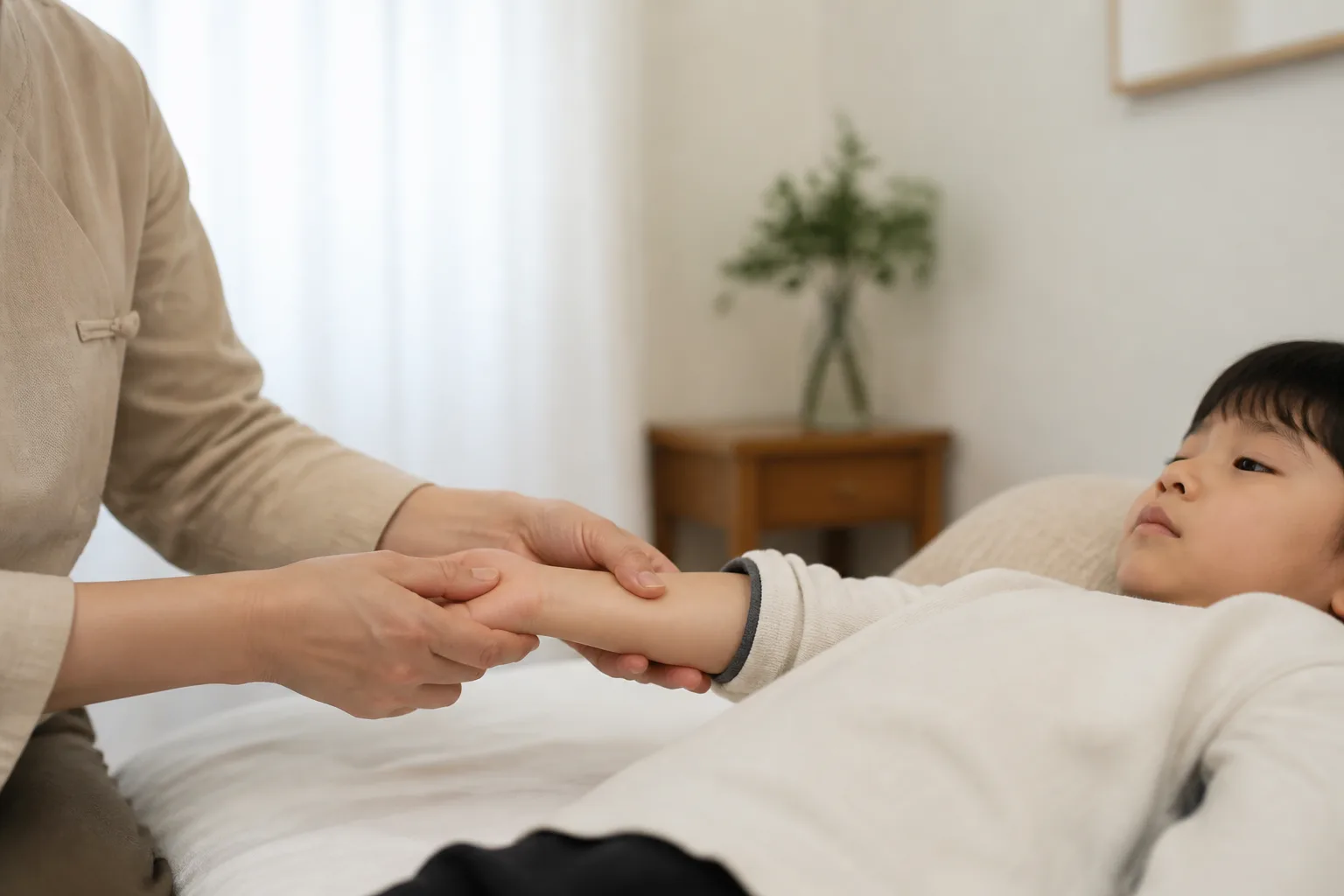
Adult hands gently stroking a child's forearm during paediatric Tuina

Insights · General Health

Paediatric Tuina (xiao er tui na 小儿推拿)

Gentle, non-invasive strokes on paediatric pathways for appetite, digestion, mild respiratory patterns, and constitution support after a physician assesses your child.

In brief

Paediatric Tuina (xiao er tui na 小儿推拿) is gentle TCM bodywork for children, usually from about 6 months to 7 years. After diagnosis, physicians use light strokes, kneading, rubbing, and acupressure on paediatric hand and arm pathways, then limbs and trunk as needed. Sessions typically last 15–30 minutes. Care can support appetite, digestion, mild coughs or congestion, sleep ease, and constitution, and complements Western paediatric care. Home press is educational only when a physician has shown the method.

01 · Growing constitutions

Why children fall sick easily, and why Tuina fits

脾 · 肺 · 卫气 · 小儿推拿

In TCM, children's organs and defensive qi (wei qi 卫气) are still maturing. That can show up as easier colds, picky appetite, or restless nights, not as a failure of parenting.

Irregular meals and frequent snacking can further burden a developing spleen. Many children accept gentle external massage more readily than bitter medicine or injections when the pattern allows Tuina alone. Children's points are often more responsive, and unique paediatric hand meridians help explain why light strokes can work without needles in this age band. When constitution support is the goal, physicians often recommend about one to two sessions a week after the first assessment.
02 · What it is

What paediatric Tuina is

小儿推拿 · xiao er tui na

Paediatric Tuina (xiao er tui na 小儿推拿) is a specialised, gentle variant of Tuina for infants and children. Physicians use light strokes, kneading, rubbing, and acupressure on paediatric hand and arm pathways (xue wei 穴位), plus limbs and trunk when needed, while channels are still developing.

The aim is to move qi and blood, regulate organ function, ease discomfort, and support general health without bitter medicine when Tuina alone fits. Care stays process-led after pulse and tongue reading suited to age.

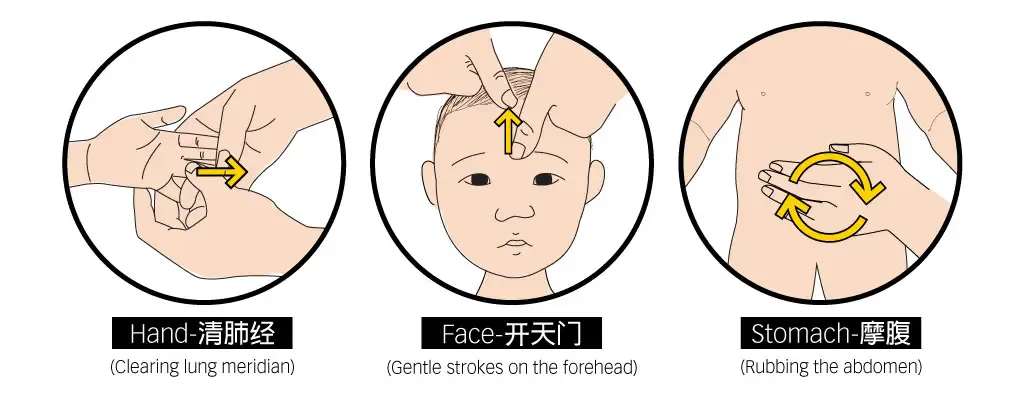
Teaching diagram of three paediatric Tuina strokes: qing fei jing on the hand, kai tian men on the forehead, and mo fu on the abdomen

1. Qing fei jing 清肺经

Hand · clearing the lung meridian. Along the radial or ring-finger pathway. Gentle stroke from the base of the finger toward the tip.

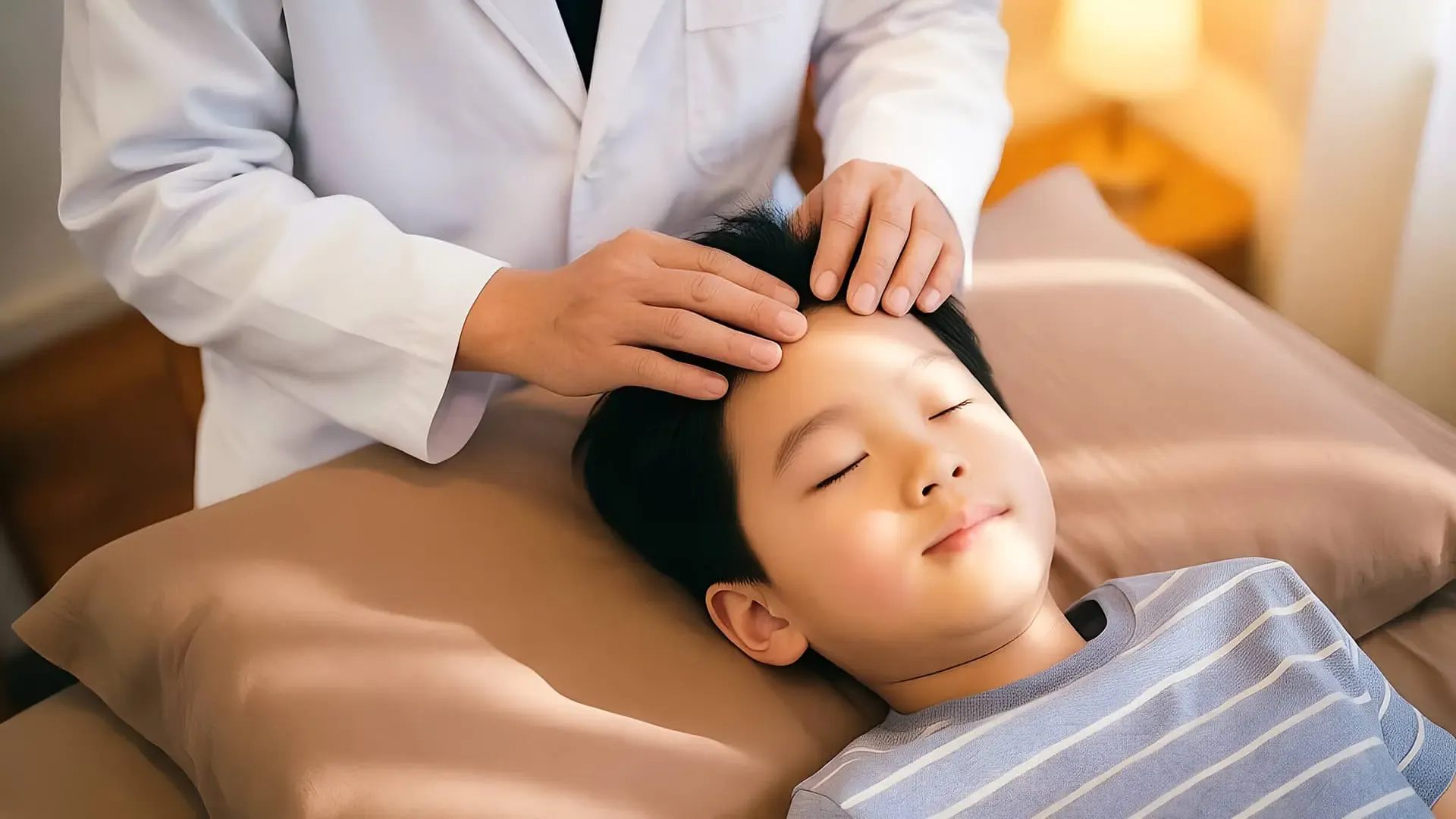
2. Kai tian men 开天门

Face · opening the heavenly gate. Midline of the forehead from the glabella toward the hairline. Upward strokes that settle the head and spirit.

3. Mo fu 摩腹

Abdomen · rubbing the belly. Around the navel. Clockwise circular rubbing to support digestion. Technique mix still follows the pattern that day.

03 · Common concerns

What it is used for

Paediatric Tuina is used mainly for children about 6 months to 7 years. Physicians treat patterns, not disease labels alone. Care here is complementary under physician guidance.

1. Respiratory & immunity

Colds and flu recovery, cough, allergic rhinitis, sinus congestion; recovery after tonsillitis when the acute risk has settled.

2. Digestion & appetite

Poor appetite, tummy ache, diarrhoea, constipation.

3. Sleep, behaviour & growth

Night-crying, bed-wetting patterns, slower growth concerns. Some children also receive Tuina as adjunct care for adenoid, ADHD, or short-sightedness patterns after assessment.

Seek Western paediatric or emergency care first for high fever, breathing difficulty, dehydration, injury, or a sudden change in alertness.

Adult hands gently stroking a child's forearm during paediatric Tuina

04 · In clinic

How it is done

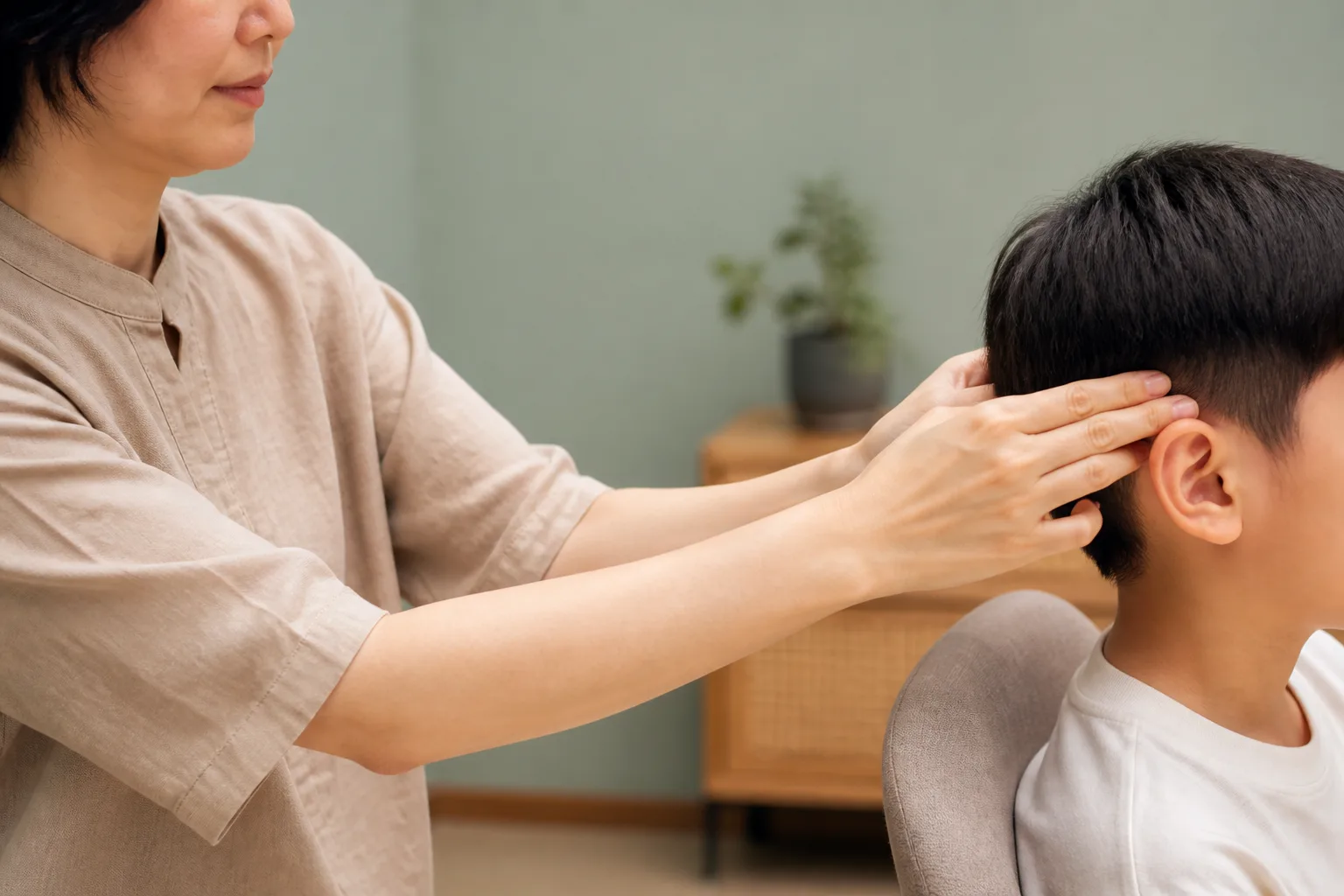
A physician diagnoses first, then customises the sequence. Work often starts on the palms and upper limbs, then head, body, and lower limbs as the child settles.

Technique combination varies by illness and cooperation. Sessions typically last about 15–30 minutes. Paediatric Tuina cannot replace Western medicine in emergencies or contagious acute disease; it can support the recovery phase when that risk has been assessed.

05 · Daily rhythm

Tips and habits

Clinic care works best when daily rhythm supports a developing spleen and lung.

1. Sufficient sleep

Most children need about 9–12 hours in a day, including naps when age-appropriate.

2. Steady meals

Keep regular meal times. Ease back on frequent snacking, cold drinks and foods, and very sweet, fried, or spicy snacks that burden the spleen.

3. Outdoor play

Leave time for play in the sun when the weather allows.

06 · Between visits

Gentle home massage

Use the child's own fingers as the measuring unit so landmarks stay age-appropriate. Soft pressure only. Stop if the child is upset or acutely unwell.

Home press limits

These tips are educational. They do not replace clinic care for fever, breathing difficulty, contagious illness, or when your child is not settling. Learn nie ji 捏脊 from a physician before practising at home.

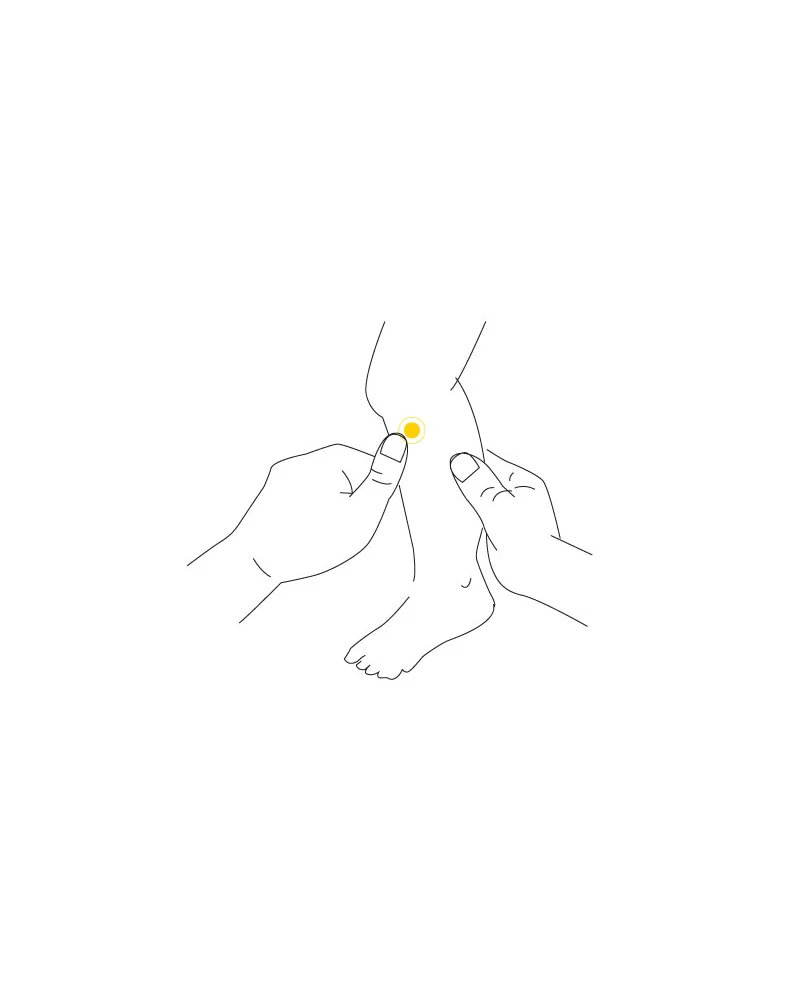
Adult hand locating Zu San Li ST36 on a child's lower leg

Digestion · ST36 + ST25

Zu San Li and Tian Shu

ST36 about four child finger-widths below the kneecap; ST25 two child thumb-spaces from the navel on each side. About one minute each.

Soft circles only. Skip over pain, rash, or a very full belly right after a huge meal.

Locate ST36 and ST25
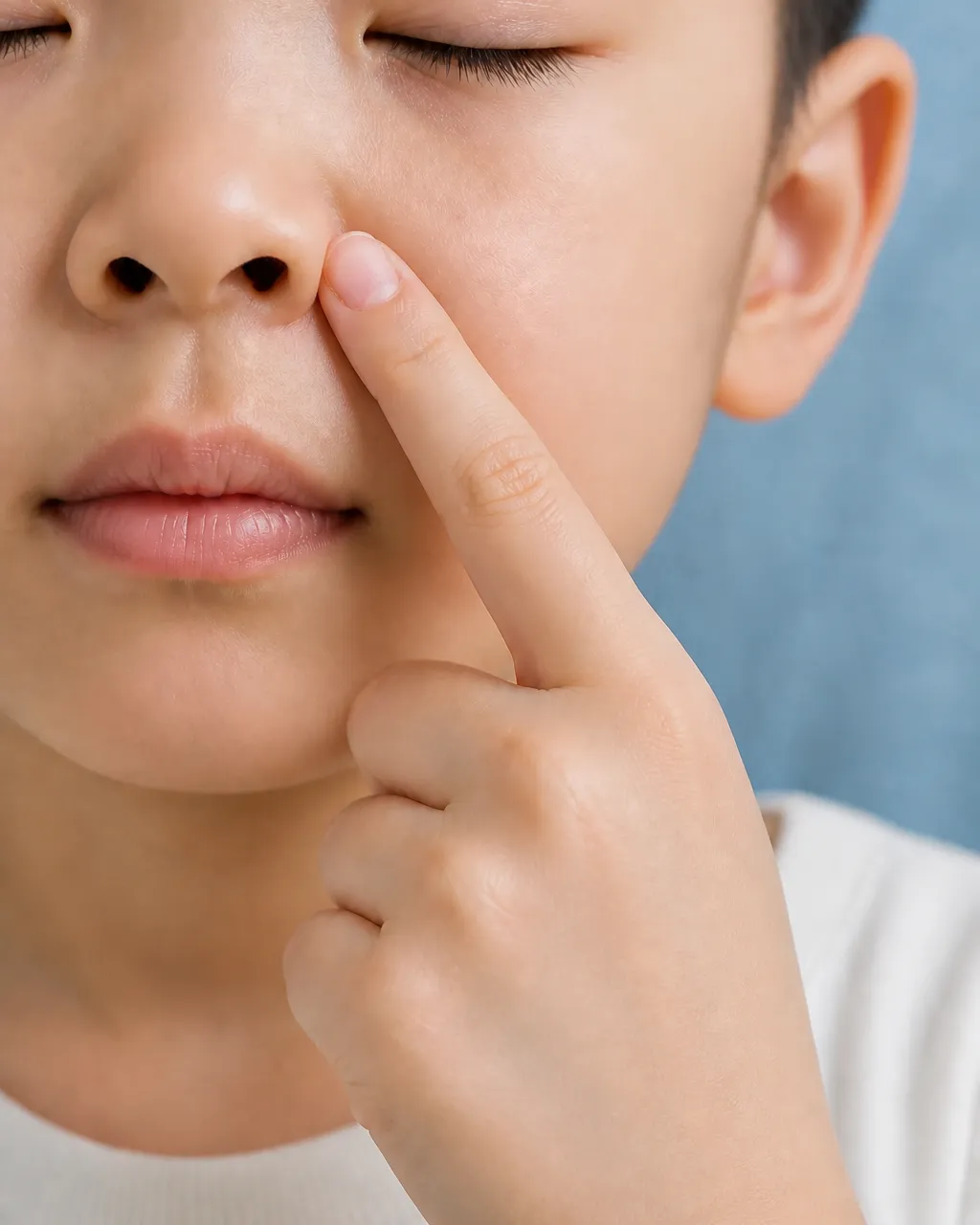
Finger circling Ying Xiang LI20 beside a child's nostril

Nose · LI20 + Taiyang

Ying Xiang and Taiyang

LI20 in the groove beside each nostril for about three minutes; Taiyang in the temple depression for about one minute.

Keep the press kind. Ease off if the skin is broken or a boil is present.

Locate LI20 and Taiyang
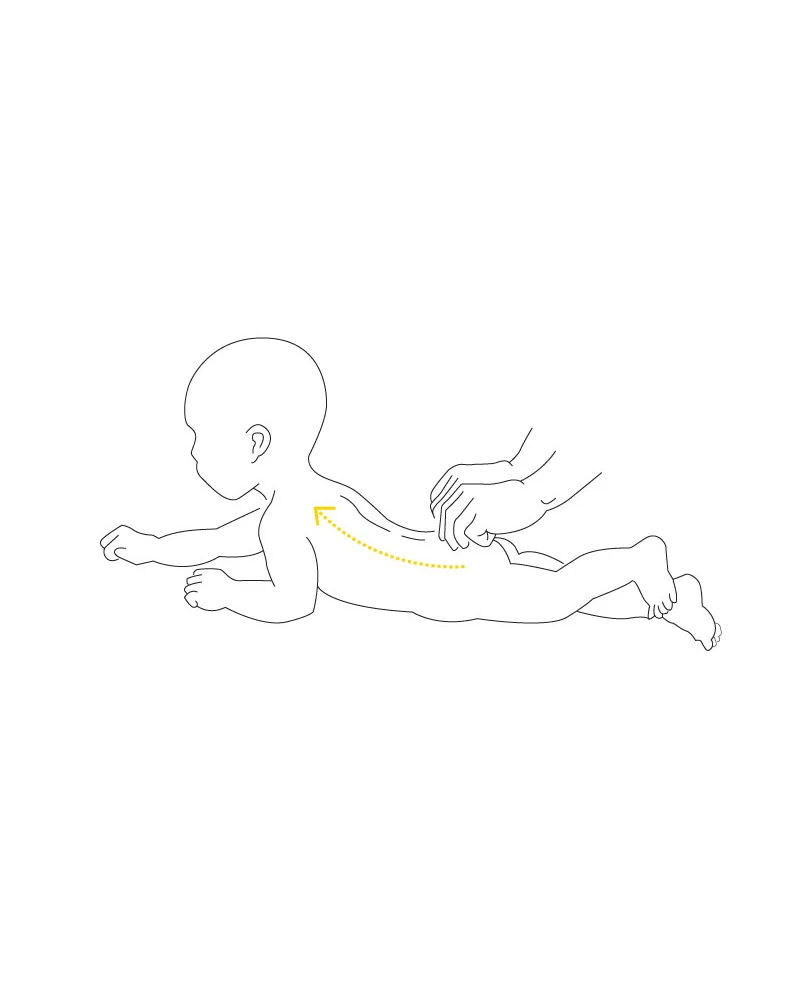
Adult hands performing gentle spinal skin-rolling on a prone infant

Constitution · 捏脊

Spinal skin-rolling (nie ji)

With the child prone and calm, gather soft skin folds on both sides of the spine and roll upward from the lower back. About five gentle passes when taught.

Learn the grip in clinic first. Skip over fever, rash, or broken skin.

See the nie ji guide
Dr Sim Beng Joo

Clinically reviewed

Reviewed by Dr Sim Beng Joo

Advisor (Science & Strategy) / Consultant Physician · TCMPB T1303003A

MOH-licensed TCM physician and biomedical scientist, with clinical work in digestion, pain, and sleep or fatigue.

View full profile

Educational information based on clinical experience and TCM principles. Not a substitute for personalised consultation or paediatric medical care. Constitutions differ; speak with a licensed TCM practitioner and your child's healthcare providers before starting new treatments. Paediatric Tuina complements (and does not replace) urgent, emergency, or specialist Western care.

FAQs

Questions, answered

Age bands, session length, safety, home massage, and how paediatric Tuina differs from adult bodywork.

What is paediatric Tuina?

Paediatric Tuina (xiao er tui na 小儿推拿) is gentle TCM bodywork for infants and children. Physicians use light strokes, kneading, rubbing, and acupressure on paediatric hand and arm pathways and related points. It does not rely on bitter medicine or needles when Tuina alone fits.

At what age can children have paediatric Tuina?

Paediatric Tuina is typically suited to children around 6 months to 7 years, and sometimes older when a lighter approach is preferred. Infants under about 6 months are assessed case by case. Your physician advises for your child.

What is paediatric Tuina used for?

Common entry points include flu and cold prevention support, cough, allergic rhinitis or sinus patterns, tonsillitis or adenoid recovery support, stomach ache, diarrhoea or constipation, poor appetite, night-crying, bed wetting support, slower growth support, focus and ADHD-pattern support, and short-sightedness support. Care is pattern-based and complementary. Acute or severe illness needs Western paediatric assessment first.

How long does a paediatric Tuina session take?

After consultation and diagnosis, treatment usually lasts about 15–30 minutes depending on age, condition, and cooperation. First visits are often longer so history and medicines can be shared without rush.

Is paediatric Tuina safe?

When performed by a registered TCM physician with age-appropriate pressure, paediatric Tuina is generally well tolerated. It is not a substitute for emergency care in high fever, breathing difficulty, dehydration, injury, or contagious acute disease. Stop if your child is distressed.

Can I do paediatric Tuina at home?

Physicians sometimes teach gentle locate-and-press habits between visits, measured with the child's own fingers. Digestion points, nose points, and spinal skin-rolling (nie ji 捏脊) are common teaching sets. Home massage does not replace clinic care when your child is acutely unwell.

How often should my child have paediatric Tuina?

It depends on the pattern. Some acute digestive or mild respiratory concerns settle over a short course. Constitution support may use about one to two sessions a week when your physician recommends that pace.

How is paediatric Tuina different from adult Tuina?

Children's points are often more responsive, and paediatric hand meridians and points are unique to this age band. Pressure stays light. Adult therapeutic Tuina for musculoskeletal pain uses firmer techniques and is covered on our Tuina massage treatment page.

References

Selected sources

  1. Loh CH. Use of traditional Chinese medicine in Singapore children: perceptions of parents and paediatricians. Singapore Medical Journal. 2009;50(12):1162–1168. (Survey of parents at a TCM clinic and paediatricians' perceptions; describes usage patterns, not treatment efficacy.) pubmed.ncbi.nlm.nih.gov/20087553
  2. Original article author: Physician Sheryl Tay.

Next step

Ready for a paediatric consultation?

Tell us about your child's appetite, sleep, stools, and recent illnesses. We will match you with a suitable physician. Paediatric Tuina from $80 after assessment.

Hours
Most clinics daily 11:00 AM – 8:00 PM
Care
Physician-led consultation