1. Swelling and bruising
Swelling and discolouration as blood sits under the skin.

Insights · Pain & Injuries
A twisted ankle that swells and bruises often needs ice first, then warmth. TCM reads blood stasis so clinic methods can move qi and blood, not rest alone.
In brief
A twisted ankle that swells and bruises often reads as blood stasis in TCM. Ice for the first 24 to 48 hours, then warmth once swelling has stopped. Do not massage in that window. Mild to moderate sprains often settle in 1 to 3 weeks with acupuncture and herbs; severe ligament tears may need the traditional hundred-day (about three-month) recovery saying. Go to A&E if you cannot bear weight, the ankle looks deformed, or numbness spreads.
01 · Signs
A bad fall or twist may leave one or more of these. In TCM, injuries to muscle, tendon, and bone are often said to need 100 days.
Swelling and discolouration as blood sits under the skin.
Ache or sharp pain around the joint, worse on load.
The ankle feels weak or stiff, and range of motion drops.
Going up or down stairs is hard while the joint is unstable.
Numbness, tingling, or pins and needles in the foot.
02 · Pattern scan
A twist with swelling and bruising often reads as blood stasis (血瘀). Once the swell drops, residual stasis can sit with Cold, which is why warmth, tuina, and moxa appear later.
| Pattern | Typical signs | Clinic lean |
|---|---|---|
| Blood stasisBlood stasis (血瘀): the usual reading after a twist. |
|
Ice while it is still swelling. Needling, cupping, and blood-moving herbs once you are in clinic. |
| Residual stasis with ColdStasis with Cold (瘀滞夹寒): lingering swell that prefers warmth. |
|
Warm compresses, tuina once swell has stopped, moxa, and ointment to move what is left. |
03 · First hours
Ice while the joint is still swelling, usually the first 24 to 48 hours. Warmth only after that swell has stopped. Do not massage in the ice window.
| Phase | What to use | What it does |
|---|---|---|
| While it is still swellingUsually the first 24 to 48 hours. | Cold compresses (ice or a cold towel). No heat, no hot bath, no massage. | Constriction limits extra bleeding and swelling. |
| After acute swelling stopsRecovery phase. | Warm compresses. Tuina can wait until this window. | Opens vessels, moves qi and blood, and helps residual bruising absorb. |
Identify whether the pain sits in muscle or bone. If a fracture is suspected, seek immediate medical attention. Go to A&E if you cannot bear weight, the ankle looks deformed, or numbness spreads to the toes.
Stop walking. Elevate the injured limb.
Do not massage the injured area while it is still swelling. Rubbing a fresh sprain can increase internal bleeding and stress torn ligaments. Tuina waits until that swell has stopped.
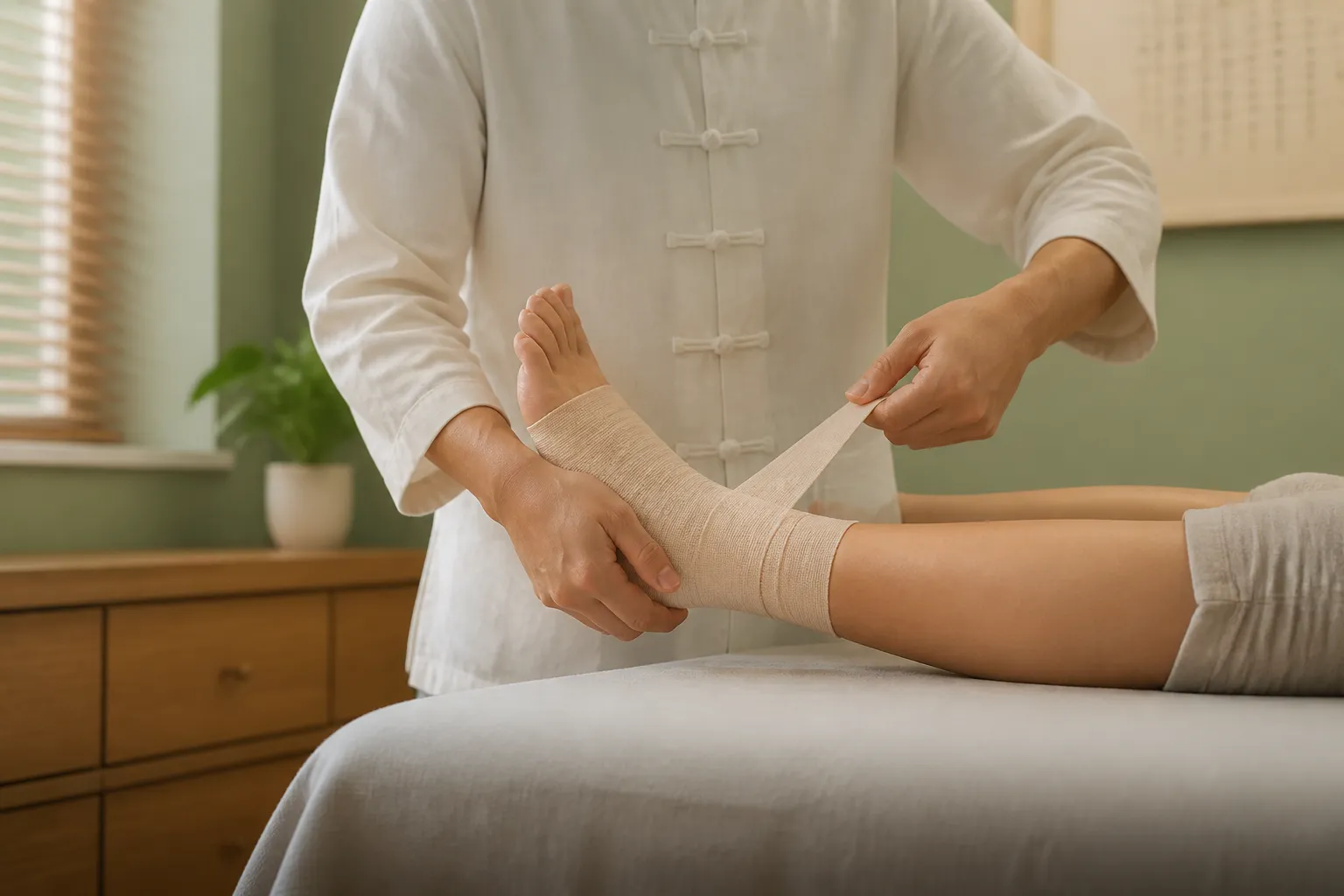
Use adhesive tape for initial stabilisation. Once acute swelling has stopped, switch to warm compresses to enhance blood circulation and lymphatic drainage.
04 · Clinic methods
Blood stasis often leans toward needling, cupping, and blood-moving herbs. Once swell has stopped, tuina, warmth, and ointment sit in the plan.
| Method | When it sits in the plan | What it does |
|---|---|---|
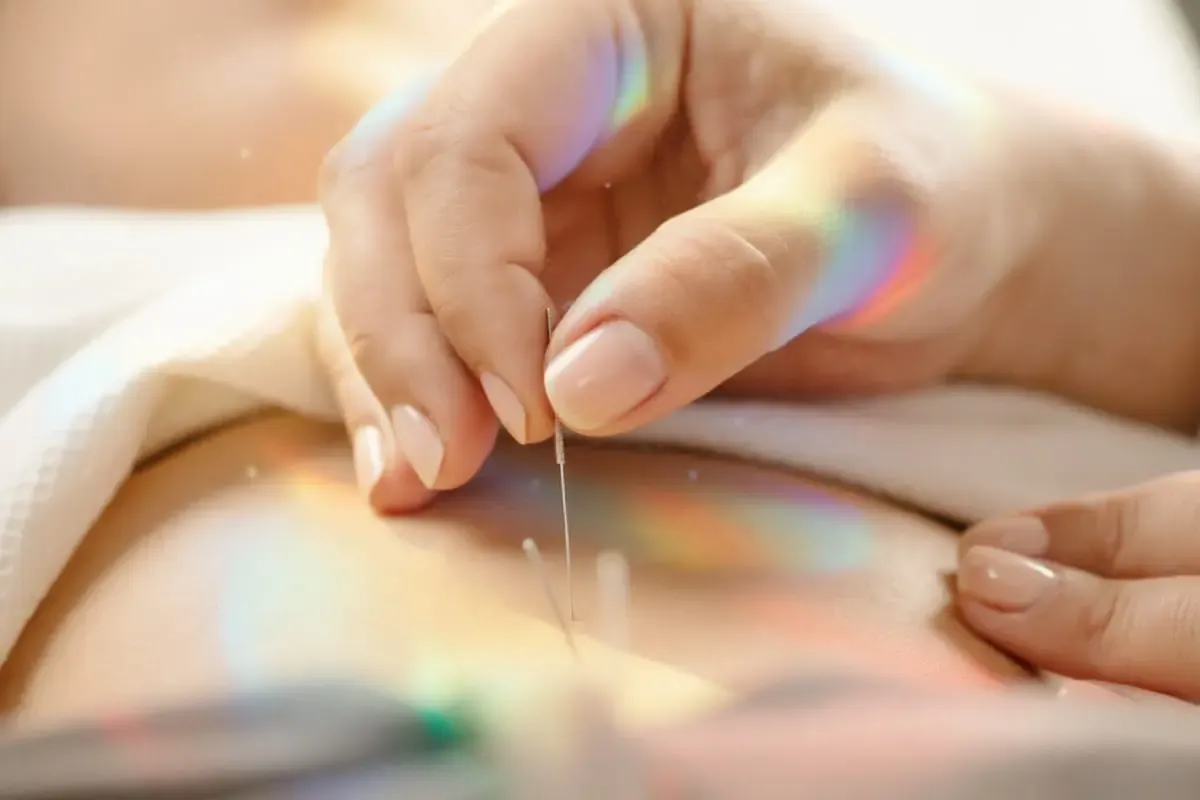
| AcupunctureNeedling on points related to the affected meridians. | Pain, inflammation, and stagnant fluids around the ligaments. | Moves qi and blood so swelling can ease and tissue can repair. |
| Chinese herbal medicineFormulas after treatment, matched to the pattern. | Pain that needs internal support alongside local care. | Frankincense, myrrh, and turmeric are commonly used for their anti-inflammatory properties. |
| Tuina massageHands-on work once acute swelling has settled. | After the ice window, when inflammation has subsided. | Stimulates blood flow, reduces residual swelling, and restores mobility. |
| CuppingSuction around the calf and ankle. | Lingering swell and blood stasis after the acute phase. | Draws stagnant blood and fluids so fresh circulation can enter. |
| MoxibustionMugwort warmth near ankle-related points. | When Cold sits with the residual stasis and the joint needs warmth. | Stimulates circulation and the body’s healing response. |
| Herbal ointment and bandagingApplied as needed before you leave clinic. | Local strain, swelling, and pain after needling or tuina. | Settles inflammation, moves blood, and supports tissue mending. |
Qi and Blood
Thin needles at points on the affected meridians reduce pain and inflammation around the sprained ligaments and help stagnant fluids move.
Acupuncture at PULSE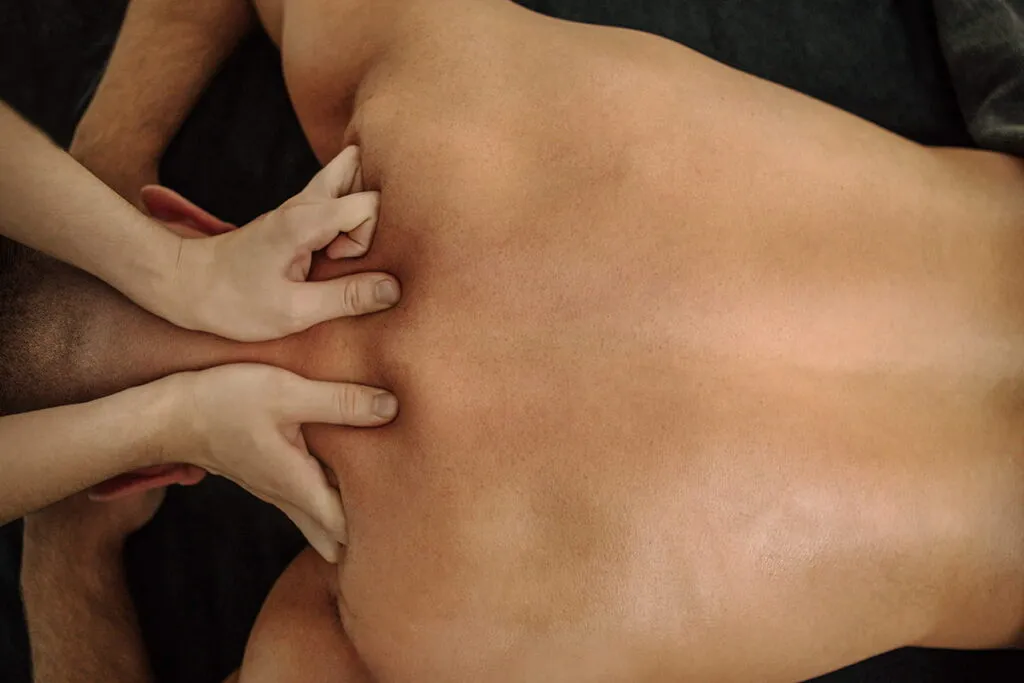
After the ice window
Do not massage a fresh sprain. Once acute swelling has stopped, tuina on the ankle can restore mobility and move residual stasis.
Tuina at PULSE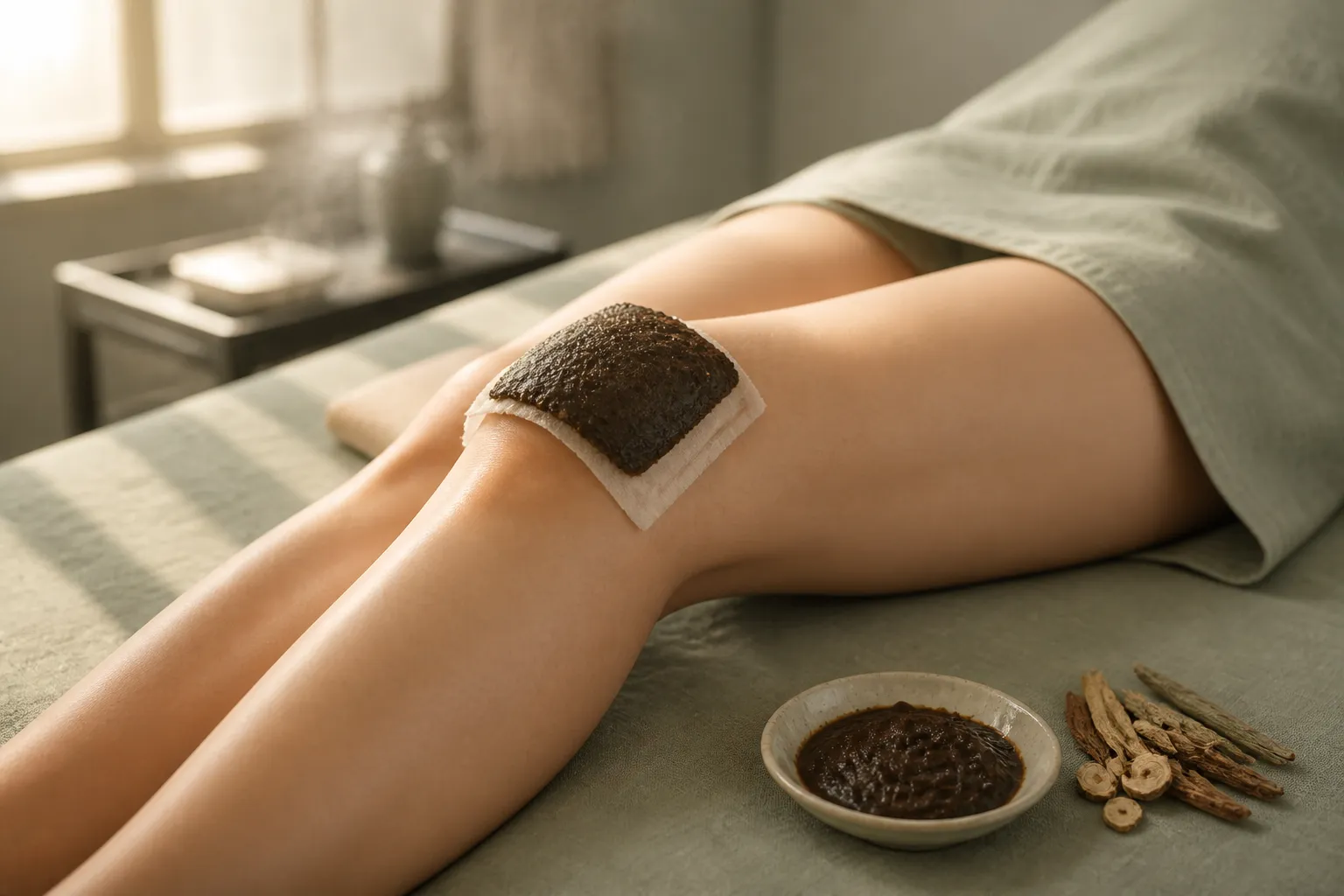
外治
Before you leave clinic, a physician may apply herbal ointment and bandaging to settle local swelling, move blood, and support tissue mending.
External herbal therapy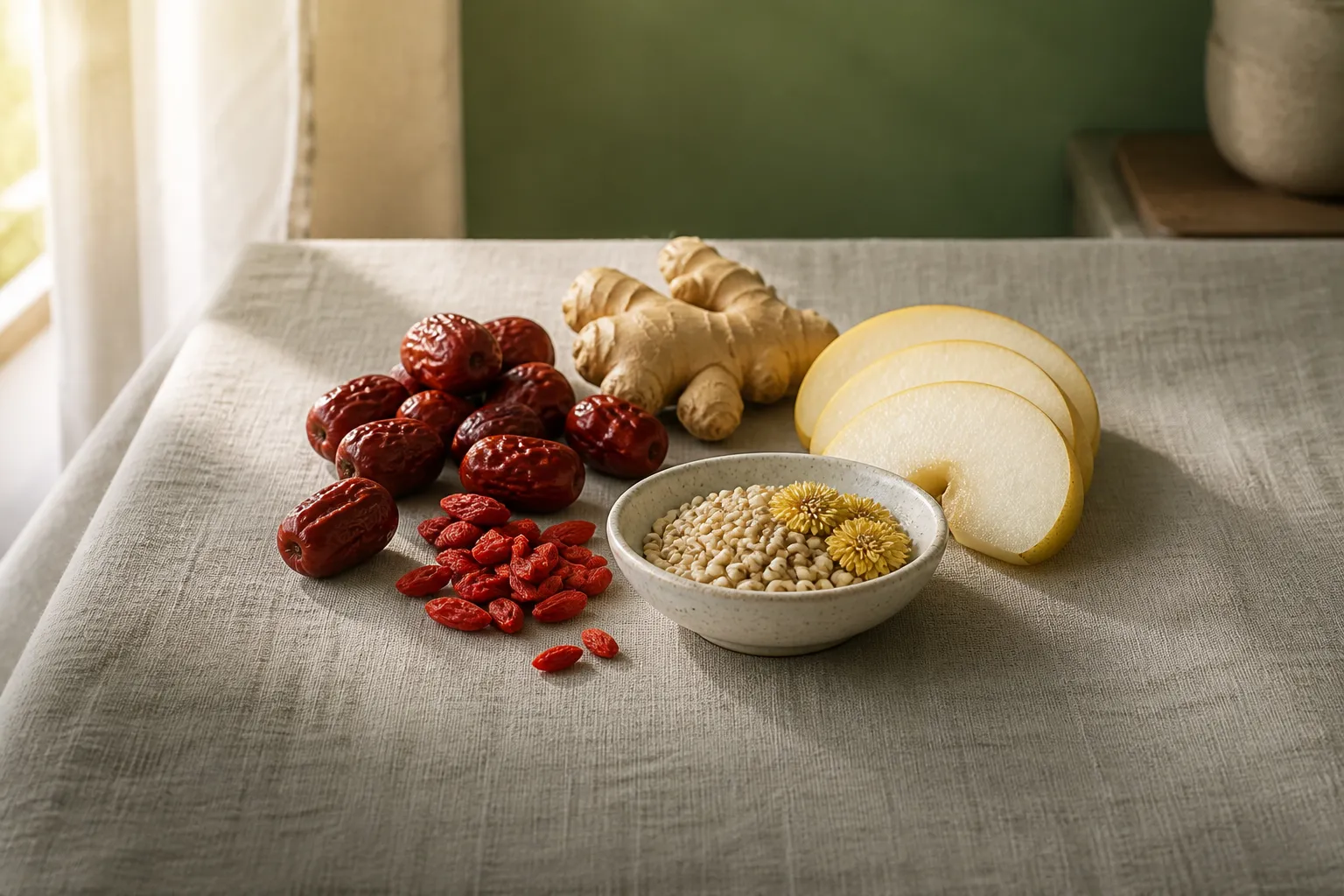
食疗
Once you have switched to warmth, skip iced drinks and cold, raw food. Cold can sit in a recovering joint. Warming meals support circulation while the sprain settles.
Dietary therapy at PULSEIf swelling has lasted beyond the first days, or walking is still unstable, a physician can name whether the ankle reads as blood stasis or residual Cold and decide which methods belong in your plan. Bring any X-ray or physio notes.

Clinically reviewed
TCM Physician · TCMPB T1002697B
MOH-licensed TCM physician with more than 12 years in clinic, including a decade in community charity settings. Clinical work in pain and injury, dry eye, and internal medicine.
View full profileEducational information based on clinical experience and TCM principles. Not a substitute for personalised consultation, medical care, or urgent attention. Speak with your physician before starting herbs, moxibustion, or new self-care in pregnancy or with a chronic condition. Seek urgent care for sudden inability to bear weight, a deformed joint, or numbness that spreads. TCM complements orthopaedics and physiotherapy for acute injury or suspected fracture.
FAQs
Common questions on ice or heat, massage, cupping, and when A&E should lead.
With prompt TCM care, a mild to moderate ankle sprain typically takes 1 to 3 weeks to settle. Severe sprains with significant ligament tears may take up to the traditional 100 days (roughly 3 months) to recover. Acupuncture, herbal remedies, and adequate rest sit together in that timeline.
Acupuncture is commonly used for sprained ankles. Fine needles at selected points can stimulate the local nervous system and support natural pain relief through endorphins. Needling also increases circulation to injured ligaments, which helps move stagnant fluids, reduce swelling, and support tissue repair.
Use ice while the joint is still swelling, usually the first 24 to 48 hours, and switch to heat only after that swell has stopped. Cold compresses constrict vessels and limit extra bleeding and swelling. Warm compresses then expand vessels, improve qi and blood circulation, and help the body absorb residual bruising.
No. Do not massage a freshly sprained ankle. Rubbing the injured area while it is still swelling, usually the first 24 to 48 hours, can increase internal bleeding, worsen swelling, and further stress torn ligaments. Wait until that swell has stopped before tuina to restore joint mobility.
Visit a Western medical clinic or A&E immediately if you cannot bear any weight on the foot, if the ankle looks physically deformed, or if numbness spreads down to your toes. These can be signs of a fracture or nerve injury that needs an X-ray and immobilisation before TCM rehabilitation.
Cupping (ba guan) is often used for lingering swelling after an ankle sprain. A localised vacuum on the skin around the calf and ankle draws stagnant blood and fluids (blood stasis) from deeper tissue so fresh circulation can enter the area.
Selected sources
Continue
Pathways and care options that sit next to this guide.
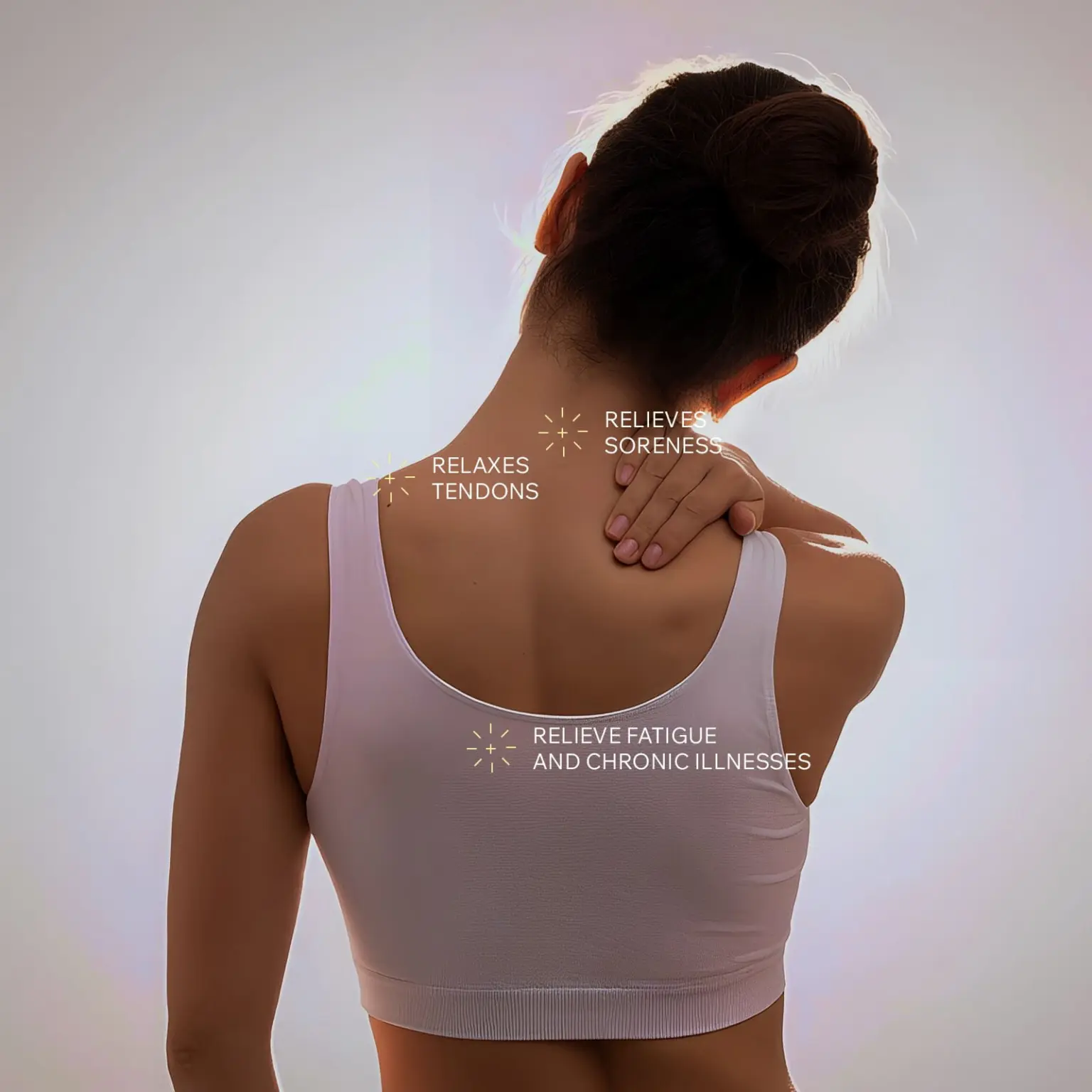
Programme
Physician-led care for chronic pain, sports injury, and joint mobility.
Explore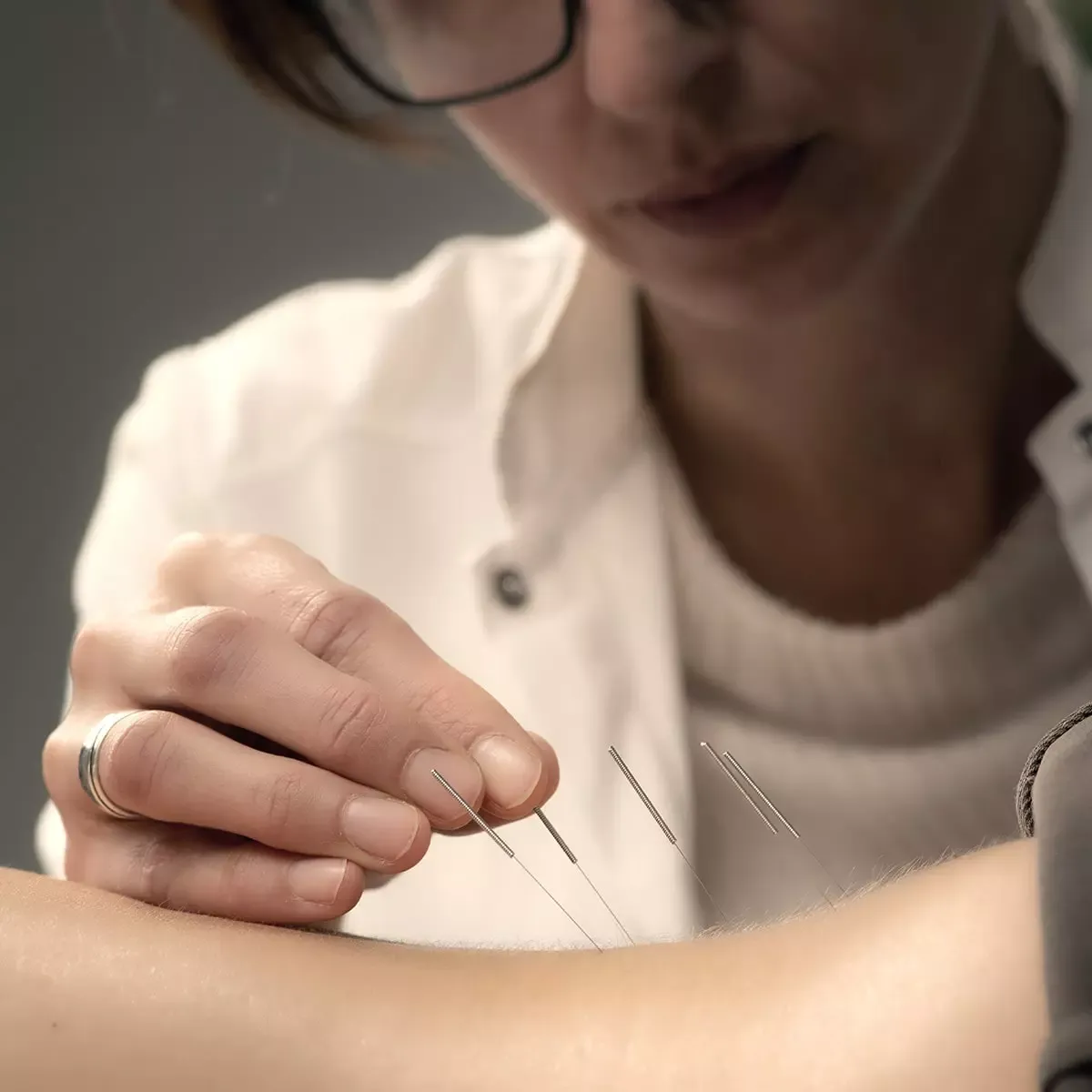
Treatment
Needle care to move qi and blood and ease swelling around injured ligaments.
Explore
Treatment
Hands-on work on points and meridians once acute swelling has settled.
Explore
Treatment
Ointment and bandaging to settle local swelling before you leave clinic.
Explore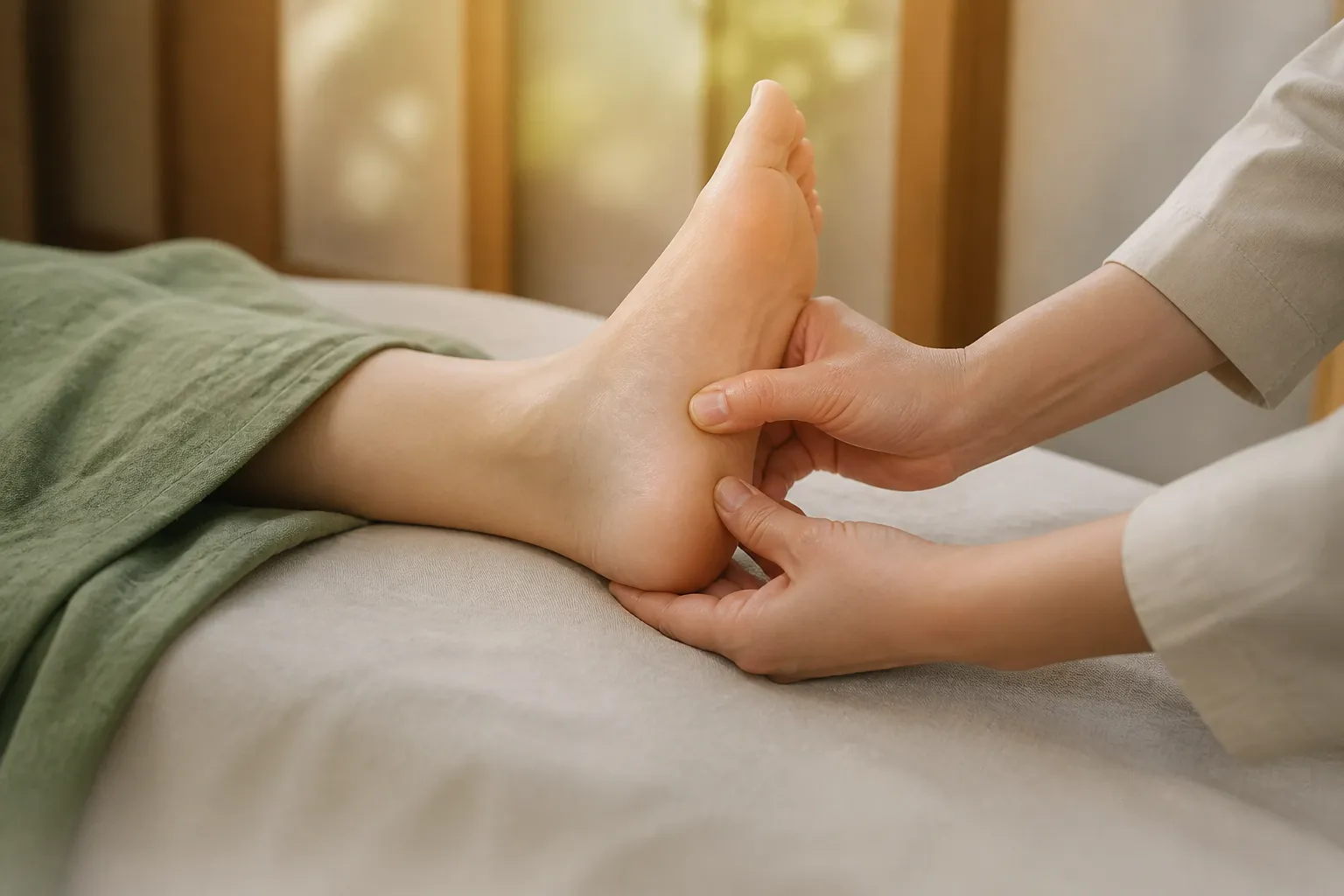
Insight
First-step morning heel pain, Qi and Blood vs Kidney weakness, and home stretches.
Explore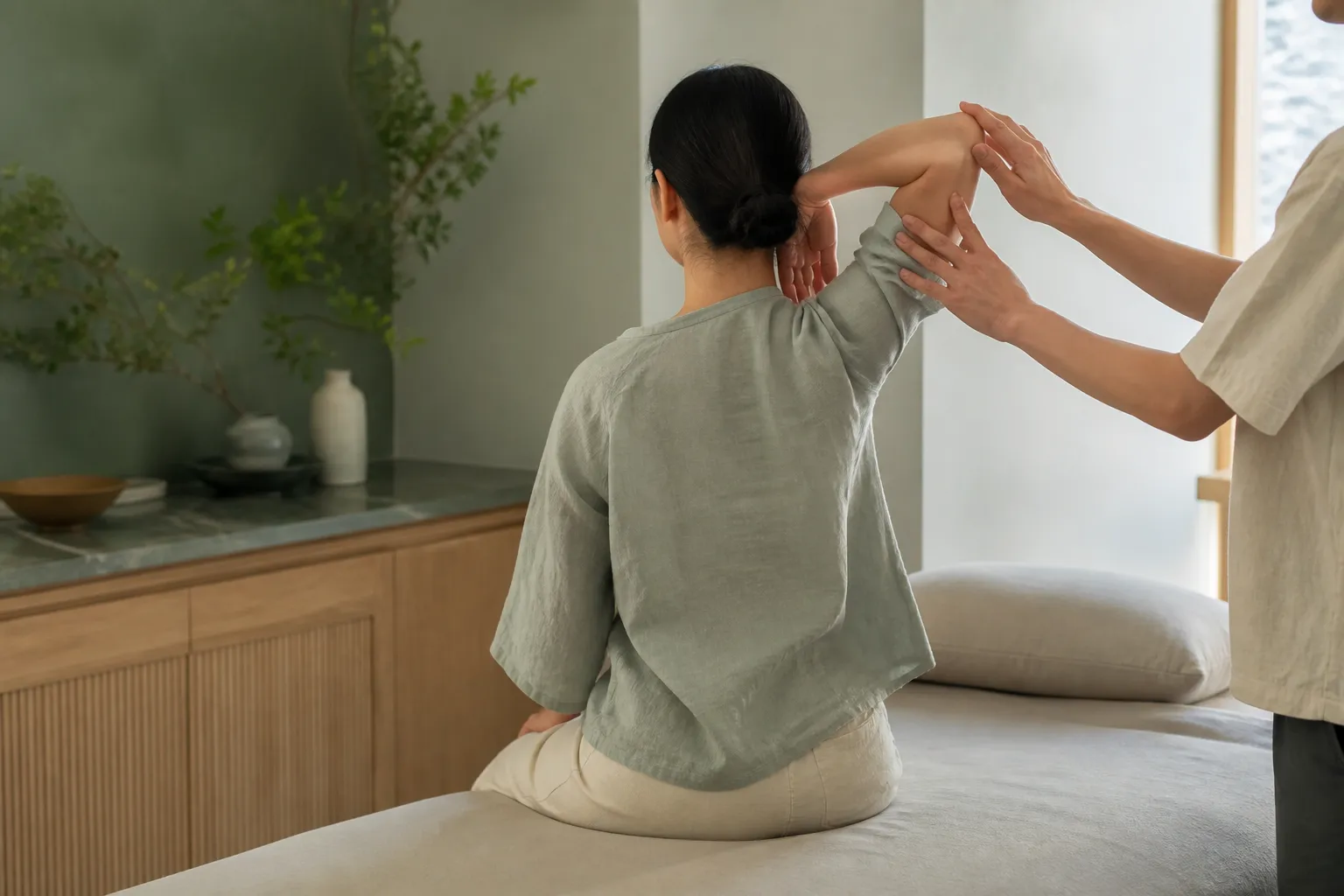
Insight
冻结肩 / 五十肩, three stages, GB34, and four home stretches.
Explore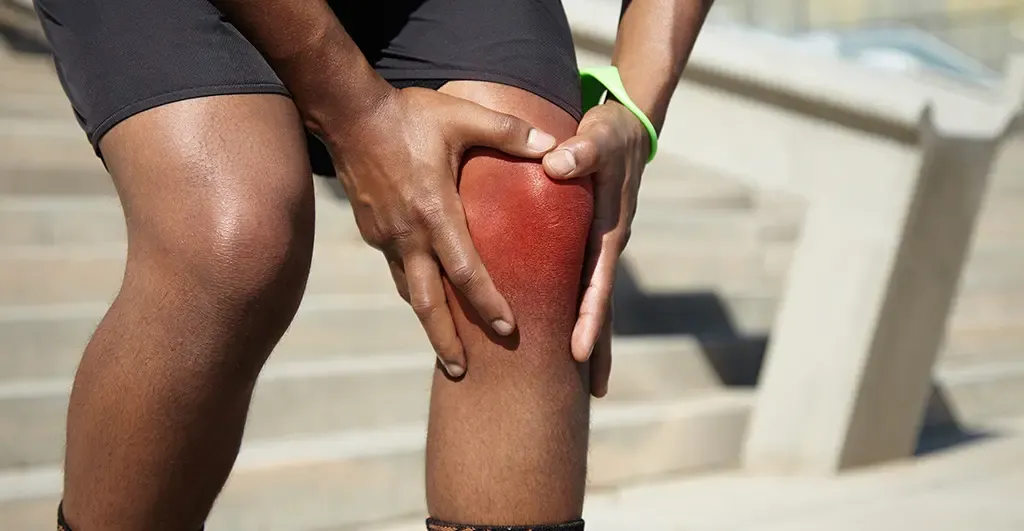
Insight
膝痛, ACL, jumper’s knee, and osteoarthritis; acupuncture, herbs, cupping, tuina.
Explore
Physician
TCMPB-registered physician focusing on pain and injury, dry eye, and internal medicine.
Explore
Next step
Bring how the twist happened, how long the swelling has lasted, and any X-ray or physio notes. We will name the pattern in plain language and decide what belongs in your plan.