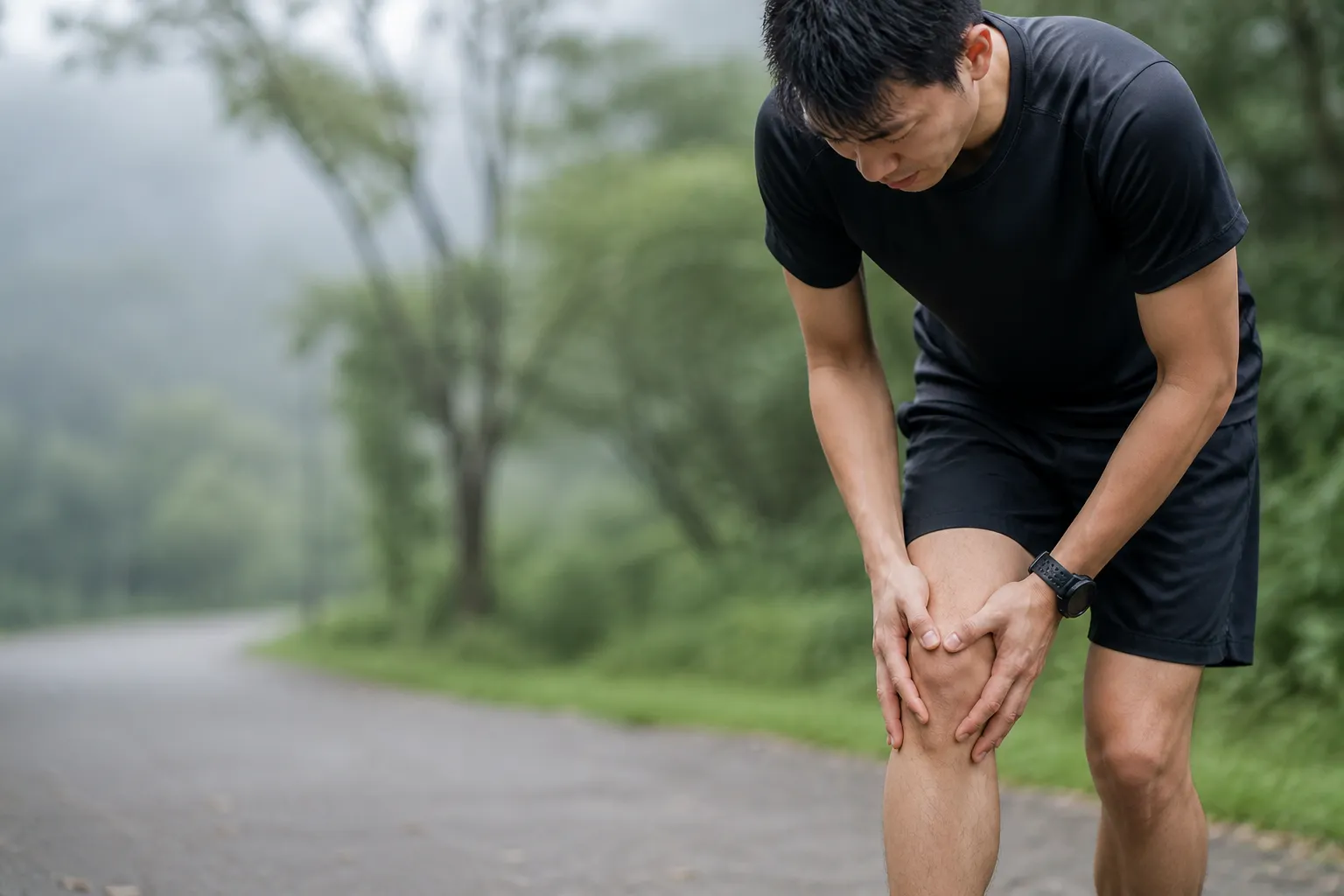
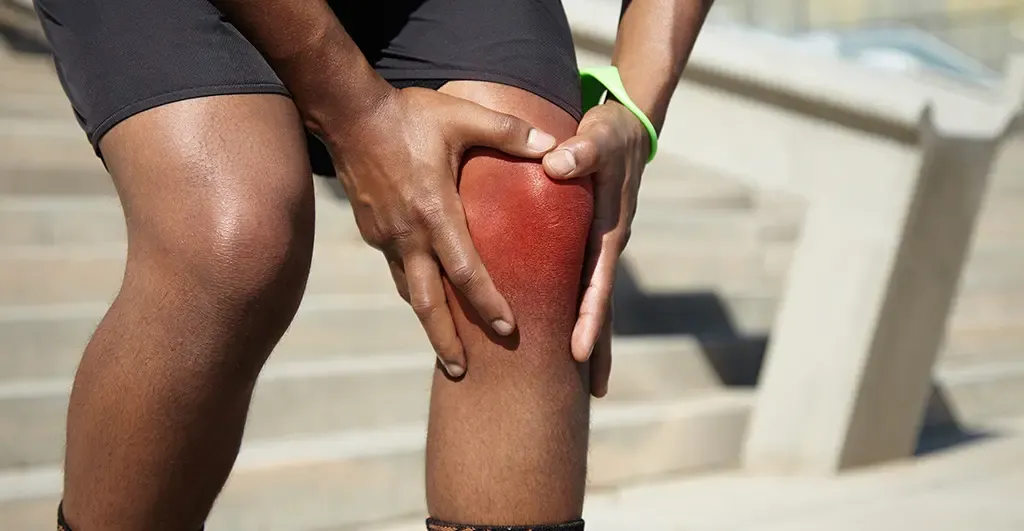
Hands holding a painful knee

Insights · Pain & Injuries

TCM and acupuncture for knee pain

A dull ache on the stairs or a sharp catch when you twist often means knee pain (膝痛). Needling, herbs, cupping, and tuina at clinic, plus gentle load changes at home, usually fit once a physician names the pattern.

In brief

A dull ache on the stairs, a sharp catch when you twist, or stiffness after sport often sits as knee pain (膝痛, also 膝关节痛). Common pictures include an ACL sprain, meniscus tear, jumper's knee, and osteoarthritis. TCM names wind-cold-damp-heat or injury, plus Liver-Kidney deficiency or qi-blood stagnation. After pulse and tongue, care may mix acupuncture, oral or external herbs, cupping, and tuina. Seek conventional care first for fracture or severe trauma.

01 · What TCM sees

How TCM reads knee pain

膝痛 · 膝关节痛 · qi and blood

A dull ache on the stairs or a sharp catch when you twist often reads as knee pain (膝痛, also 膝关节痛). The same torn ligament can still read as wind-cold, injury stasis, or Liver-Kidney weakness on pulse and tongue.

Western care often starts with the ligament, the meniscus, or the cartilage. TCM also asks whether wind, cold, dampness, or heat has entered, whether injury has stalled qi and blood, and whether Liver and Kidney are under-nourishing the joint. Pulse and tongue decide which of those readings leads. Two people with the same Western label can still receive different plans.
02 · Four pictures

Common knee conditions

The same joint can sprain, tear, inflame, or wear. Naming the picture helps a physician match the TCM pattern. It does not replace imaging when a rupture or fracture is suspected.

Ligament, meniscus, tendon, and arthritis
Condition What happens Typical signs
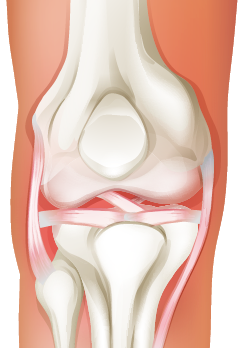
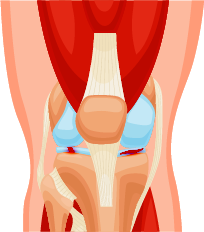
Sprained or strained ligamentsTough bands that connect bone to bone and steady the joint. Sprains or strains, particularly of the anterior cruciate ligament (ACL), can follow a sudden twisting motion or a direct impact to the knee.
  • Instability in the knee
  • Swelling after a twist or impact
  • Pain
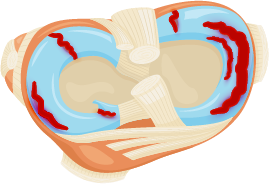
Meniscus tearsTwo crescent-shaped cartilages that cushion and guide movement. Tears can develop from a sudden twist, a deep squat, or degenerative change over time.
  • Locking or catching during movement
  • Swelling
  • Pain after a squat or twist
TendonitisInflammation of the tendons around the joint. Overuse, repetitive motion, or a sudden jump in activity can inflame the tendon. Patellar tendonitis, also called jumper’s knee, affects the tendon from the kneecap to the shinbone. It is common among athletes such as badminton players.
  • Pain and tenderness on the tendon
  • Stiffness around the kneecap-to-shin line
  • Worse after jump or badminton load
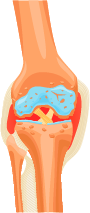
ArthritisInflammation and wear of joint cartilage. Osteoarthritis is the most common type in the knee. It often develops with age or after earlier injury. Rheumatoid arthritis, an autoimmune condition, can also affect the knee.
  • Worse with activity
  • Stiffness and decreased range of motion
  • Swelling

Ligaments

Knee ligaments including the ACL in an anterior diagram

ACL · instability

Meniscus

Top-down diagram of torn menisci in the knee

Lock or catch

Tendon

Knee tendons and ligaments in an anterior joint diagram

Jumper’s knee

Arthritis

Worn knee cartilage and joint inflammation in arthritis

Worse with activity

Signs that need urgent care

These signs sit outside a typical knee pain (膝痛) picture. Seek conventional care the same day. TCM is not a primary treatment for fracture or severe trauma.

1. Cannot bear weight

Sudden inability to stand or walk on the knee after a twist or impact.

2. Deformed joint

The knee looks out of place, or a fracture is suspected.

3. Fever with a hot swollen knee

Heat, swelling, and fever together need same-day medical assessment.

4. Spreading numbness

Numbness that spreads down the leg. Physicians refer to the appropriate specialist when that is needed.

03 · Pattern scan

TCM patterns behind knee pain

Weather-linked stiffness, post-twist swelling, or a dull ache that worsens with age each point to a different TCM reading. Two people with the same Western label can still need different care.

Environmental, injury, and internal readings
Pattern What TCM reads May help
Wind, cold, dampness, and heatEnvironmental factors that enter the channels.
  • An ache that changes with weather or air-conditioning
  • Stiffness, heaviness, or a hot swollen joint
Cupping and needling when heaviness or a weather-change ache sits in the channels.
InjuryA twist, impact, or overload that stalls local flow.
  • Pain after a sudden twist, squat, or impact
  • Swelling that sits with the sprain or tear
External herbs or needling once severe trauma has been ruled out.
Liver and Kidney deficiencyThe organs that nourish sinew and bone.
  • A dull ache that sits with age or long wear
  • The joint feels under-nourished rather than freshly sprained
Acupuncture and oral herbs once the joint reads as under-nourished.
Qi and blood stagnationFlow stalls, then pain.
  • Fixed or stabbing pain where qi and blood cannot move
  • Stiffness after injury or repetitive load
Needling, tuina, and cupping to move what has stalled.

04 · Clinic aims

What treatment is for

Once pulse and tongue name the pattern, clinic care usually aims to ease pain, move stalled flow, and support the joint over time.

Aims for knee care
Aim What it means
Ease painSo walking and daily load feel kinder. Needling, tuina, and herbs are matched to the pattern so walking and daily load can feel kinder.
Support healingOnce qi and blood can move through the joint. Circulation and local repair sit behind the methods, not a separate protocol.
Move qi and bloodWhen flow stalls, pain sits. Needling, cupping, and tuina are used to restore movement in the channels.
Restore yin-yang in the jointThe knee needs both nourishment and movement. Treatment rebalances what has gone slack or stuck after pulse and tongue.
Support the joint over timeWear pictures such as osteoarthritis. The plan supports the joint across visits rather than waiting on a single session.

05 · Clinic methods

TCM treatments for knee pain

A physician assesses first, then matches acupuncture, herbs, cupping, and tuina to the pattern.

Clinic methods for knee pain
Method What it does for the knee When it sits in the plan
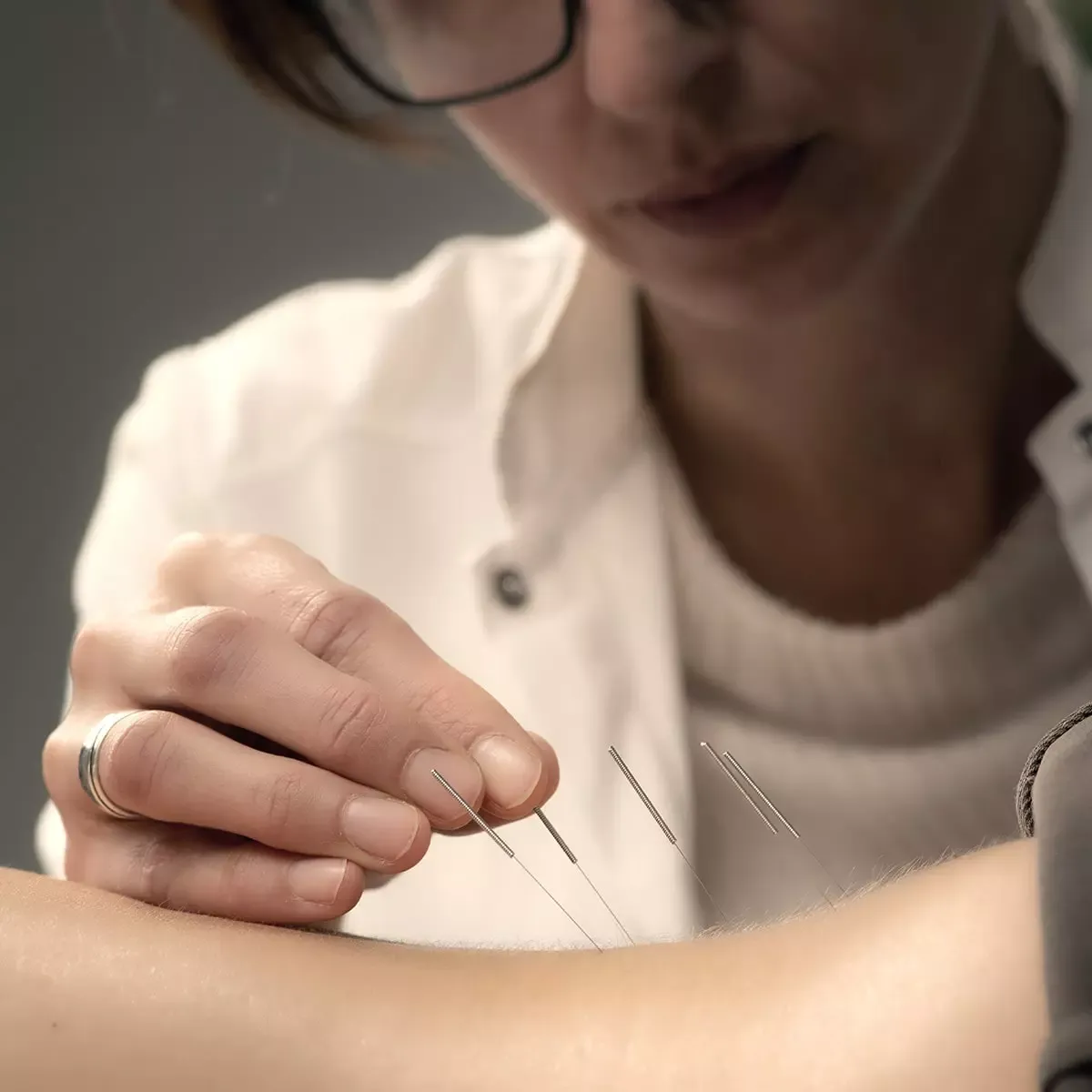
AcupunctureFine needles at selected points to move qi. Needling can prompt endorphin release and improve local circulation. A 2018 individual-patient meta-analysis found acupuncture better than sham or no acupuncture for chronic pain, including osteoarthritis. It can sit with tuina, cupping, or herbs. Often first-line once pulse and tongue have named the pattern.
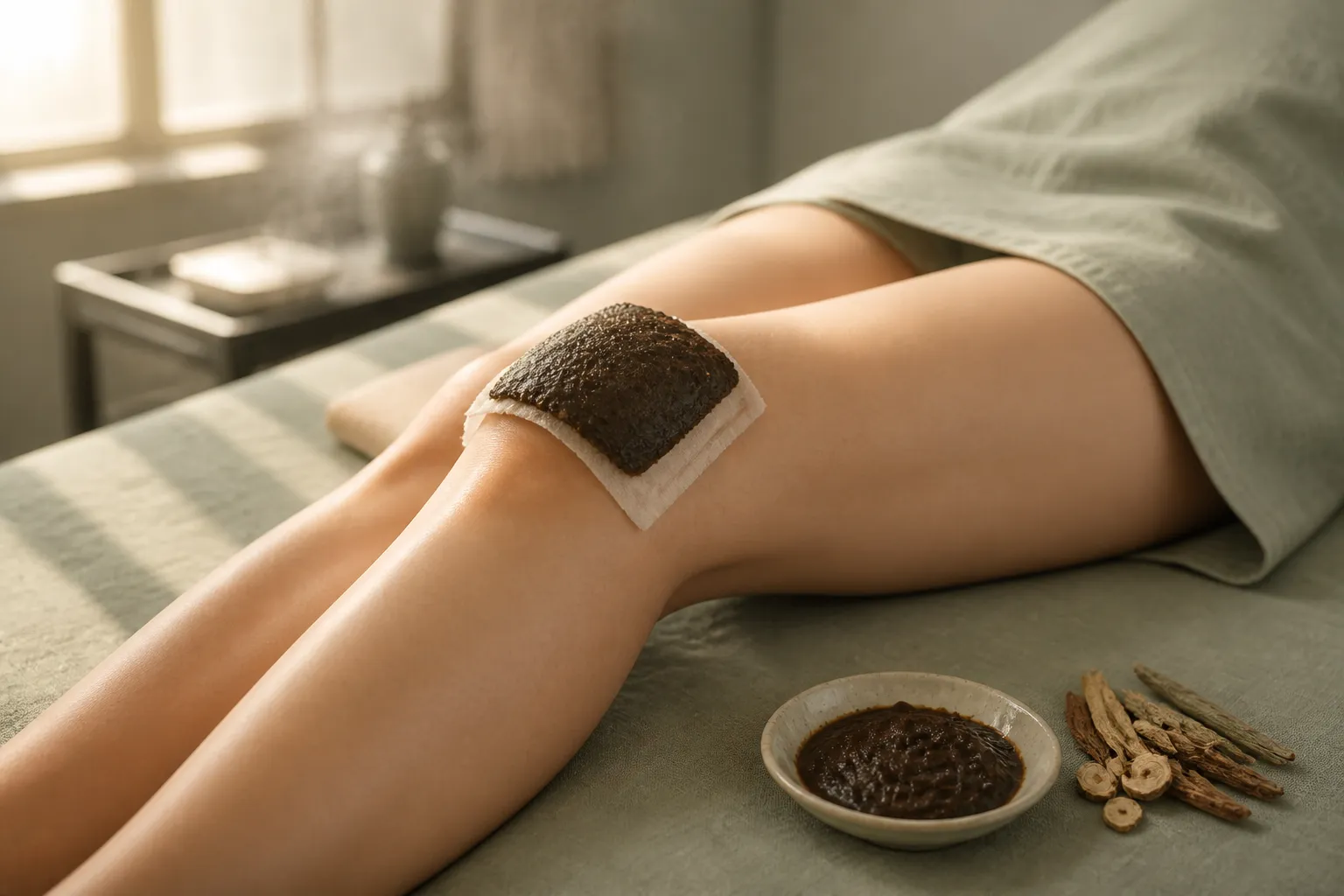
Herbal medicineSelected herbs to reduce inflammation and support healing. Herbs may be prescribed as oral formulas, or applied as external herbs and ointments on the joint. When the pattern needs an internal formula, local application, or both. No over-the-counter dosing.
CuppingCups on the skin to create suction. Suction helps increase blood flow and circulation around the joint. When local stagnation or tightness sits around the knee, after the pattern is named.
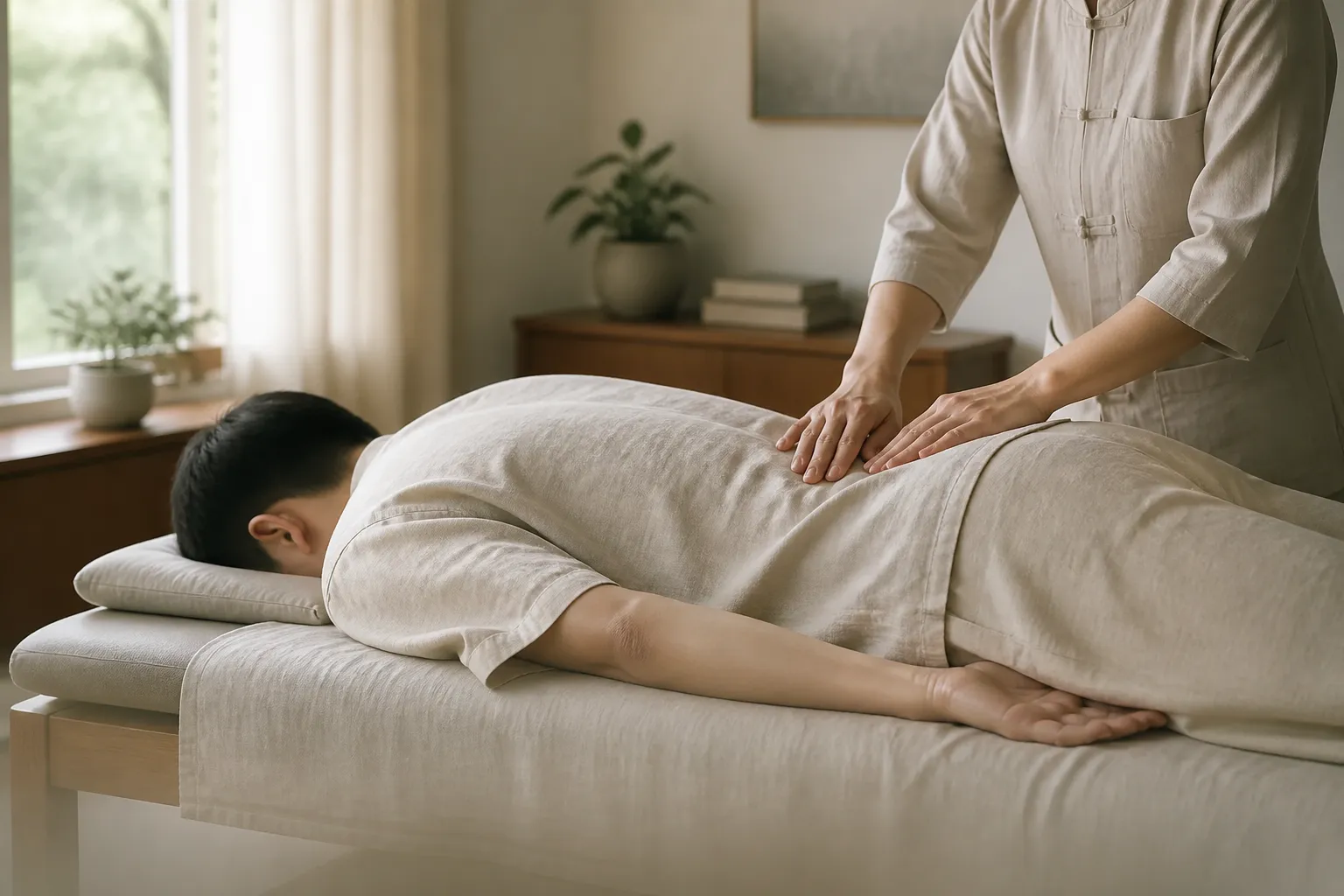
TuinaChinese medical massage on points and meridians. Pressure on specific points to move qi and ease pain. It may sit with acupuncture and other TCM therapies. When tight muscle and stagnation sit together, after acute severe trauma has been ruled out.

Consultation and assessment

Pulse · tongue · history

Each person’s root causes differ, even for the same ailment such as knee pain. Treatments are tailored after this read, not as a fixed knee pack.

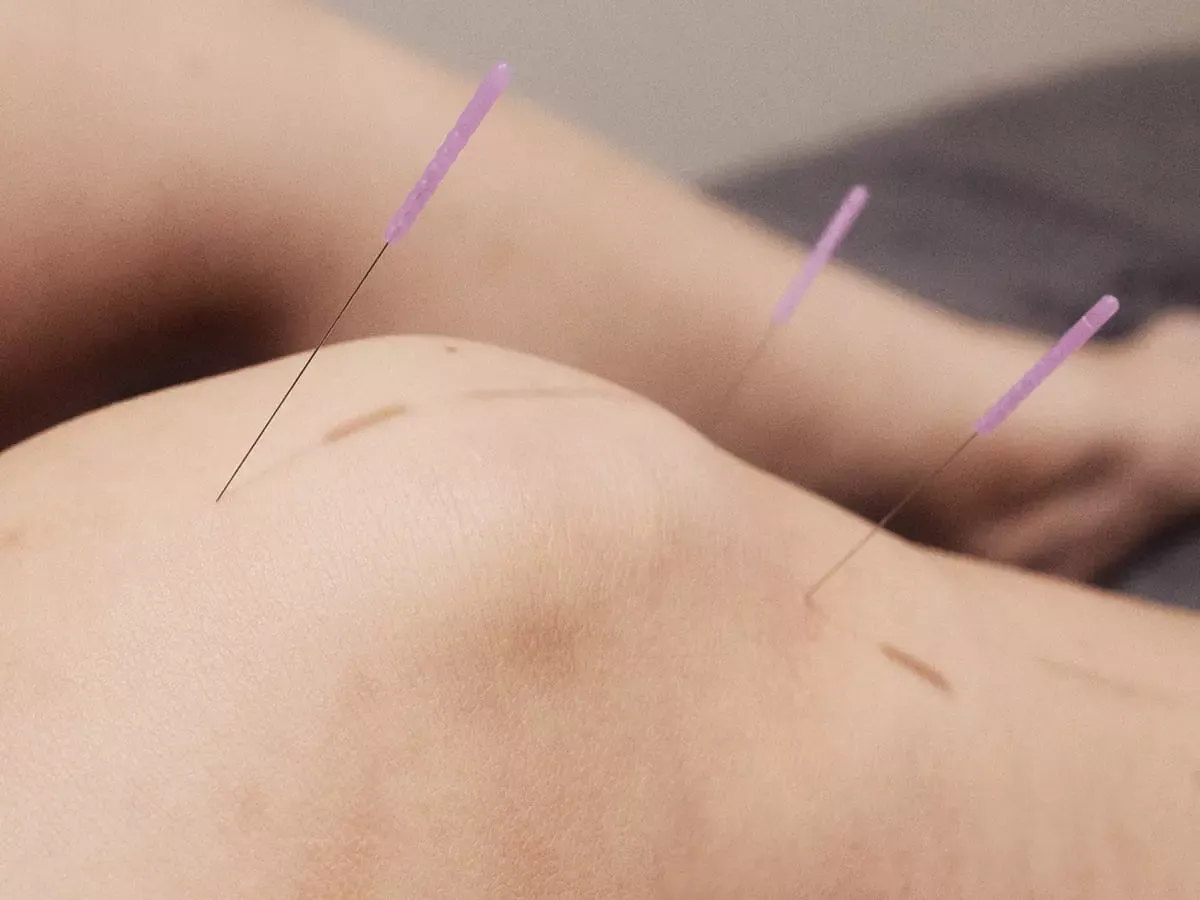
Acupuncture

Acupuncture needles at points around a knee at PULSE TCM

Qi, blood, and local circulation

Needling is used to move stalled qi and blood around the knee, and to support Liver or Kidney when those organs are named on pulse and tongue.

Acupuncture at PULSE

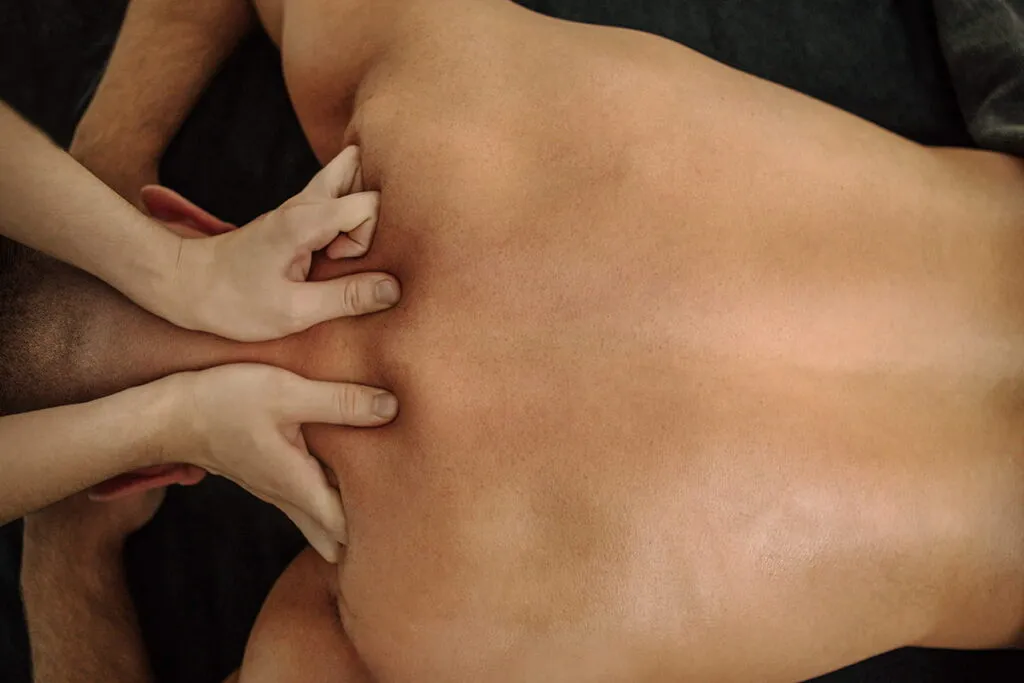
Tuina massage

Tuina massage treatment at a PULSE TCM clinic

Tight muscle and stagnation

Hands-on work sits when tight muscle and stagnation sit together, after the pattern is named, so qi can move through the joint.

Tuina at PULSE

When to book for knee pain

If a dull ache, a catch on the stairs, or stiffness after sport has lasted weeks, a physician can name whether it reads as wind-cold-damp, Liver-Kidney deficiency, or qi-blood stagnation and match needling, herbs, cupping, or tuina to that read.

Dr Sim Beng Joo

Clinically reviewed

Reviewed by Sim Beng Joo

Advisor (Science & Strategy) / Consultant Physician · TCMPB T1303003A

MOH-licensed TCM physician and biomedical scientist, with clinical work in digestion, pain, sleep or fatigue, and constitution patterns that show as tendon and joint load.

View full profile

Educational information based on clinical experience and TCM principles. Not a substitute for personalised consultation, medical care, or urgent attention. Speak with your physician before starting herbs or new self-care in pregnancy or with a chronic condition. Seek urgent care for sudden inability to bear weight, a deformed joint, fever with a hot swollen knee, or numbness that spreads. TCM complements orthopaedics and physiotherapy for acute injury or suspected fracture. In severe trauma, fractures, or injuries that need immediate medical attention, TCM is not a primary treatment.

FAQs

Questions, answered

Common questions on acupuncture for knee pain, TCM versus Western labels, jumper’s knee, osteoarthritis, herbs, and when to go to A&E.

Can acupuncture help knee pain?

Acupuncture is a core TCM method for 膝痛. Fine needles at selected points are used to move qi and blood. A 2018 individual-patient meta-analysis found acupuncture better than sham or no acupuncture for chronic pain, including osteoarthritis. It can sit alongside tuina, cupping, herbs, and conventional care. A physician matches points after pulse and tongue.

How does TCM explain knee pain compared with a Western diagnosis?

Western care usually names the structure, a ruptured ligament, torn cartilage, or inflamed tissue. TCM also asks whether wind, cold, dampness, or heat has entered, whether injury has stalled qi and blood, and whether Liver and Kidney are under-nourishing the joint. Two people with the same Western label can receive different plans.

Is jumper’s knee the same as runner’s knee?

Jumper’s knee is patellar tendonitis, inflammation of the tendon that connects the kneecap to the shinbone. It is common in sports with repetitive jump load, including badminton. Runner’s knee is a different picture, often around the kneecap from running load (patellofemoral pain). This guide covers jumper’s knee and the wider 膝痛 map; see the runner’s knee guide for anterior kneecap load, patterns, and home strengthening. A physician can sort which picture you have after examination.

Can TCM help osteoarthritis of the knee?

Osteoarthritis is wear and inflammation of joint cartilage. It often develops with age or after earlier injury. Rheumatoid arthritis, an autoimmune condition, can also affect the knee. TCM reads the pattern behind the ache, often Liver-Kidney deficiency or qi-blood stagnation, then may mix acupuncture, herbs, cupping, and tuina. It complements orthopaedics; it does not replace imaging or disease-modifying RA care.

Are Chinese herbs for knee pain taken by mouth or applied as ointment?

Both. A physician may prescribe an oral formula to reduce inflammation and support healing, or apply herbs and ointments locally. The choice follows pulse, tongue, and whether the picture is more internal deficiency or local stagnation. There is no single over-the-counter knee herb.

When should I go to A&E instead of TCM for knee pain?

Seek conventional care first for severe trauma, a suspected fracture, a deformed joint, sudden inability to bear weight, fever with a hot swollen knee, or numbness that spreads. TCM is not a primary treatment in those cases. Physicians refer to the appropriate specialist when that is needed.

References

Selected sources

  1. National Center for Complementary and Integrative Health. Traditional Chinese medicine: What you need to know. 2019. https://www.nccih.nih.gov/health/traditional-chinese-medicine-what-you-need-to-know/
  2. World Health Organization. Traditional, complementary and integrative medicine. https://www.who.int/health-topics/traditional-complementary-and-integrative-medicine
  3. Ministry of Health Singapore. TCM practitioners (Healthcare Professional Portal). https://hpp.moh.gov.sg/tcm-practitioners/
  4. Vickers AJ, Vertosick EA, Lewith G, et al. Acupuncture for chronic pain: update of an individual patient data meta-analysis. J Pain. 2018;19(5):455–474. https://pubmed.ncbi.nlm.nih.gov/29198932/
  5. Lin X, Huang K, Zhu G, Huang Z, Qin A, Fan S. The effects of acupuncture on chronic knee pain due to osteoarthritis: a meta-analysis. J Bone Joint Surg Am. 2016;98(18):1578–1585. https://pubmed.ncbi.nlm.nih.gov/27655986/
  6. Original article author: Physician Wayne Lim.

Next step

Ready for a knee pattern read?

Bring how long the ache has lasted, whether it followed a twist or built slowly, and any GP or imaging notes. We will name the pattern in plain language and decide what belongs in your plan.

Hours
Most clinics daily 11:00 AM – 8:00 PM
Care
Physician-led consultation