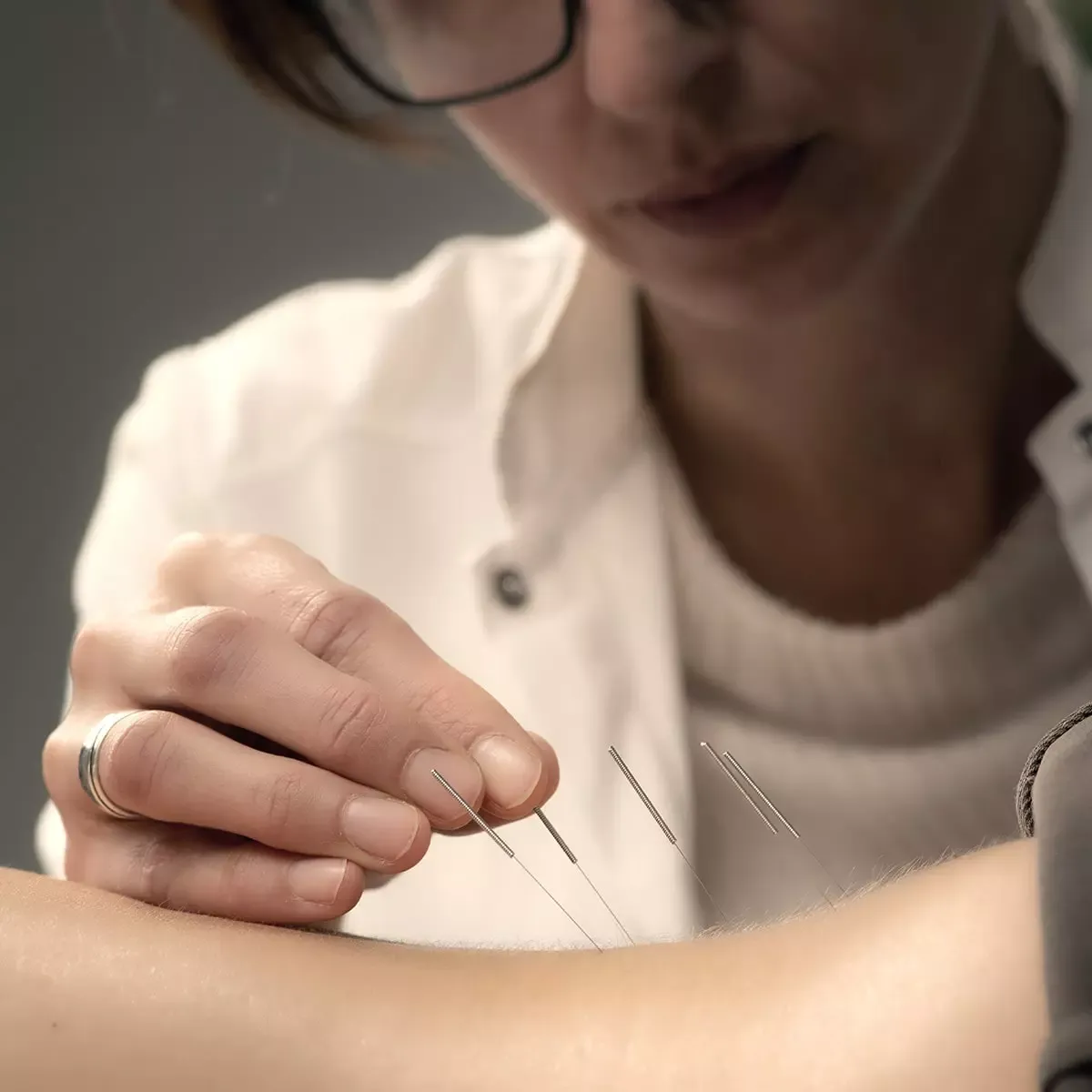
Quiet bedside lamp and rumpled bedding at night, illustrating stress-linked insomnia

Insights · Insomnia

How is insomnia and stress related according to TCM theory?

A mind that will not switch off, or waking between 1 and 3am, often sits with Liver qi stagnation. Naming that picture guides needling, home presses, and when psychology belongs in the plan.

In brief

A mind that will not switch off, waking between 1 and 3am, or many dreams often sit with stress-linked insomnia in TCM: Liver qi stagnation (肝郁气滞). Stress, tight mood, anxiety, or overthinking can impede Liver qi. Stagnation may heat and disturb Shen (神), leaving the mind too active for lasting rest. Clinic care may use Four Gates points with Bai Hui and Yin Tang; the same set supports educational home acupressure. When thin sleep keeps returning, the Insomnia programme pairs TCM with optional psychology.

01 · Pattern

How does liver qi stagnation affect sleep?

A mind that will not switch off, or waking between 1 and 3am with irritability, often sits with Liver qi stagnation (肝郁气滞), a common stress-linked insomnia picture in TCM.

Liver is the organ system that helps manage emotion flow. Smooth Liver qi supports mood, sleep, digestion, and metabolism. Stress, unstable mood, anxiety, and overthinking can impede that flow.

When qi and blood congest, stagnated qi may heat and generate fire. That innate heat can interrupt Shen (神), the state of mind, so the mind stays too active for lasting sleep.

For this picture, name the emotional and lifestyle drivers of stress, then change what you can or learn steadier ways to hold them. Bring wake timing (especially 1–3am), dream load, and stress triggers to a consult. PULSE psychology can sit with TCM when that load needs structured support.

If the stronger picture is Heart-Spleen or Heart-Kidney disharmony rather than Liver stagnation, see Acupressure & TCM tips for insomnia for the wider type map and home presses.

02 · Signs

Signs that often travel with this picture

Sleep signs and body or mood signs often sit together when Liver qi is stuck.

1. Sleep

Disrupted sleep; waking in the night especially between 1am and 3am; trouble falling asleep; many dreams through the night.

2. Mood and stress

Feeling stressed or low; easy irritability or frustration; frequent sighing (叹气).

3. Body

Vertex headache (top of the head); abdomen bloating; chest tightness.

03 · Clinic methods

How TCM helps manage stress and insomnia

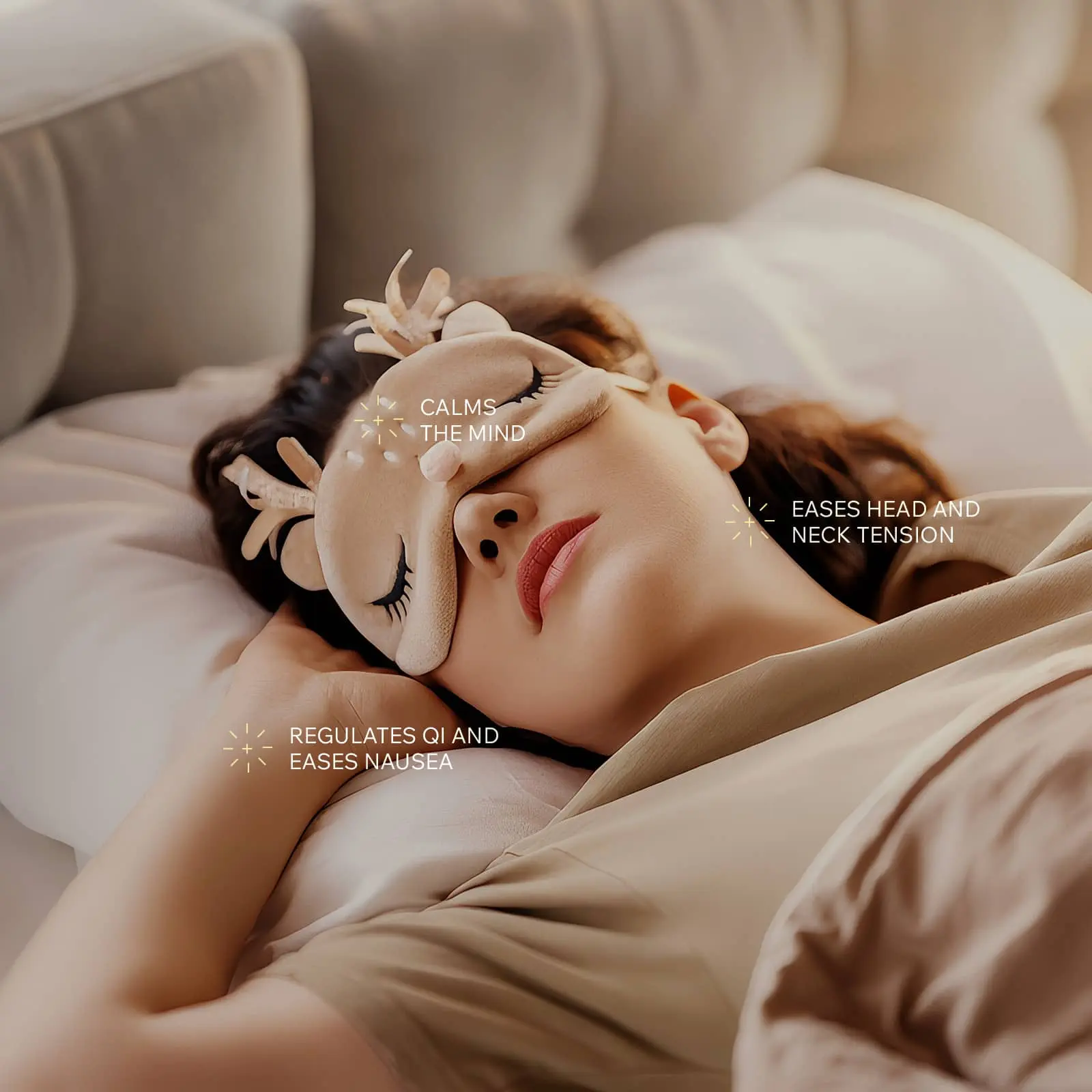
Acupuncture on selected points may help calm the mind and body, ease tension, and regulate the flow of qi and blood after pulse and tongue.

A common educational set for this picture is the Four Gates (四关) with crown and brow support: Bai Hui (百会, GV20) and Yin Tang (印堂, EX-HN3) to settle Shen, with Tai Chong (太冲, LV3) and He Gu (合谷, LI4) to move Liver-linked stagnation. Plans still follow constitution rather than a fixed protocol.

When thin sleep keeps returning with stress load, physician-led TCM can sit with psychology support in the Insomnia programme. When burnout and tension dominate more than a named insomnia pattern, Sleep & Stress may be the closer funnel.

Quiet bedside rest illustrating the Insomnia programme at PULSE TCM

Programme

Insomnia care with TCM and psychology

When sleeplessness keeps returning, the Insomnia programme offers TCM therapies with the option to add psychology support.

04 · Home presses

Acupressure points for insomnia and sleep

These four points are a common home set when stress sits with thin sleep. Keep pressure kind. Skip He Gu in pregnancy.

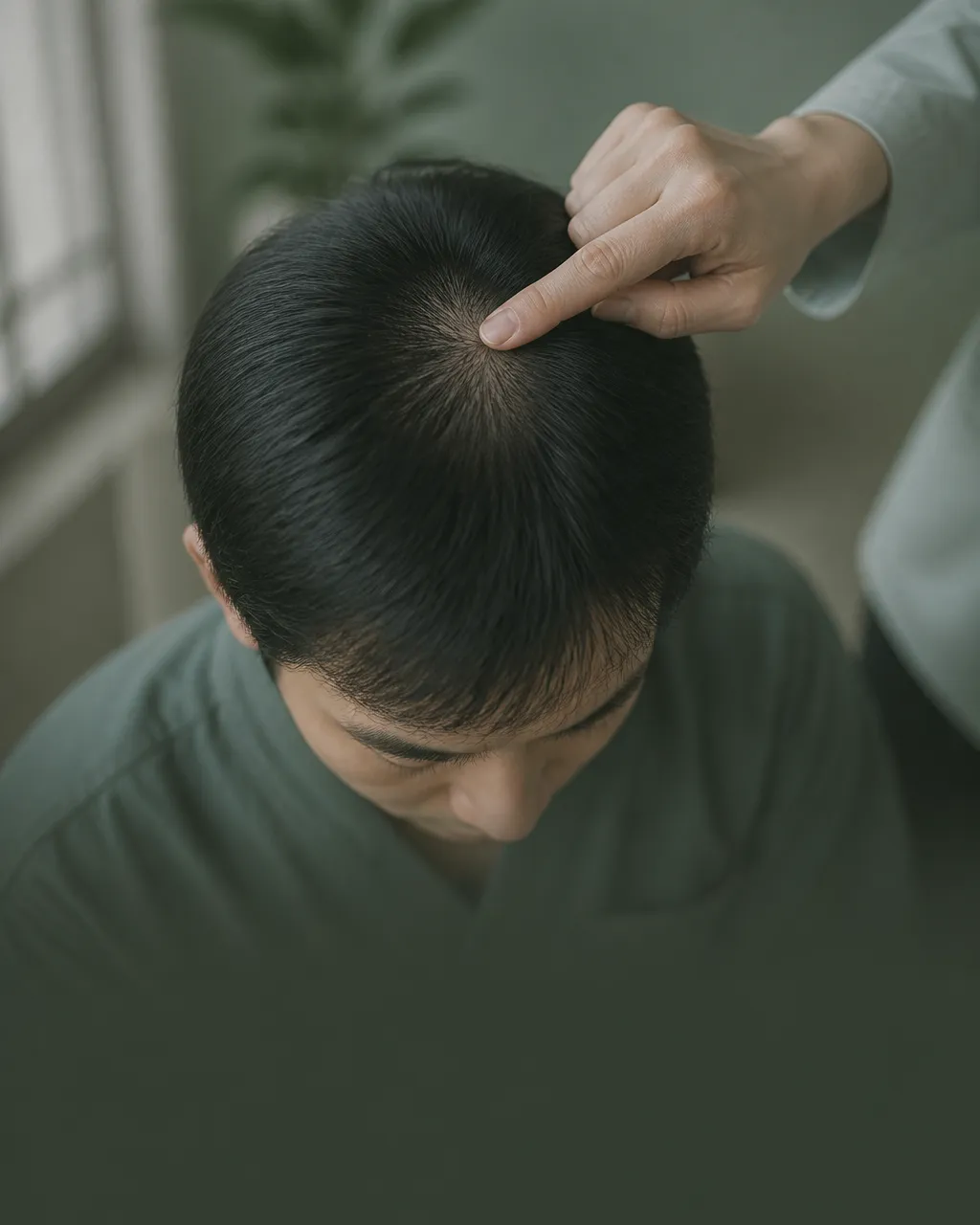
Finger locating Bai Hui GV20 at the crown of the head

Acupoint · GV20

Bai Hui (百会)

At the crown, where a line across the apex of both ears meets the midline. Massage kindly for about five minutes when the mind will not settle before sleep.

Skip over scalp cuts or recent head injury. Ease off if dizziness appears.

Press Bai Hui
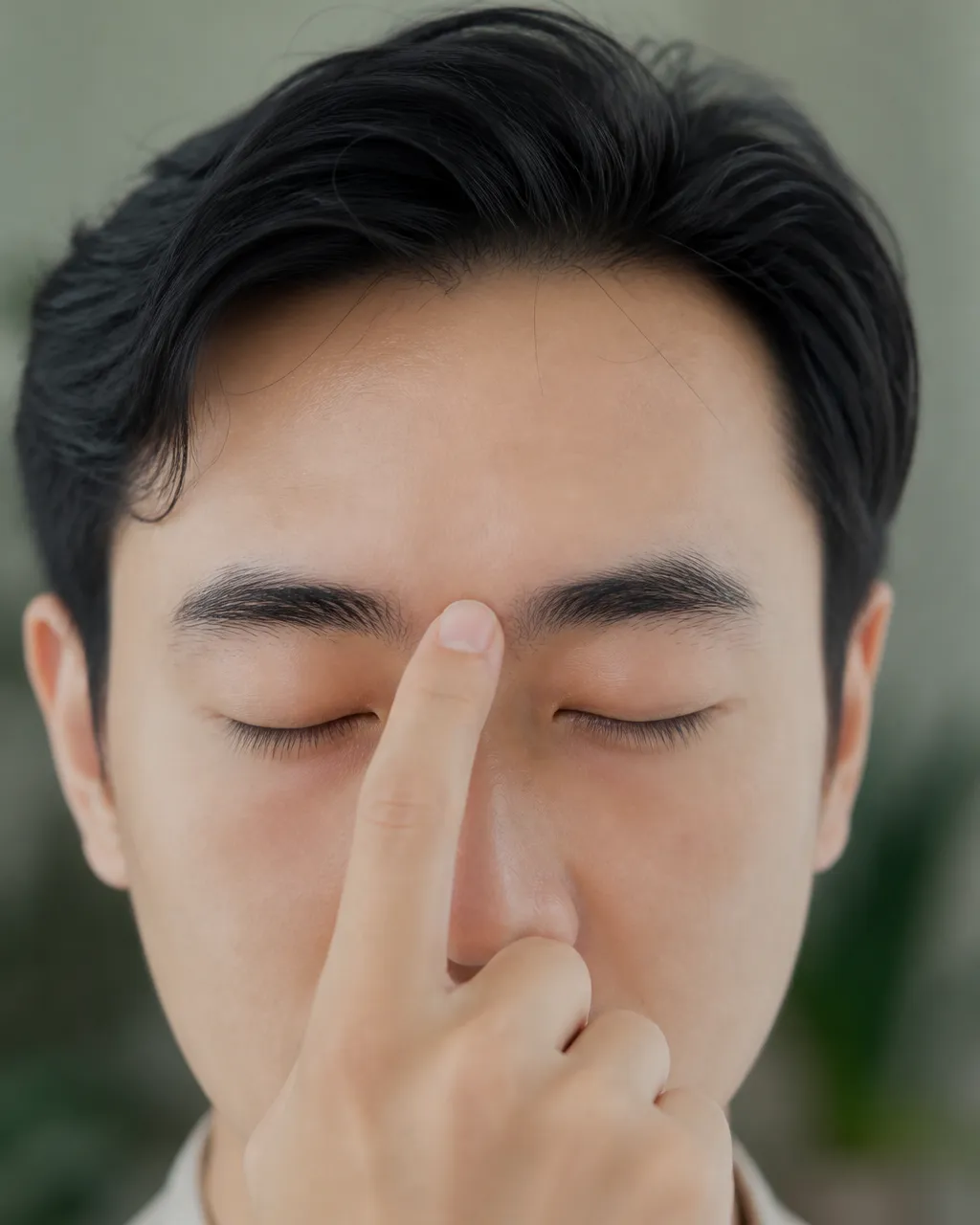
Finger locating Yin Tang EX-HN3 at the midpoint between the eyebrows

Acupoint · EX-HN3

Yin Tang (印堂)

Midpoint between the inner ends of both eyebrows. Hold about five seconds, then stroke gently up to the front hairline about fifteen times.

Skip broken skin or boils on the forehead. Keep the press gentle on facial soft tissue.

Press Yin Tang
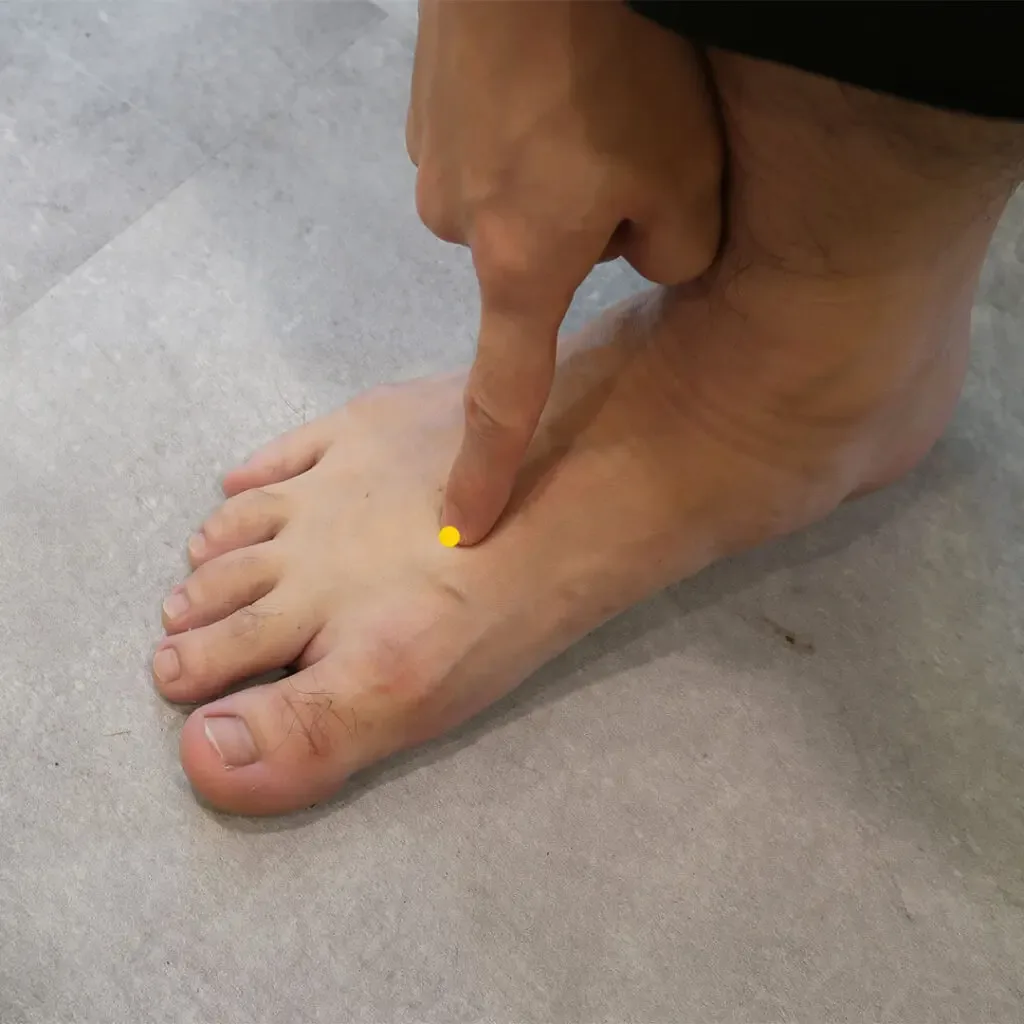
Finger pointing to Tai Chong LV3 on the top of the foot

Acupoint · LV3

Tai Chong (太冲)

On the top of the foot, in the hollow between the first and second metatarsal bones just before they join. Finger-press to dull soreness, then rotate three to five minutes on each foot.

Skip cuts or swollen feet. Ask a physician before new presses in pregnancy.

Press Tai Chong
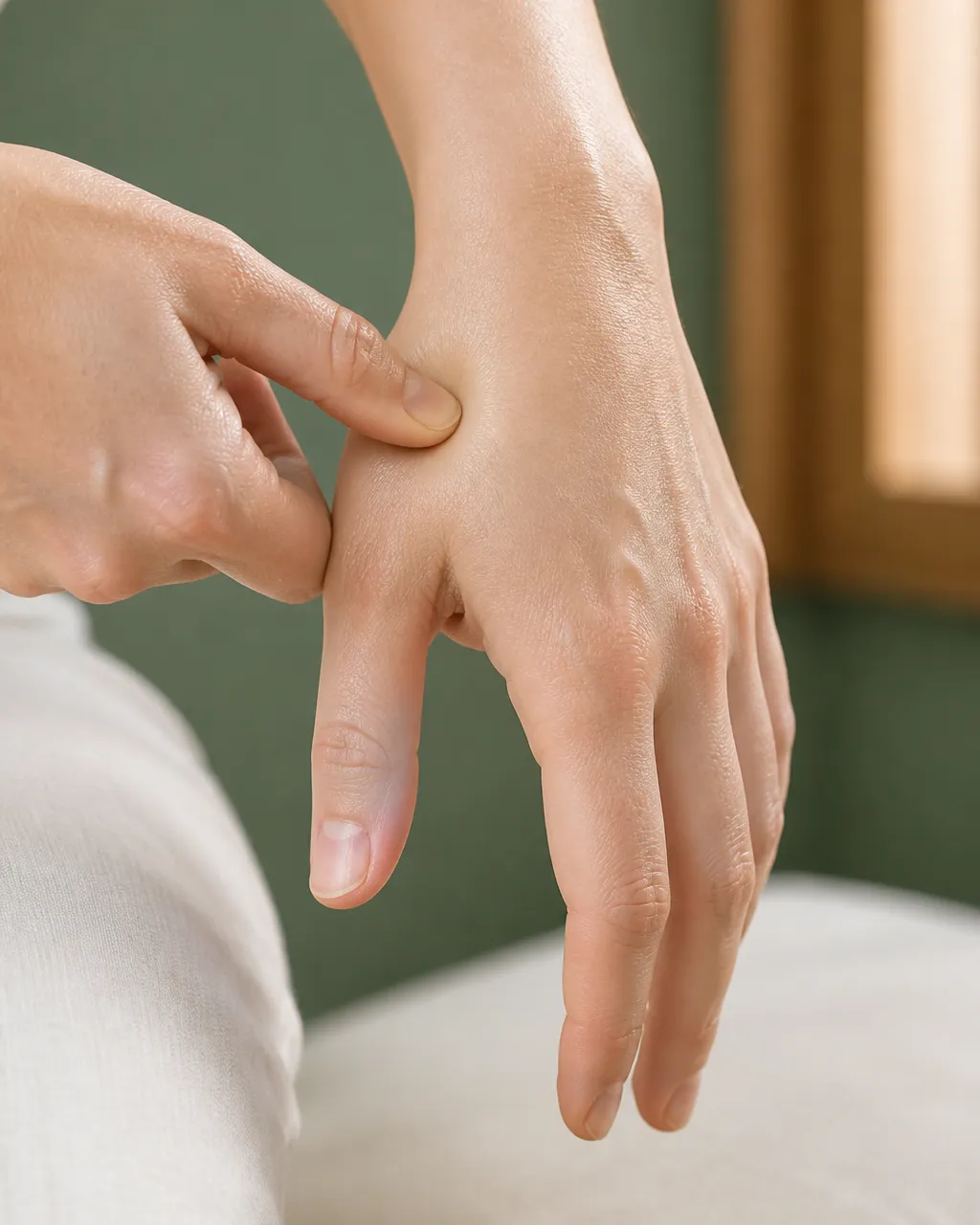
Thumb pressing He Gu LI4 in the hand webbing

Acupoint · LI4

He Gu (合谷)

On the back of the hand, beside the second metacarpal at mid-shaft in the webbing between thumb and index finger. Soft fist, then thumb-massage both sides until tension eases.

If there is any chance of pregnancy, do not use this. Skip He Gu in pregnancy. Stop if pain sharpens.

Press He Gu

05 · What may help

A cooling steep when sleep breaks at 1–3am

When waking between 1am and 3am sits with irritability or a restless mind, a short cooling tea may sit with the Liver picture.

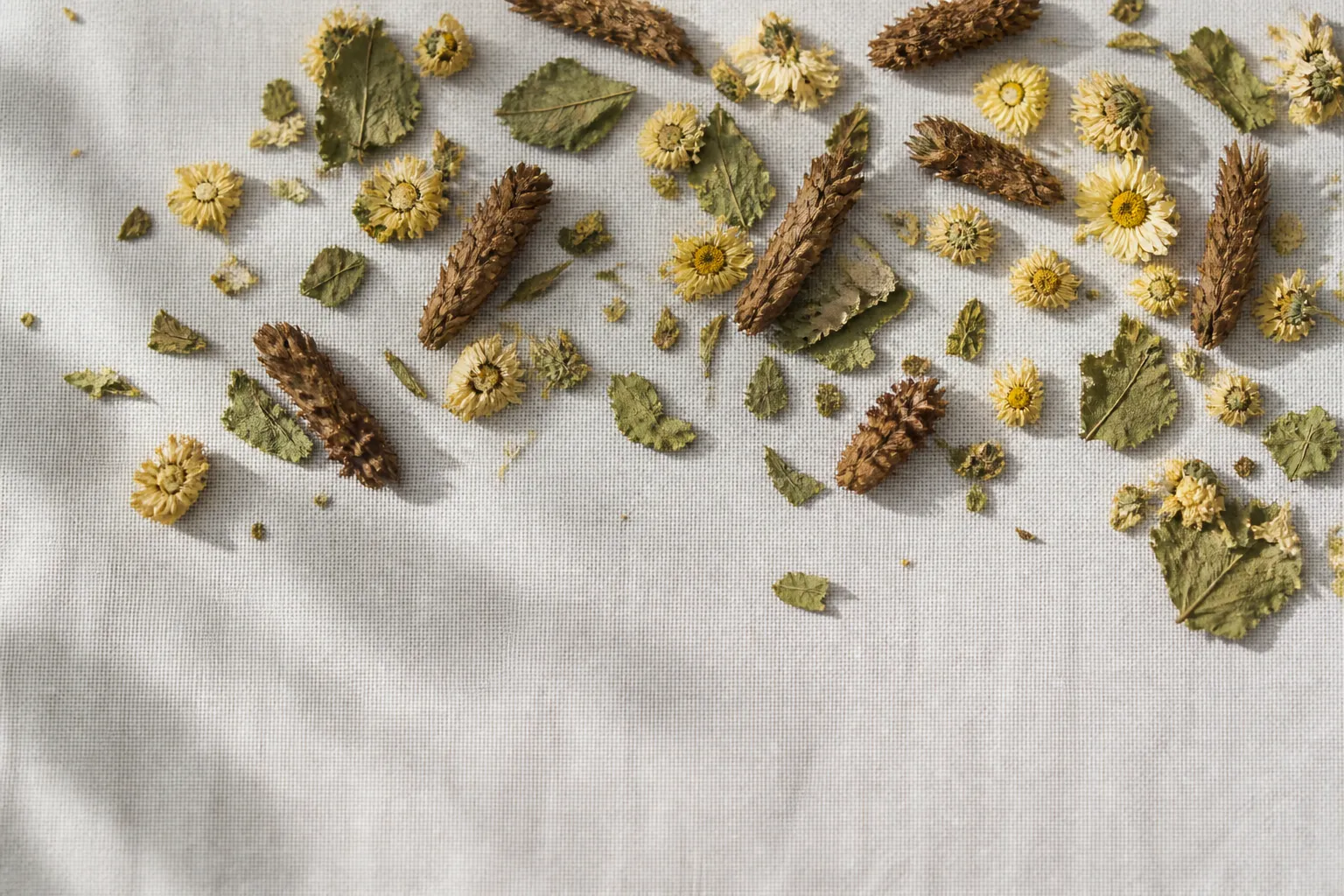
Dried chrysanthemum, mulberry leaf, and Prunella for Mind Relaxing Tea at PULSE TCM

Tea

Mind Relaxing Tea

Steep 5 g chrysanthemum, 5 g mulberry leaf, and 5 g Prunella (Xia Ku Cao) for five minutes. Sip warm through the afternoon or evening when Liver-linked heat breaks sleep.

Educational food therapy, not a sleep cure. Ease off if you run cold. If there is any chance of pregnancy, ask a physician before using this.

Make Mind Relaxing Tea
Dr Sim Beng Joo

Clinically reviewed

Reviewed by Sim Beng Joo

Advisor (Science & Strategy) / Consultant Physician · TCMPB T1303003A

MOH-licensed TCM physician and biomedical scientist, with clinical work in digestion, pain, sleep or fatigue, and constitution patterns that show as restless or unrefreshing sleep.

View full profile

Educational information based on clinical experience and TCM principles. Not a substitute for personalised consultation, medical care, or urgent attention. Speak with your physician before starting herbs or new self-press in pregnancy or with a chronic condition. Skip He Gu (LI4) in pregnancy. Seek urgent care for sudden chest pain, severe panic, collapse, or sleep loss after a head injury. TCM complements medical and psychology care for persistent insomnia.

FAQs

Questions, answered

Common questions on stress-linked insomnia, Liver qi stagnation, Four Gates presses, and when to book care.

How are insomnia and stress related in TCM?

Mental stress often sits with Liver qi stagnation (肝郁气滞). When Liver qi does not flow smoothly, sleep may break, dreams increase, and falling asleep can feel hard. Stagnated qi may generate heat that disturbs Shen, so the mind stays too active for lasting rest.

How does liver qi stagnation affect sleep?

Common sleep signs include disrupted sleep, waking between 1am and 3am, trouble falling asleep, and many dreams. Mood and body signs may include feeling stressed or low, irritability, vertex headache, abdomen bloating, chest tightness, and frequent sighing (叹气).

Which acupressure points help stress-related insomnia?

Educational home presses match a common clinic set: Bai Hui (GV20) on the crown, Yin Tang (EX-HN3) between the brows, Tai Chong (LV3) on the foot dorsum, and He Gu (LI4) in the hand webbing. Keep pressure kind. Skip He Gu in pregnancy.

Can psychology sit with TCM for insomnia?

Yes. Naming lifestyle and emotional drivers of stress matters for this picture. PULSE psychology can sit with physician-led TCM, including in the Insomnia programme when thin sleep keeps returning.

How is the Insomnia programme different from Sleep & Stress?

The Insomnia programme pairs TCM with psychology support for persistent insomnia. Sleep & Stress focuses on sleep quality with stress and burnout load. A physician helps choose the closer funnel after assessment.

Is He Gu (LI4) safe in pregnancy?

No. If there is any chance of pregnancy, do not press He Gu. Ask a physician before starting new point habits in pregnancy, and skip presses over cuts, rashes, or swollen tissue.

References

Selected sources

  1. National Center for Complementary and Integrative Health. Traditional Chinese medicine: What you need to know. 2019. https://www.nccih.nih.gov/health/traditional-chinese-medicine-what-you-need-to-know/
  2. Ministry of Health Singapore. TCM practitioners (Healthcare Professional Portal). https://hpp.moh.gov.sg/tcm-practitioners/
  3. World Health Organization. Traditional, complementary and integrative medicine. https://www.who.int/health-topics/traditional-complementary-and-integrative-medicine

Next step

Ready for a stress and sleep pattern read?

Bring when you fall asleep, when you wake (especially 1–3am), dream load, stress triggers, and any GP or psychology notes. We will name the pattern in plain language and decide whether the Insomnia programme or Sleep & Stress sits closer.

Hours
Most clinics daily 11:00 AM – 8:00 PM
Care
Physician-led consultation