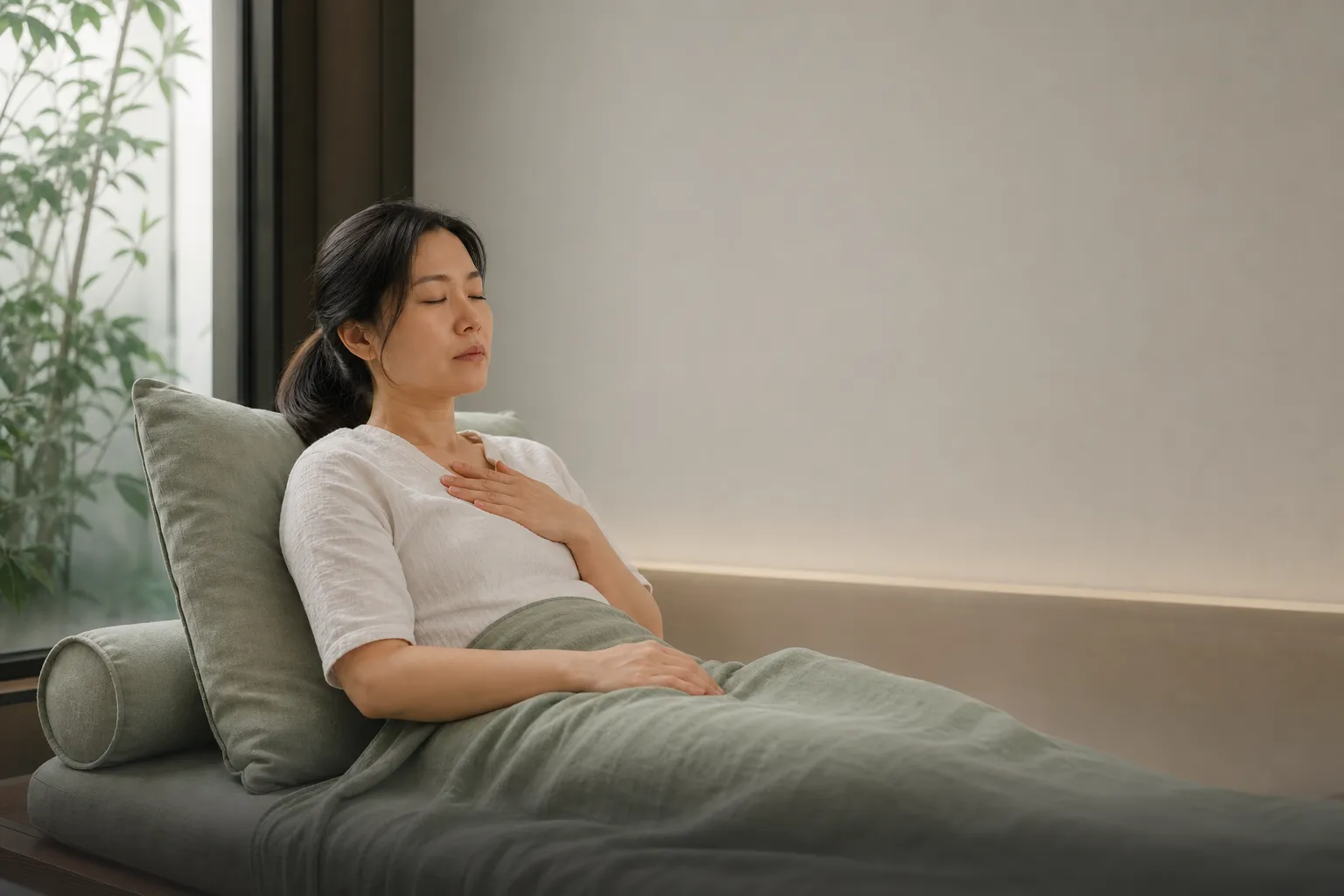
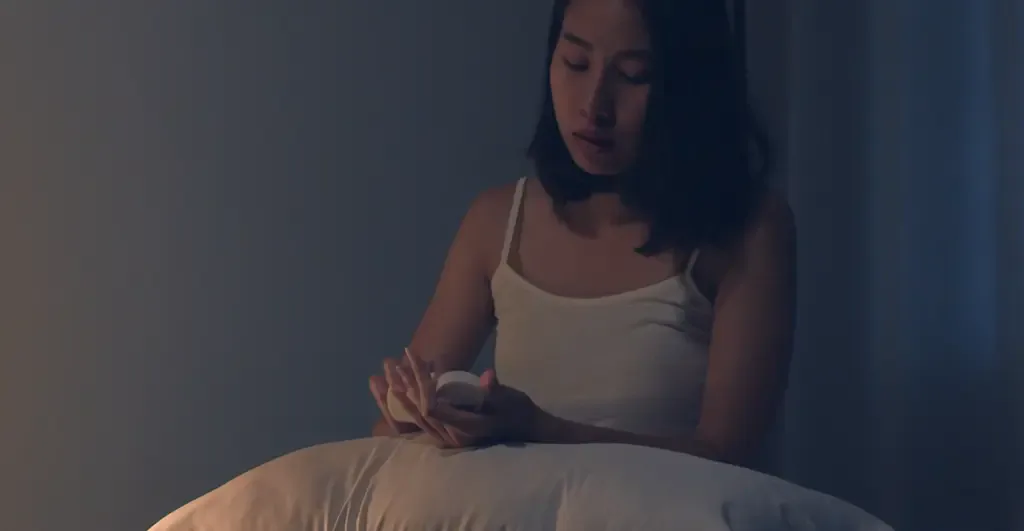
Person resting in bed at night, seeking calm sleep

Insights · Insomnia

Acupressure & TCM tips for insomnia

Lying awake for hours, waking between 1 and 3am, or feeling tired after a full night often means sleep is thin. Acupuncture, herbs, and home presses work best after pulse and tongue name the pattern.

In brief

Lying awake for hours, waking between 1 and 3am, or feeling tired after a full night in bed often reads as insomnia. TCM names four common pictures: difficulty falling asleep, short or broken sleep, light sleep, and dream-disturbed sleep. Waking 1–3am with fearfulness or irritability may lean Liver-Gallbladder disharmony. Clinic care may combine herbs, acupuncture, cupping, and acupressure. Home presses include Bai Hui, An Mian, Shi Mian, Shen Men, and Lao Gong with Yong Quan. Keep stimulants, heavy meals, and screens away from bedtime.

01 · Definition

What is insomnia?

Lying awake for hours, waking in the night, or feeling tired after sleep often reads as insomnia: difficulty falling asleep, staying asleep, or both.

Insomnia is defined by the quality of your sleep and how you feel after sleeping. Chronic thin sleep may contribute to wider health problems. If you feel drowsy and tired during the day even after about eight hours in bed, you may still be experiencing insomnia.
02 · Pictures

Four common types of insomnia

These four pictures often sit alone or together. Naming which one dominates helps match clinic methods and home presses.

1. Difficulty falling asleep

An endless stream of thoughts can make it hard to drop into sleep even when the body feels tired.

2. Short or broken sleep

Time spent asleep stays short. You wake often in the night and struggle to return to sleep.

3. Light or transient sleep

Sleep shifts frequently between asleep and awake. Sound or small disturbance wakes you easily.

4. Dream-disturbed sleep

Excessive dreaming, vivid dreams, or nightmares leave sleep unrefreshing even after hours in bed.

03 · Clinic methods

How TCM helps with a good night’s rest

Plans depend on cause, symptoms, duration, and constitution after pulse and tongue. Methods are often combined rather than used as a single fixed protocol.

Clinic methods matched to insomnia
Method What it does for sleep When it often sits
TCM medicationHerbal formulas matched to the named pattern. Supports yin-yang balance and organ systems that hold the spirit at night. When constitution and pattern need internal regulation alongside needling.
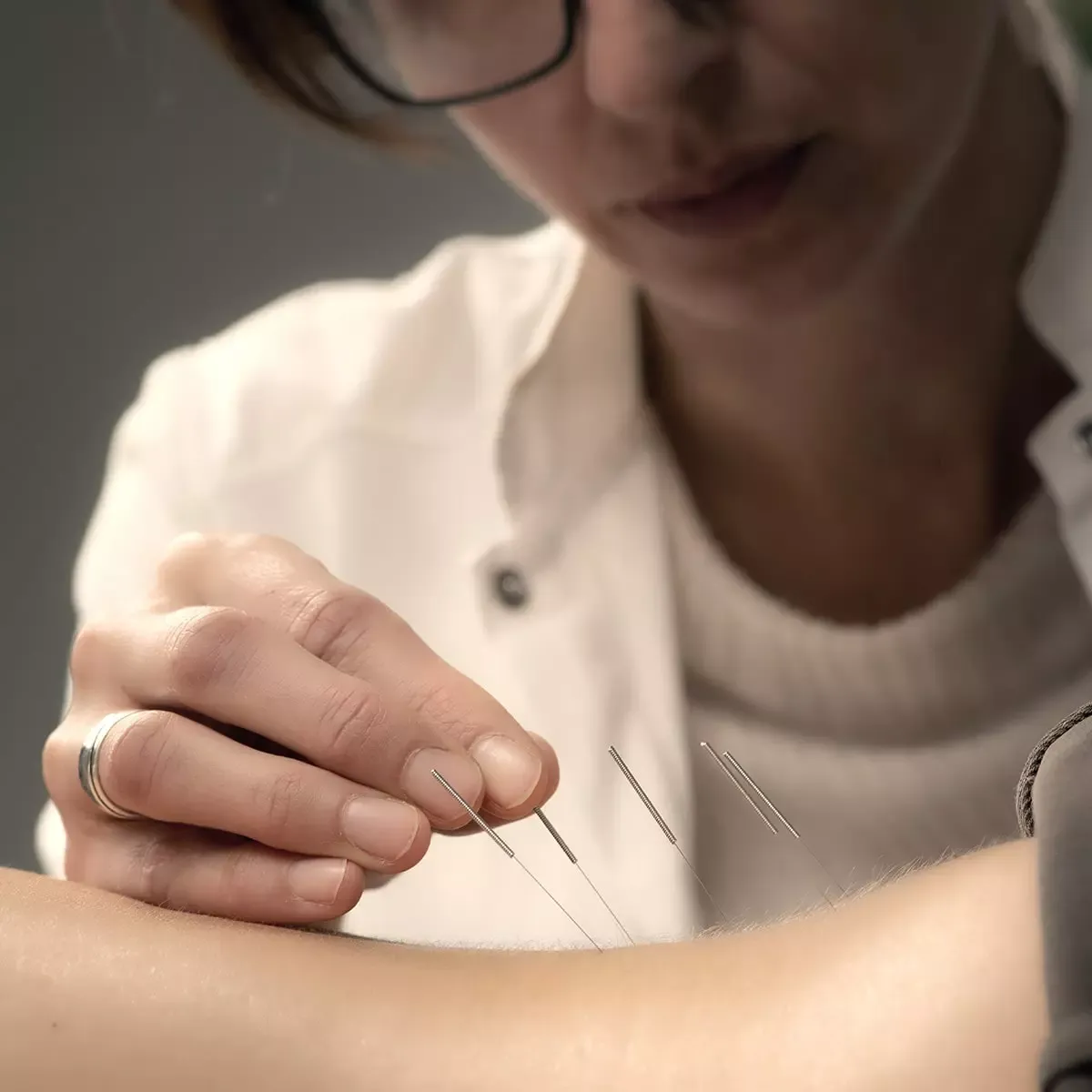
AcupunctureFine needles on points that calm Shen and regulate organ qi. Settles Heart and Liver patterns that keep sleep thin or broken. Often first-line when restless sleep sits with clear meridian signs.
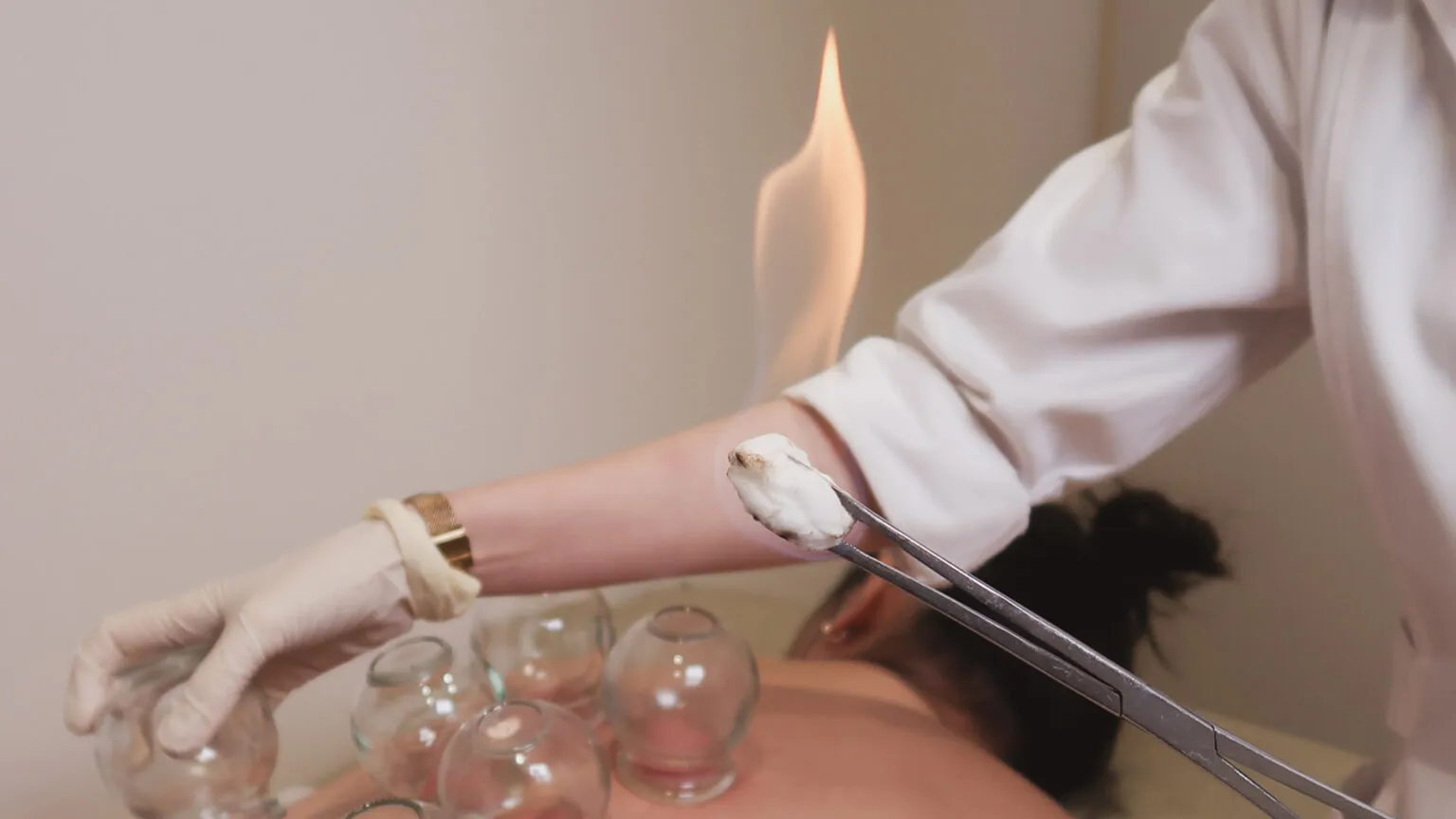
CuppingSuction cups on selected regions. Moves stagnation that may travel with tension and unrefreshing sleep. When upper-back or shoulder load sits with nighttime unrest.
Acupressure massagePoint work in clinic and teachable home presses. Calms the spirit between visits with locate-and-press habits. When patients can safely self-press Bai Hui, An Mian, Shi Mian, Shen Men, or Lao Gong with Yong Quan.

According to TCM principles, waking between 1am and 3am, frequent fearful awakening, timidity, irritability, and sighing are often associated with disharmony in the Liver and/or Gallbladder. Personalised care aims to balance yin and yang rather than treating the clock hour alone.

When insomnia keeps returning, physician-led TCM can sit with psychology support in the Insomnia programme.

04 · Home presses

Acupressure for insomnia

These points are educational home habits. Keep pressure kind. Stop if pain sharpens, and ask a physician before new presses in pregnancy.

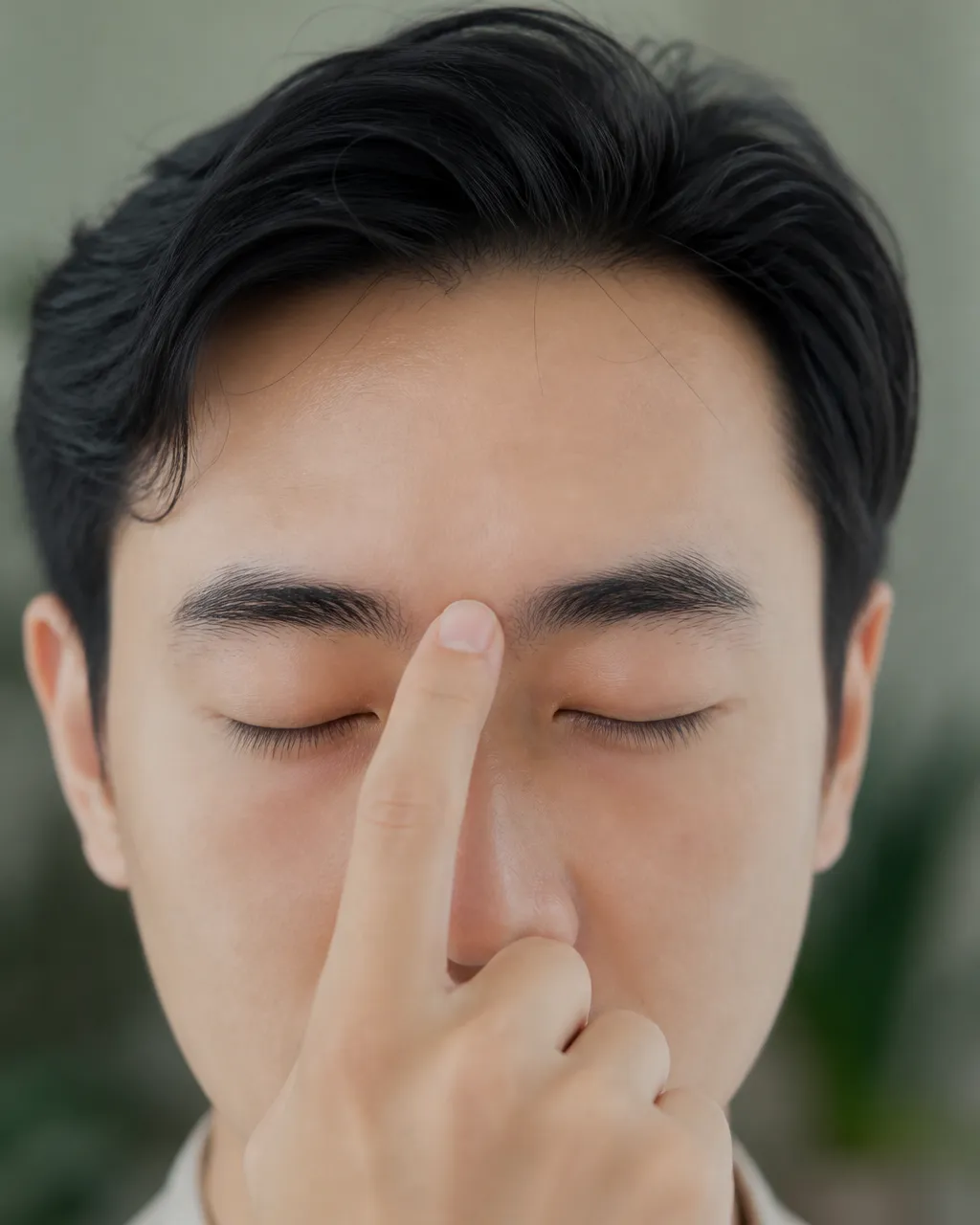
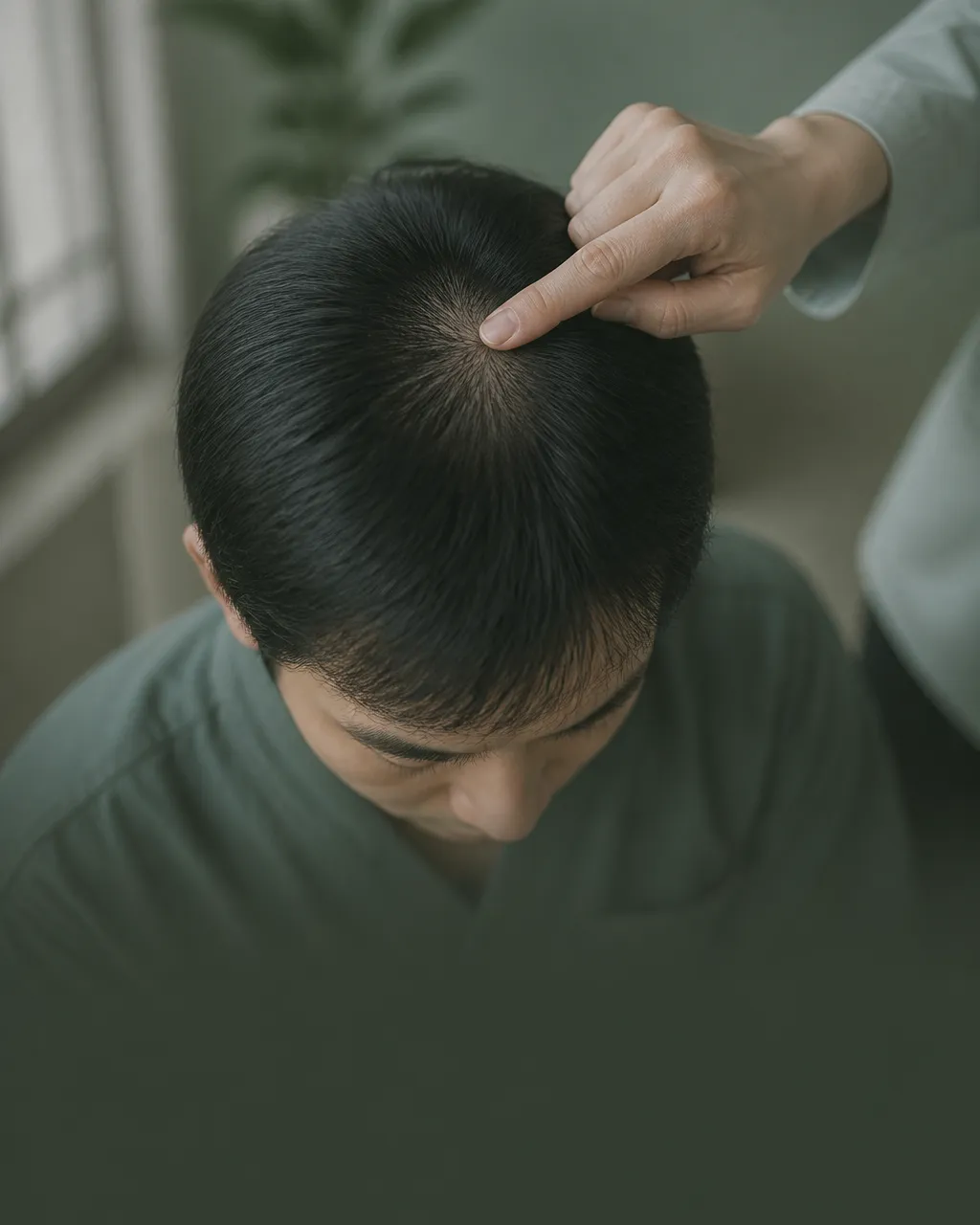
Finger locating Bai Hui GV20 at the crown of the head

Acupoint · GV20

Bai Hui (百会)

At the crown, where a line across the apex of both ears meets the midline from between the eyes to the back of the head. Massage kindly for about two minutes when the mind will not settle.

Skip over scalp cuts or recent head injury. Ease off if dizziness appears.

Press Bai Hui
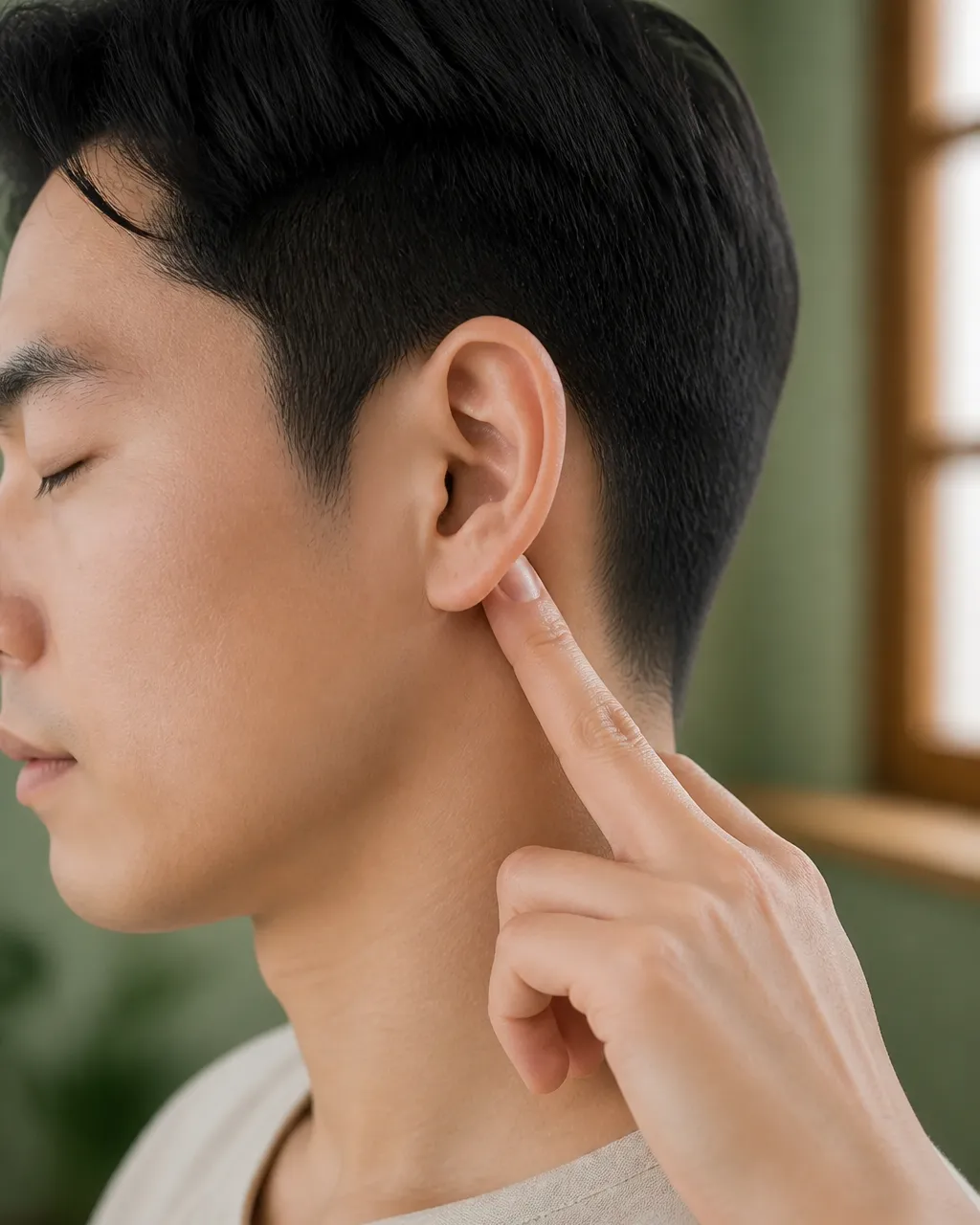
Finger locating An Mian EX-HN20 just under the earlobe

Acupoint · EX-HN20

An Mian (安眠)

On either side of the neck, a little under the earlobe. Massage kindly for about two minutes. A traditional insomnia point that may also ease anxiety, headache, or dizziness.

Skip over swollen glands or ear infection. Keep pressure gentle near the neck.

Press An Mian
Diagram locating Shi Mian at the middle of the heel

Acupoint · heel

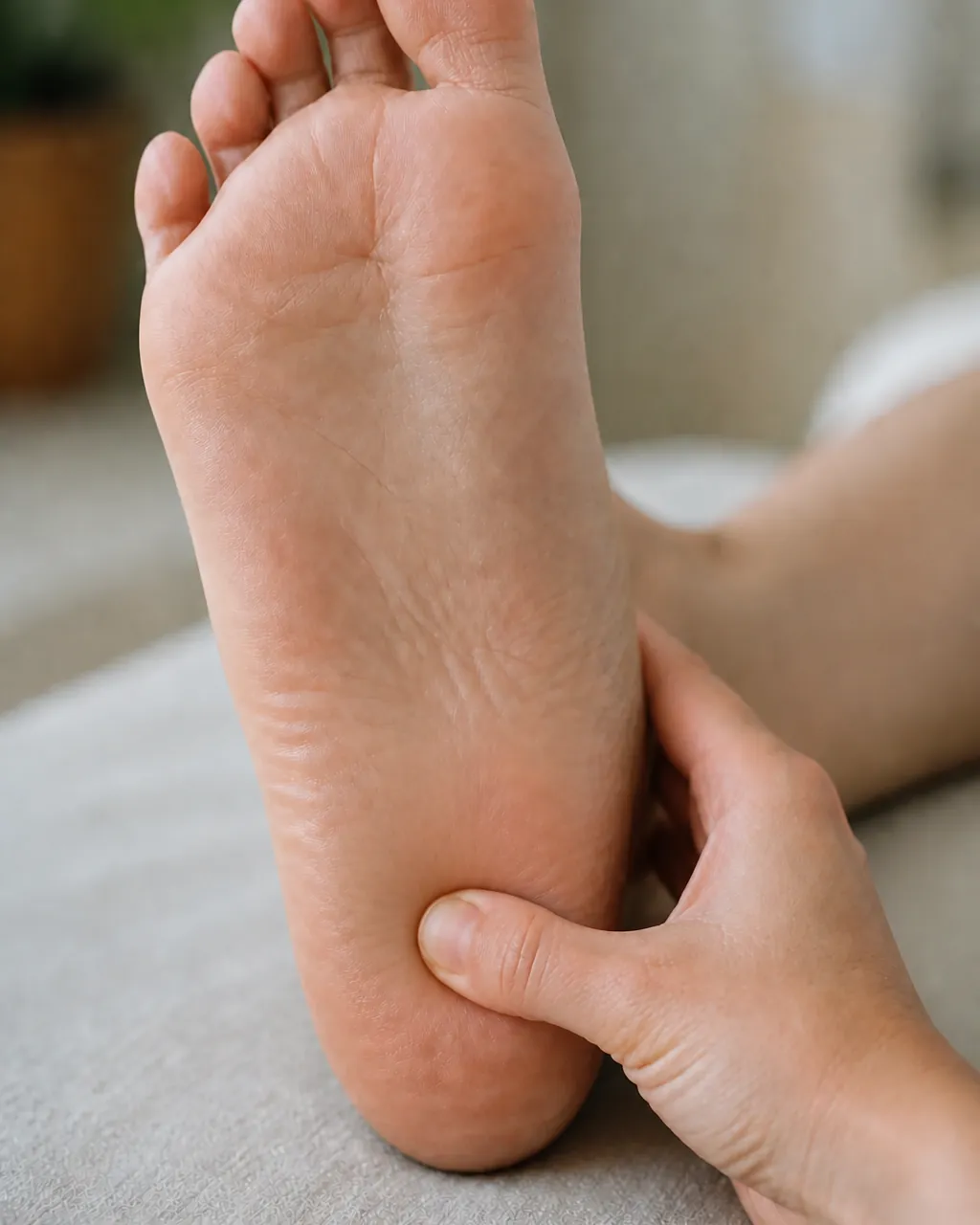
Shi Mian (失眠)

At the middle of the heel pad. Thumb-massage about 100 times with kind pressure when sleep quality stays thin.

Skip bruised, cut, or swollen heels. Sharp pain means ease off.

Press Shi Mian
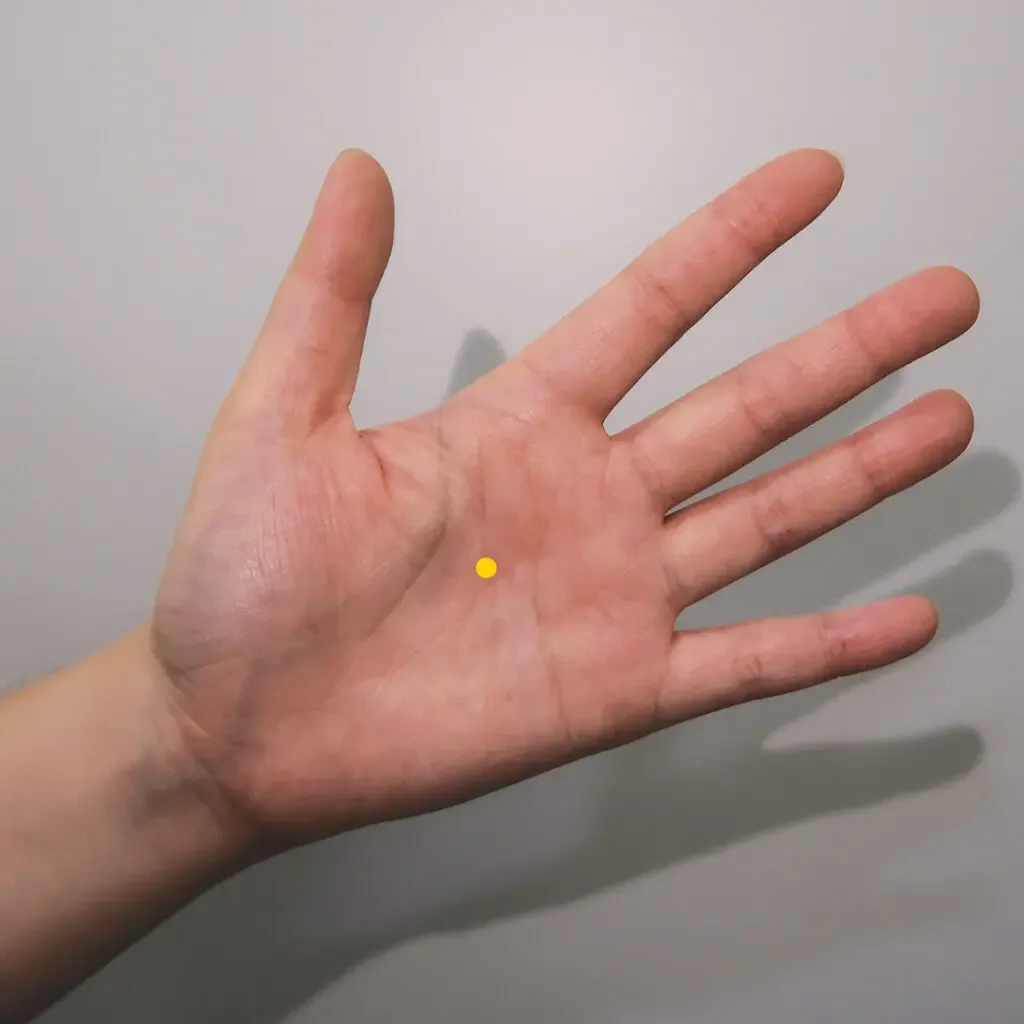
Finger locating Shen Men HT7 on the ulnar palmar wrist crease

Acupoint · HT7

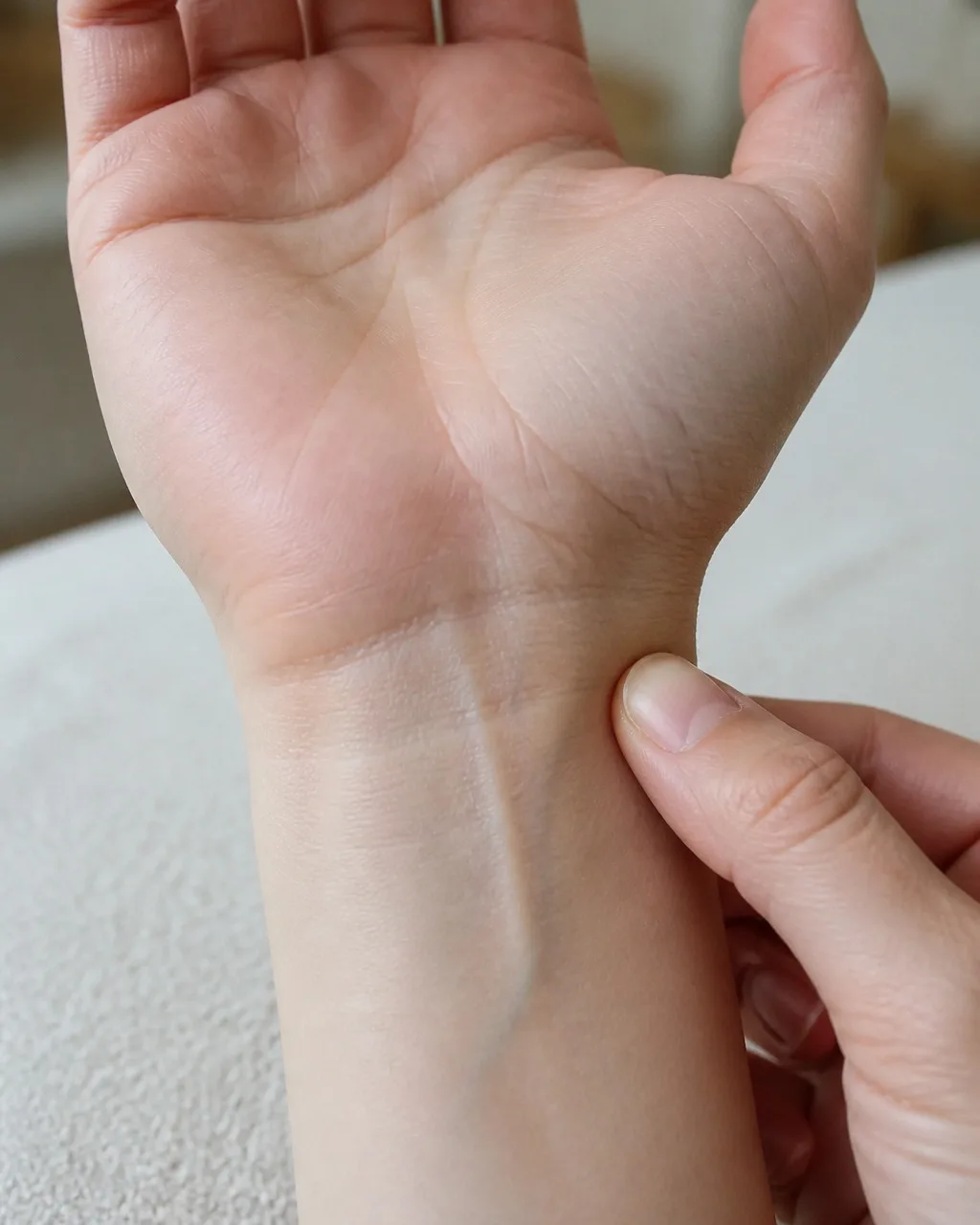
Shen Men (神门)

On the inner wrist crease toward the little-finger (ulnar) side, about one-fifth across the crease, in the hollow at the base of the pisiform. For dream-disturbed sleep, rub right Shen Men on left Shen Men for two minutes, then reverse.

Skip over cuts or swollen wrists. Sharp pain or numbness means ease off.

Press Shen Men
Diagram locating Lao Gong PC8 in the palm of the fist

Acupoint · PC8 / KD1

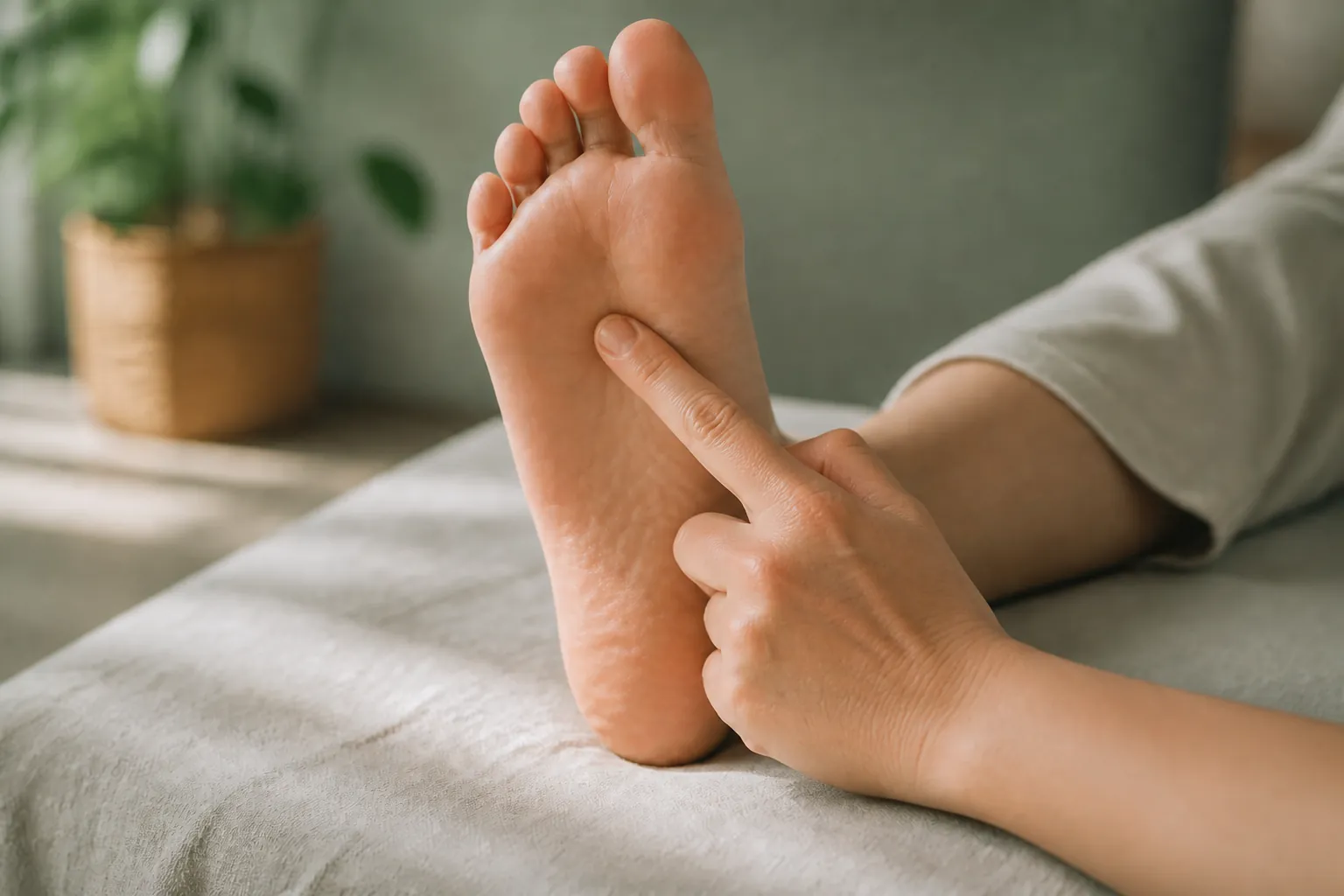
Lao Gong and Yong Quan

When irritability, dizziness, palpitations, hot sweaty palms, tinnitus, aching knees or lower back, and/or night sweats sit with thin sleep, TCM may name Heart-Kidney disharmony. Rub right Lao Gong on left Yong Quan clockwise and anticlockwise 100 times each, then swap sides. Lao Gong is where the middle fingertip lands in a fist; Yong Quan is the sole depression about one-third from toes to heel in plantar flexion.

Skip cuts or swollen palms and soles. Not for sudden chest pain or collapse.

Press Lao Gong and Yong Quan

05 · Bedtime habits

Don’ts before sleeping

Know your body habits. Small evening choices often decide whether sleep can deepen.

1. Late stimulants

If caffeinated drinks keep you awake, avoid coffee, chocolate, alcohol, or other stimulants late in the day.

2. Heavy late meals

Do not eat heavy or hard-to-digest food late at night. Space the last meal and sleep by at least three hours. TCM says 「胃不和则卧不安」: a poor stomach leads to unrestful sleep. Eating too much or too little before bed can leave the abdomen bloated or aching so sleep quality falls.

3. Phones and tablets in bed

Electronic devices emit blue light that interferes with melatonin and disrupts the sleep cycle. Exposure close to bed can trick the brain into reading daylight.

Dr Sim Beng Joo

Clinically reviewed

Reviewed by Sim Beng Joo

Advisor (Science & Strategy) / Consultant Physician · TCMPB T1303003A

MOH-licensed TCM physician and biomedical scientist, with clinical work in digestion, pain, sleep or fatigue, and constitution patterns that show as restless or unrefreshing sleep.

View full profile

Educational information based on clinical experience and TCM principles. Not a substitute for personalised consultation, medical care, or urgent attention. Speak with your physician before starting herbs or new self-press in pregnancy or with a chronic condition. Seek urgent care for sudden chest pain, severe panic, collapse, or sleep loss after a head injury. TCM complements medical and psychology care for persistent insomnia.

FAQs

Insomnia questions

Common questions on insomnia types, 1–3am waking, home presses, bedtime habits, and when to book care.

What are the common types of insomnia in TCM education?

Four pictures often named here: difficulty falling asleep with a stream of thoughts; short or broken sleep with frequent night waking; light or transient sleep that shifts easily with sound; and dream-disturbed sleep with vivid dreams or nightmares that leave you unrefreshed.

Why do people wake between 1am and 3am in TCM?

Waking between 1am and 3am with fearful awakening, timidity, irritability, or sighing is often associated with Liver and/or Gallbladder disharmony. A physician balances yin and yang after pulse and tongue rather than treating the clock hour alone.

Which acupressure points help insomnia?

Educational home presses include Bai Hui (GV20) on the crown, An Mian (EX-HN20) under the earlobe, Shi Mian on the mid-heel, Shen Men (HT7) on the ulnar wrist for dream-disturbed sleep, and Lao Gong (PC8) paired with Yong Quan (KD1) when Heart-Kidney signs sit with thin sleep.

Should I avoid screens and late meals before sleep?

Yes as a habit. Space the last meal and sleep by at least three hours; TCM says 胃不和则卧不安 (a poor stomach leads to unrestful sleep). Avoid late stimulants if you are sensitive, and keep phones or tablets away before bed because blue light can disrupt melatonin and the sleep cycle.

When should I book the Insomnia programme?

Book when thin sleep keeps returning despite habits, when daytime function suffers, or when you want physician-led TCM with psychology support. Bring timing of waking, dream quality, stimulants, and any GP or sleep notes.

Is self-press safe in pregnancy?

Ask a physician before starting new point habits in pregnancy. Skip presses over cuts, rashes, or swollen tissue, and stop if pain sharpens or numbness appears.

How is the Insomnia programme different from Sleep & Stress?

The Insomnia programme pairs TCM with psychology (including CBT-I style care) for persistent insomnia. Sleep & Stress focuses on sleep quality with stress and burnout load. A physician helps choose the closer funnel after assessment.

References

Selected sources

  1. National Center for Complementary and Integrative Health. Traditional Chinese medicine: What you need to know. 2019. https://www.nccih.nih.gov/health/traditional-chinese-medicine-what-you-need-to-know/
  2. Ministry of Health Singapore. TCM practitioners (Healthcare Professional Portal). https://hpp.moh.gov.sg/tcm-practitioners/
  3. World Health Organization. Traditional, complementary and integrative medicine. https://www.who.int/health-topics/traditional-complementary-and-integrative-medicine
  4. Original article author: Physician Tan Kang Ting.

Next step

Ready for an insomnia pattern read?

Bring when you fall asleep, when you wake, dream quality, stimulants, late meals, and any GP or sleep notes. We will name the pattern in plain language and decide what belongs in your plan.

Hours
Most clinics daily 11:00 AM – 8:00 PM
Care
Physician-led consultation