1. Qi and Blood deficiency · 气血不足
Childbirth spends Qi and Blood, so less milk forms. Often sits with low or no supply, a soft breast, little bloating, fatigue, poor appetite, and loose stools.


Insights & Wellness · Women's Health
Childbirth spends Qi and Blood; stress can stall Liver Qi. Name the lead pattern, then match kitchen pots, rest, and self-press beside your feeding plan.
In brief
In TCM, breast milk is formed from Qi and Blood. Low supply after birth often maps to Qi and Blood deficiency, Liver Qi stagnation that obstructs flow, or phlegm-damp blocking the ducts. Match soft-breast fatigue, tender bloated irritability, or full painless heaviness to kitchen soups, rest, and acupressure, and book when DIY support fails.
TCM map
Low milk supply often reads as weak Qi and Blood after birth. Clues below help name whether Spleen deficiency, Blood deficiency, or Liver qi stagnation leads.
Childbirth spends Qi and Blood, so less milk forms. Often sits with low or no supply, a soft breast, little bloating, fatigue, poor appetite, and loose stools.
Stuck Liver Qi obstructs milk flow. Often sits with low or no supply, tender bloated breasts, emotional strain, irritability, loss of appetite, and a heaty feel in the body.
Phlegm-damp can block the ducts so milk does not move freely. Often sits with low or no supply, a full breast without much pain or bloating, chest tightness, nausea, and sticky stool. This lead usually needs self-press plus physician care rather than a DIY soup alone.
Singapore context
Night feeds, long air-con hours, and iced drinks can deepen Qi-Blood depletion and stuck Liver Qi beside low supply after birth.
What may help
Qi-Blood deficiency and Liver Qi stagnation often pair with kitchen pots. Phlegm-damp leans toward SP9 and ST40 self-press and a physician plan for herbs.
| Pattern | What may help |
|---|---|
| Qi and Blood deficiency | Pork trotter with peanuts, Codonopsis (党参), and Astragalus (黄芪), about once or twice a week; Zu San Li (ST36) for Qi-Blood support. |
| Liver Qi stagnation | Astragalus, Bupleurum (柴胡), rice paper pith, peanuts, and rice porridge, about two to three times a week; Shan Zhong (CV17) and Tai Chong (LR3) to move stuck Qi. |
| Phlegm-damp blockage | Yin Ling Quan (SP9) and Feng Long (ST40) self-press; ask a physician before herbs. Crucian carp with 通草 may help regulate flow when the lead is milder. |
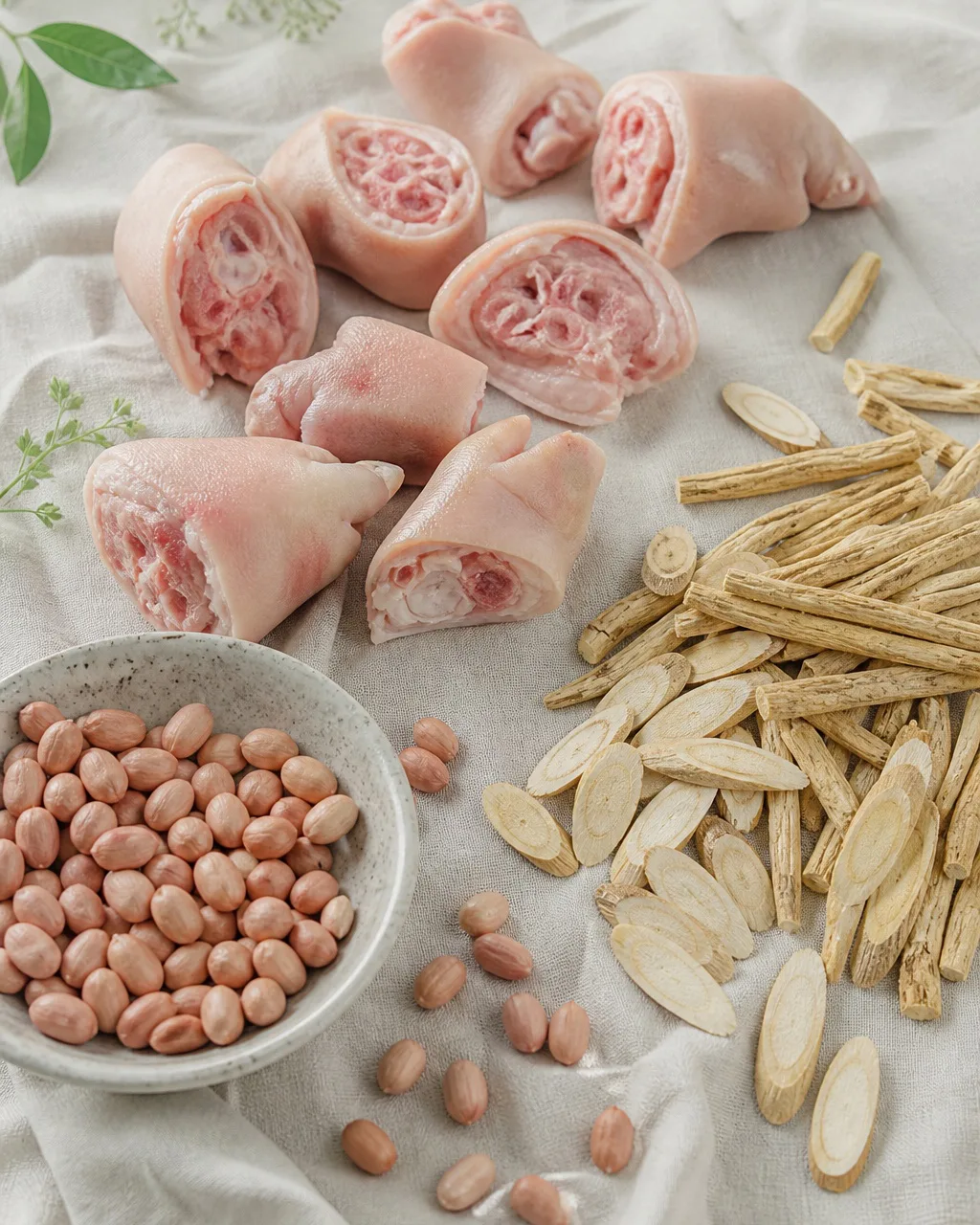
Qi-Blood deficiency · 气血不足
Pork trotter with peanuts, Codonopsis, and Astragalus suits soft-breast fatigue when Qi and Blood run thin beside low supply.
Match the pot to your lead pattern; book if supply stays low.
Make the pork trotter soup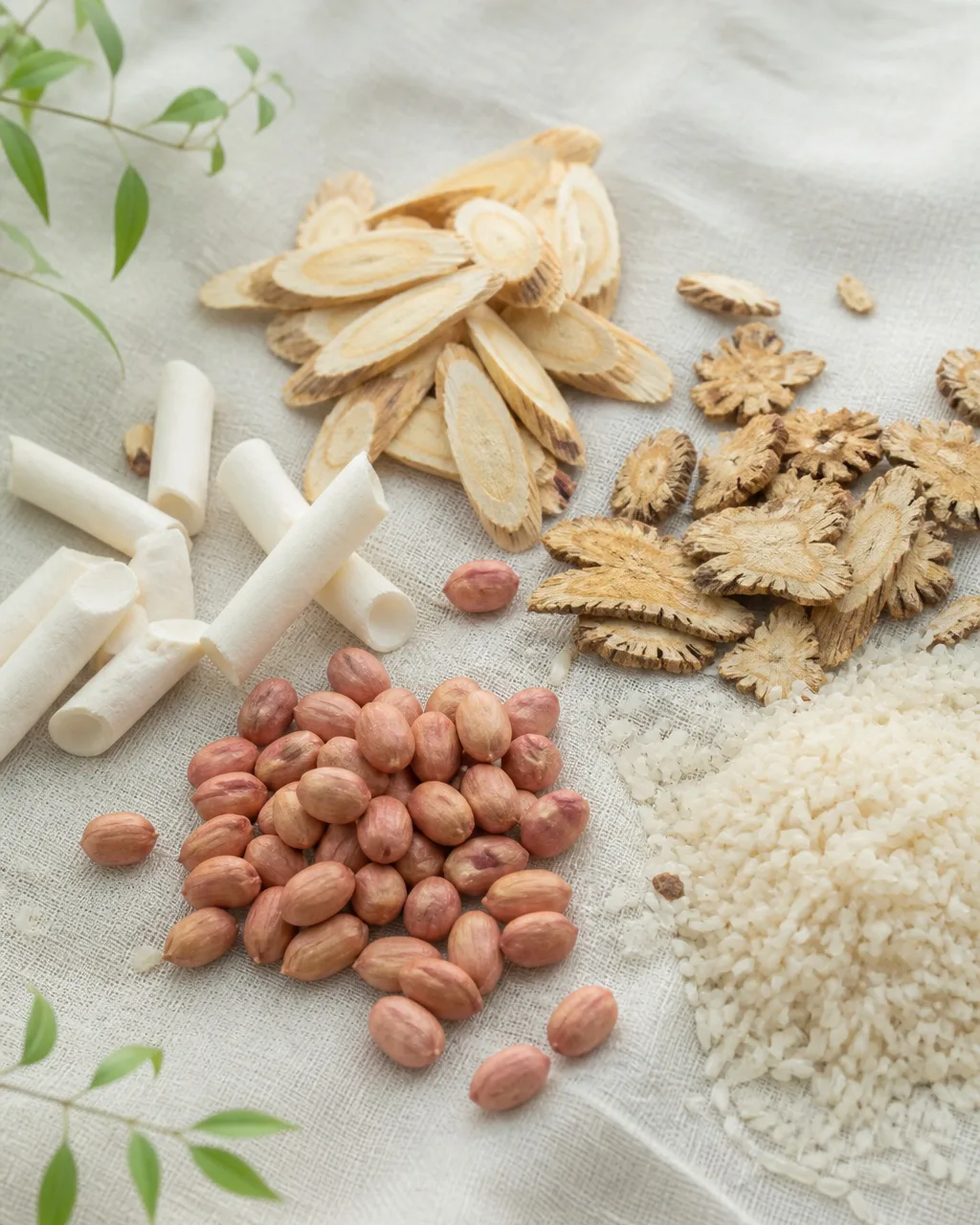
Liver Qi stagnation · 肝气郁结
Astragalus with Bupleurum, rice paper pith, peanuts, and rice suits tender bloated breasts when stuck Liver Qi obstructs flow.
Match the pot to your lead pattern; book if supply stays low.
Make the chai hu porridge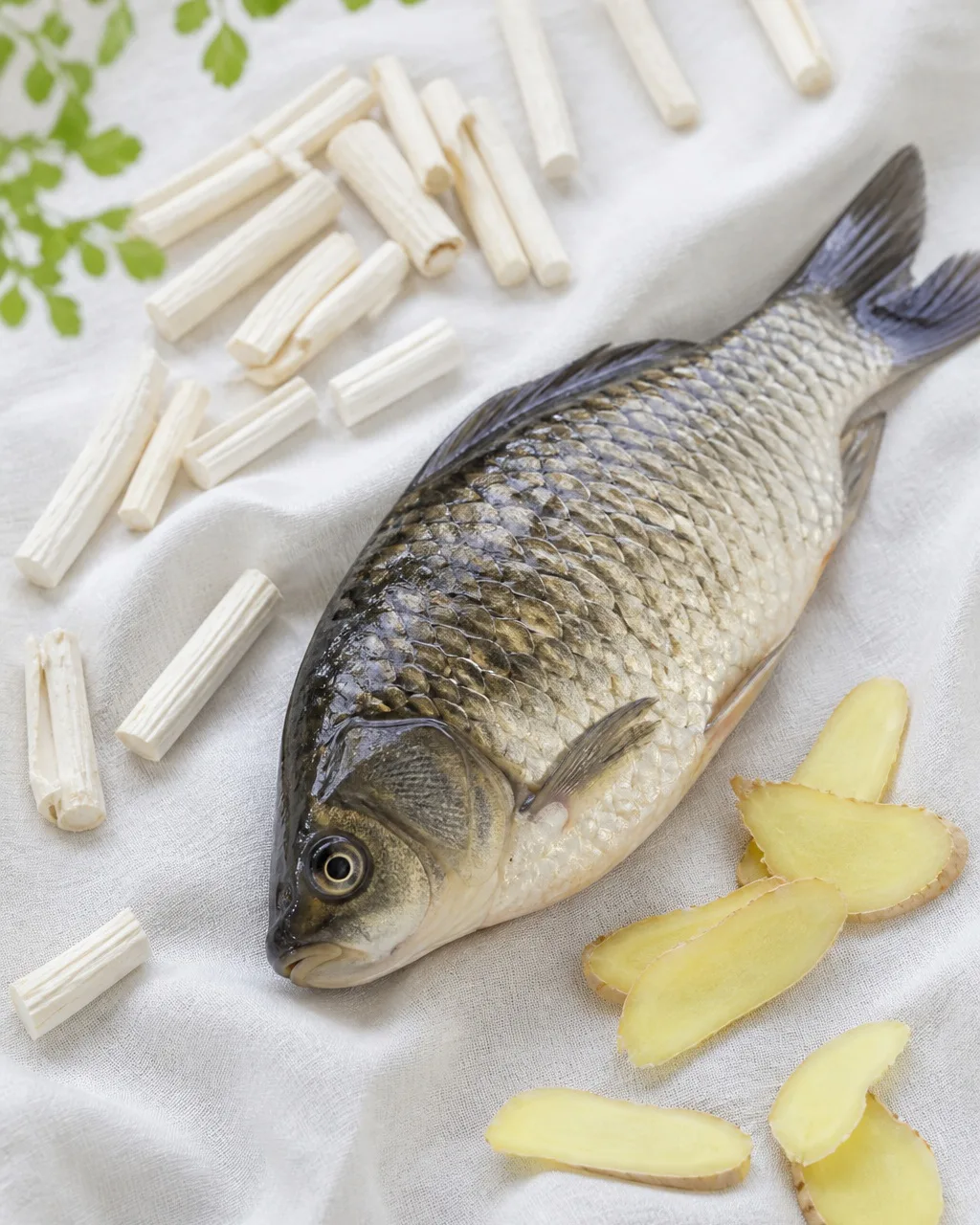
Milk flow · 通乳
Crucian carp with rice paper pith and ginger is a classic pot when milk flow needs regulating after birth.
Often used across milder flow pictures; still match pattern with a physician when damp or Heat leads.
Make the crucian carp soup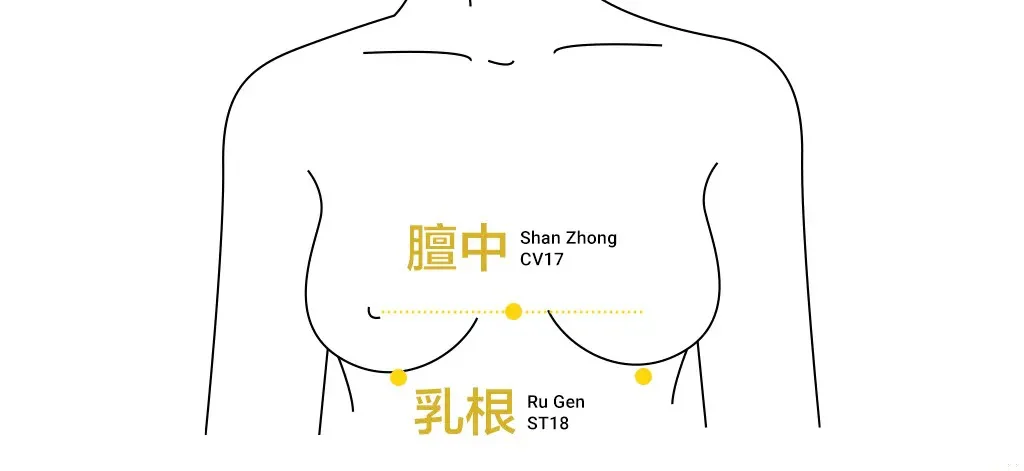
Self-press
After locating each point, use your thumb in a circular press for three to five minutes. Soft pressure only; stop over pain, rash, engorgement with fever, or suspected mastitis.
ST36 leans Qi-Blood deficiency. CV17 and LR3 lean Liver Qi stagnation. SP9 and ST40 lean phlegm-damp. Ru Gen (ST18) is often used across pictures for local milk flow.

Six points · 穴位
Locate ST18, CV17, SP9, ST36, LR3, and ST40, then circle each for three to five minutes matched to your leading pattern.
Press the lactation pointsRest and emotion
夫乳乃气血之所化而成也,无血固不能生乳汁,无气亦不能生乳汁
Rest helps regenerate Blood and Qi so the Liver can store nourishment for milk. Stress and strong emotion can stagnate Liver Qi and obstruct flow through the breast and nipple.
When you rest, Blood can be nourished in the Liver; nourished Blood supports milk. Anger, frustration, and low mood may stagnate Liver Qi. The Liver meridian influences the breast and controls the nipple, so stagnant Qi can also obstruct smooth milk flow.
More rest and steadier emotion give Qi, mood, and milk a clearer path to move.
If kitchen support, rest, and self-press do not settle supply, a physician can name the pattern and decide whether acupuncture or a custom postpartum plan belongs beside midwifery and lactation care. There is no one-size-fits-all postpartum formula.

Clinically reviewed
Advisor (Science & Strategy) / Consultant Physician · TCMPB T1303003A
MOH-licensed TCM physician and biomedical scientist, with clinical work in digestion, pain, sleep or fatigue, and women's health patterns that show as postpartum depletion and milk supply strain.
View full profileEducational information based on clinical experience and TCM principles. Not a substitute for personalised consultation, midwifery, lactation, or obstetric care. Seek medical review for fever, red hot breast, pus-like discharge, or supply that does not settle with rest and feeding support. TCM complements, and does not replace, Western postnatal and breastfeeding care.
FAQs
TCM patterns, kitchen pots, acupressure, rest, mastitis red flags, and when to book beside midwifery care.
TCM often reads three leads: Qi and Blood deficiency after childbirth so less milk forms; Liver Qi stagnation that obstructs flow; or phlegm-damp blocking the ducts. Soft breast with fatigue, tender bloated irritability, and full painless heaviness help name which cluster fits.
Qi and Blood deficiency often shows low or no supply with a soft breast, little bloating, fatigue, poor appetite, and loose stools. Liver Qi stagnation more often sits with tender bloated breasts, emotional strain, irritability, loss of appetite, and a heaty feel.
Match the pot to the pattern: pork trotter with peanuts, Codonopsis, and Astragalus for Qi-Blood deficiency; Astragalus and Bupleurum porridge for Liver Qi stagnation; crucian carp with rice paper pith when flow needs regulating. Phlegm-damp usually leans self-press and physician herbs rather than a DIY soup alone. Frequencies stay a few times a week.
Common self-press points include Ru Gen (ST18), Shan Zhong (CV17), Yin Ling Quan (SP9), Zu San Li (ST36), Tai Chong (LR3), and Feng Long (ST40). After locating, circular thumb pressure for three to five minutes is the usual home method. Soft pressure only over healthy skin.
Rest helps regenerate Qi and Blood so the Liver can store nourished Blood for milk. Stress, anger, frustration, and low mood can stagnate Liver Qi; the Liver channel influences the breast and nipple, so stuck Qi can obstruct flow. Fu Qing Zhu links milk to the transformation of Qi and Blood.
Book when kitchen support, rest, and self-press do not settle supply, or when pattern signs are unclear. Acupuncture and a postpartum plan can sit beside midwifery and lactation care.
Seek urgent medical or midwifery review for high fever, a red hot breast, pus-like discharge, or sudden severe breast pain. Those signs can mean mastitis or infection and are not DIY soup or acupressure problems.
No. Pork trotter and fish soups are traditional kitchen supports, not a licence to over-tonify every constitution. Match food to the lead pattern and tongue or pulse findings; confinement menus alone do not guarantee supply.
Selected sources
Continue
Pathways and care options that sit next to this guide.

Programme
Postpartum recovery pathway beside cycle and fertility support.
Explore
Insight
Five TCM precautions, sleep rhythm, and tongue signs for warming food.
Explore
Insight
Pig-trotter soup myths, ginger, and postpartum kitchen caution.
Explore
Bite
Qi-Blood deficiency kitchen pot for low milk supply.
Explore
Bite
Six points matched to Qi-Blood, Liver Qi, and phlegm-damp pictures.
Explore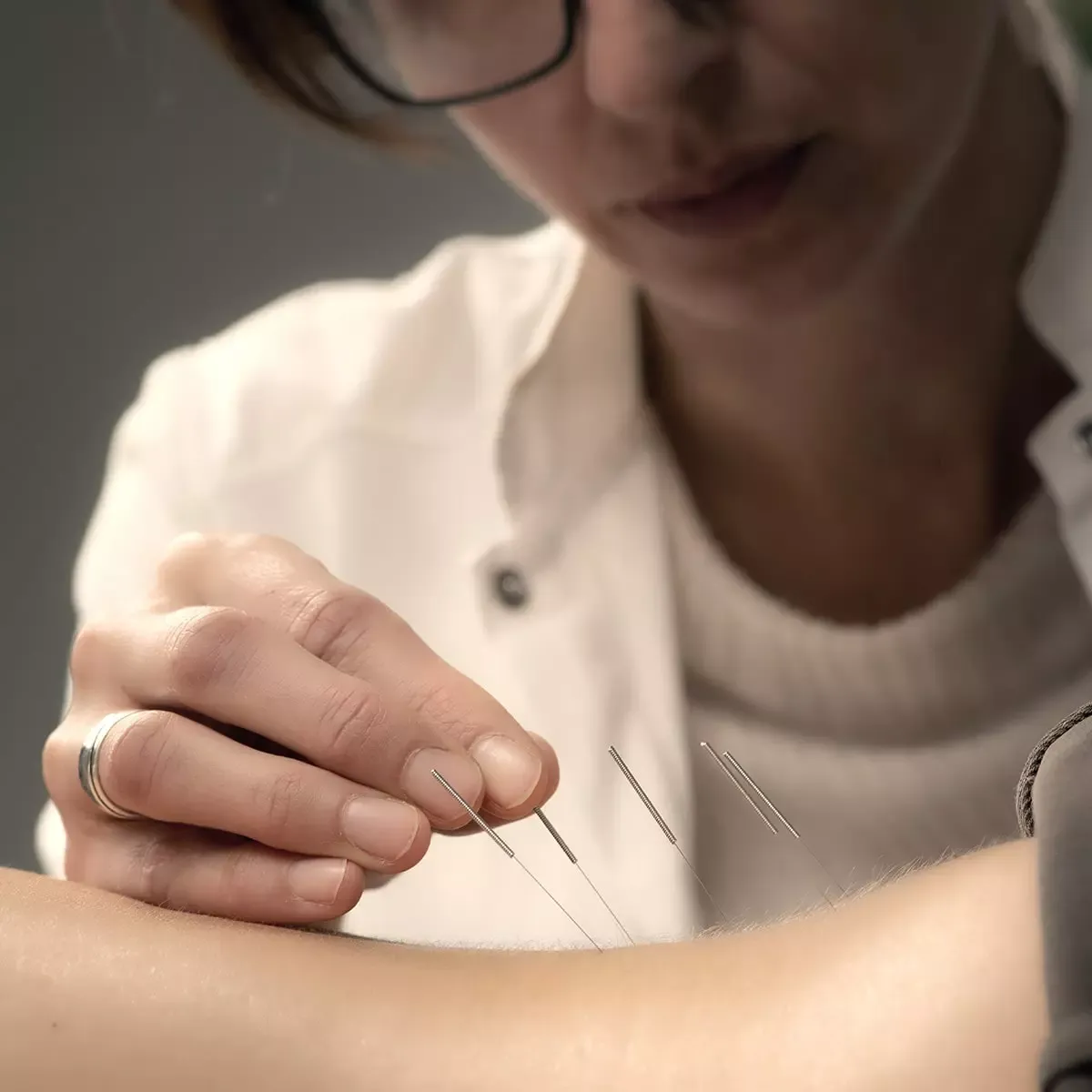
Treatment
Needle care to move Qi and ease stress in a postpartum plan.
Explore
Next step
Bring feeding notes, delivery recovery load, sleep and stress, and any lactation findings. We will name the pattern in plain language and decide whether Women’s Health postpartum support fits beside midwifery care.