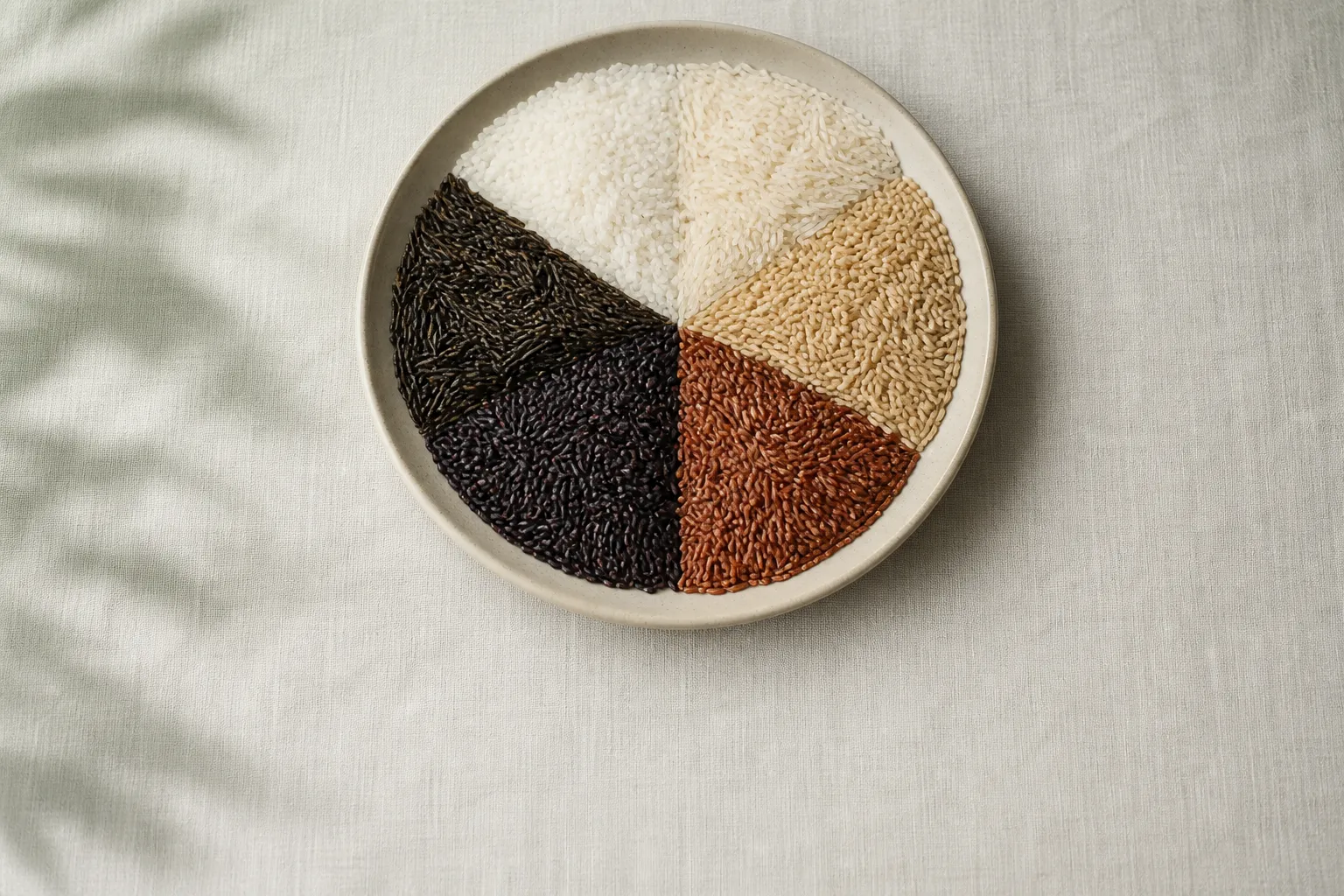
Six types of rice in wedges on a round plate at PULSE TCM

Insights · General Health

Types of rice: a TCM guide to choosing the grain

Jasmine, basmati, brown, red, and black sit in the same supermarket aisle. In TCM the “healthiest” grain is the one that matches digestion and constitution, not the darkest bag on the shelf.

In brief

In TCM, rice is a primary Qi grain. White polished rice is neutral, sweet, and easy on Spleen-Stomach Qi, so it suits weak digestion and recovery. Brown, red, and black keep the bran and run slightly warm. Black builds Blood and Kidney-Liver Yin. Red is brown rice with proanthocyanidin pigment. Mix about 20% unpolished with 80% white if digestion is weak. Pulse and tongue decide.

01 · Definition

Rice as a primary Qi grain

脾胃 · 气血

In TCM, rice is a staple source of Qi (vital energy). Jasmine in the NTUC bag and black rice on the health shelf are not ranked by colour. Constitution, digestion, and how the meal sits afterwards decide.

  • White (白米): polishing makes it easier to digest. That is a clinical use, not a failure of willpower.
  • Bran grains (糙米, 红米, 黑米): brown, red, and black keep fibre and run slightly warm. They ask more of the Spleen.
  • Sticky rice (糯米): sits with the warmer japonica group. Ease off if you already run phlegm or dampness.
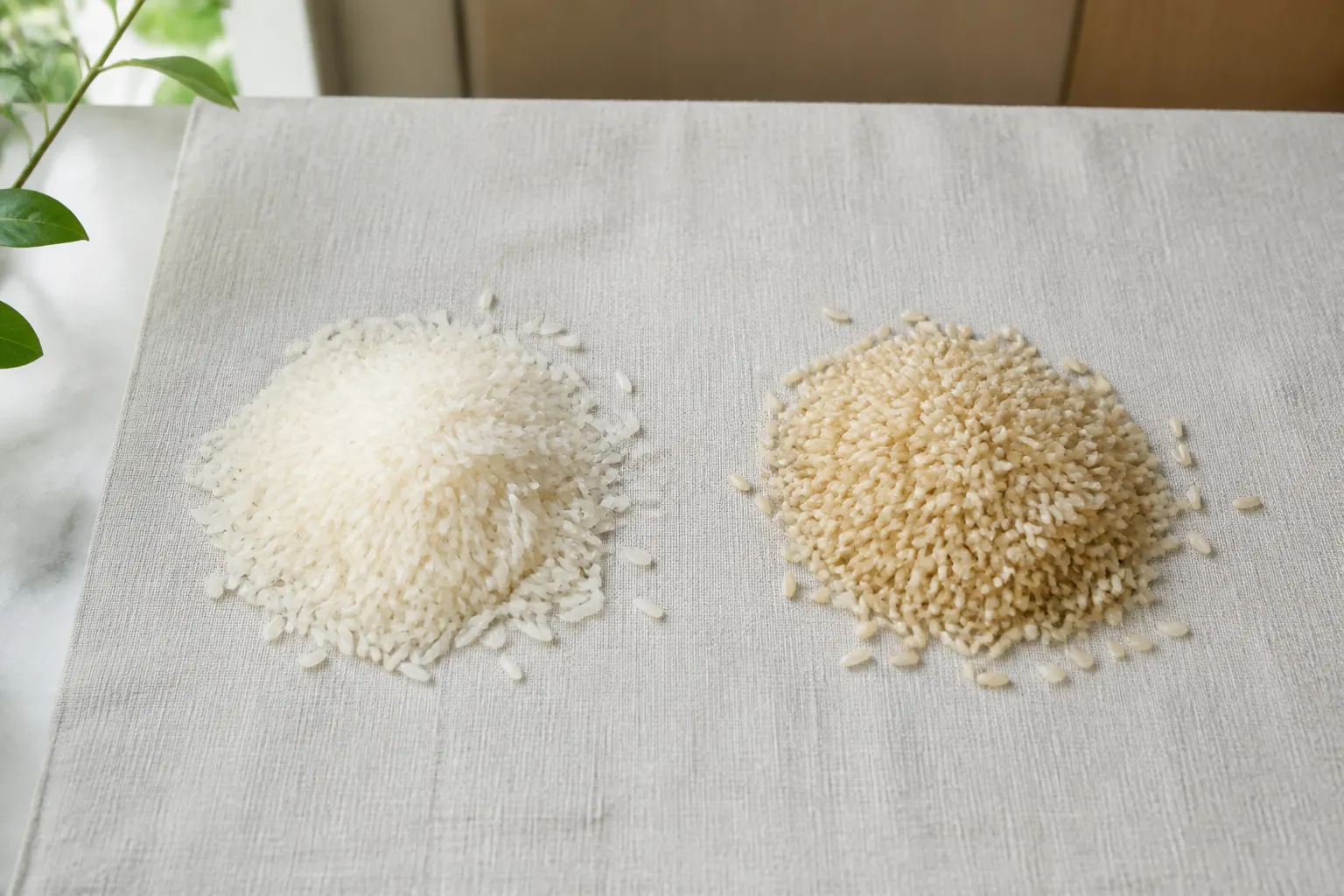
Polished white rice beside unpolished brown rice on a kitchen counter at PULSE TCM

02 · Polished vs unpolished

Polished vs unpolished: which is healthier?

Bran · germ · endosperm

Polished rice, commonly called white rice (白米), has its hull, bran, and germ removed. That extends shelf life, because bran oil left on the grain can turn rancid. It also strips the protein-rich aleurone and germ.

  • Refining a grain removes about 85% of its fat, 15% of protein, and up to 70% of B-vitamins.
  • Unpolished rice keeps bran and germ intact. A grain is wholegrain when bran, germ, and endosperm are all present.
  • Fibre in the bran slows the breakdown of complex carbohydrates, which can blunt sharp blood-sugar spikes.

03 · Compare

How different rice affects the body

TCM reads energetic nature and organ systems, not only macros. White rice is neutral and sweet. Unpolished grains run slightly warm. Black rice is the Kidney and Blood grain. Red and brown are the same unpolished family; the bran pigment differs.

Which rice matches the pattern
Type Grain TCM nature Who it suits
White (白米)Polished table rice. Bran and germ removed Neutral, sweet; tonifies Spleen-Stomach Qi Weak digestion, fatigue, recovery from illness
Japonica / sticky (粳米, 糯米)Short grain, clumping. Higher amylopectin Slightly warmer and more tonifying than long-grain white Moderate if you already run phlegm or dampness
Brown (糙米)Unpolished umbrella. Bran and germ intact Slightly warm; harder to break down Steady energy when the Spleen can take the bran
Red (红米)Brown rice with pigment. Unpolished; proanthocyanidins in the bran Slightly warm, same family as brown Want bran with an earthy flavour; not a stronger species
Black / purple (黑米)Forbidden rice. Unpolished; anthocyanins, cooks purple Nourishes Kidney and Liver Yin; builds Blood Hair, fertility, longer-term vitality; mix if digestion is weak
Germinated riceSprouted brown. Soaked until the bran softens Same unpolished family, gentler to digest Spleen Qi xu who still want a wholegrain
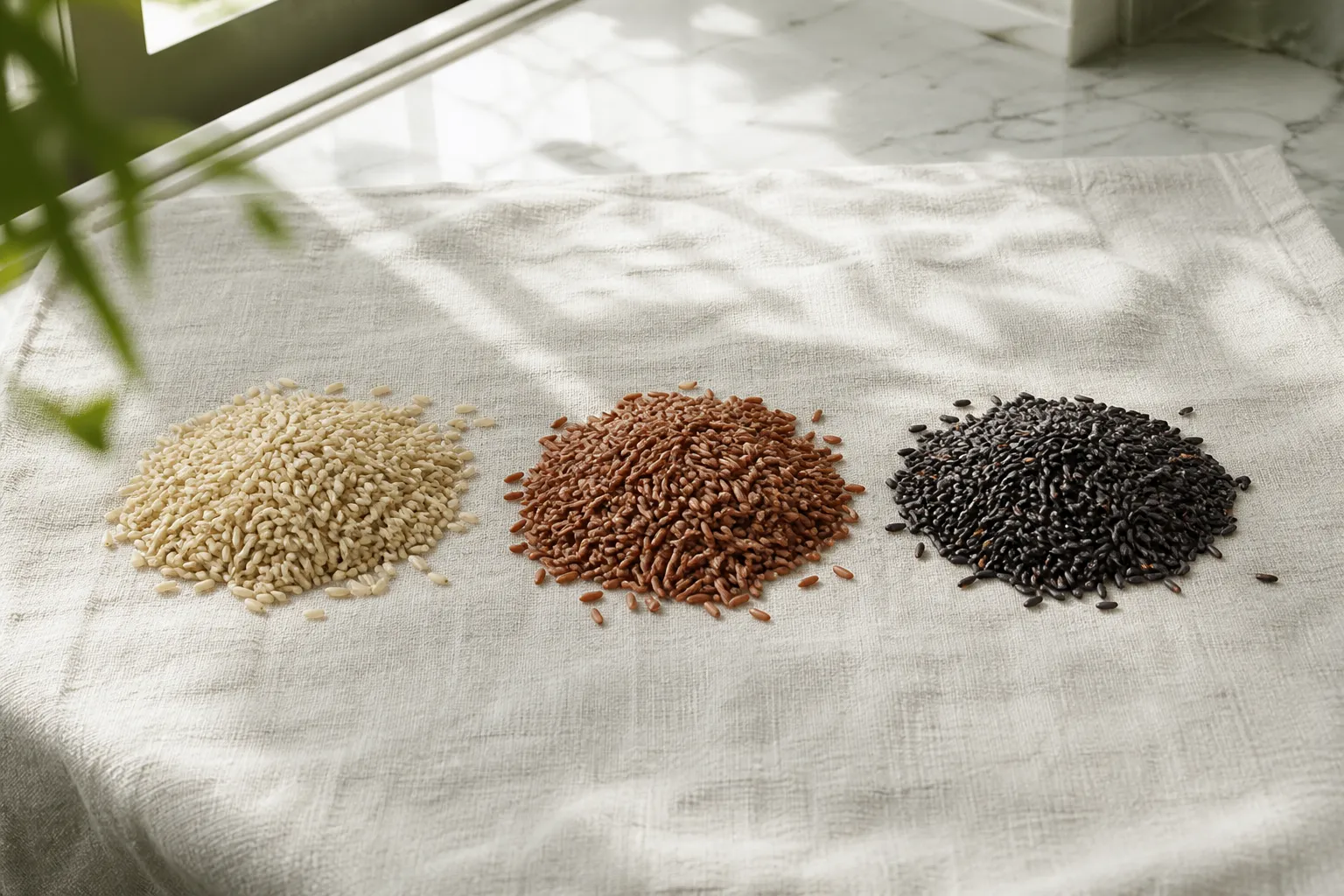
Brown, red, and black unpolished rice grains on linen at PULSE TCM

04 · Unpolished

Varieties of unpolished rice and their benefits

糙米 · 红米 · 黑米

Black, purple, and red rice are varieties of brown (unpolished) rice. The colour pigments in the bran set the kitchen difference, not a separate species.

Brown rice (糙米)

Wholegrain umbrella

Brown rice is the umbrella category for unpolished rice. It has a nutty flavour and a chewy texture. It is rich in B-vitamins, dietary fibre, and essential amino acids, and it acts as a steady energy source.

  • The colour pigments in the bran determine whether the same wholegrain looks tan, red, or black.
  • Slightly warm in TCM, and harder to break down than white rice.
  • A 20% brown to 80% white mix is how many Singapore kitchens add bran without a heavy bowl.

Red vs brown rice (红米)

Proanthocyanidins

Red rice is unpolished brown rice with pigment, not a different species. The earthy, slightly beany flavour comes from oxidised proanthocyanidins in the bran, which give the red hues.

  • Same slightly warm nature as other unpolished rice. It does not “work harder” than brown because it looks darker.
  • The bran compounds are discussed for cardiovascular and anti-inflammatory support.
  • Choose it for flavour and pigment, then still match the portion to digestion.

Black / purple rice (黑米)

Anthocyanins · Kidney Yin

Once known as forbidden rice in ancient China, black rice turns deep purple when cooked. It contains anthocyanins, antioxidants that protect cells against damage.

  • In TCM it nourishes Kidney and Liver Yin and builds Blood.
  • Used for longevity, hair health, and women’s health and fertility support.
  • Mix with brown or white rice if a full unpolished bowl feels heavy.

Germinated (sprouted) rice

Softer bran

Germination is achieved by soaking brown rice in water to start sprouting. This softens the bran, so the texture is easier to digest.

  • It also breaks down phytates, so more minerals can be absorbed.
  • Soak ordinary brown rice for at least 30 minutes before cooking if you are not using a sprouted bag.
  • A practical wholegrain when Spleen Qi is already weak.

Wild rice

Grass seed

Wild rice is not Oryza rice. It is the harvested seed of a grain-producing grass native to North America, with more protein than regular rice, plus zinc, folate, and magnesium, and an earthy, robust flavour.

  • Useful as a protein-dense grain in the bowl. Thermal teaching here is for ordinary rice (Oryza).

05 · Polished

Varieties of polished rice

Polishing strips some nutrients and fibre. It also extends shelf life and leaves a softer, more easily digestible texture. In TCM these are still neutral, sweet grains that tonify Spleen-Stomach Qi.

Indica rice: jasmine and basmati

Long grain · 白米

Indica varieties are long-grain. After cooking, the grains stay distinct, fluffy, and non-sticky, which suits curries, pilafs, and fried rice. Both common white bags are polished, so TCM treats them as the same Spleen-Stomach job.

  • Jasmine: the usual Southeast Asian table rice. Floral aroma, slightly clinging, pairs with stir-fries and sauces.
  • Basmati: aromatic, elongated, a staple in Indian and Middle Eastern cooking. Even when polished it often has a slightly lower glycaemic index, so blood sugar may rise more slowly.

Japonica and sticky rice (粳米, 糯米)

Short grain · amylopectin

Japonica varieties are short or medium-grain. They contain more amylopectin, so the grains stick and clump. Sticky or glutinous rice (糯米) sits with this warmer, more tonifying group.

  • Japanese sushi rice is easy to eat with chopsticks and to mould into sushi or onigiri.
  • Arborio, the risotto grain, releases starch as it cooks and keeps a firm, chewy core.
  • Ease off sticky rice if you already run phlegm or dampness.
Parboiled rice

Steamed in husk

Parboiled rice is soaked, steamed, and dried in its husk before polishing. That process pushes B-vitamins from the bran into the endosperm, so the cooked grain stays firmer and more separate than ordinary white rice. It is a milling process, not a separate TCM thermal nature.

06 · Choose

Which rice should you choose?

Match the grain to digestion first, then to the organ job. Mixed heaty and cooling signs still need pulse and tongue. The nine constitution types name that picture more closely.

1. Bloating, loose stools, fatigue, or recovery

Stay with polished white rice (白米), or mix about 20% brown or black with 80% white. Japonica and 糯米 are slightly warmer; ease off if you already run phlegm or dampness. Germinated rice is the gentler wholegrain if you want bran without a heavy bowl.

2. Digestion already steady, or a Kidney and Blood lean

Unpolished grains run slightly warm. Black rice (黑米) nourishes Kidney and Liver Yin and builds Blood, which is why it is discussed for hair and fertility. Red (红米) is pigmented brown, not a stronger medicine. Increase the bran share only while bloating stays settled.

When meals leave you bloated or unsure

If digestion is weak, signs mix heaty and cooling, or a darker grain sits heavily, pulse and tongue can name the pattern before you change the household rice.

Dr Sim Beng Joo

Clinically reviewed

Reviewed by Sim Beng Joo

Advisor (Science & Strategy) / Consultant Physician · TCMPB T1303003A

MOH-licensed TCM physician and biomedical scientist, with clinical work in digestion, pain, sleep or fatigue, and constitution patterns that show as heaty or cooling signs, dampness, or everyday sub-health.

View full profile

Educational information based on clinical experience and TCM principles. Not a substitute for personalised consultation, medical care, or urgent attention. Speak with your physician before starting herbs, strong warming or cooling foods, or new self-care in pregnancy or with a chronic condition. Seek urgent care for high fever, severe pain, or acute illness. Blood-sugar meal plans belong with a physician or dietitian, not a grain chart alone.

FAQs

Rice questions

Common questions before you change the household grain or book a first visit.

Is white rice "bad" for you?

Not in TCM. White rice is valued for strengthening the digestive system. The key is moderation, and pairing it with fibre-rich vegetables and proteins. People with weak Spleen Qi often sit better with polished rice than with a full bowl of bran-heavy grain.

Can I mix different types of rice?

Yes. Mixing about 20% brown or black rice with 80% white rice is a practical way to gain bran nutrients while keeping the meal easy on the Spleen. Increase the unpolished share only if bloating and loose stools stay settled.

Is it necessary to soak brown rice before cooking?

Yes. Soaking brown rice for at least 30 minutes breaks down phytic acid, which improves nutrient absorption and softens the bran for a more palatable texture. Germinated (sprouted) rice takes this further and is gentler when digestion is already weak.

Which rice is best for diabetics or blood sugar control?

Unpolished varieties such as brown, red, or black rice are often a better fit. The intact bran layer provides fibre that slows carbohydrate digestion and can blunt a rapid blood-sugar rise. This is food guidance, not a diabetes meal plan. A physician or dietitian should still set the personal carbohydrate picture.

Can I eat black rice every day?

Yes. Black rice is rich in anthocyanins and is used in TCM to nourish Kidney and Liver Yin and build Blood. For easier digestion, mix it with brown or white rice rather than eating a full unpolished bowl every meal.

What is the difference between red rice and brown rice?

Red rice is a variety of unpolished brown rice, not a different species. Brown is the umbrella for grains that keep bran and germ. Red hues come from oxidised proanthocyanidins in the bran, which give an earthy, slightly beany flavour. Both run slightly warm in TCM; the pigment is the main kitchen difference.

Is jasmine rice different from basmati in TCM?

Both are polished indica rice, so TCM treats them as neutral and sweet, and easy on Spleen-Stomach Qi. The kitchen difference is texture and glycaemic index: basmati stays longer-grain and often rises blood sugar more slowly; jasmine is floral, slightly clinging, and the usual Southeast Asian table rice. Neither is a bran grain.

References

Selected sources

  1. Goufo P, Trindade H. Rice antioxidants: phenolic acids, flavonoids, anthocyanins, proanthocyanidins, tocopherols, tocotrienols, γ-oryzanol, and phytic acid. Food Sci Nutr. 2014;2(2):75–104. https://doi.org/10.1002/fsn3.86
  2. Zhu Y, Sun H, He S, et al. Metabolism and prebiotics activity of anthocyanins from black rice (Oryza sativa L.) in vitro. PLoS One. 2018;13(4):e0195754. https://doi.org/10.1371/journal.pone.0195754
  3. Ravichanthiran K, Ma ZF, Zhang H, et al. Phytochemical profile of brown rice and its nutrigenomic implications. Antioxidants (Basel). 2018;7(6):71. https://doi.org/10.3390/antiox7060071
  4. National Center for Complementary and Integrative Health. Traditional Chinese medicine: What you need to know. 2019. https://www.nccih.nih.gov/health/traditional-chinese-medicine-what-you-need-to-know/
  5. World Health Organization. Traditional, complementary and integrative medicine. https://www.who.int/health-topics/traditional-complementary-and-integrative-medicine
  6. Pyo E, Tsang BL, Parker ME. Rice as a vehicle for micronutrient fortification: a systematic review of micronutrient retention, organoleptic properties, and consumer acceptability. Nutr Rev. 2022;80(5):1062–1085. https://doi.org/10.1093/nutrit/nuab107
  7. Health Promotion Board, Singapore. Brown rice paradise. HealthHub. https://www.healthhub.sg/well-being-and-lifestyle/food-diet-and-nutrition/brown_rice_paradise
  8. Ministry of Health Singapore. TCM practitioners (Healthcare Professional Portal). https://hpp.moh.gov.sg/tcm-practitioners/
  9. Original article author: Dietitian Adelyn Khoo.

Next step

Unsure which grain matches your digestion?

Bring what you have been eating and whether meals leave you bloated, tired, or heaty. We will name the pattern in plain language and decide whether food guidance, herbs, or acupuncture belong in your plan.

Hours
Most clinics daily 11:00 AM – 8:00 PM
Care
Physician-led consultation