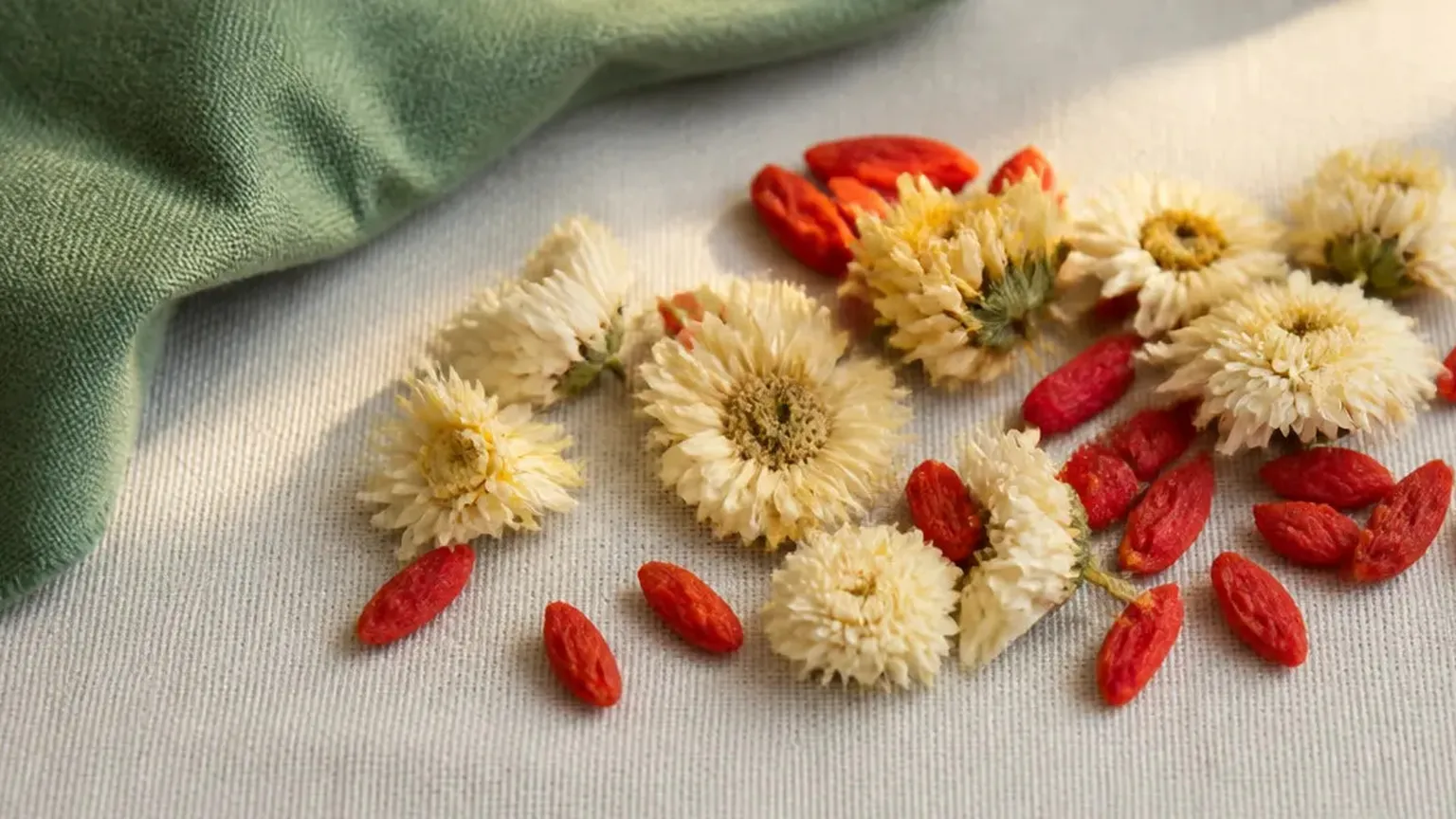
Dry, tired eyes? Steep white chrysanthemum
White chrysanthemum and wolfberry tea for tired eyes
White chrysanthemum and wolfberry tea for dry, tired eyes after screen time. Cooling, caffeine-free kitchen steep.
Read bite
Bites · Everyday TCM · General Health · Acupoint · About 4 minutes
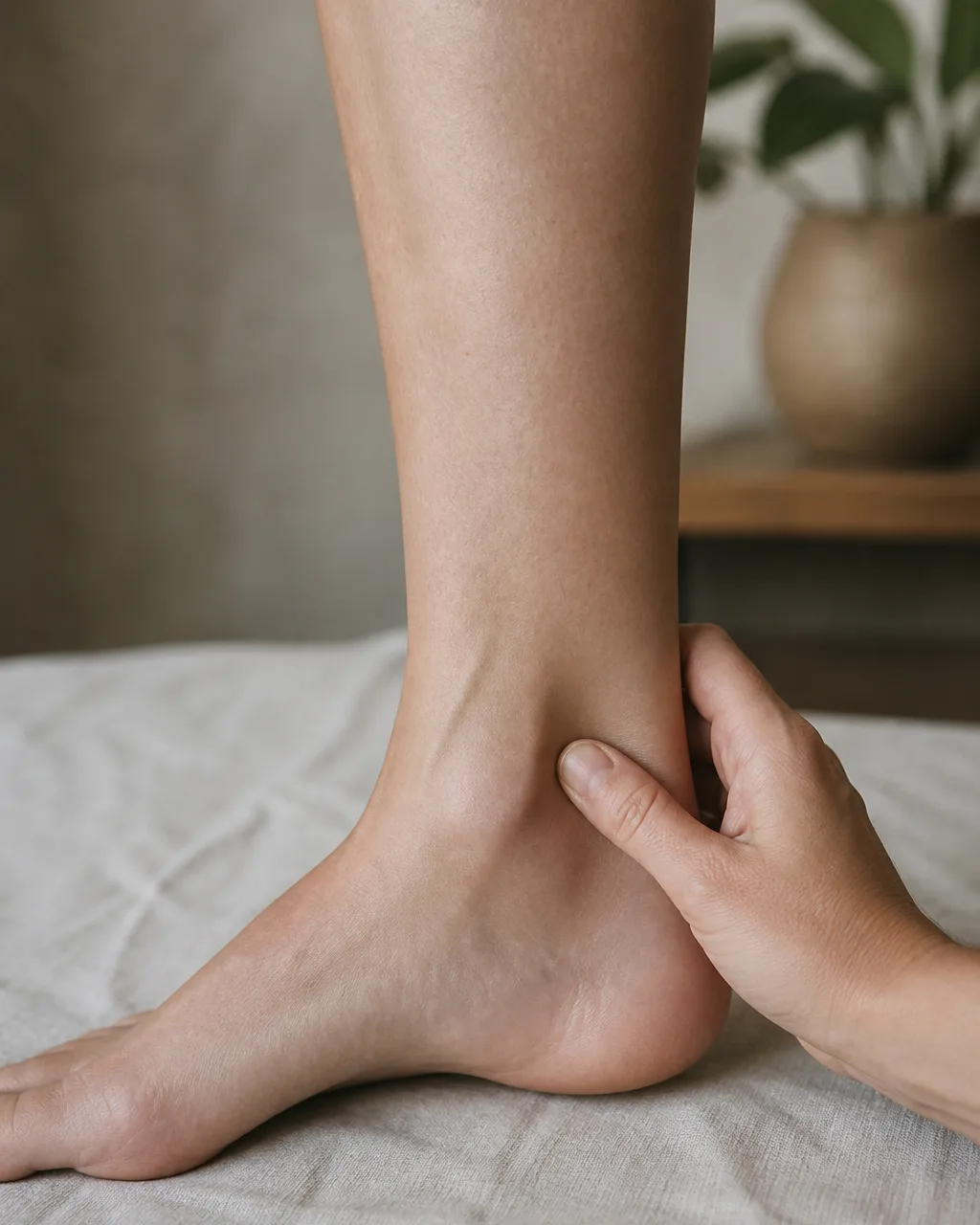
Di Ji (SP8) on the inner calf and Tai Xi (KD3) at the inner ankle are a common educational pair beside Xiao-Ke pattern care. Gentle locate-and-press sits with blood tests and physician plans, not instead of them.
In brief
Two points often taught for diabetes self-care education: Di Ji (SP8) on the medial lower leg about three finger-widths below the inner knee hollow on the Spleen channel, and Tai Xi (KD3) in the soft hollow between the inner ankle bone and the Achilles tendon. Circle each kindly for one to two minutes per side. This is educational habit work, not a glucose protocol or a substitute for insulin, oral medicine, or clinic care.
Routine
Sit with the leg relaxed. On the medial (inner) lower leg, find the soft hollow just below the inner knee where Yin Ling Quan (SP9) sits, then move about three cun (roughly the width of four fingers) down along the posterior border of the shin bone. Di Ji (地机 SP8) is the tender hollow there. Circle kindly for one to two minutes each side.
Slide a thumb into the depression between the tip of the medial malleolus (inner ankle bone) and the Achilles tendon, level with the high point of the ankle bone. Tai Xi (太溪 KD3) is that soft hollow. Circle for one to two minutes; switch ankles if you like.
Ease off if pressure feels sharp, numb, or wrong. Mild ache that eases on release is common. Do not press over cuts, rashes, or swollen areas.
Try today Locate Di Ji once on each leg and circle for one to two minutes.
Next step
Read the matching guide or pathway next. Book when you are ready for personalised care.
Self-press tips are educational, not personal medical advice. Book a consult for pattern-led care beside your glucose plan, or if symptoms keep changing.
FAQs
Up to two or three short sessions a day is a common educational cadence. Stop if pain sharpens. Point habits do not replace blood glucose checks or prescribed medicine.
No. They are self-care education taught with Xiao-Ke pattern teaching. Glucose targets still need Western monitoring and a physician plan.
More bites
Dry, tired eyes? Steep white chrysanthemum
White chrysanthemum and wolfberry tea for dry, tired eyes after screen time. Cooling, caffeine-free kitchen steep.
Read bite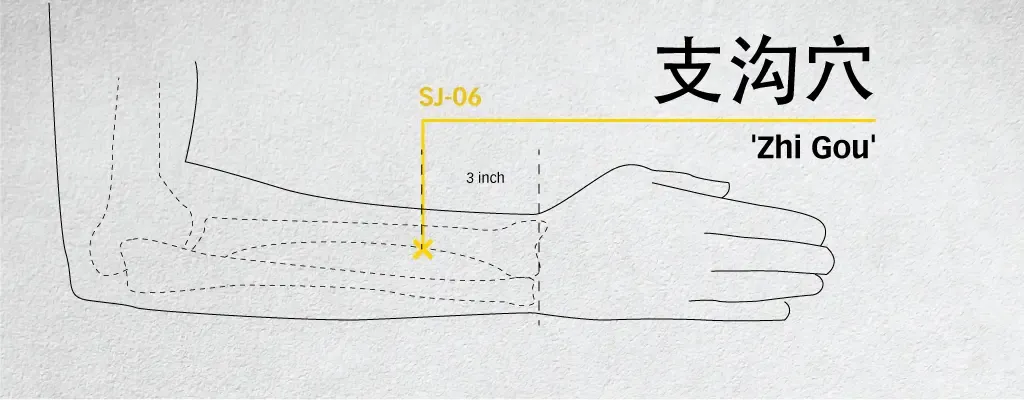
Sluggish stools? Press SJ6, HT7, and ST25
Locate and press Zhi Gou, Shen Men, and Tian Shu, plus clockwise tummy circles, for sluggish stools.
Read bite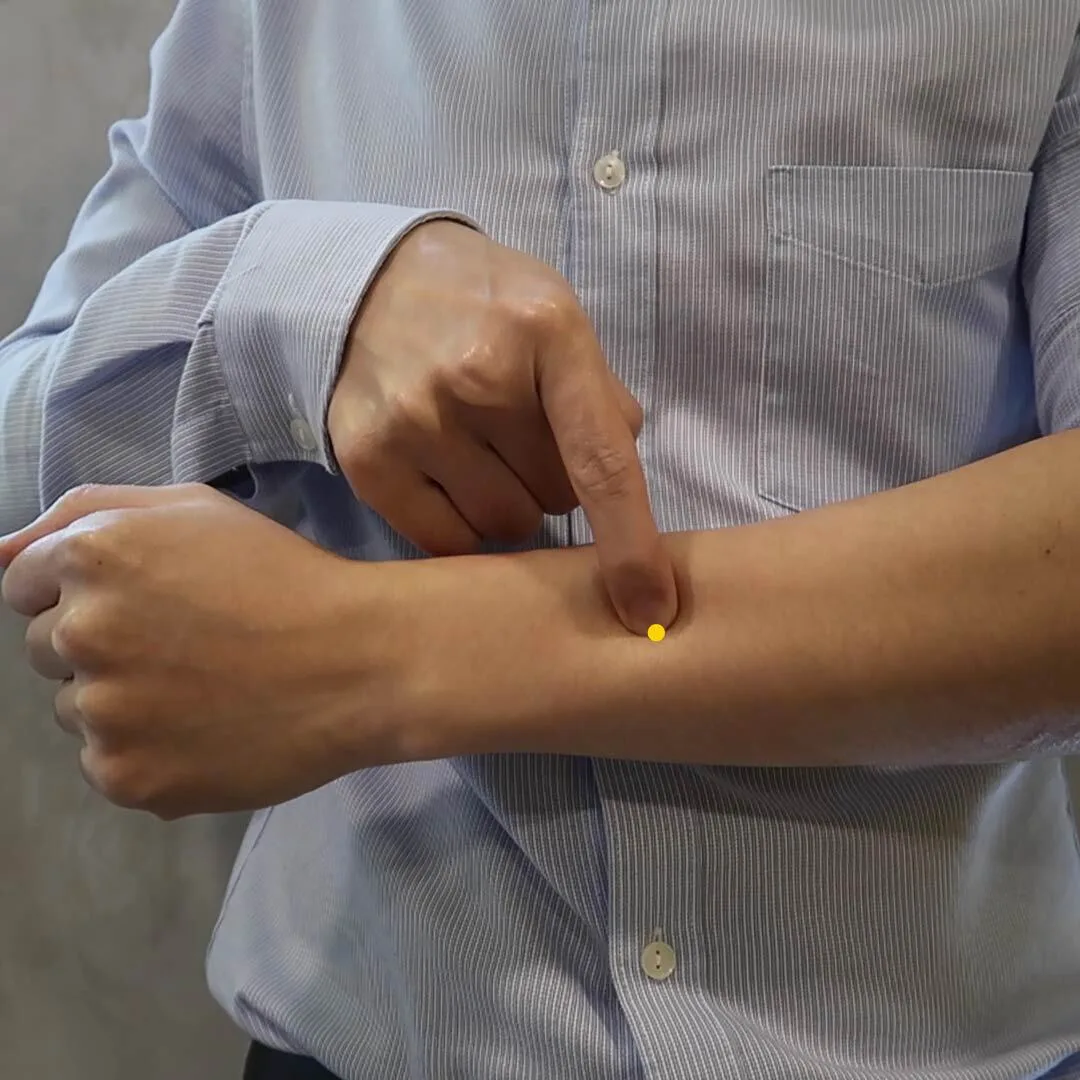
Stools stuck? Press Zhi Gou on the outer forearm
Locate 支沟 (SJ6) three cun above the dorsal wrist crease between the forearm bones. Rotate press 3–5 minutes from PULSE TCM.
Read bite
Book
Tell us what you are working on. We will match you with a suitable physician and clinic.