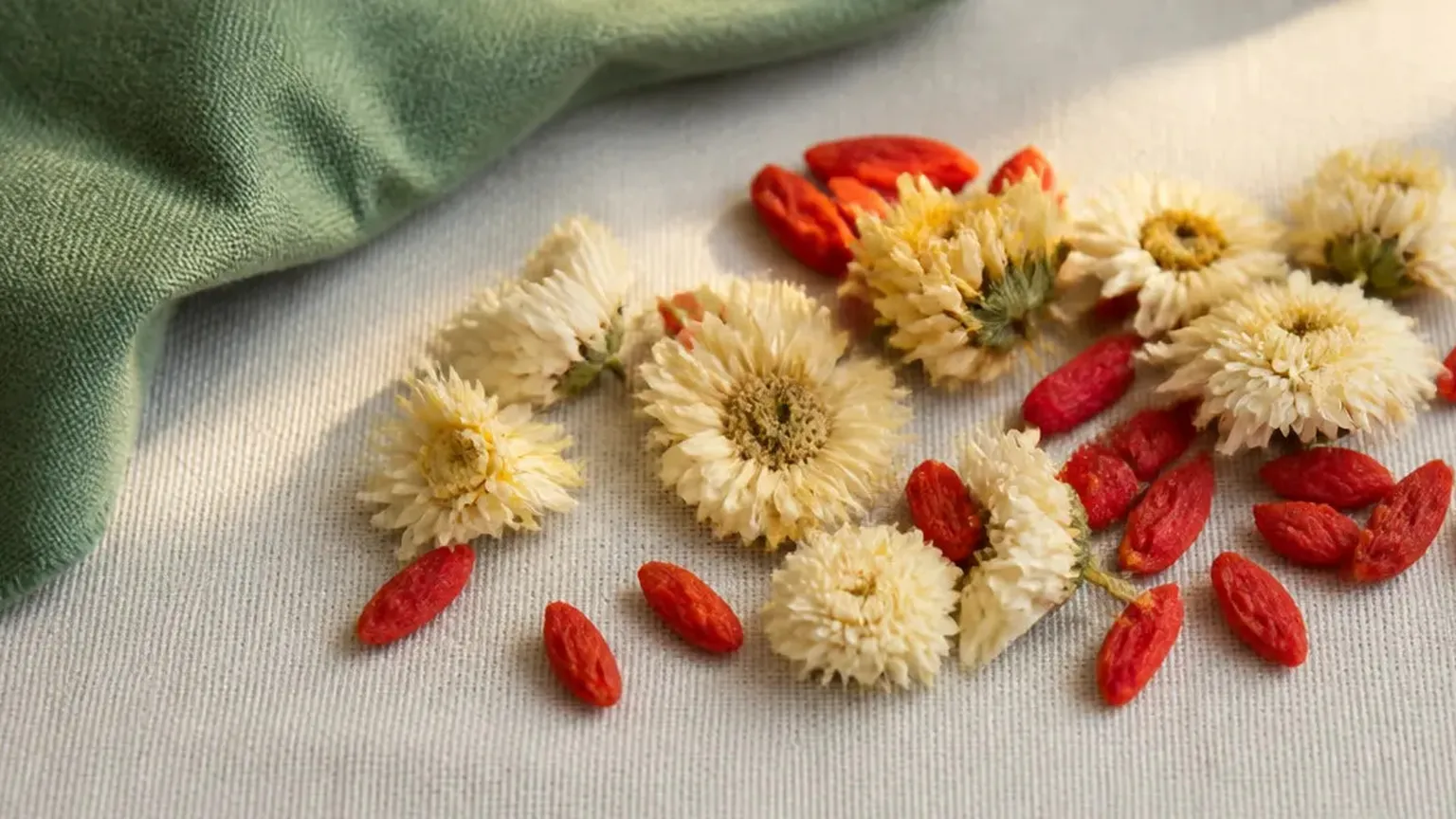
Dry, tired eyes? Steep white chrysanthemum
White chrysanthemum and wolfberry tea for tired eyes
White chrysanthemum and wolfberry tea for dry, tired eyes after screen time. Cooling, caffeine-free kitchen steep.
Read bite
Bites · Everyday TCM · General Health · Acupoint · 2 minutes
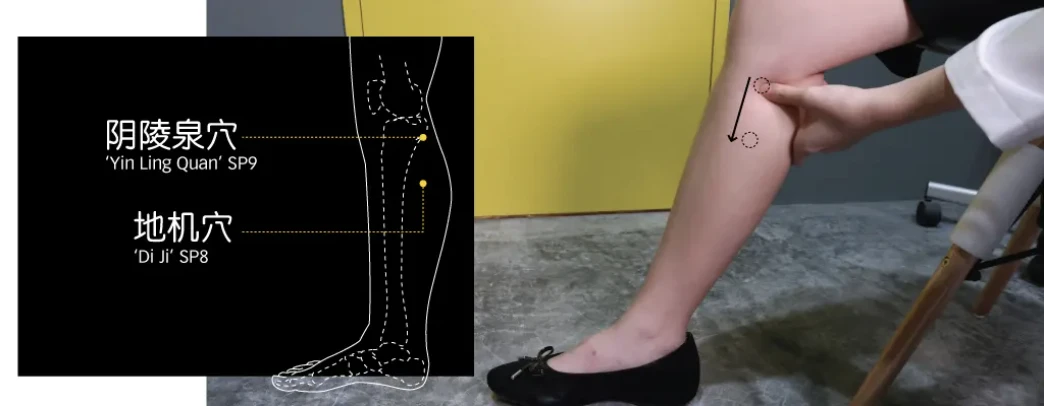
Yin Ling Quan (SP9) and Di Ji (SP8) sit on the inner lower leg. A downward stroke between them is a classic self-press when dampness sits with a heavy lipid load.
In brief
Massage from Yin Ling Quan (SP9) down to Di Ji (SP8) on the medial lower leg for about two minutes daily. SP9 sits in the depression at the lower border of the medial tibial condyle. The stroke helps move dampness; it does not replace blood tests or a physician plan for raised cholesterol.
Routine
Sit with the leg relaxed. On the medial side of the lower leg, feel for the depression at the lower border of the medial condyle of the tibia, just below the inner knee. That hollow is SP9 (阴陵泉).
From SP9, stroke firmly but kindly down the inner calf toward Di Ji (SP8, 地机), which sits further along the Spleen channel on the medial tibia. Keep a slow downward motion for about two minutes.
Ease off if the press feels sharp, numb, or wrong. Mild ache that eases on release is common; sharp pain is a stop signal.
Try today Locate SP9 once and stroke down to SP8 for two minutes today.
Next step
Read the matching guide or pathway next. Book when you are ready for personalised care.
Self-press tips are educational, not personal medical advice. Book a consult for raised lipids, damp patterns that keep returning, or pain that sharpens.
FAQs
Home self-press often starts with Yin Ling Quan (SP9) stroking down to Di Ji (SP8) to move dampness. Clinic acupuncture is patterned to your pulse and tongue, not a fixed cholesterol protocol.
About two minutes daily is the habit on this page. Stop if pain sharpens or the leg feels numb afterward.
More bites
Dry, tired eyes? Steep white chrysanthemum
White chrysanthemum and wolfberry tea for dry, tired eyes after screen time. Cooling, caffeine-free kitchen steep.
Read bite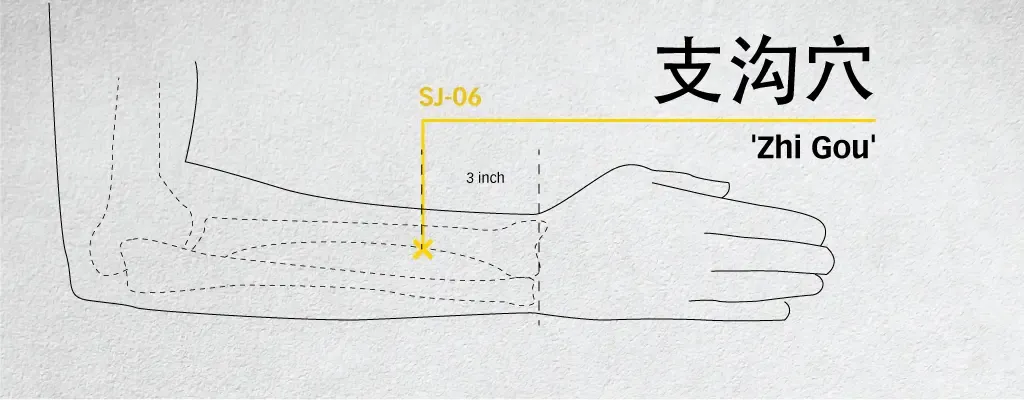
Sluggish stools? Press SJ6, HT7, and ST25
Locate and press Zhi Gou, Shen Men, and Tian Shu, plus clockwise tummy circles, for sluggish stools.
Read bite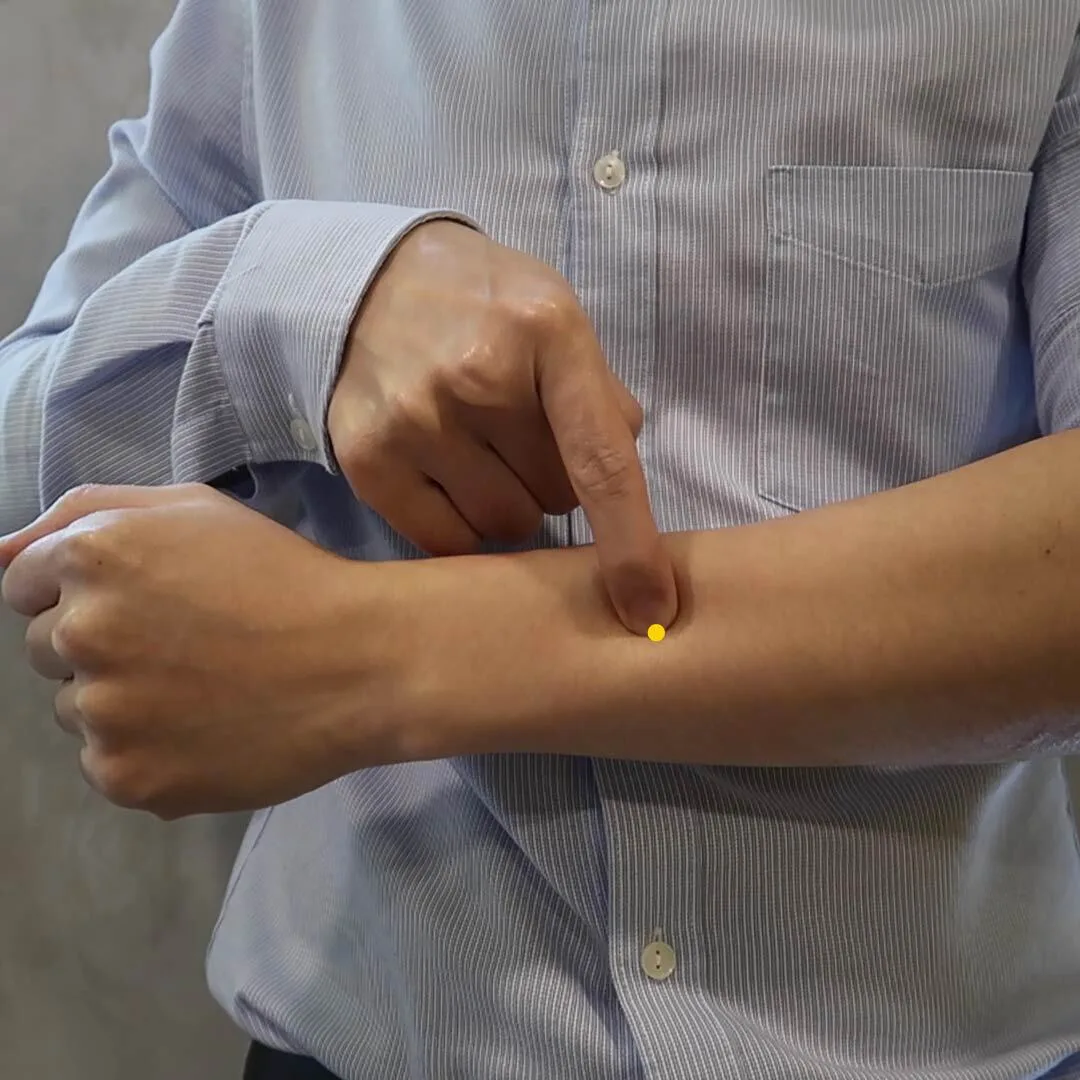
Stools stuck? Press Zhi Gou on the outer forearm
Locate 支沟 (SJ6) three cun above the dorsal wrist crease between the forearm bones. Rotate press 3–5 minutes from PULSE TCM.
Read bite
Book
Tell us what you are working on. We will match you with a suitable physician and clinic.