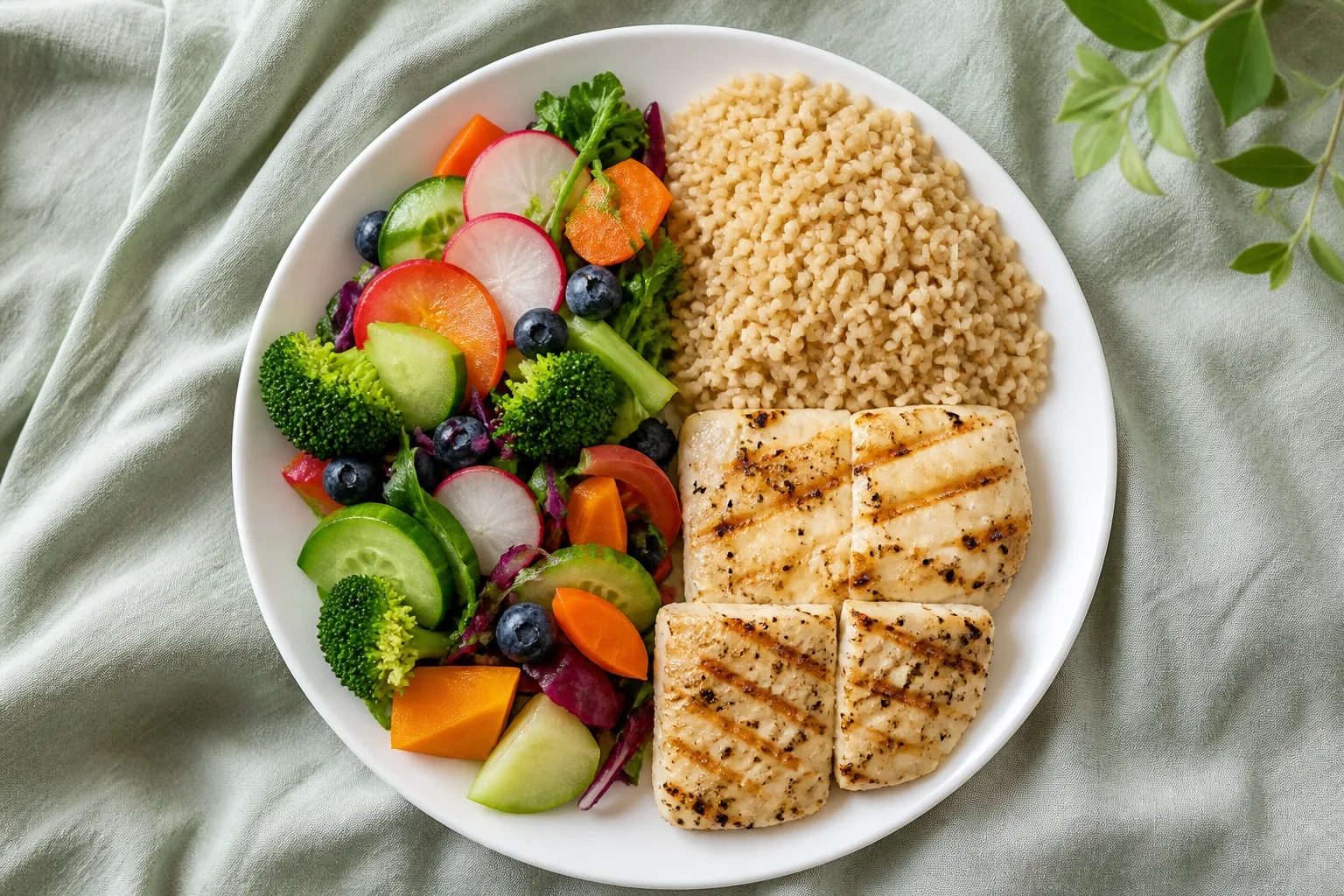
Balanced plate with vegetables, fruit, lean protein, and wholegrains on a pale linen table

Insights · General Health

ABC Your Way to a Healthier Weight

Build each meal as quarter, quarter, half. Match the plate to your constitution lean, keep favourite foods in moderation, and add TCM with Medical Nutrition Therapy when home practice plateaus.

In brief

For weight care in Singapore, automate each meal as one-quarter wholegrains, one-quarter protein, and half fruit and vegetables. Then boost the plate for your constitution lean (often dampness, qi stagnation, or Spleen-Kidney deficiency), and keep favourite foods through share, mini, swap, and treat choices. That is the ABC path. At PULSE, TCMPB physicians and dietitians co-manage with Medical Nutrition Therapy when home plate practice is not enough.

01 · Why plans stall

Common weight struggles

Misinformation, conflicting advice, and fad diets that do more harm than good often leave people plateauing and starting again from scratch.

1. Diet confusion

Keto, paleo, or juice cleanses compete for attention. Without a plate rule that fits daily life, the next trend replaces the last one.

2. Eating far too little

Some people eat under about 1000 kcal a day and still cannot lose weight. Severe restriction often backfires when hunger returns.

3. Regain after every attempt

Weight that drops quickly often returns when the plan was never sustainable for Singapore food culture and work hours.

4. Exercise then overeating

Hard training can raise appetite. Without portion automation, extra snacks cancel the calorie burn and weight drifts up.

Dinner plate with half vegetables and fruit, quarter brown rice, and quarter grilled fish

02 · A · Automate

Automate your food portions

The useful rule is fractions on each plate or bowl: quarter wholegrains, quarter protein, and half fruit and vegetables make one meal.

1. Quarter plate wholegrains

Wholegrains are unprocessed and carry vitamins B and E, iron, zinc, magnesium, phytochemicals, and dietary fibre. They add bulk and keep you full longer, so you are less likely to eat past need. Skipping carbohydrates because rice “counts as calories” often removes that satiety buffer.

2. Quarter plate protein

Protein includes poultry, red meat, eggs, seafood, fish, dairy, and plant sources such as soy milk, tofu, tempeh, mushrooms, nuts, beans, and legumes. Prefer fresh meat, lean cuts, and lower-fat dairy. Keep about one serving per meal; richer protein choices raise calories quickly.

3. Half plate fruit and vegetables

Vegetables are naturally low in calories and fat. One serving of fruit adds colour, antioxidants, texture, and flavour. High water and fibre add volume beside wholegrains so meals fill you up and leave less room for denser foods. More on fibre sits in The importance of fibre.

Satiety matters for weight care. When the body receives the nutrients it needs and hunger is met, cravings for sugar-, fat-, or salt-heavy foods ease. Automating these portions reminds you to feed function so the body can work on excess weight.

Intentionally cutting well below quarter, quarter, half can leave hunger unmet. When you later give in, overeating is common and goals slip. If every meal feels hard (especially when you eat out daily), practise the fractions at least twice a day first.

03 · Plate in practice

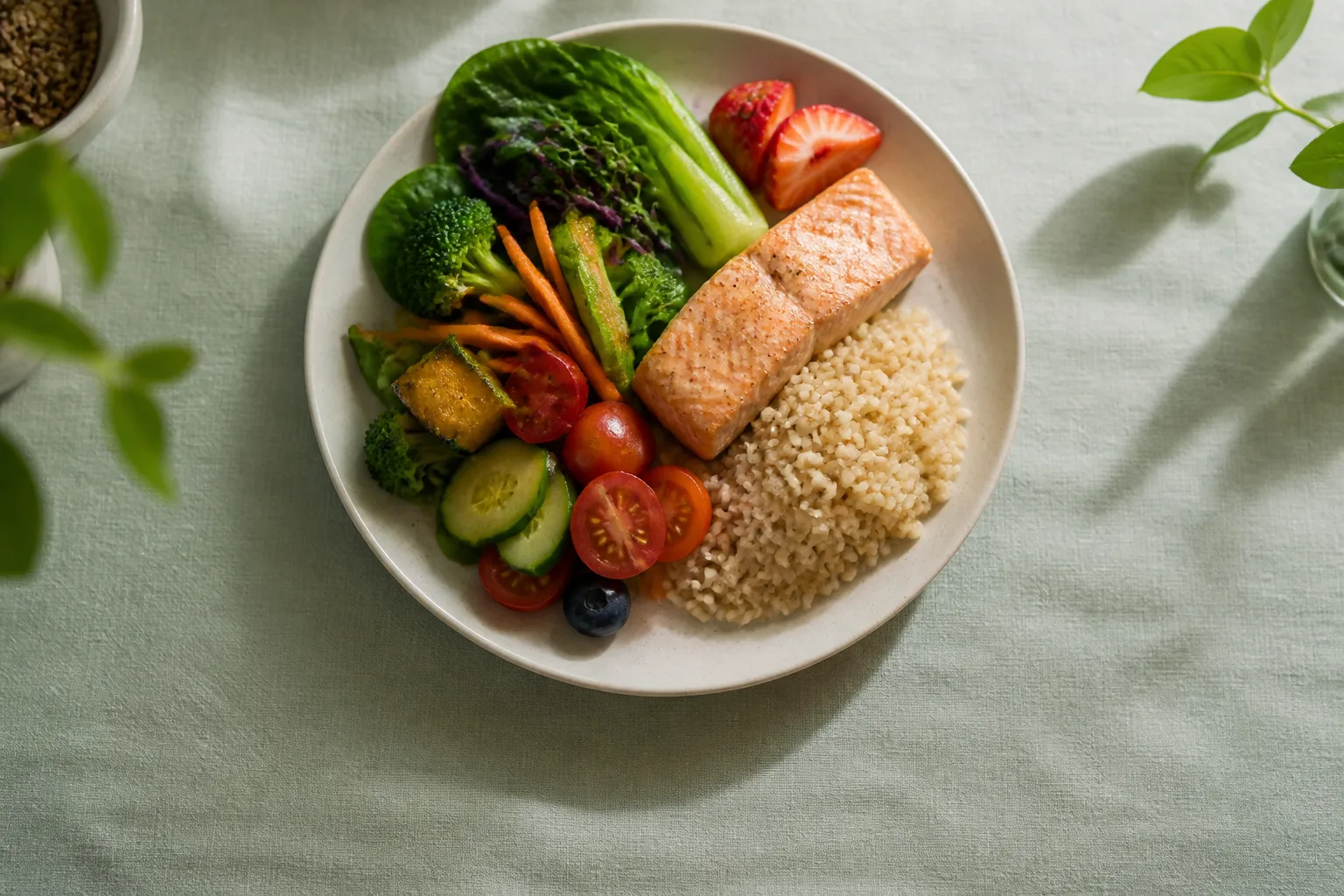
Singapore-friendly meal shapes

Hawker and home plates can still show quarter, quarter, half without asking for bland food every day.

Singapore-friendly meals that keep quarter-quarter-half visible
Meal Example Plate cue
Breakfast Congee with ginger and spring onion; oatmeal with apple and nuts; or wholegrain toast, soft-boiled eggs, and fruit Half produce or garnish volume; quarter grain; quarter egg or other protein. Keep sugary coffee add-ins light.
Lunch Fish soup bee hoon with greens; mixed bowl with sweet potato, lentils, egg or tofu; or curry with flatbread and extra vegetables Push vegetables past half the bowl; keep noodles or rice to a quarter; protein one modest serve.
Dinner Brown-rice bowl with peppers, broccoli, wood ear, and tofu; plated rice with greens and fish; or leaner nasi lemak with more cucumber and greens Half the plate vegetables; rice a quarter; protein a quarter. Cut oil and ikan bilis share on festive plates.
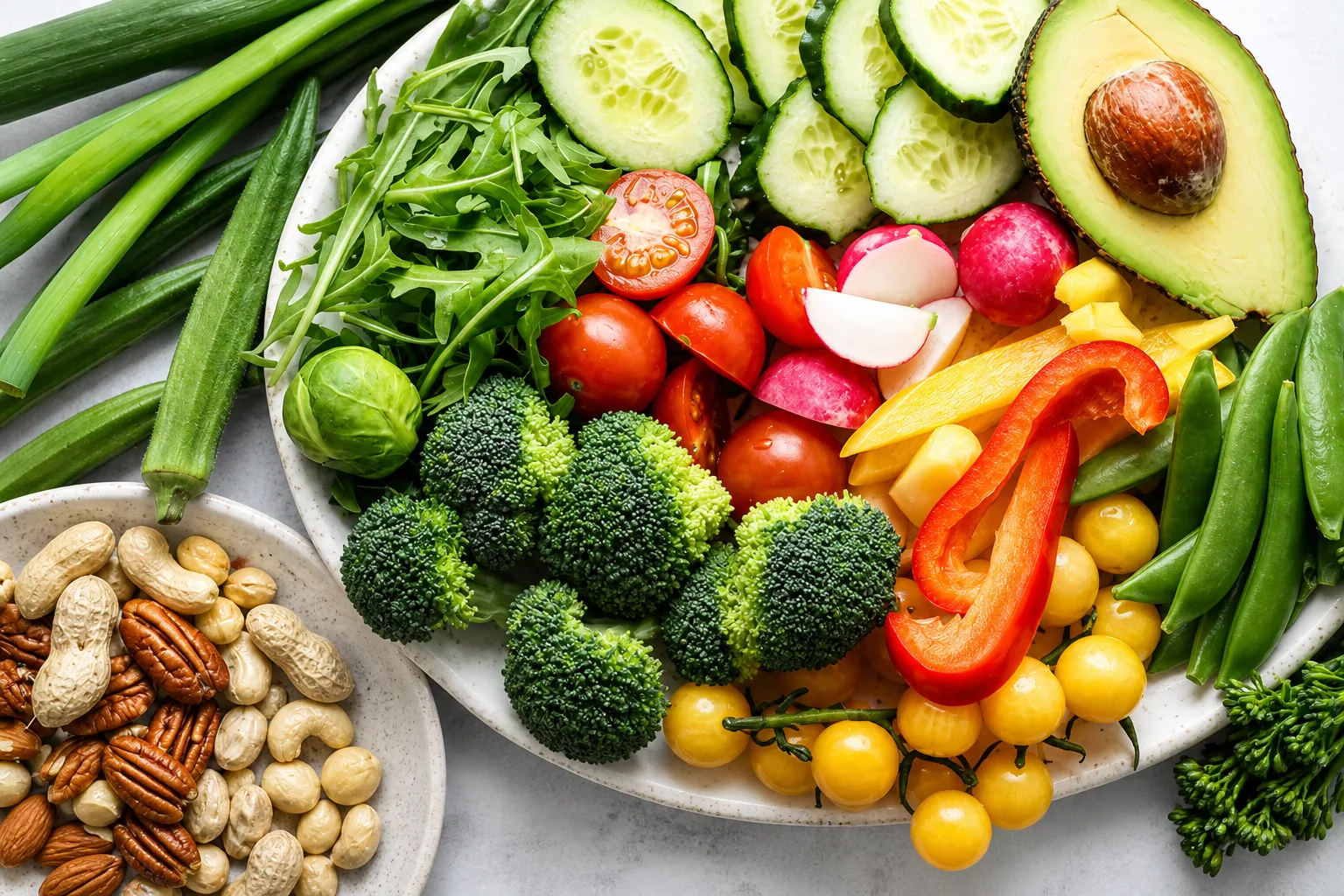
Fresh produce spread used in weight-focused Medical Nutrition Therapy meal planning

04 · B · Boost

Boost your body constitution

TCM describes nine body constitutions (体质). Stubborn weight often maps to three leans: dampness, qi stagnation, and Spleen-Kidney deficiency. The base plate stays; the tip changes.

Constitution is shaped by diet, lifestyle, environment, physical traits, and emotional load. Inherited traits are harder to change, so limiting the factors that tip you out of balance matters. When constitution is imbalanced, symptoms rise and excess weight is harder to shift safely.

Three weight-prone constitution leans and plate tips
Lean What you may notice Plate tip
Dampness (痰湿体质) Heaviness, puffiness, weight around the waist; sweet or starchy cravings Keep the base plate; favour protein and complex carbs; ease sweets, bubble tea, and simple carbs
Qi stagnation (气滞体质) Stress-linked eating, mood swings, upper-body weight load Prefer lighter steamed meals; ease greasy plates, alcohol, and heavy red meat
Spleen-Kidney deficiency (脾肾虚体质) Cold hands, fatigue, weight all around; dairy or creamy cravings Warm proteins and a solid breakfast; ease dairy, sugar, and late supper

Pulse and tongue decide the lead lean; one person can carry more than one. TCM treatments and herbal medication vary with that read. Full maps sit in Understanding your body constitution, the three body types prone to weight gain, and their diet guide.

05 · C · Choose

Choose your favourite foods

Weight plans often fail when the diet is unsustainable. In Singapore, food is a deep pleasure and a link to heritage; cutting favourites entirely often leads to burnout.

Favourite foods may be higher in fat, salt, or sugar, yet they comfort us and mark belonging. The key is moderation, not permanent exile.

1. Choose to share

Split a plate of char kway teow or a bowl of cendol rather than finishing the whole serve alone.

2. Choose mini sizes

Pick a mini chocolate bar, a small packet of chips, or a single muffin instead of a full share-size pack.

3. Choose a lighter swap

Trade fries for baked vegetables or a corn cup; trade fruit juice for a whole fruit or fruit cup so fibre stays in the meal.

4. Choose a planned treat

After several steadier days, enjoy a favourite such as Hokkien mee for lunch. The treat is scheduled, not a daily default.

Plateaus still happen. If weight stalls, or you need substitutes that fit medical conditions, clinic co-management can personalise the next step.

06 · Singapore

Hawker life and daily eating out

When many meals are outside the home, automating portions twice a day is a realistic start before every plate is perfect.

Hawker favourites, late dinners after desk hours, and iced drinks in air-con often stack load on digestion. Keeping heritage foods in the plan through share, mini, swap, and treat choices protects adherence better than a bland-only diet. For the damp and phlegm read behind stubborn weight, see TCM & Obesity.

07 · Clinic care

TCM with Medical Nutrition Therapy

Medical Nutrition Therapy is an evidence-based approach that treats certain conditions through an individually tailored nutrition plan, delivered by a certified dietitian.

At PULSE, English- and Mandarin-speaking TCMPB-registered physicians work with dietitians experienced in weight care. Eastern diagnosis and Western nutrition science sit in one plan.

Physicians categorise symptoms, observe the tongue, and feel the pulse at the radial artery. After that read, dietitians co-manage weight with a dietary balance that factors in illnesses, body condition, medicines, and food preferences. Advice is more precise than vague “eat more of” or “avoid these” lists, and less rigid than a one-size diet.

Together, TCM and dietetic care aim for safer, more sustainable progress and clearer decisions about what you eat next. Explore the Medical Nutrition Therapy and Weight Management programmes when home ABC practice needs clinic depth.

Dietitian reviewing a meal plan during Medical Nutrition Therapy consult at PULSE TCM

Next step

When plate practice needs clinic support

If portions, constitution questions, or favourite-food moderation still leave a plateau, bring meal rhythm, how long the plateau has lasted, medicines, and any recent labs. We will decide whether Weight Management, Medical Nutrition Therapy, or both belong beside your ABC habits.

Dr Sim Beng Joo

Clinically reviewed

Reviewed by Sim Beng Joo

Advisor (Science & Strategy) / Consultant Physician · TCMPB T1303003A

MOH-licensed TCM physician and biomedical scientist, with clinical work in digestion, pain, sleep or fatigue, and constitution patterns that show as damp, phlegm, or metabolic load.

View full profile

Educational information based on clinical experience, dietetic practice, and TCM principles. Not a substitute for personalised consultation, metabolic blood tests, dietetics, or urgent care. Speak with your physician and GP before starting herbs, restrictive diets, or new self-care, especially with unexplained weight change, endocrine concerns, or eating-disorder history. TCM and Medical Nutrition Therapy complement Western assessment; they do not replace it.

FAQs

Questions, answered

Common questions on the ABC plate, body constitution, favourite foods, and when Medical Nutrition Therapy belongs.

What is the quarter-quarter-half healthy plate for weight care?

One meal is one-quarter wholegrains, one-quarter protein, and half fruit and vegetables. Wholegrains and produce add bulk and fibre for satiety; protein stays at about one serving per meal so calories stay realistic.

Why should I not cut portions below the recommended plate?

Cutting well below quarter-quarter-half can leave hunger unmet. When hunger returns, overeating is common and the plan stalls. Fill the plate fractions first so nutrients and satiety arrive together.

What does ABC mean for a healthier weight?

Automate the quarter-quarter-half plate, Boost the plate for your constitution lean, and Choose favourite foods in moderation through share, mini, swap, and treat. It is a repeatable path beside clinic support when needed.

How do dampness, qi stagnation, and Spleen-Kidney deficiency change the plate?

The base plate stays. Dampness often needs more protein and complex carbs with fewer sweets. Qi stagnation prefers lighter steamed meals and less greasy or alcohol-heavy food. Spleen-Kidney deficiency leans warm proteins, a solid breakfast, and less dairy or late supper. Pulse and tongue still decide the lead.

Can I keep favourite foods while losing weight?

Yes, in moderation. Share a high-calorie dish, choose mini sizes, swap one item for a lighter option, or schedule a treat after several steadier days. Cutting favourites entirely often leads to burnout in Singapore food culture.

What is Medical Nutrition Therapy with TCM?

Medical Nutrition Therapy is an evidence-based, individually tailored nutrition plan delivered by a certified dietitian. At PULSE, dietitians co-manage with TCMPB-registered physicians after tongue and pulse diagnosis, so macros and preferences sit beside pattern-led TCM care.

When should I book for weight care at PULSE?

Book when plate practice and moderation still leave a plateau, when medical conditions need dietary personalisation, or when you want constitution-led TCM beside dietetics. Bring meal rhythm, plateau length, and any labs so we can route Weight Management, Medical Nutrition Therapy, or both.

References

Selected sources

  1. National Center for Complementary and Integrative Health. Traditional Chinese medicine: What you need to know. 2019. https://www.nccih.nih.gov/health/traditional-chinese-medicine-what-you-need-to-know/
  2. Ministry of Health Singapore. TCM practitioners (Healthcare Professional Portal). https://hpp.moh.gov.sg/tcm-practitioners/
  3. World Health Organization. Traditional, complementary and integrative medicine. https://www.who.int/health-topics/traditional-complementary-and-integrative-medicine
  4. Original article author: Dietitian Adelyn Khoo.

Next step

Ready for a plate-and-pattern plan?

Bring meal rhythm (how often you eat out), plateau length, foods you will not give up, medicines, and any recent labs. We will match portions and constitution care, then route Weight Management, Medical Nutrition Therapy, or both.

Hours
Most clinics daily 11:00 AM – 8:00 PM
Care
Physician-led consultation