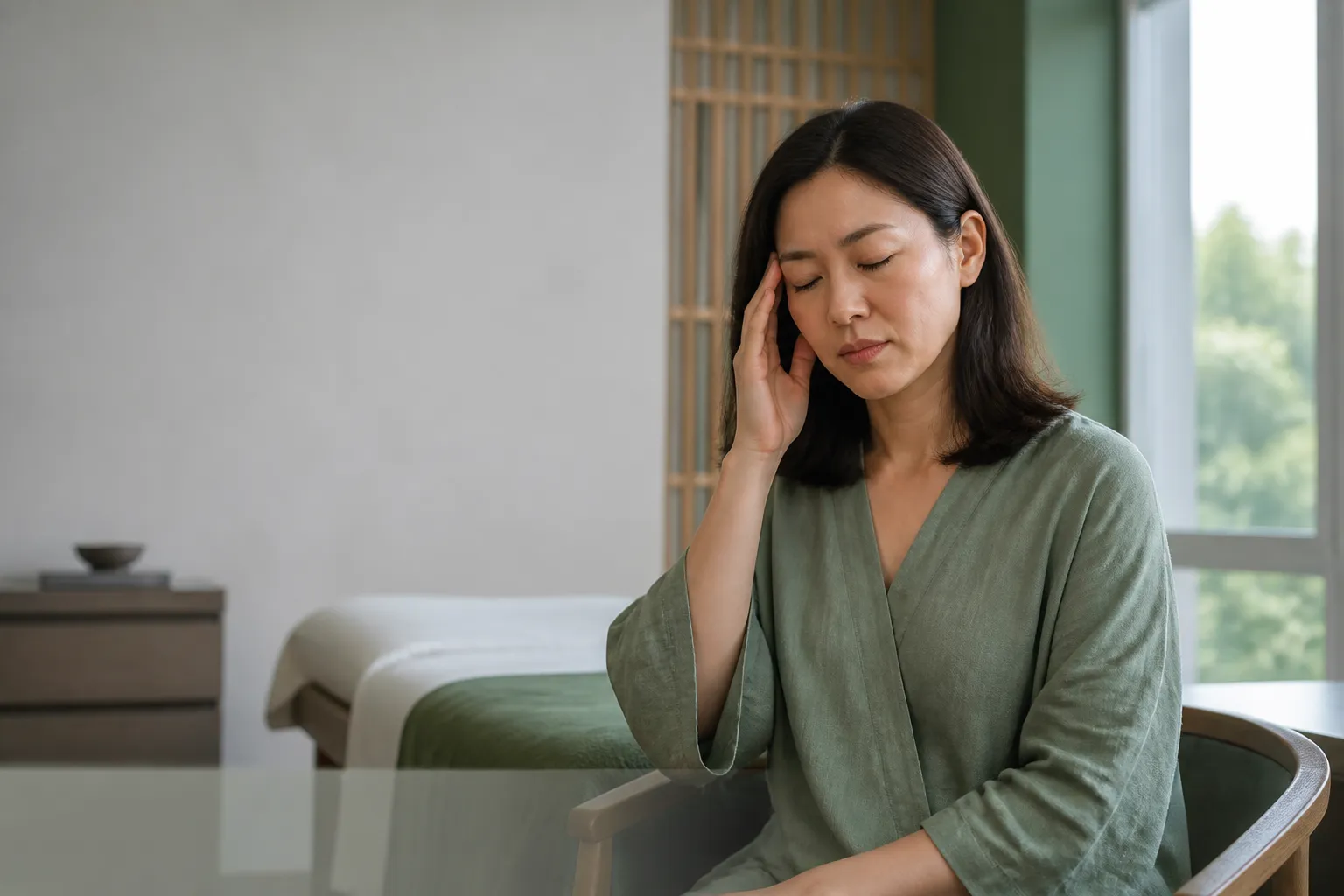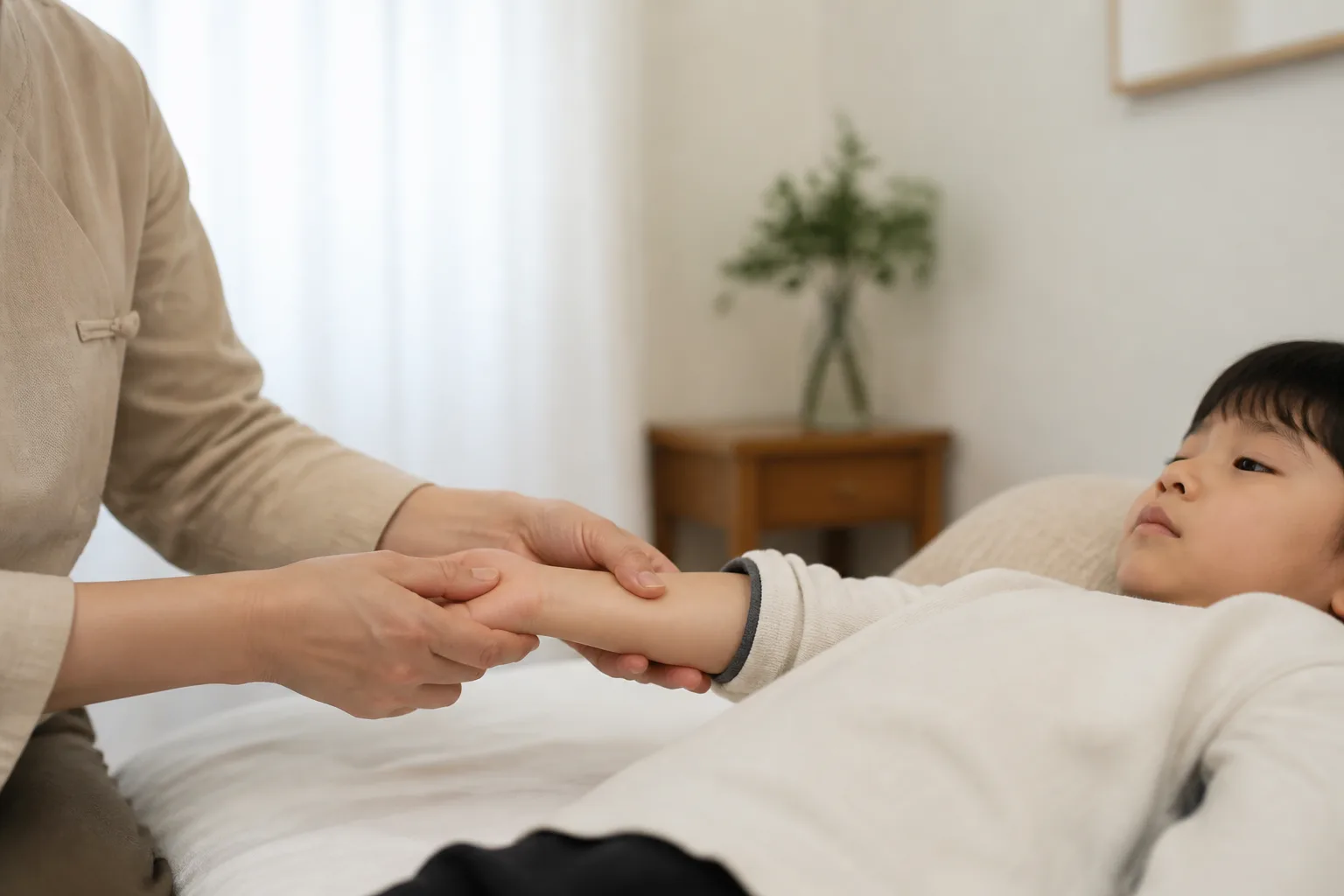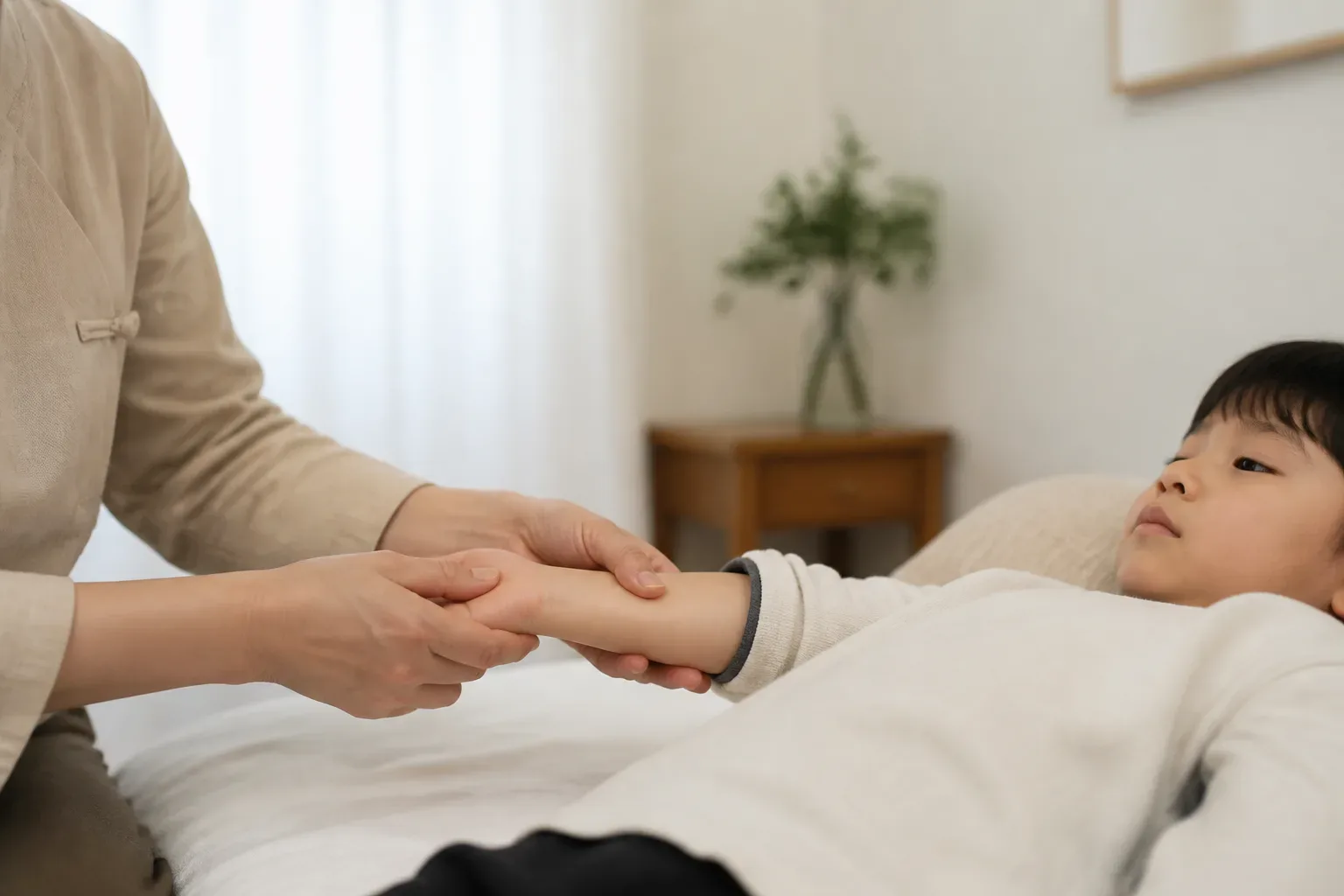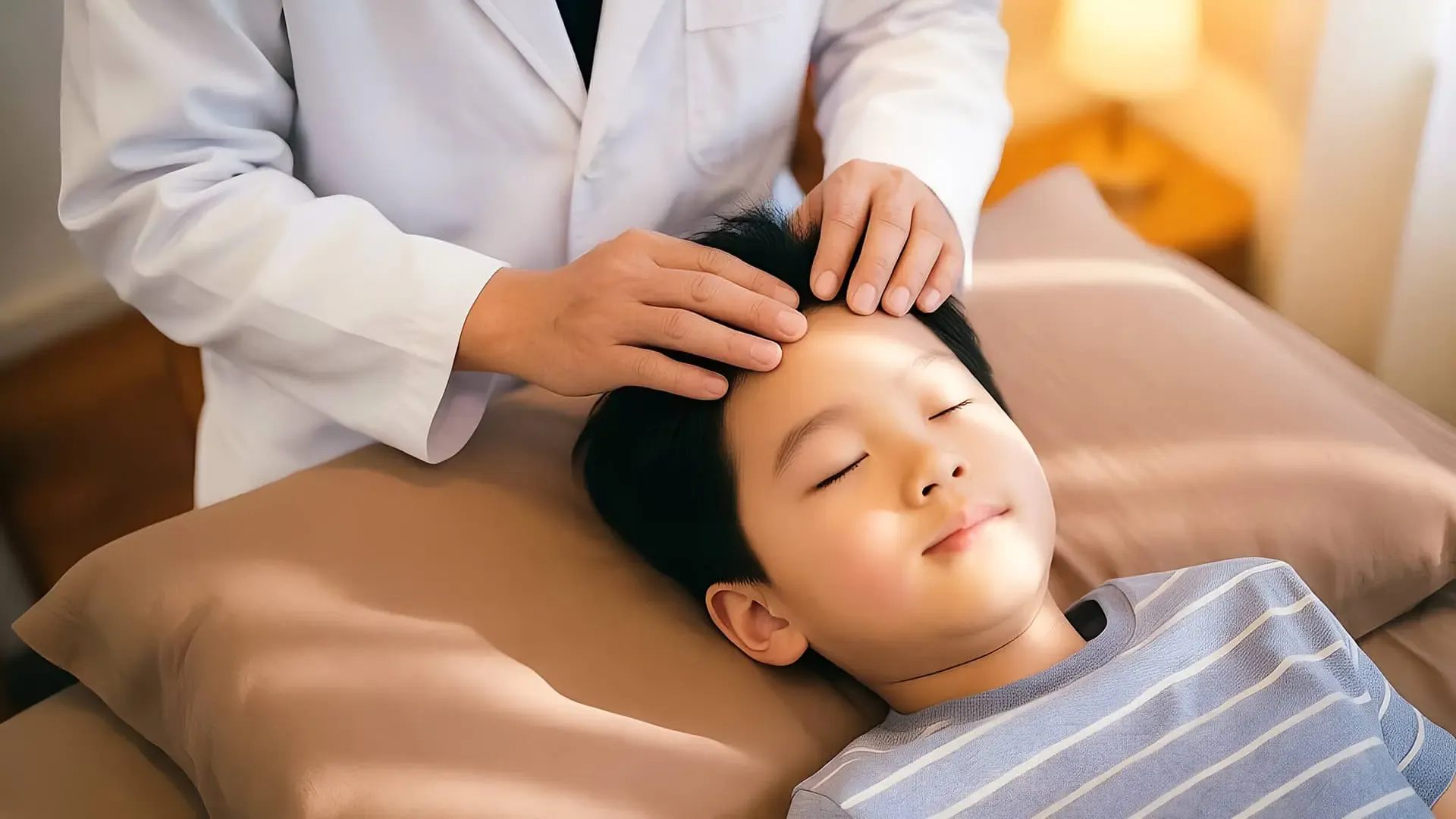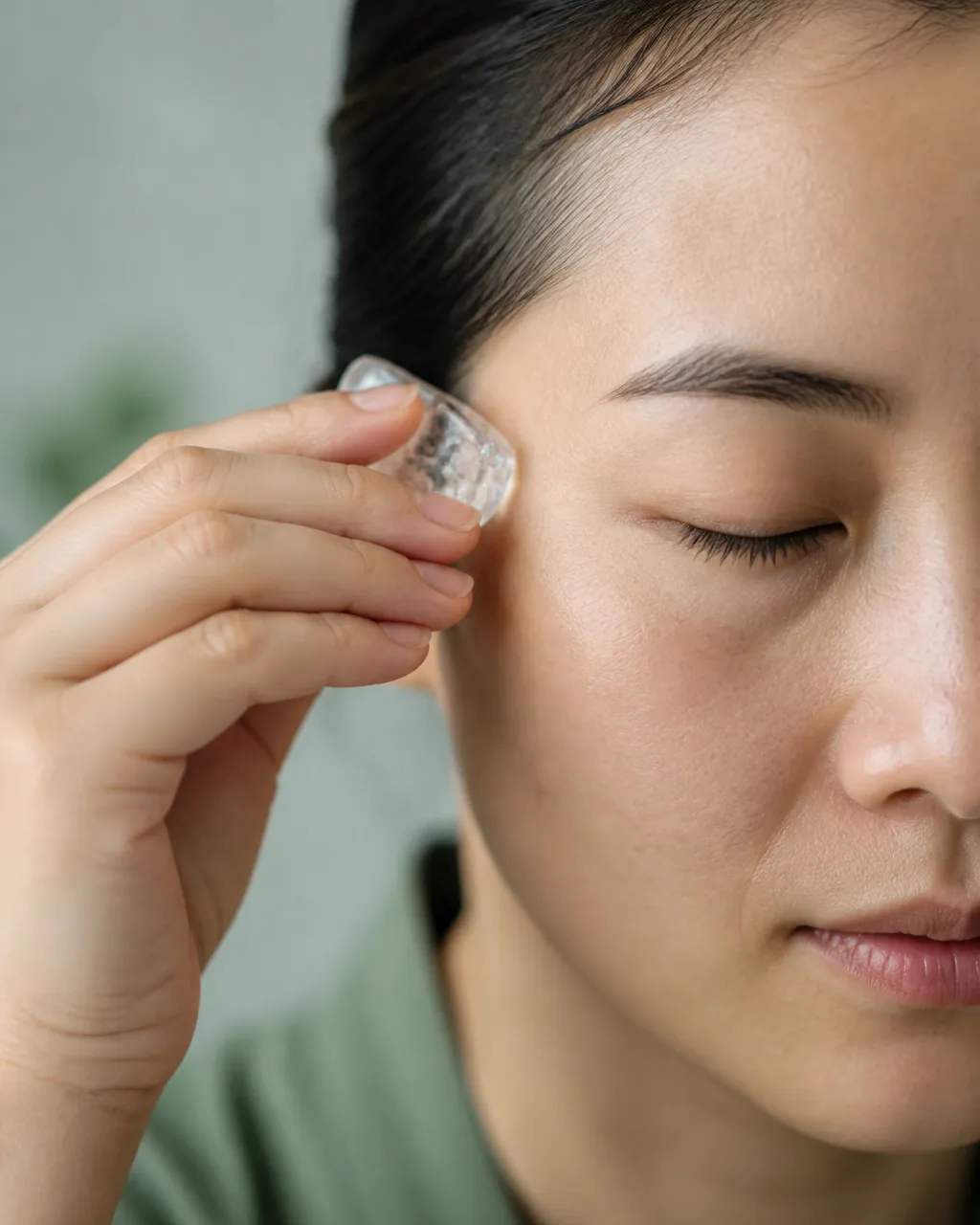
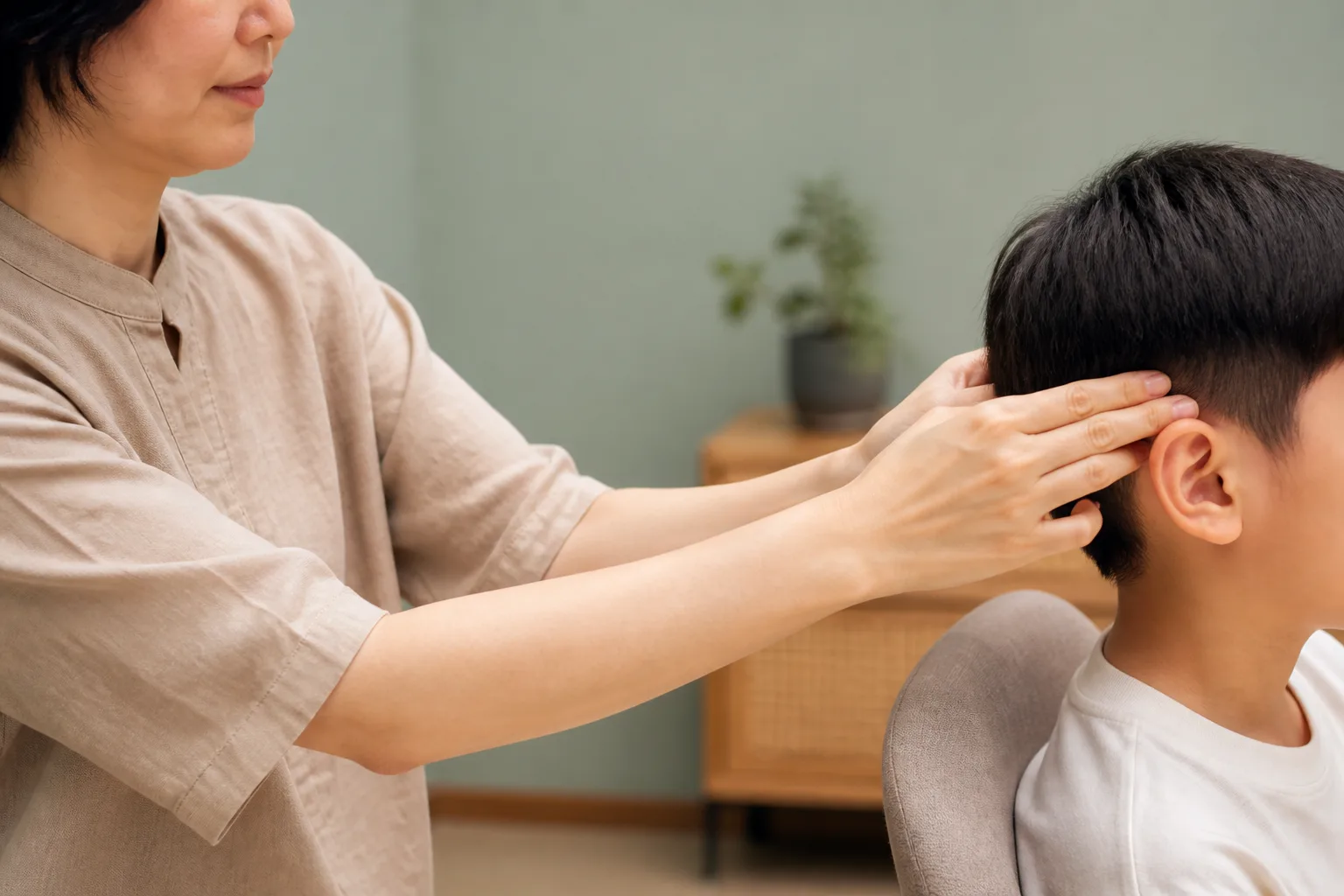
Adult hands demonstrating gentle temple acupressure for paediatric migraine care in a calm TCM clinic

Insights · Pain & Injuries

Migraine in children and teenagers

Clinic teaching cites about 8% of school-aged children in Singapore with migraine. TCM reads Liver excess and Gallbladder blockage, then matches Tuina, acupuncture, herbs, and home care to age.

In brief

Children and teenagers can get migraines. Clinic teaching cites about 8% of school-aged children in Singapore, and up to about 10% globally. Younger children often have bilateral pain; older teens more often one-sided. In TCM, Liver excess (肝常有余) with study stress and late nights can raise Liver Heat and block the Gallbladder meridian (不通则痛). Rest, soft press, and cool steeps support between visits; recurrent or escalating pain needs a physician.

01 · Definition

What is a migraine

Recurring attack · age patterns · aura

Migraine is a recurring throbbing or pulsating headache on one or both sides of the head. Attacks usually last hours to days and often worsen with activity.

Older teens more often feel pain on one side. Younger children more often feel it on both sides. Attacks may come with nausea, vomiting, dizziness, sensitivity to light, sound, odours, or touch, abdominal pain, irritability, or loss of appetite.

Some children get auras: neurological signs before the pain that can last up to about one hour. Examples include blurred vision, flashes of light, bright spots, shapes or lines, and numbness or tingling in the fingers or part of the face.
02 · Singapore

School load, screens, and AC days

Tuition · late nights · cold classrooms

Clinic teaching often cites about 8% of school-aged children in Singapore with migraine, and up to about 10% globally. Diagnosis often comes after age 5 because younger children struggle to name what they feel.

Long tuition evenings, late device use, and early starts leave little buffer for sleep. Air-conditioned classrooms and iced drinks all day can tighten the nape and temples for some children. At puberty the sex ratio flips, with more adolescent girls than boys affected as menses begins.

These habits do not diagnose a pattern alone. They are the Singapore load that often sits with Liver Heat or Liver Yang when migraine keeps returning.

03 · TCM view

Causes in a TCM point of view

肝胆相表里 · 肝常有余 · 不通则痛

Liver and Gallbladder are an exterior-interior pair (肝胆相表里). The Gallbladder meridian runs along the sides of the head, so migraine often links to that axis.

Children and teenagers often show a constitution where the Liver sits in relative excess (肝常有余). Late nights, heavy screen time, and study stress can push Liver Heat and Liver Yang higher, then block the Gallbladder meridian. When Qi and blood do not move, pain follows (不通则痛).

Girls rely more on Liver function across menstruation and puberty (女子以肝为先天). Liver Qi stagnation can turn into Heat over time. After menarche, blood loss can leave the Liver less anchored, so Liver Yang rises more easily. That helps explain why adolescent girls become more affected than boys.

04 · Triggers

Common migraine triggers

Modern medicine frames migraine as a neurological disorder of brain, nerves, and vessels. Environmental and emotional irritants release chemicals that set an attack off. Children with migraine are often more susceptible than peers.

1. Stress and hormones

Study and family stress; hormonal change around menses and puberty in teens.

2. Sleep, meals, and fluids

Too little or too much sleep, skipping meals, and dehydration.

3. Environment and senses

Weather change, glare, and strong odours.

4. Food and drink

MSG; caffeine in coffee, tea, or colas; nitrates and nitrites in preserved meats; tyramine in aged cheese. Alcohol is less common in children but still a known adult trigger in the same family list.

Helping your child notice and avoid their own trigger set can reduce how often attacks return.

05 · During an attack

Rest that settles the system

Dark · quiet · cool

When pain builds, rest in a dark, quiet, cool room. Lying down and sleeping when possible can calm the system enough for the attack to ease.

Soft press and cooling teas sit between visits. They do not replace rest in the acute hour, and they do not replace urgent care for sudden worst-ever headache or neurological red flags.

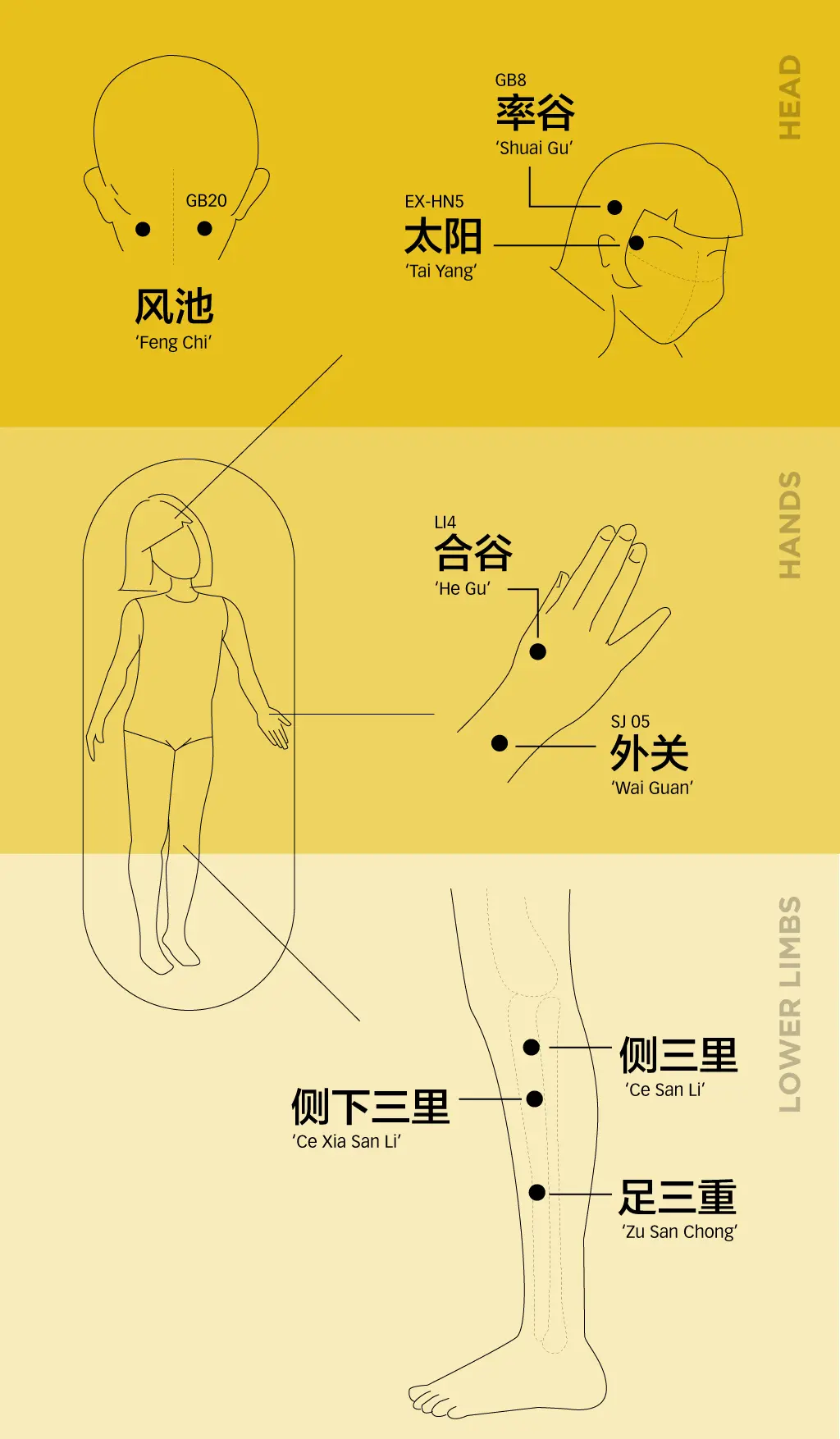
Teaching diagram of paediatric migraine acupressure points on the head, hands, and lower limbs

06 · What may help

Points, cool steeps, and a Tian Ma pot

Press · tea · soup

When Liver Heat or Liver Yang sits with study load, soft temple and nape press, cool chrysanthemum steeps, and a Tian Ma chicken pot are common educational supports between visits.

Age and herb limits

Tea amounts suit ages above 7; use half for ages 5–7. Apocynum is a stronger cool herb; ask a physician before regular use. If there is any chance of pregnancy, skip the blood-moving soup and ask before cooling teas.

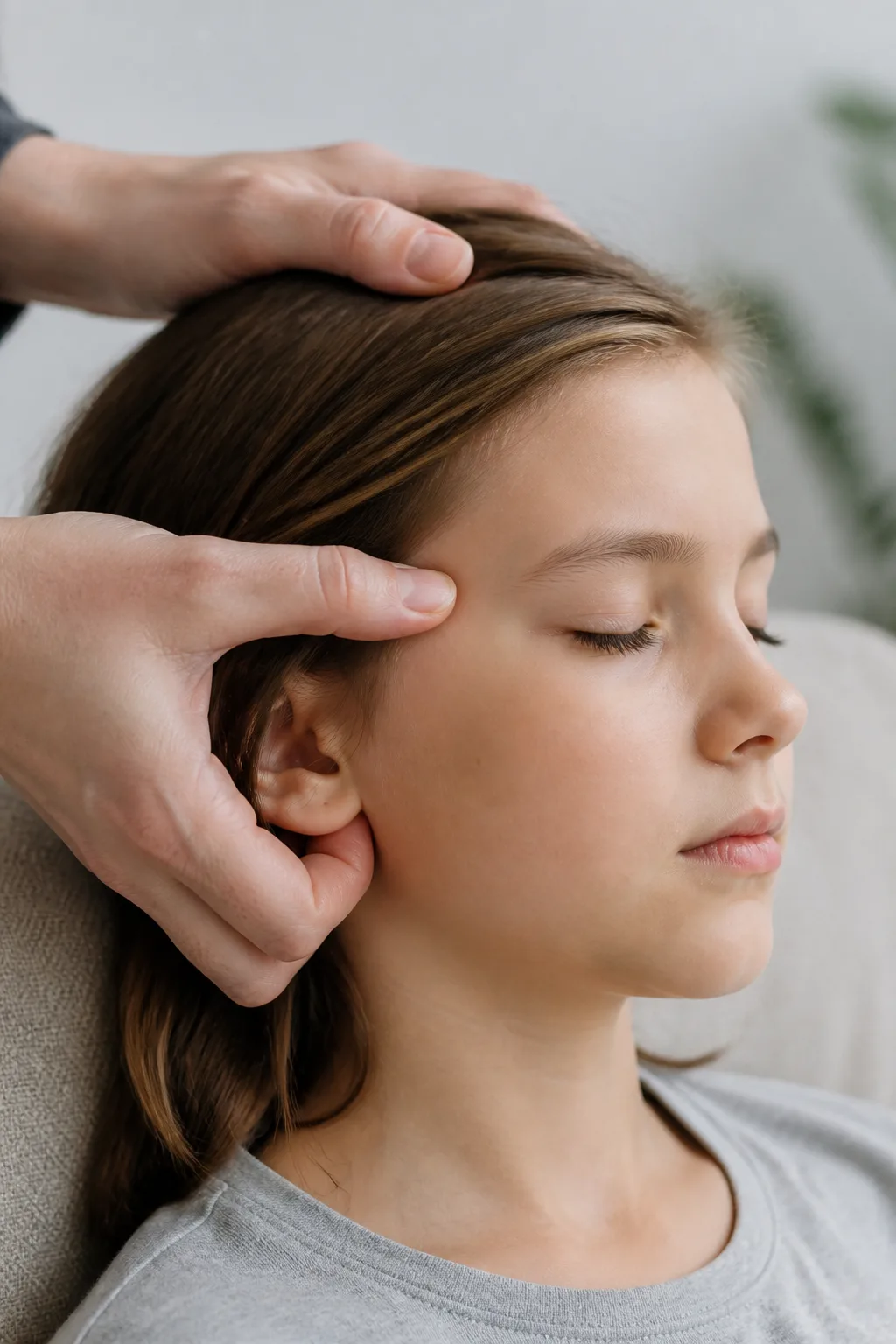
Adult fingertips gently pressing the temple hollow for paediatric migraine acupressure

Acupressure · temple · nape · limb

Press the paediatric migraine points

Taiyang, Feng Chi, and Shuai Gu on the head, with hand and lower-limb points from the teaching set, when pain builds at the sides of the head.

Soft circles for two to three minutes. Mild ache is expected; never press into the eyeball.

Press the points
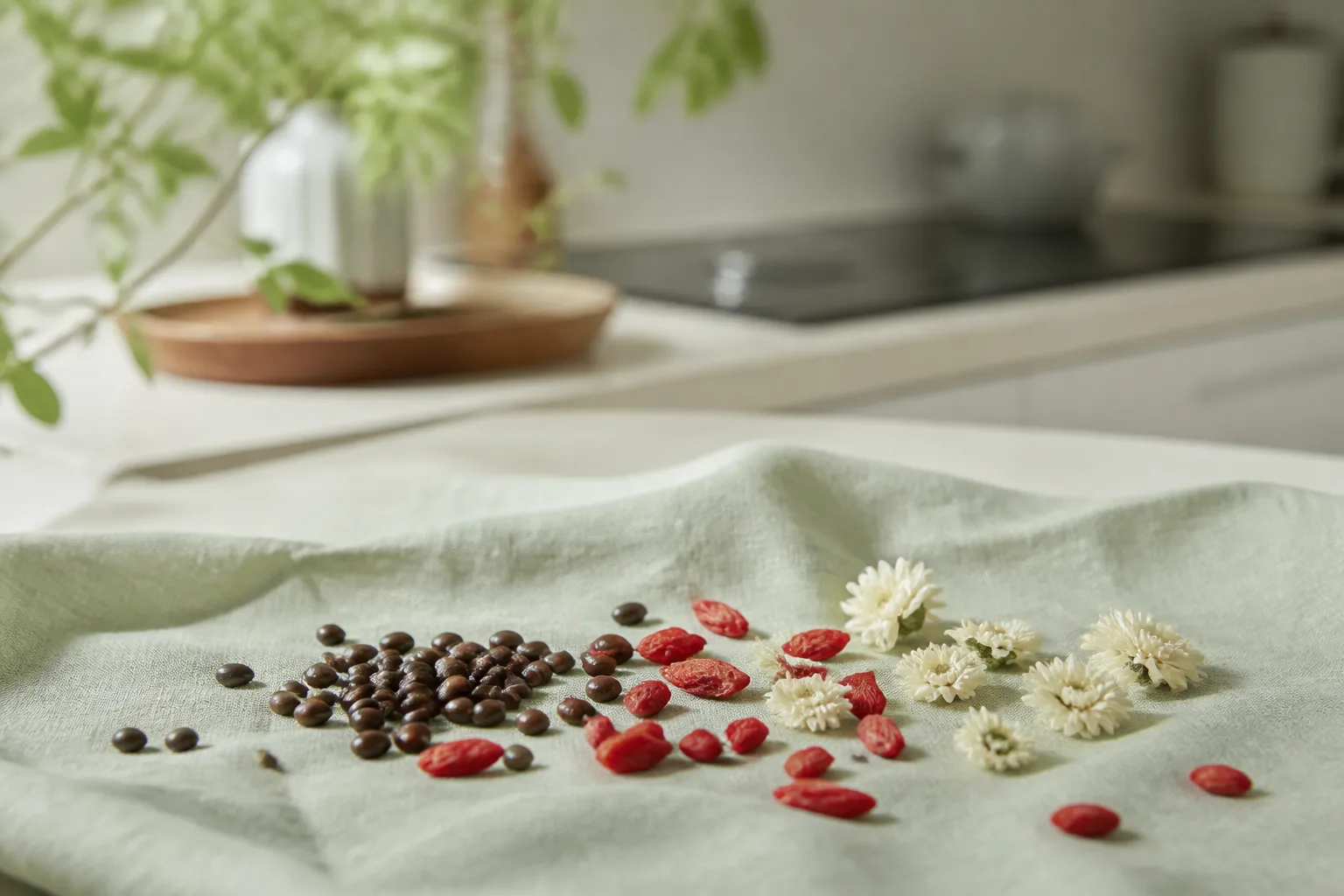
Dried cassia seeds, goji berries, and white chrysanthemum for tea at PULSE TCM

Tea · cassia · goji · chrysanthemum

Steep cassia, goji, and white chrysanthemum

A short cool steep when Liver-linked heat sits with glare sensitivity or restless temples between attacks.

About twice a week. Half dose ages 5–7. Cassia can loosen stools.

Steep the cassia tea
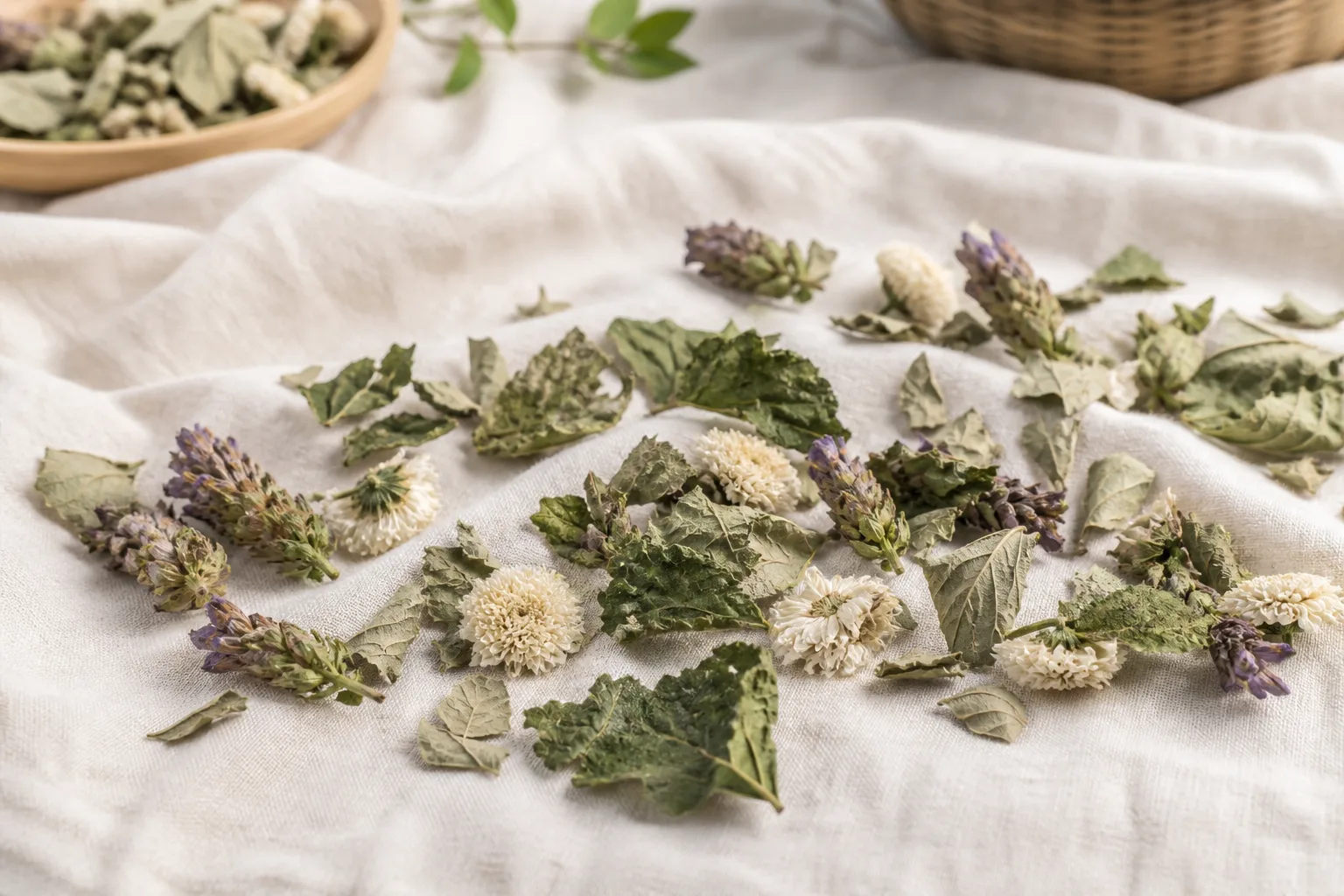
Dried mulberry leaf, white chrysanthemum, Apocynum, and Prunella for tea at PULSE TCM

Tea · mulberry · Apocynum · Prunella

Steep mulberry, chrysanthemum, Apocynum, and Prunella

A stronger cool cup when irritability, heat signs, and side-of-head pain stack with study stress.

Ask before regular Apocynum use. Half dose ages 5–7. Ease off if stools loosen.

Steep the mulberry tea
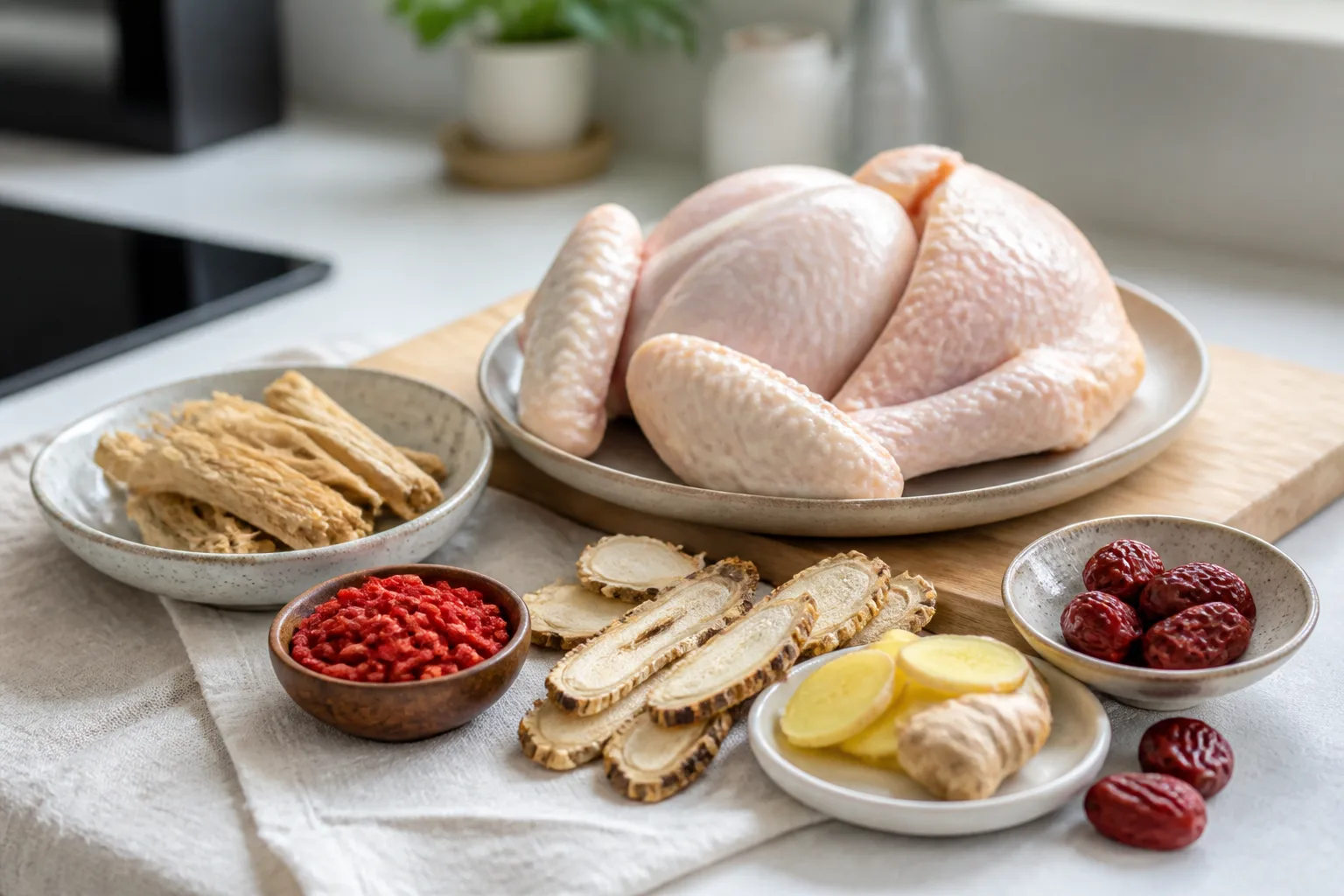
Chicken, Tian Ma, Chuan Xiong, red dates, goji, and ginger for soup at PULSE TCM

Soup · Tian Ma · Chuan Xiong

Simmer Tian Ma and Chuan Xiong chicken soup

A fortnightly pot, or during an attack, when wind-linked head pain and stuck blood signs sit with migraine.

About 4–5 servings. Skip in pregnancy. Ask a physician for infants or complex illness.

Simmer the chicken soup

Clinic path

Recurrent migraine needs a pattern read

Home tips settle some episodes. When attacks keep returning, a physician matches Tuina, acupuncture, herbs, or cupping to your child's constitution.

07 · In clinic

TCM treatments for paediatric migraine

Herbs · Tuina · acupuncture · cupping

Consult a physician if migraines keep occurring or the pain escalates beyond what home tips can manage. Pulse, tongue, age, and constitution decide the mix.

1. Herbal medicine

Often used between attacks to settle Liver Heat or Yang and reduce how often migraines return, after a pattern read.

2. Paediatric Tuina

Gentle strokes and press for children under about seven years when needles are not the first choice.

3. Acupuncture

More often offered for older children when they can stay still and the pattern calls for channel work during or between attacks.

4. Vacuum cupping

Used when stagnation in the nape or upper back sits with the headache pattern and age allows.

TCM complements GP and neurology care. It does not replace urgent assessment for sudden worst-ever headache, fever with stiff neck, vision loss, weakness on one side, confusion, collapse, or headache after trauma.

Dr Sim Beng Joo

Clinically reviewed

Reviewed by Dr Sim Beng Joo

Advisor (Science & Strategy) / Consultant Physician · TCMPB T1303003A

MOH-licensed TCM physician, with clinical work in gastrointestinal syndromes, pain management, sleep / fatigue.

View full profile

Educational information based on clinical experience and TCM principles. Not a substitute for personalised consultation, paediatric medical care, or urgent attention. Constitutions differ; speak with a licensed TCM practitioner and your child's healthcare providers before starting herbs, teas, soups, or new self-care. Seek urgent care for sudden worst-ever headache, fever with stiff neck, vision loss, weakness on one side, confusion, collapse, or headache after trauma. TCM complements GP and neurology care; it does not replace emergency assessment.

FAQs

Questions, answered

Prevalence, Singapore school load, tea dosing ages, home tips, and when to book.

Can children and teenagers get migraines?

Yes. Clinic teaching cites about 8% of school-aged children in Singapore with migraine, and up to about 10% globally. Onset can be young; diagnosis often comes after age 5 because younger children struggle to describe symptoms accurately. At puberty the sex ratio flips, with more adolescent girls than boys affected.

How do paediatric migraines differ from adult migraines?

Pain is throbbing or pulsating and lasts hours to days, often worse with activity. Older teens more often have one-sided pain; younger children more often have bilateral pain. Accompanying signs can include nausea, vomiting, dizziness, light or sound sensitivity, abdominal pain, irritability, and loss of appetite. Aura, when present, usually lasts up to about one hour.

What causes migraine in children in TCM?

Liver and Gallbladder are an exterior-interior pair (肝胆相表里). The Gallbladder meridian runs along the sides of the head, so migraine often links to that axis. Children often show Liver excess (肝常有余). Late nights, electronics, and study stress can raise Liver Heat and Liver Yang, blocking the meridian (不通则痛). Girls rely more on Liver function across menses and puberty (女子以肝为先天), so stagnation and heat patterns are common after menarche.

What triggers migraine in children?

Common triggers include stress, hormonal change around menses and puberty, too little or too much sleep, skipping meals, dehydration, weather change, glare, strong odours, MSG, caffeine drinks, nitrate-preserved meats, and tyramine-rich aged cheese. Children with migraine are often more sensitive to these irritations than peers.

What home tips help paediatric migraine?

Rest in a dark, quiet, cool room during an attack; soft circular acupressure at Taiyang, Feng Chi, Shuai Gu, and related hand and limb points; cool cassia or mulberry steeps about twice a week; and Tian Ma chicken soup fortnightly or during an attack. These support between visits.

What tea dose should ages 5–7 use?

Amounts listed for the cassia-goji-chrysanthemum and mulberry-Apocynum teas suit ages above 7. For ages 5–7, use half of each herb amount. Apocynum is a stronger cool herb; ask a physician before regular use.

When should I take my child to a TCM physician for migraine?

Consult when migraines keep recurring or escalate beyond home tips. Care may include herbal medicine, paediatric Tuina under about seven years, acupuncture for older children, and vacuum cupping when the pattern fits. Seek urgent Western care for sudden worst-ever headache, fever with stiff neck, vision loss, weakness on one side, confusion, collapse, or headache after trauma.

References

Selected sources

  1. National Center for Complementary and Integrative Health. Traditional Chinese medicine: What you need to know. 2019. https://www.nccih.nih.gov/health/traditional-chinese-medicine-what-you-need-to-know/
  2. Ministry of Health Singapore. TCM practitioners (Healthcare Professional Portal). https://hpp.moh.gov.sg/tcm-practitioners/
  3. World Health Organization. Traditional, complementary and integrative medicine. https://www.who.int/health-topics/traditional-complementary-and-integrative-medicine

Next step

Ready for a paediatric consultation?

Tell us about your child's headache pattern, sleep, screens, and school stress. We will match you with a suitable physician.

Hours
Most clinics daily 11:00 AM – 8:00 PM
Care
Physician-led consultation