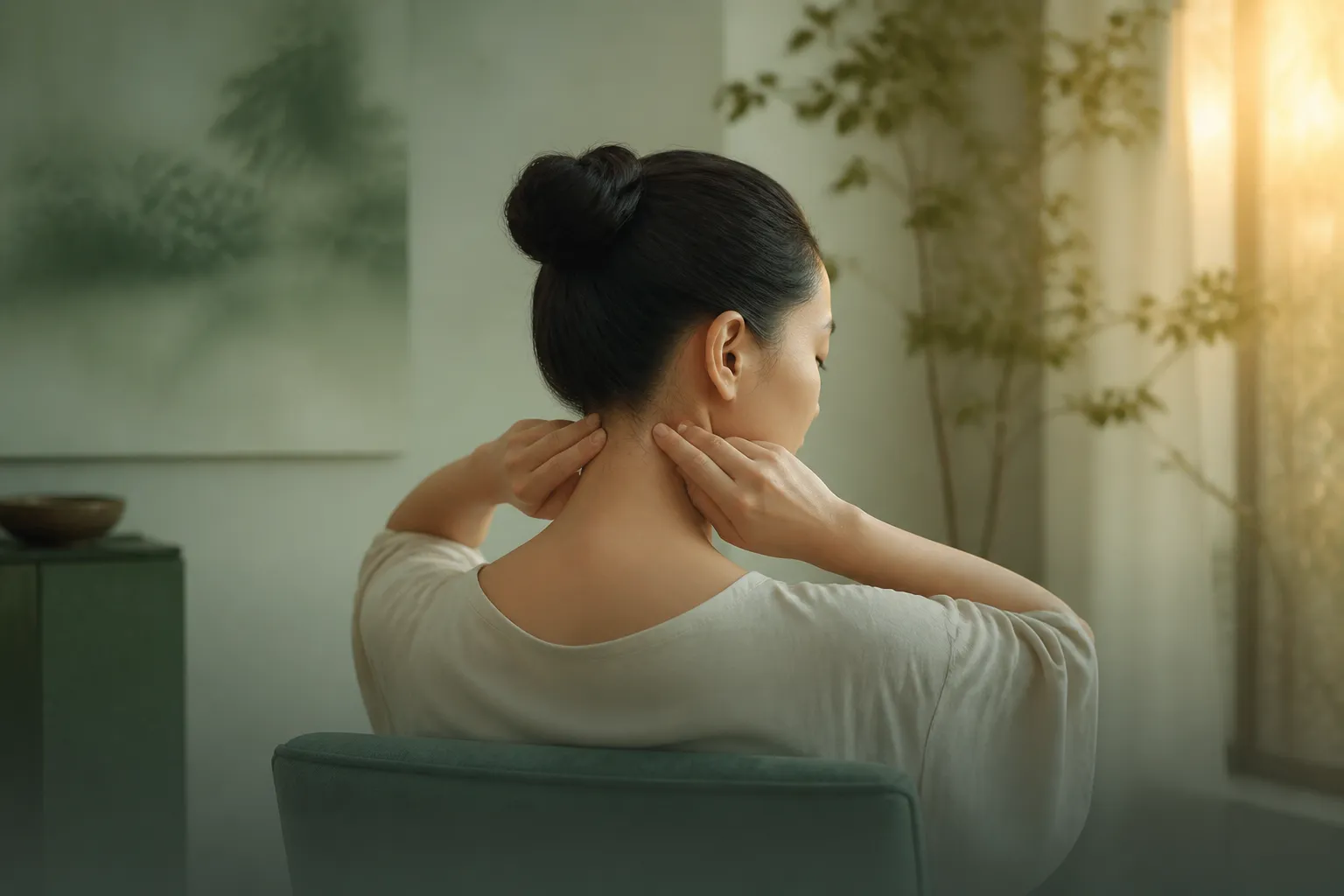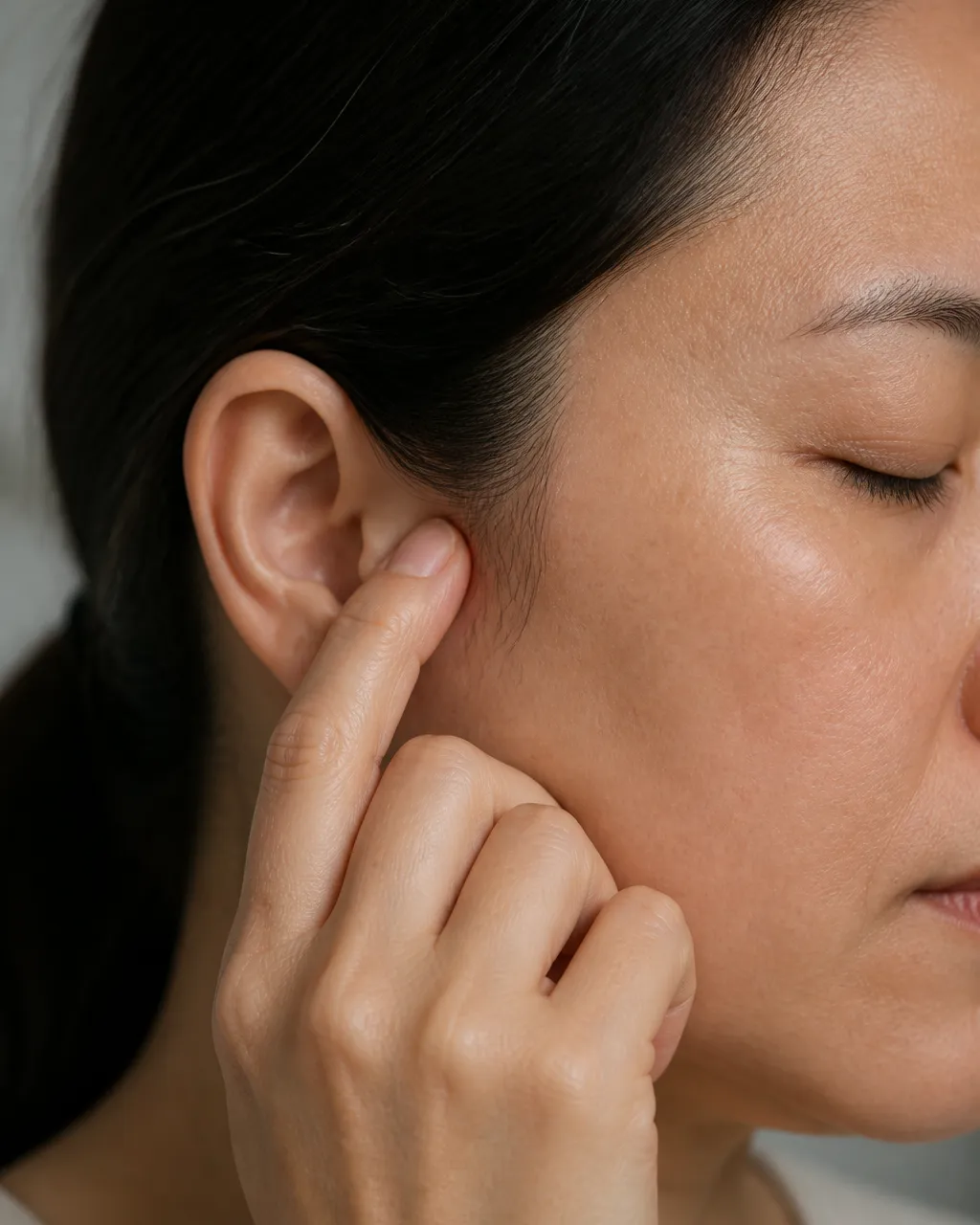
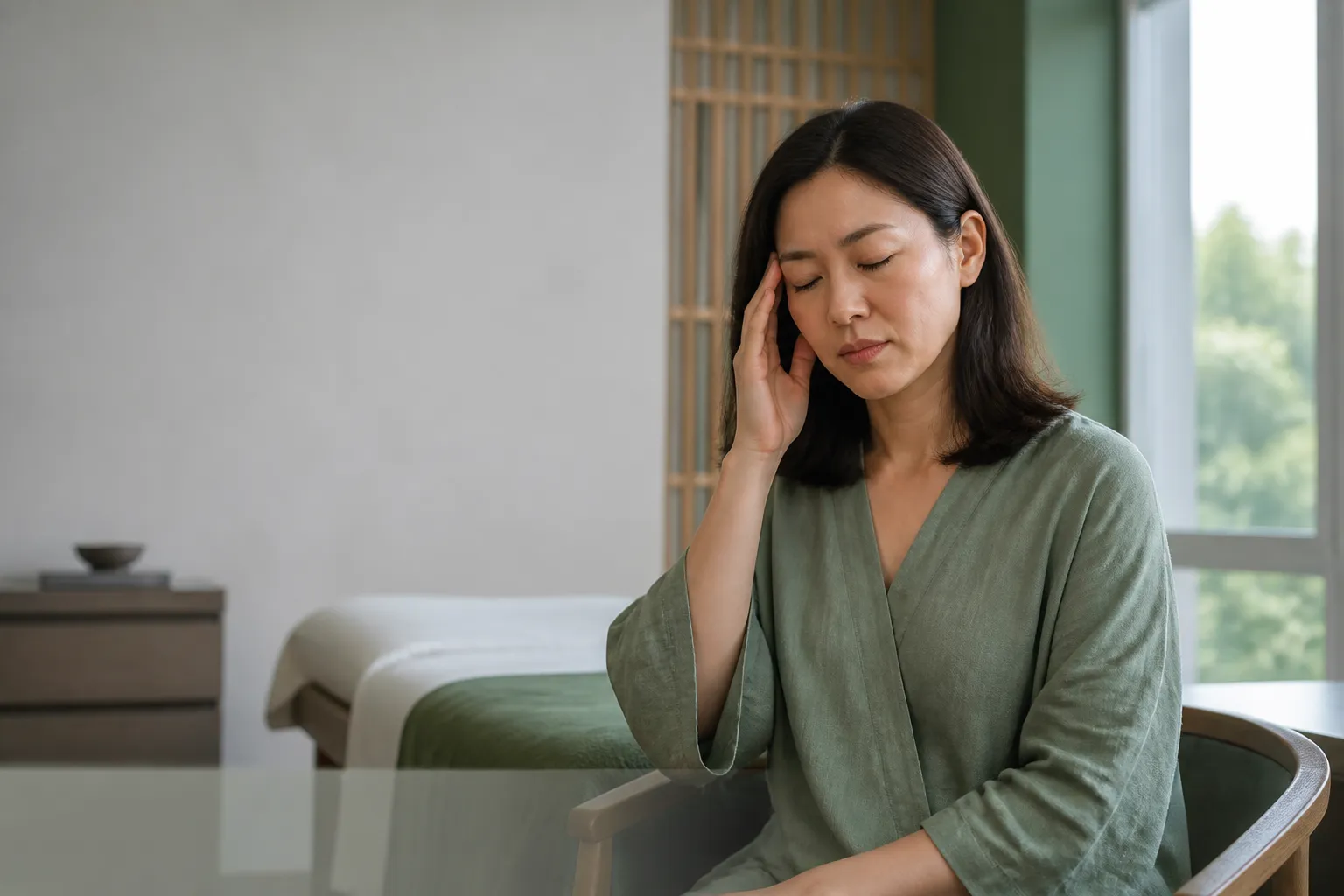
Adult resting fingertips at the temple during migraine care at a calm TCM clinic

Insights · Pain & Injuries

Migraine 101: causes and TCM treatments

A one-sided throbbing head with nausea or light sensitivity often returns in cycles. Acupuncture often sits in the attack stage; herbs between attacks; ice or warmth at home depends on the pattern.

In brief

A one-sided throbbing headache with nausea, blurred vision, or light and sound sensitivity often reads as migraine. TCM names patterns such as Liver-Yang aggression, stagnant Blood, external Wind-Cold, Liver-Qi stagnation, or Phlegm blockage after pulse and tongue. Acupuncture is often used in the attack stage; herbs often sit between attacks. Ice from Taiyang to Yintang may ease a building episode for some; Wind-Cold often prefers a hot neck compress.

01 · Definition

What is a migraine

Periodic attack · accompanying symptoms

A one-sided throbbing head with nausea, light sensitivity, or blurred vision often marks a migraine attack. Attacks usually start from puberty and peak around 35 to 45; women see them more often for hormonal reasons.

Migraine usually develops from puberty, or from childhood in rare cases, and reaches its peak around 35 to 45 years of age. Women are more susceptible than men for hormonal reasons.
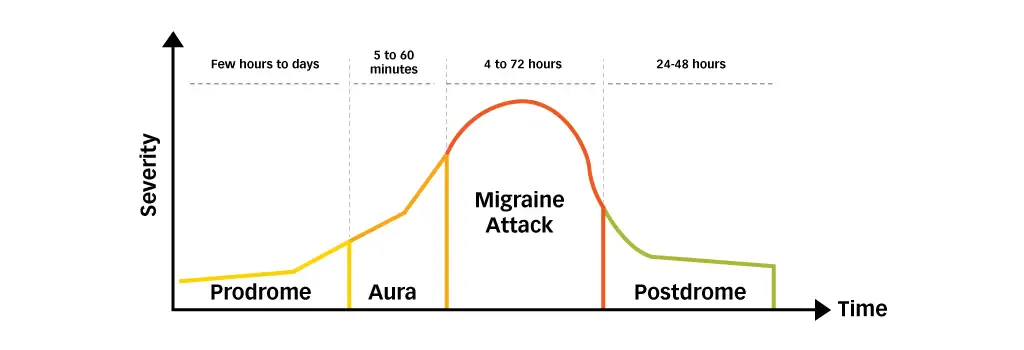
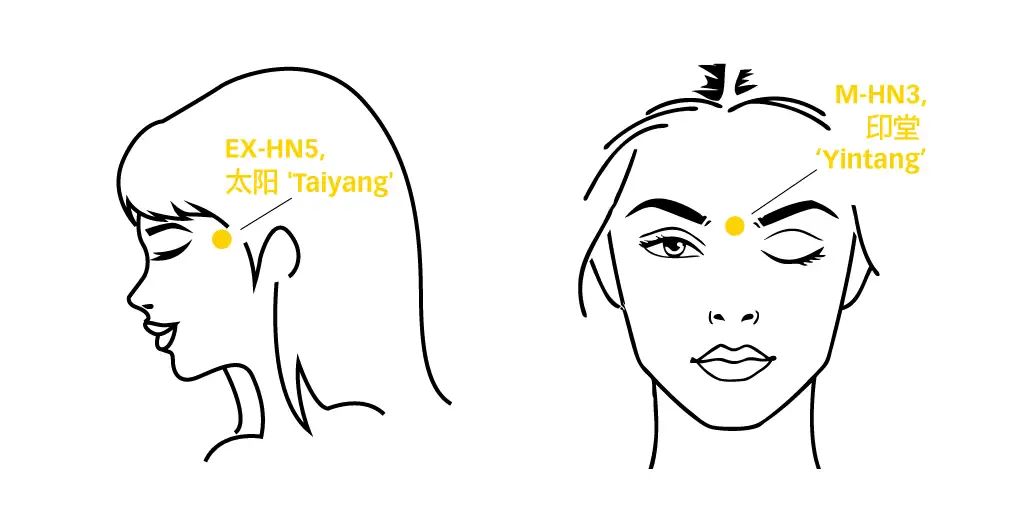
Diagram of migraine stages by severity over time from prodrome through post-drome

02 · Timeline

Stages of a migraine attack

Prodrome · aura · attack · post-drome

An attack usually moves through four stages. Not everyone experiences every stage; some people skip one or more.

Migraine stages and typical duration
Stage Common signs Typical duration
ProdromeEarly warning before the pain peaks. Increased thirst and urination, constipation, fatigue, neck stiffness. A few hours to a few days.
AuraLess common than the attack stage. Visual disturbances such as floaters or bright sparks, one-sided weakness or numbness, speaking or swallowing difficulty, hallucinatory sounds. About 5 to 60 minutes.
AttackThe stage most people recognise as the migraine. Nausea, vomiting, hypersensitivity to light and sound, dizziness, blurred vision, confusion. About 4 to 72 hours.
Post-dromeThe hangover phase after the peak. Confusion, moodiness, elation, fatigue. About 24 to 48 hours.

03 · Western care

Conventional migraine treatments

Analgesics · triptans · surgery options

Painkillers are the most common first step. They may ease an attack without breaking the cyclic pattern for many people.

Prolonged use of painkillers may stress the liver and kidneys. Stronger classes can wear down the stomach lining and contribute to gastric ulcers. For people who do not respond well to ordinary analgesics, triptans are commonly prescribed. Surgery may also be offered as an option for some long-term sufferers. TCM sits alongside this pathway when a physician names a pattern; it does not replace emergency or specialist assessment.

04 · Clinic methods

TCM treatments for migraine

Acupuncture · tuina · gua sha · herbs

Clinic methods match the stage and the pattern. Acupuncture often sits in the attack stage; herbs often sit between attacks for prevention. A 2017 randomised trial also found true acupuncture may reduce migraine frequency versus sham or wait-list over longer follow-up.

Clinic methods for migraine
Method What it does When it sits in the plan
AcupunctureFine needles at selected points and related muscles. Stimulates energy flow. By working selected acupoints and muscles, an attack may abort within minutes to several hours for some people. Best employed during the attack stage.
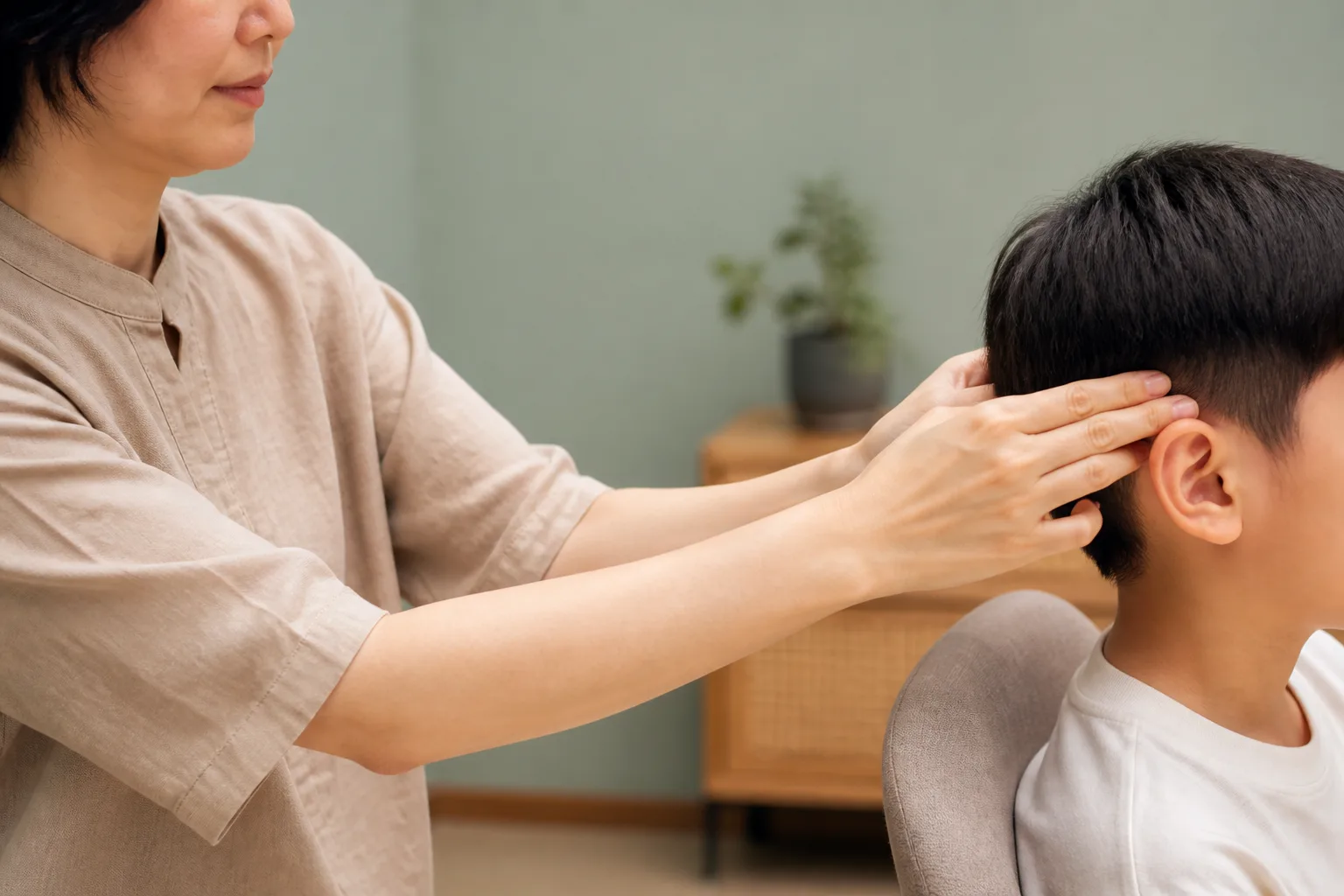
Tuina massageTherapeutic massage on acupressure points. Pressure on correct neck and head points may abort an episode and may reduce intensity in later attacks. A needle-averse alternative when points in the neck and head region are the target.
Gua shaSmooth-edged tool scraping over myofascial knots. Clears knots that form in neck and head muscles from prolonged pain. Often used with acupuncture or acupressure.
Chinese herbal medicineFormulas after pulse and tongue. Addresses underlying root causes that may be feeding migraine. Often taken between episodes to help prevent future attacks.

When to book for migraine

If attacks keep returning, bring how often they hit, which stage you notice first, and any GP or neurology notes. A physician can name the TCM pattern and match acupuncture, herbs, tuina, or gua sha to that read.

05 · Roots

What causes migraine? A TCM perspective

External pathogens · lifestyle Qi-blood

Two common roots are external invasion and lifestyle imbalance that blocks Qi and blood. In Singapore, long hours facing air-conditioning is a frequent Wind-Cold style trigger.

Invasion of external wind, cold, heat, or damp. Facing air-conditioning directly for long hours can constrict blood vessels in the head, reduce flow, and trigger episodes.

Imbalances from improper lifestyle. Long-term stress and fatigue can lead to troubled sleep, which eventually blocks Qi and blood and triggers migraine episodes.

06 · Patterns

Types of migraine in TCM

Five common classifications · 2011 compilation

A physician separates patterns by pain quality, trigger, and accompanying signs after pulse and tongue. The 2011 TCM disease compilation lists these five as the most common.

Common TCM migraine patterns
Pattern Pain and signs May help
Liver-Yang aggressionHeat, stress, or foul temper often leads.
  • Pulsating or throbbing headache.
  • Dizziness, dry mouth, insomnia, painful itchy eyes, yellowish urine.
Ice Taiyang to Yintang; cool the head; book for herbs between attacks.
Stagnant BloodLocal fixed pain that can stay tender between attacks.
  • Localised sharp piercing pain with throbbing.
  • Tender when pressed even outside an attack; night dry mouth; dry flaky skin; sharp eye pain.
Book for pattern care. Ease off pressing tender spots hard at home.
External Wind and ColdCold or dry air, including strong AC, is a common trigger.
  • Headache that eases with a hot compress.
  • Mild dizziness, stiff neck, aversion to cold environments.
Hot compress on the neck. Prefer warmth over ice when cold signs lead.
Liver-Qi stagnationStress or negative emotion often leads.
  • Expanding, throbbing headache.
  • Depression, mood swings, breathlessness, loss of appetite.
Ease stress load; gentle stretch between episodes; book when attacks keep stacking.
Phlegm blockageHeaviness and digestive sluggishness sit with the head.
  • Heavy and pulsating headache.
  • Extreme dizziness and sleepiness, nausea, blurred vision, indigestion, reduced urination, irregular bowels.
Lighter meals when heaviness sits; book for herbs matched to Phlegm.

07 · Self-care

DIY TCM migraine tips

Ice · warmth · light · stress

These physician tips may ease symptoms for some people. They are not a substitute for diagnosis or urgent care.

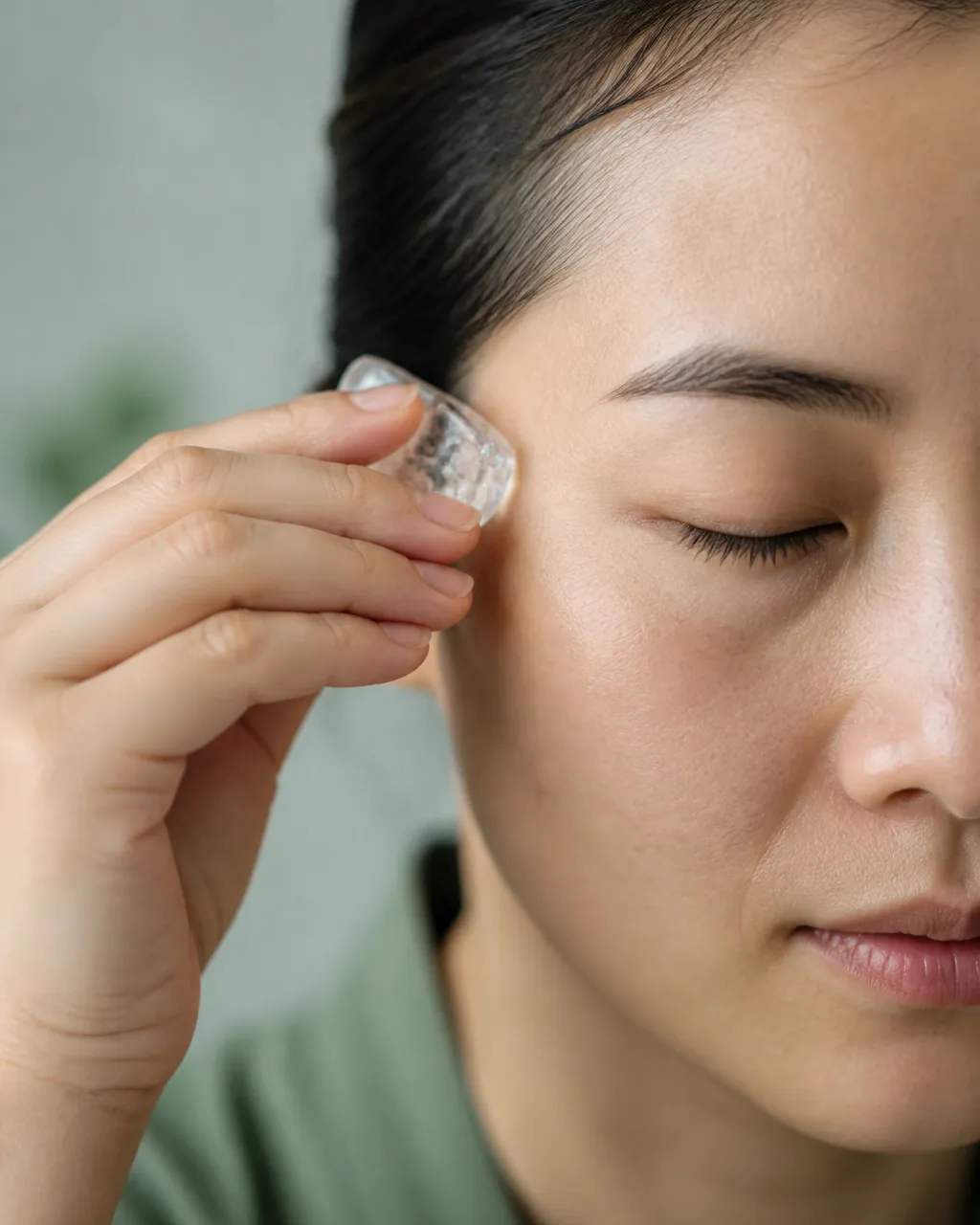
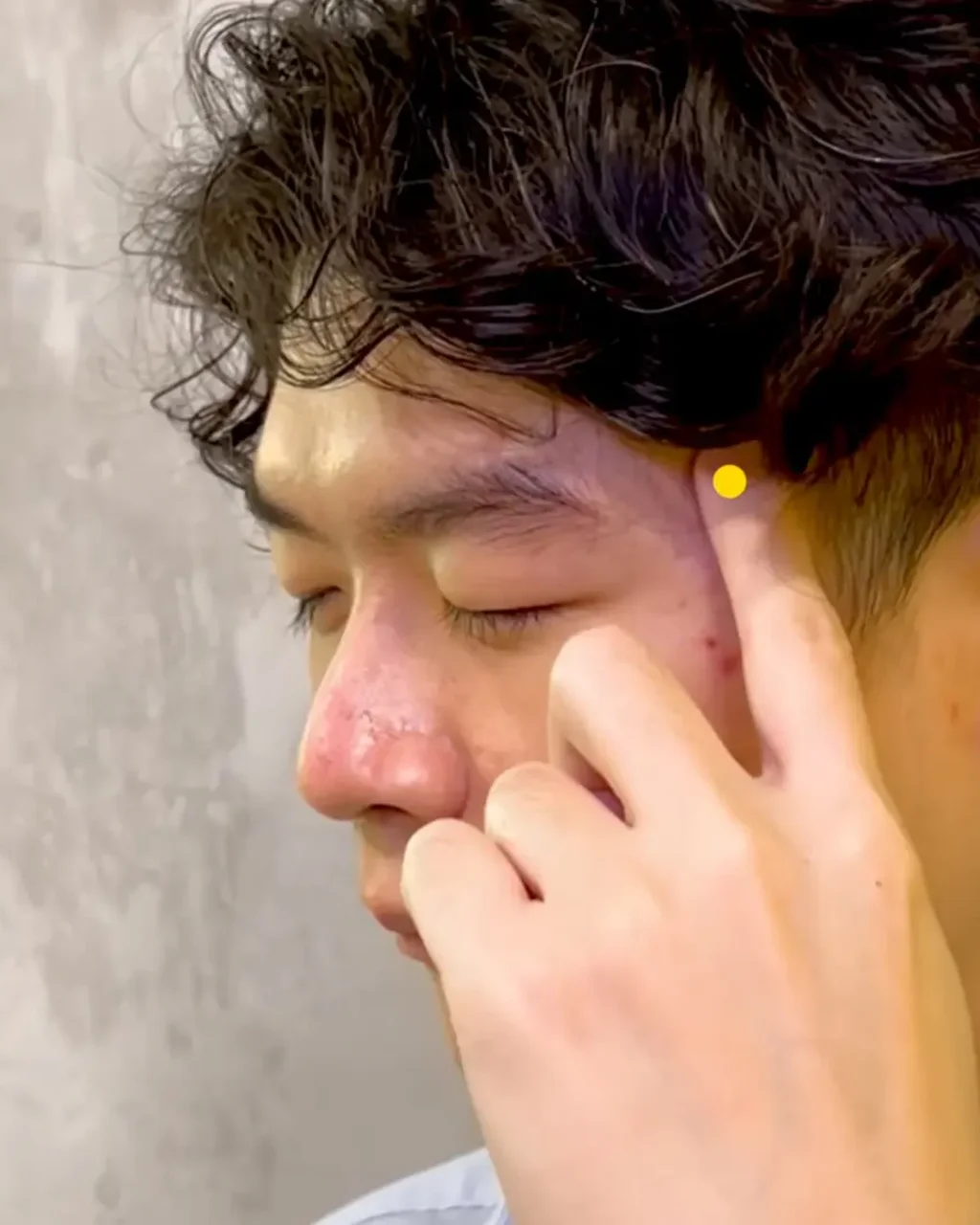
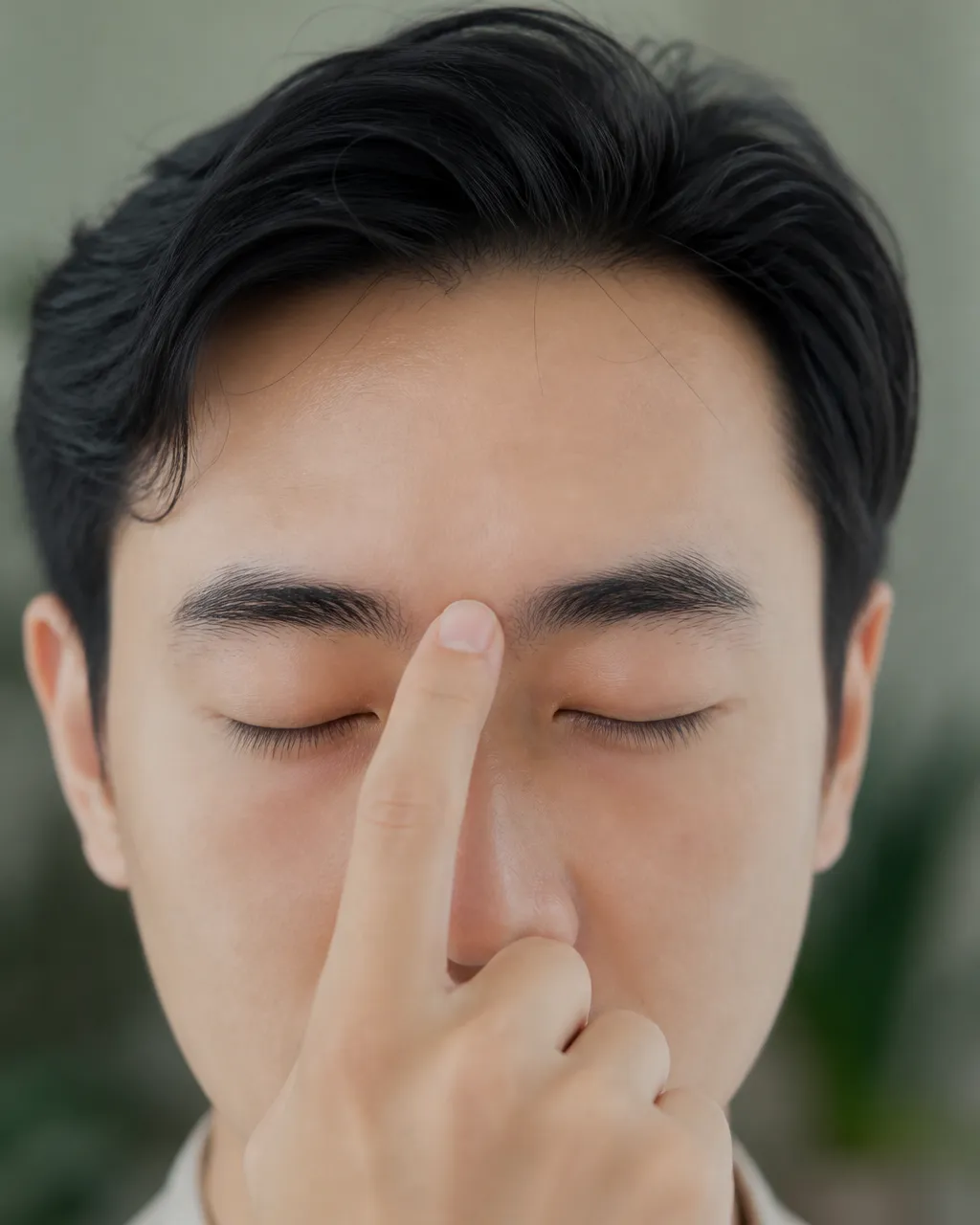
  • Run an ice cube from Taiyang (EX-HN5 · 太阳) toward Yintang (M-HN3 · 印堂).
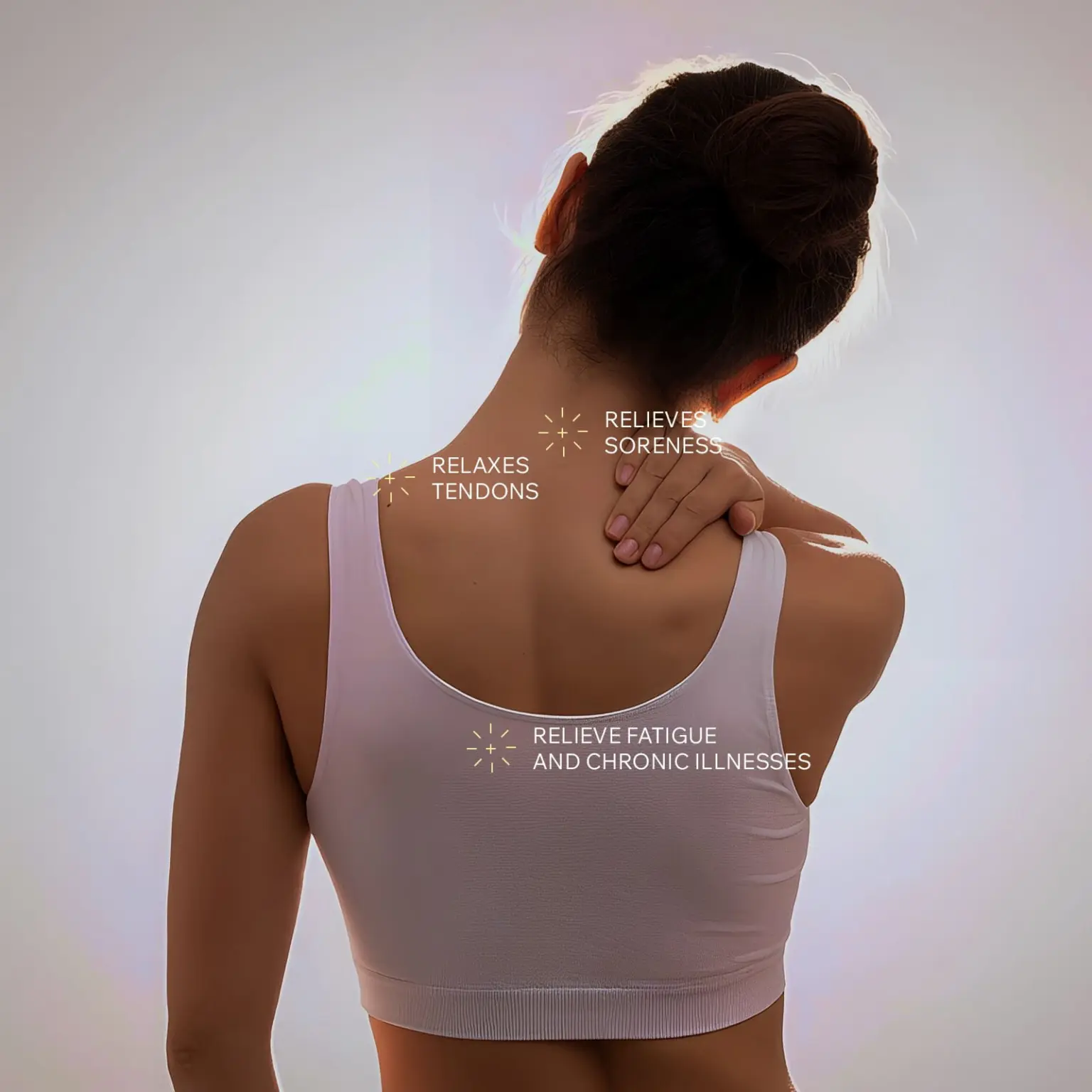
  • Apply a hot compress on the neck region, especially when Wind-Cold signs sit with the attack.
  • Caffeinated beverages may help relieve migraine for some sufferers.
  • Avoid bright flashing lights and loud noise during an attack.
  • Manage stress; yoga, meditation, and stretching may help between episodes.
Diagram labelling Taiyang at the temple and Yintang between the brows for migraine ice glide

Ice glide

Ice from Taiyang to Yintang

EX-HN5 · M-HN3

Wrap a small ice cube. Start at the soft temple hollow (Taiyang) and glide slowly toward the brow midpoint (Yintang). Repeat a few light passes on each side.

Caution

Protect the skin; do not hold bare ice until it burns. Skip broken skin or a swollen temple. Seek urgent help for sudden worst-ever headache, vision loss, one-sided weakness, or headache after trauma. Some Wind-Cold patterns prefer warmth on the neck instead.

Hand holding an ice cube near the temple for Taiyang to Yintang migraine ice glide

Acupoint · ice glide

Ice glide from Taiyang to Yintang

Wrap an ice cube and glide from the temple hollow toward the brow midpoint when a migraine builds.

Stop if the skin burns or pain sharpens. Not urgent care for stroke-like signs.

See the method
Dr Sim Beng Joo

Clinically reviewed

Reviewed by Sim Beng Joo

Advisor (Science & Strategy) / Consultant Physician · TCMPB T1303003A

MOH-licensed TCM physician, with clinical work in gastrointestinal syndromes, pain management, sleep / fatigue.

View full profile

Educational information based on clinical experience and TCM principles. Not a substitute for personalised consultation, medical care, or urgent attention. Speak with your physician before starting herbs, ice-point habits, or new self-care in pregnancy or with a chronic condition. Seek urgent care for sudden worst-ever headache, fever with stiff neck, vision loss, weakness on one side, confusion, collapse, or headache after trauma. TCM complements GP and neurology care; it does not replace emergency assessment.

FAQs

Questions, answered

Common questions on migraine stages, TCM causes and patterns, acupuncture in an attack, the ice glide, and when to seek urgent care.

What are the stages of a migraine attack?

Prodrome can last hours to days (thirst, constipation, fatigue, neck stiffness). Aura, when present, usually lasts 5 to 60 minutes. The attack itself often runs 4 to 72 hours with nausea and light or sound sensitivity. Post-drome can leave fatigue or mood change for about 24 to 48 hours. Many people skip one or more stages.

What causes migraine in TCM?

External wind, cold, heat, or damp, and lifestyle stress or fatigue that blocks Qi and blood. In Singapore, long hours facing air-conditioning is a common Wind-Cold style trigger that can constrict head vessels and reduce flow.

What are the TCM types of migraine?

Five common patterns are Liver-Yang aggression, stagnant Blood, external Wind-Cold, Liver-Qi stagnation, and Phlegm blockage. Pain quality and accompanying signs differ. A physician names the pattern after pulse and tongue, not from a single symptom alone.

Can acupuncture help during a migraine attack?

Clinic acupuncture is often used in the attack stage and may help abort an episode within minutes to hours for some people. Separately, a 2017 randomised trial found true acupuncture may reduce migraine frequency versus sham or wait-list over longer follow-up. Results vary; it is not emergency care for stroke-like signs.

How do you use ice from Taiyang to Yintang for migraine?

Wrap a small ice cube. Glide from Taiyang in the temple hollow toward Yintang between the brows. A few light passes each side is enough. Stop if the skin burns. Wind-Cold patterns with stiff neck and aversion to cold often prefer a hot neck compress instead.

When should I seek urgent care for a headache?

Seek urgent help for sudden worst-ever headache, fever with stiff neck, vision loss, weakness on one side, confusion, collapse, or headache after trauma. Recurrent migraine still needs a proper physician assessment.

References

Selected sources

  1. Zhao L, Chen J, Li Y, et al. The long-term effect of acupuncture for migraine prophylaxis: a randomized clinical trial. JAMA Intern Med. 2017;177(4):508–515. https://doi.org/10.1001/jamainternmed.2016.9378
  2. National Center for Complementary and Integrative Health. Traditional Chinese medicine: What you need to know. 2019. https://www.nccih.nih.gov/health/traditional-chinese-medicine-what-you-need-to-know/
  3. Ministry of Health Singapore. TCM practitioners (Healthcare Professional Portal). https://hpp.moh.gov.sg/tcm-practitioners/
  4. World Health Organization. Traditional, complementary and integrative medicine. https://www.who.int/health-topics/traditional-complementary-and-integrative-medicine

Next step

Ready for a migraine pattern read?

Bring how often attacks hit, which stage you notice first, and any GP or neurology notes. We will name the TCM pattern in plain language and decide what belongs in your plan.

Hours
Most clinics daily 11:00 AM – 8:00 PM
Care
Physician-led consultation