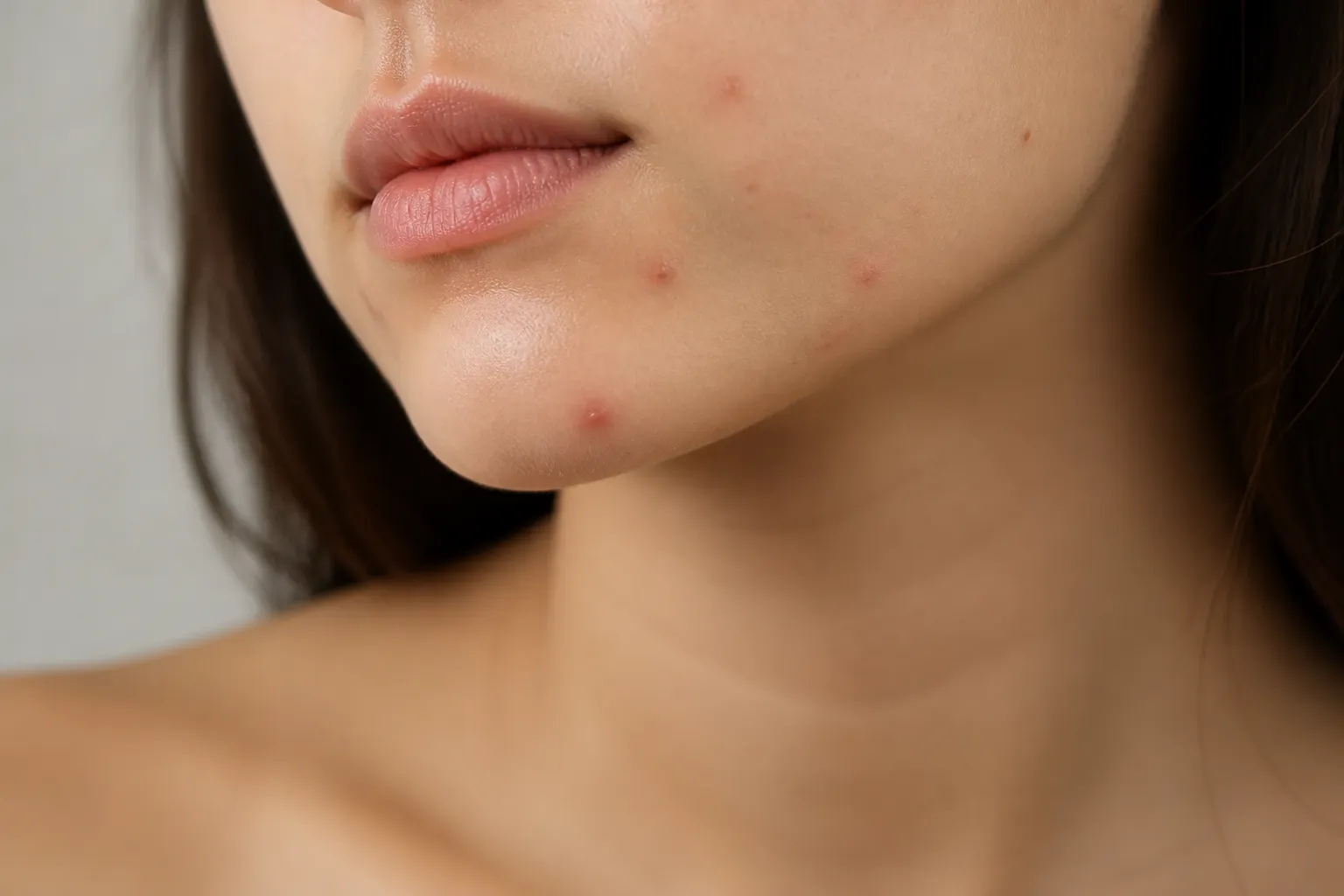
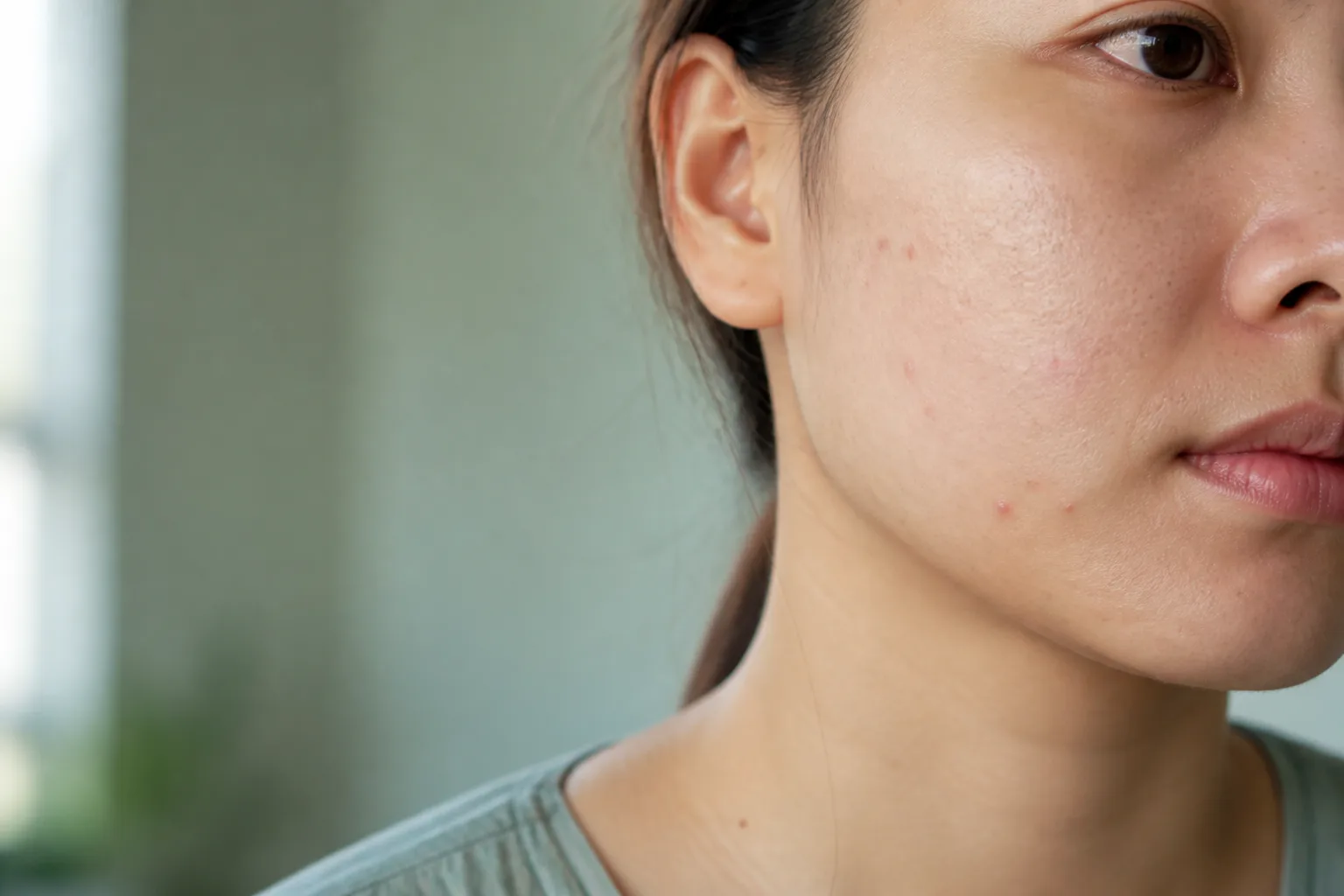
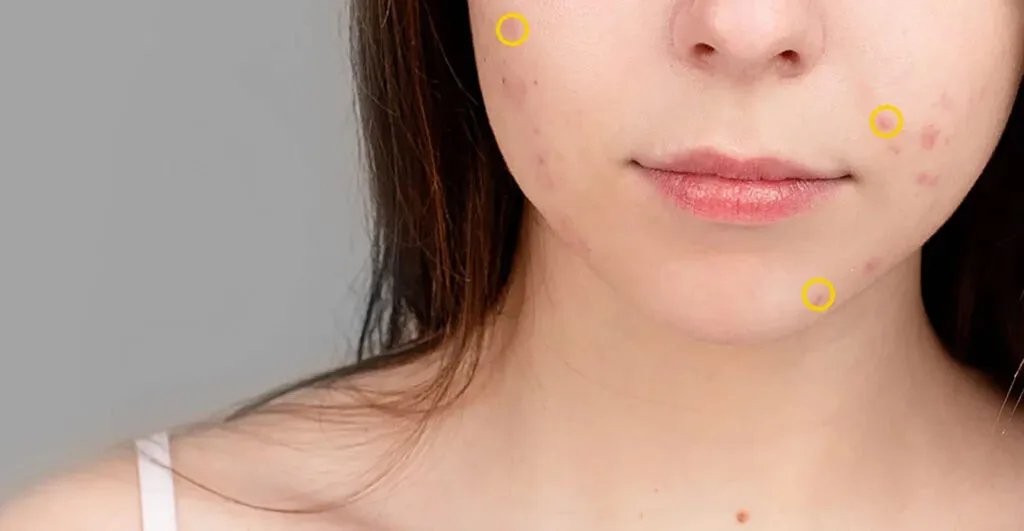
Adult jawline with mild redness during a TCM acne consult at PULSE TCM

Insights · Skin

TCM perspective on acne: causes, symptoms, and treatments

Spots that keep returning in the same zones often track a pattern, not only a pore problem. TCM reads Lung heat, damp-phlegm, and Yin deficiency so food and care can match the type.

In brief

Chin and jaw breakouts that keep returning often track internal heat, dampness, or Yin deficiency in TCM, not only clogged pores. Red papules on the forehead and lower cheeks often read Lung meridian heat (肺经郁热证). Deep oily cysts around the mouth and jaw often read damp-heat and phlegm (湿热痰瘀证). Stubborn adult flares on the chin and neck often read Yin deficiency with innate heat (阴虚内热证). Pulse and tongue name the pattern.

01 · What acne is

Pores clog, then heat shows

Oil · inflammation · internal pattern

Spots that keep returning often start when pores clog with oil, dead skin, and bacteria. Hormones, diet, and stress often sit underneath.

For the six lesion types and grades 1–4, see Learning about acne. TCM reads those same spots as internal heat, dampness, or Yin deficiency reaching the skin. Pulse and tongue name the pattern so food and care can match it. Diet heat is a frequent load; see heaty versus cooling for how Singapore foods stack.

02 · Three patterns

Top 3 internal imbalances causing acne

Breakouts that keep landing in the same zones often mirror internal load. The shape of the pimple, where it sits, and the body signs that travel with it point to Lung heat, damp-phlegm, or Yin deficiency. Mixed pictures are common. Jawline flares also track Liver constraint; that mix is named in the Acne programme. Pulse and tongue decide.

Three TCM acne patterns
Pattern Typical acne May help
Lung meridian heat (肺经郁热证)Heat trapped in the Lungs dries the skin. Red papules or pustules that may itch or hurt; dry, inflamed skin on the forehead and lower cheeks Chrysanthemum or honeysuckle tea to clear Lung heat
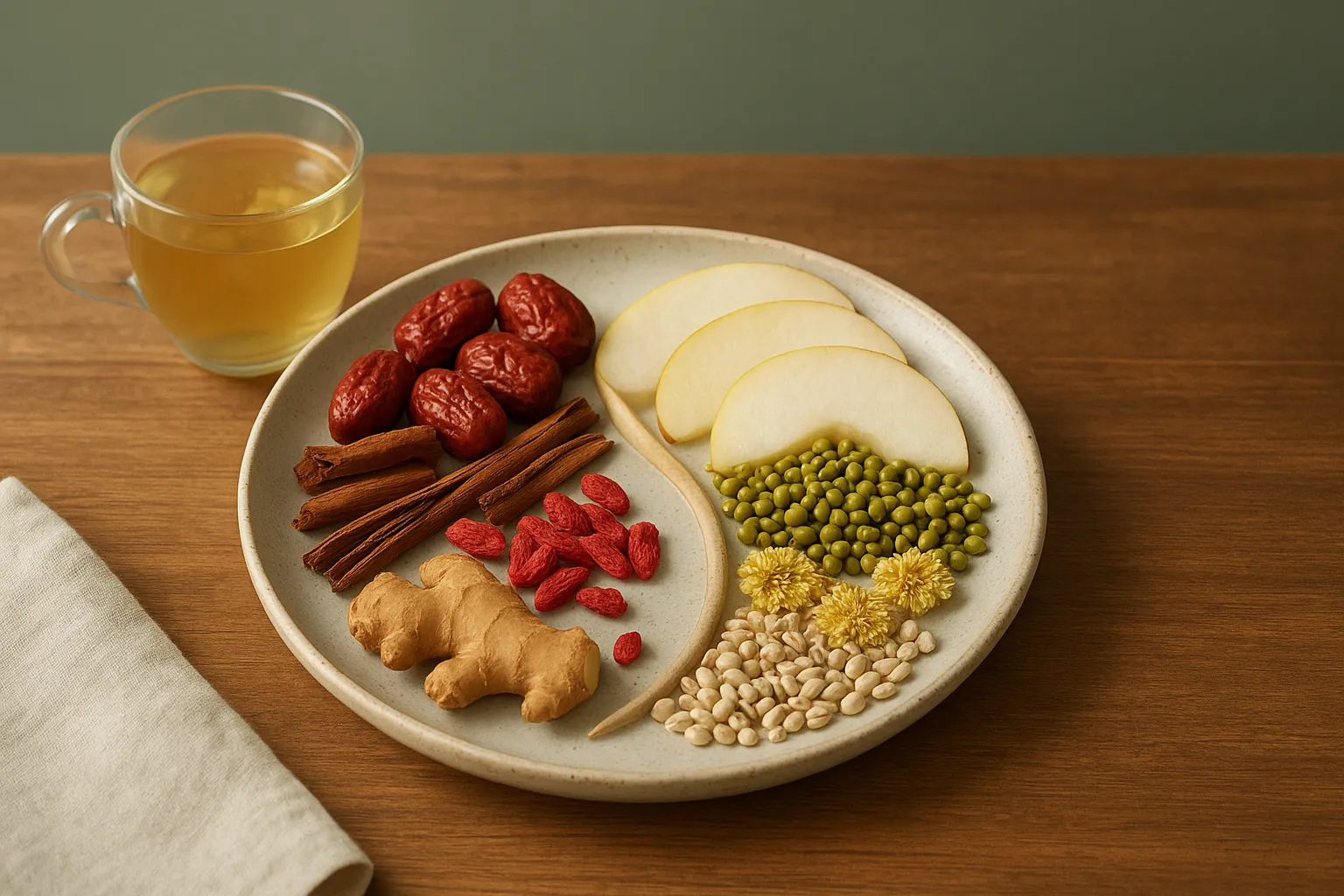
Dampness and phlegm (湿热痰瘀证)Spleen dampness turns to phlegm and heat. Deep cystic or nodular spots that heal slowly and scar; very oily skin around the mouth, chin, and jaw Chinese barley and green bean dessert; mung bean soup; dried orange peel and poria tea
Innate heat and Yin deficiency (阴虚内热证)Cooling fluids run low; empty heat rises. Stubborn adult or hormonal flares on the chin, jaw, and neck; less red, often tender Winter melon and pear soup (冬瓜雪梨汤) to nourish Yin and clear heat

Cause 1: Lung meridian heat (肺经郁热证)

Lungs · skin and hair

Forehead and lower-cheek breakouts often track heat in the Lungs, often from stress, environment, or diet.

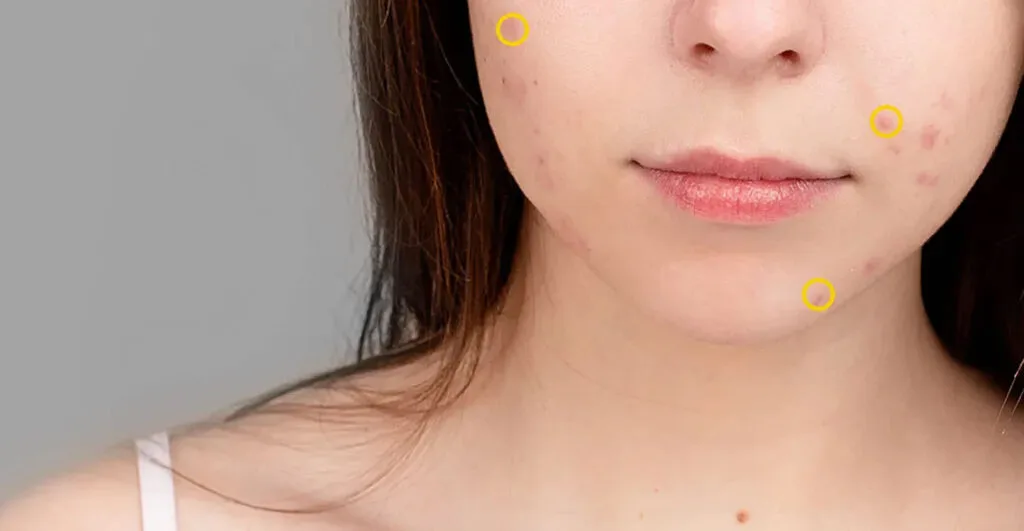
  • Acne type: red papules or pustules that may itch or hurt. Skin often feels dry and inflamed.
  • Face mapping: primarily the forehead and lower cheeks.
  • Accompanying signs: constipation, frequent thirst, and a dry throat.
  • Clinic care: herbal formulae that clear heat, resolve toxins, and moisten the Lungs.
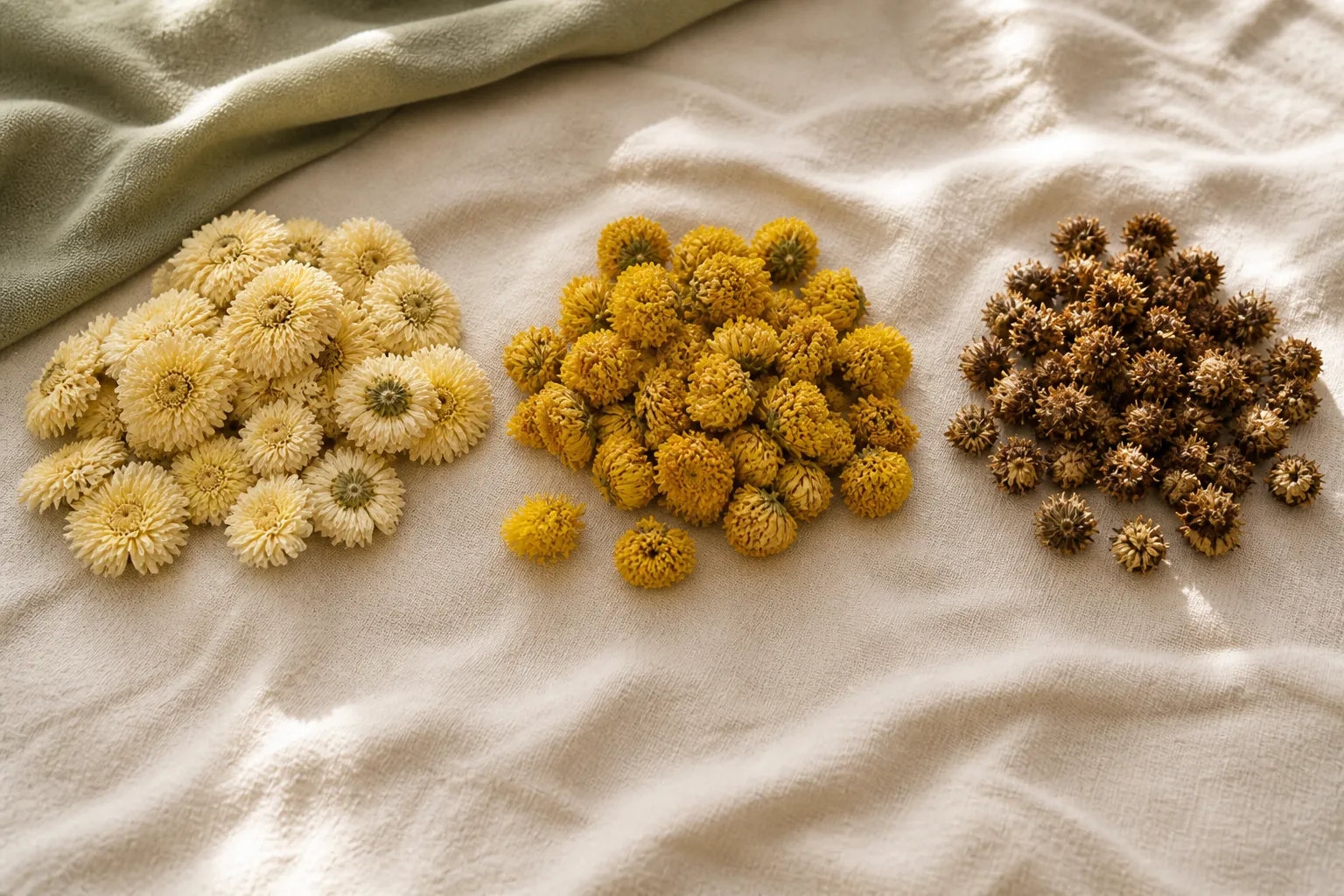
White, yellow, and wild chrysanthemum flowers for types of tea at PULSE TCM

Lung heat

Chrysanthemum or honeysuckle tea

A cooling flower steep used to clear heat in the Lungs when red papules or pustules sit on the forehead and lower cheeks.

Wild chrysanthemum is stronger and generally physician-only when heat is painful.

Types of chrysanthemum tea

Cause 2: Dampness and phlegm stagnation (湿热痰瘀证)

Spleen · dampness · phlegm

Greasy, spicy, or sweet food can tax the Spleen, so dampness builds and rises to deep cysts on the chin and jaw.

  • Acne type: deep, cystic, or nodular acne that takes a long time to heal and leaves scars. Skin tends to be very oily.
  • Face mapping: often concentrated around the mouth, chin, and jawline.
  • Accompanying signs: bloating, poor appetite, sticky stools, and a feeling of heaviness in the body.
  • Clinic care: strengthen the Spleen, resolve dampness, and support digestion.

Dampness can be viewed as heavy water in the body. It is slow and sinking. It is generally a result of a diet high in spicy, oily, and sweet food, a humid environment, and frequent drinking or smoking.

Phlegm in the body is similar to the phlegm of a cough or flu. It resembles a viscous liquid such as honey: sticky, heavy, slow, and prone to clump. It is normally a result of a diet high in oily, sweet, and cold food, a humid environment, lack of exercise, and Spleen imbalance.

When dampness and phlegm sit together, Qi and blood flow stagnate. Nutrients reach the skin more slowly, metabolism slows, and pores clog. Heat then aggravates the picture into acne. For heat-dampness, Chinese barley with mung beans clears heat and drains dampness. Fragrant mung bean soup with pandan is a sibling cooling pot. For phlegm-dampness, dried orange peel (陈皮) and poria (茯苓) tea is a classic brew.
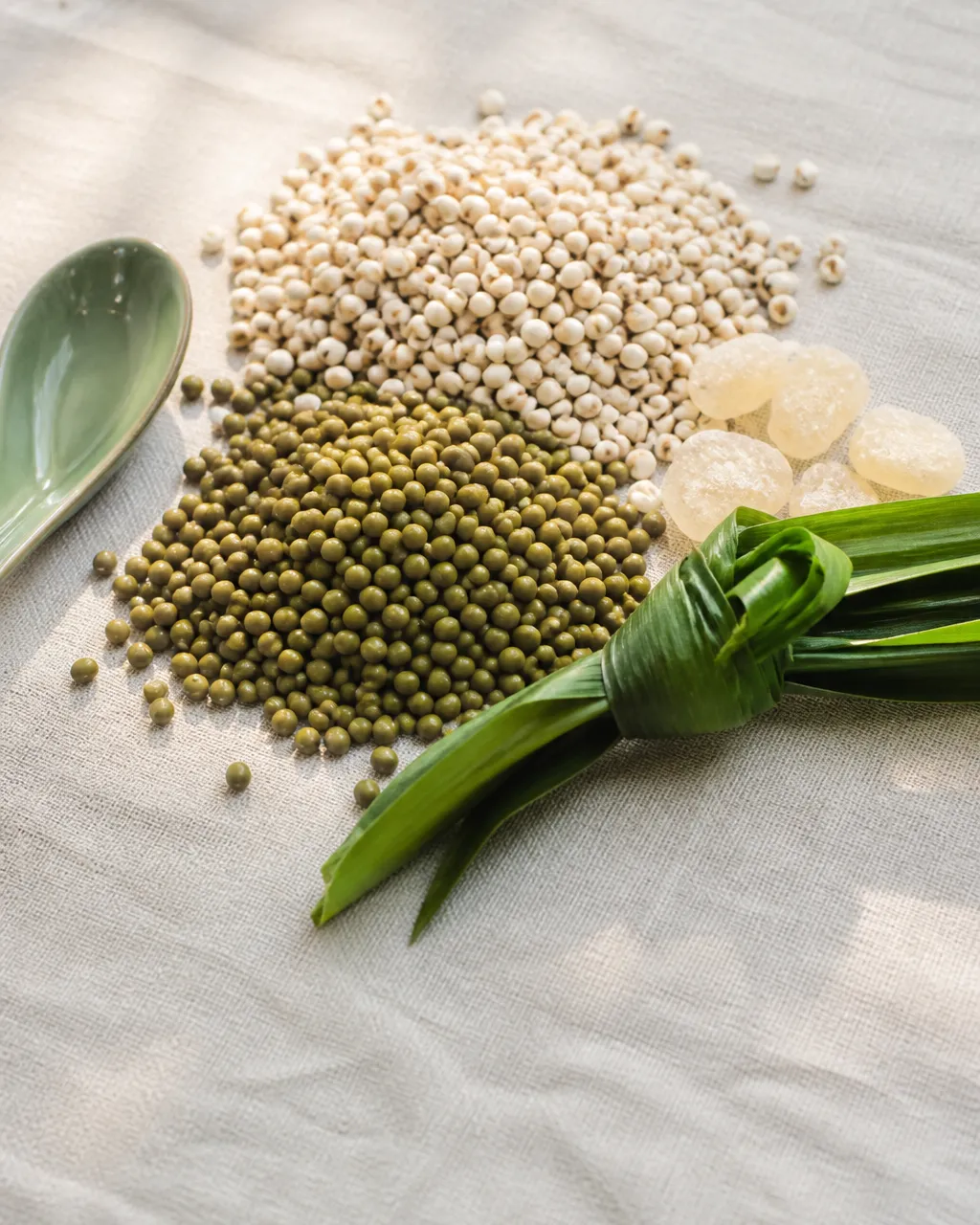
Chinese barley, mung beans, rock sugar, and pandan for dessert at PULSE TCM

Heat-dampness

Chinese barley and green bean dessert

Chinese barley with mung beans is a classic clearing pot when diet heat and dampness stack as oily, slower-healing acne.

Ease off or stop if stools loosen.

Make the barley and green bean dessert
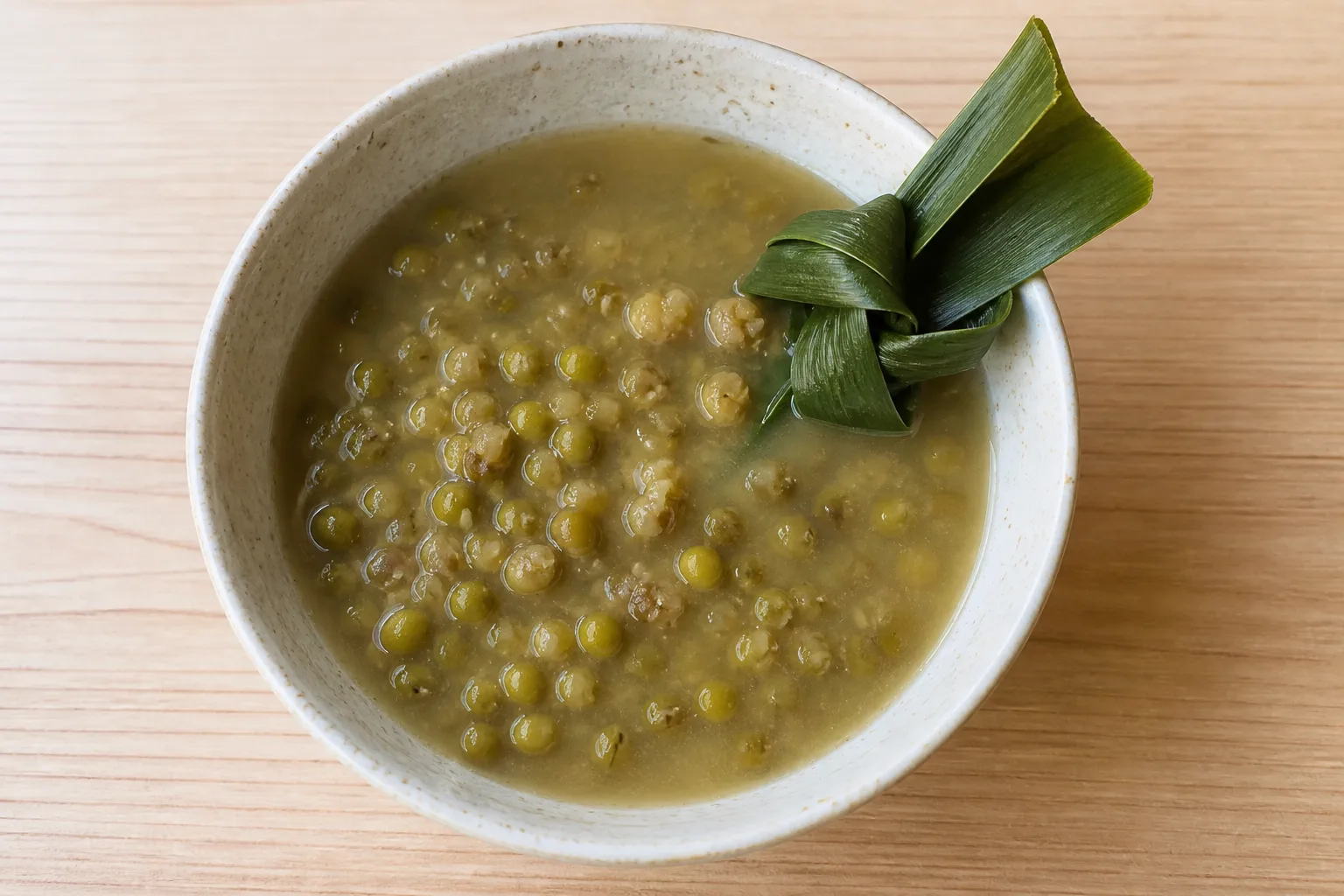
Bowl of mung bean soup with pandan

Heat-dampness

Cooling mung bean soup

Fragrant mung bean soup with pandan is a sibling cooling pot when diet heat sits on the nose and gut.

Ease off or stop if stools loosen.

Make the mung bean soup

Cause 3: Innate heat and Yin deficiency (阴虚内热证)

Yin · hormones · Kidneys

Chronic stress, overwork, and short sleep can deplete Yin, the cooling, moistening fluids, and leave innate heat. This is a common cause of persistent adult and hormonal acne.

  • Acne type: stubborn breakouts that flare with stress or around menstruation. They are often less red but can be tender. Skin looks drier and more sensitive than other forms.
  • Face mapping: chin, jawline, and neck. It can also land on the back, shoulders, and chest.
  • Accompanying signs: night sweats, dry mouth, insomnia, and irregular menstruation.
  • Clinic care: nourish Yin, cool the blood, and regulate hormone rhythm. More common from age 25.

Innate heat exhausts Yin, so the body and skin lack moisture. That heat can also trigger heat in the Liver, Lung, and Heart meridians. With the whole body overheated, pores enlarge and inflame. Winter melon and winter pear soup (冬瓜雪梨汤) may help nourish Yin and clear heat.

Care pathway

Adult and hormonal acne care

Chin and jaw flares that track stress or the cycle usually need more than a single soup. A physician can map acupuncture, herbs, and food to the Yin-deficiency picture.

03 · Face mapping

What your acne is telling you

Mien Xiang · 面相

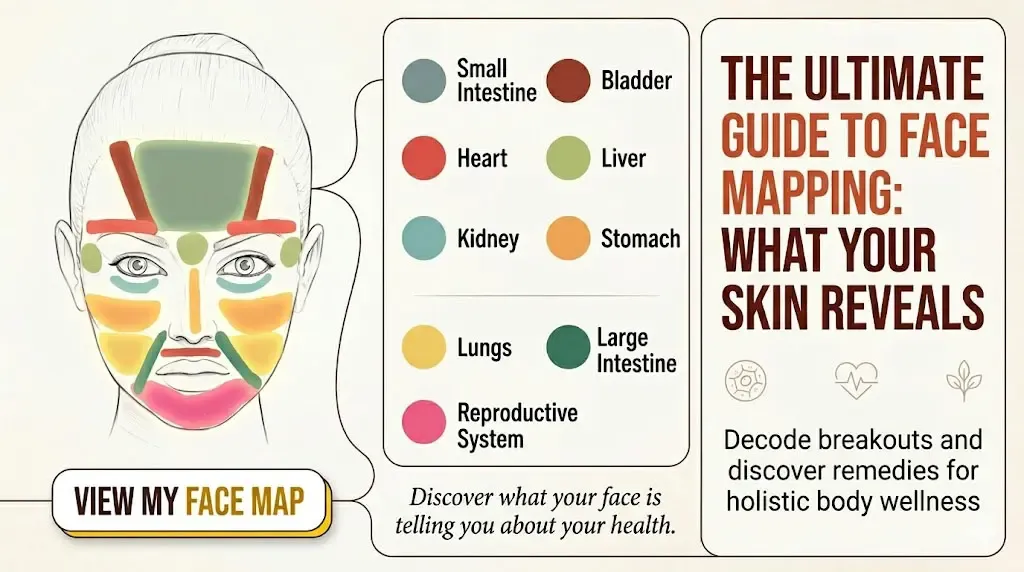
TCM face mapping connects areas of the face to organ meridians. Where breakouts keep returning helps a physician see which system needs attention.

TCM acne face map
Zone Organ pattern May help
ForeheadStress, irritability, and short sleep. Heart, Small Intestine, and Liver heat Lotus plumule tea
NoseSpicy, fried, or heavily processed food. Stomach Fire and Large Intestine Mung bean soup
CheeksRight: Lungs. Left: Liver and emotion. Lung heat or Liver constraint Snow fungus soup
Chin and jawlineCycle, PCOS, post-pill, or stacked stress. Kidneys and hormone rhythm Acne programme
Read the TCM acne face map

04 · Treatments

How TCM treats acne

Pulse and tongue name the pattern first. Herbs, body and facial acupuncture, and diet then match that picture rather than a single cream for every lesion type.

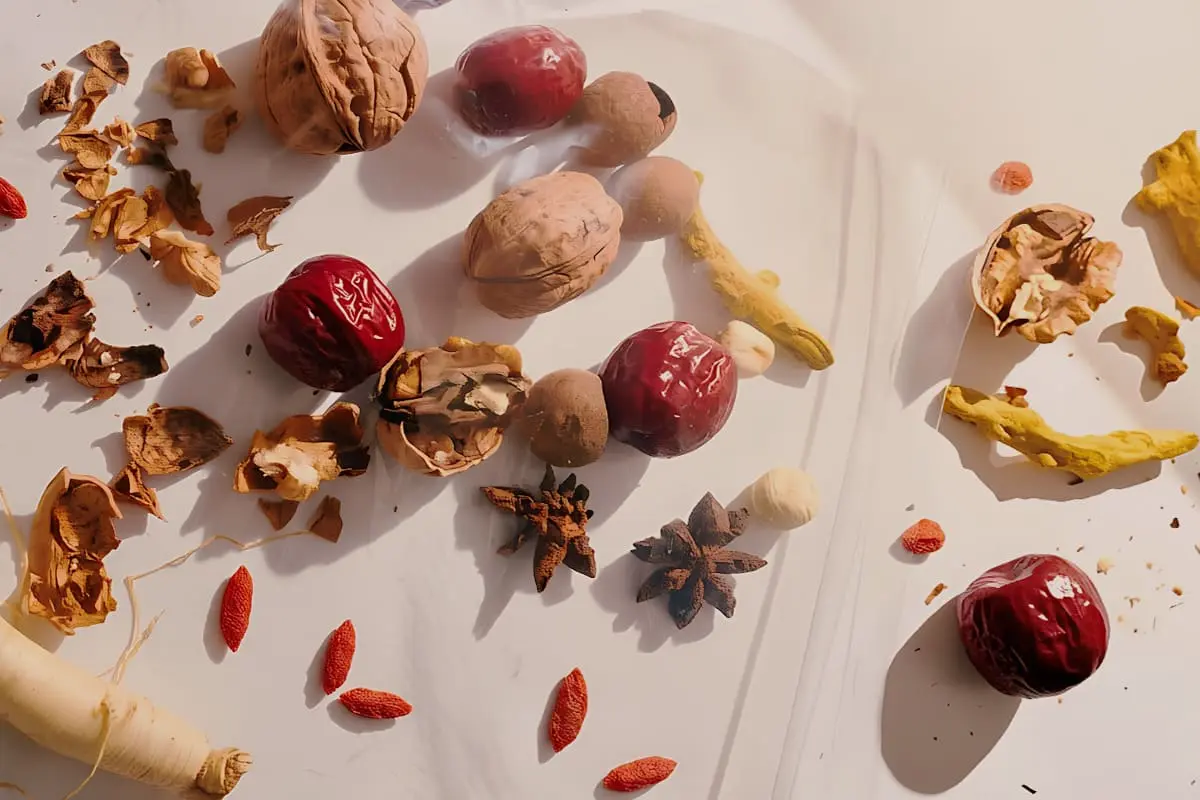
Chinese herbal medicine

Customised herbal medication for acne care at PULSE TCM

Pattern formula

Custom prescriptions clear heat, drain dampness, or nourish Yin after the pattern is named. Formulae change as the lesion picture settles.

Chinese herbal medicine

Body and facial acupuncture

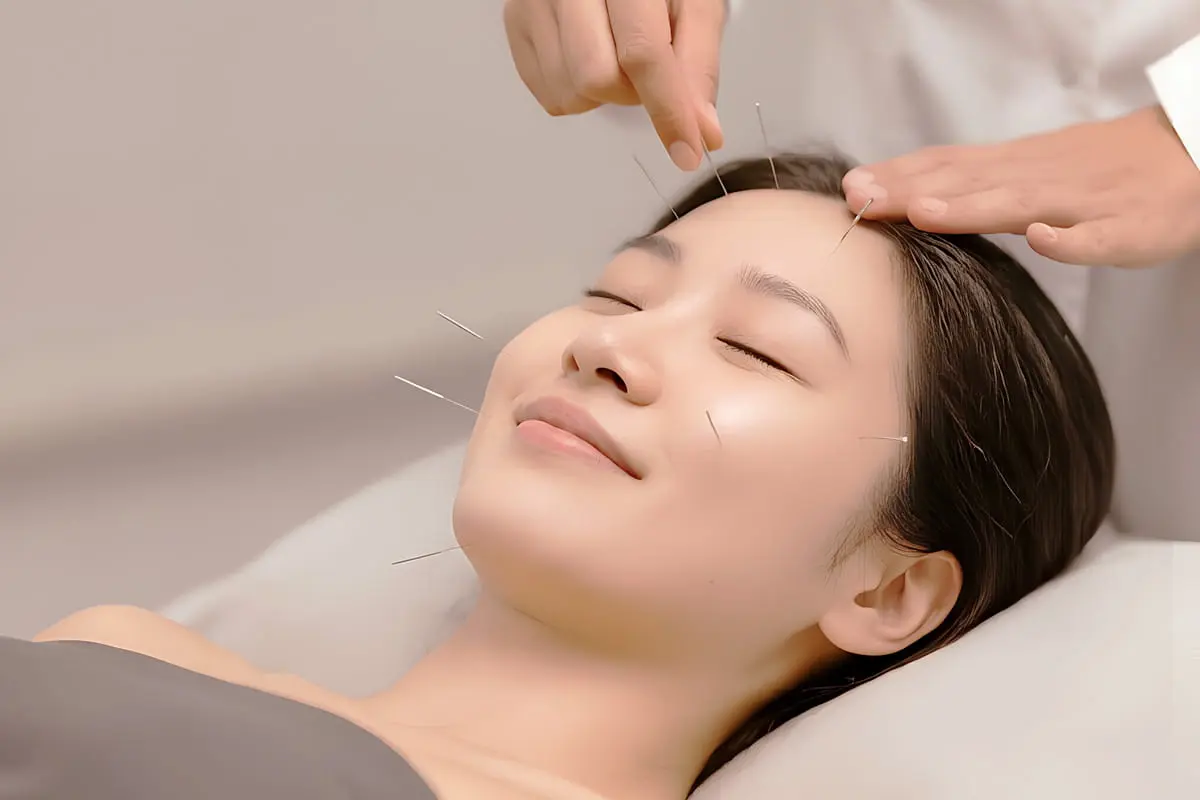
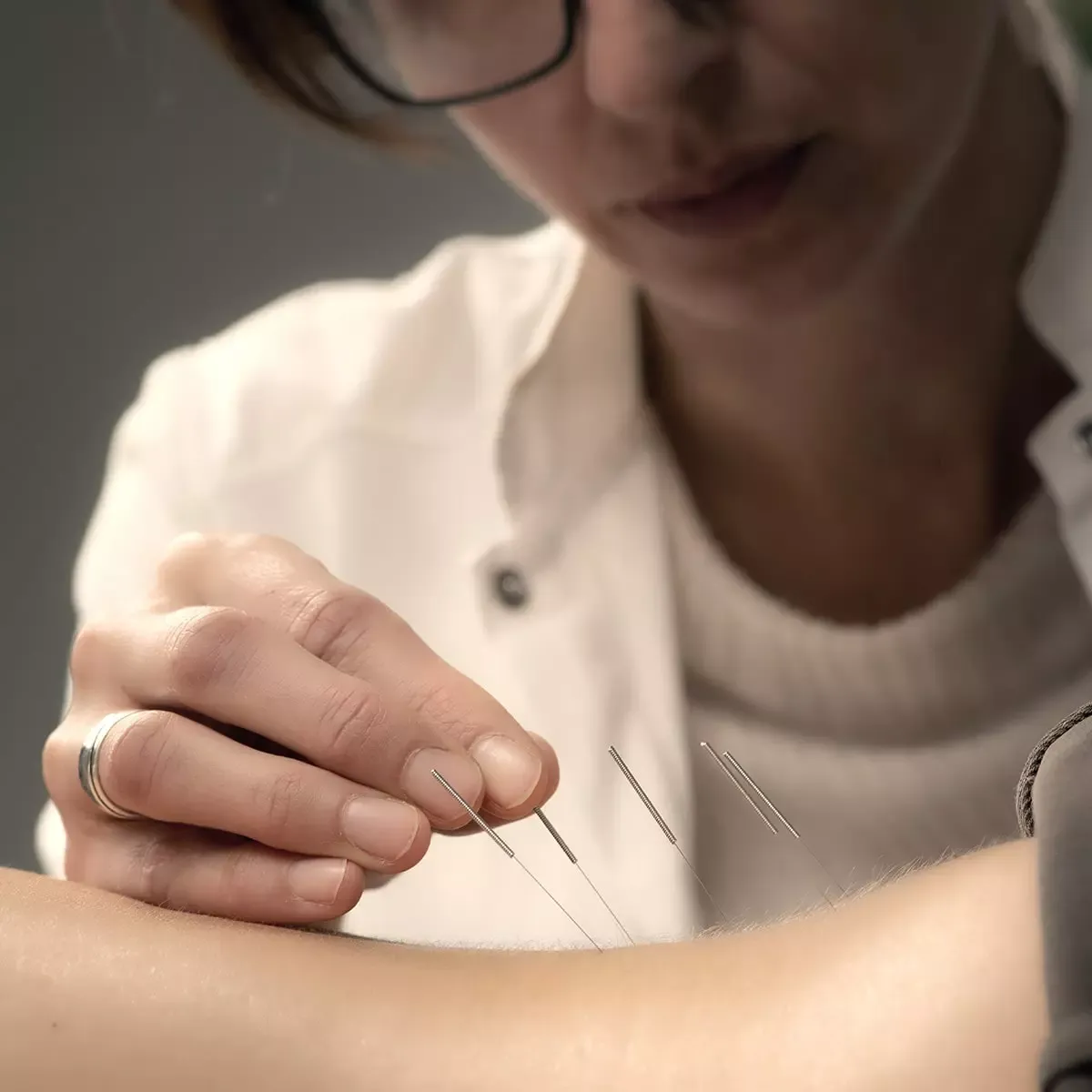
Facial acupuncture for acne care at PULSE TCM

Qi · local circulation

Body points address the internal pattern. Facial points support local circulation while active spots settle, and may ease redness and stress-linked flares.

Acupuncture at PULSE

Diet that matches the pattern

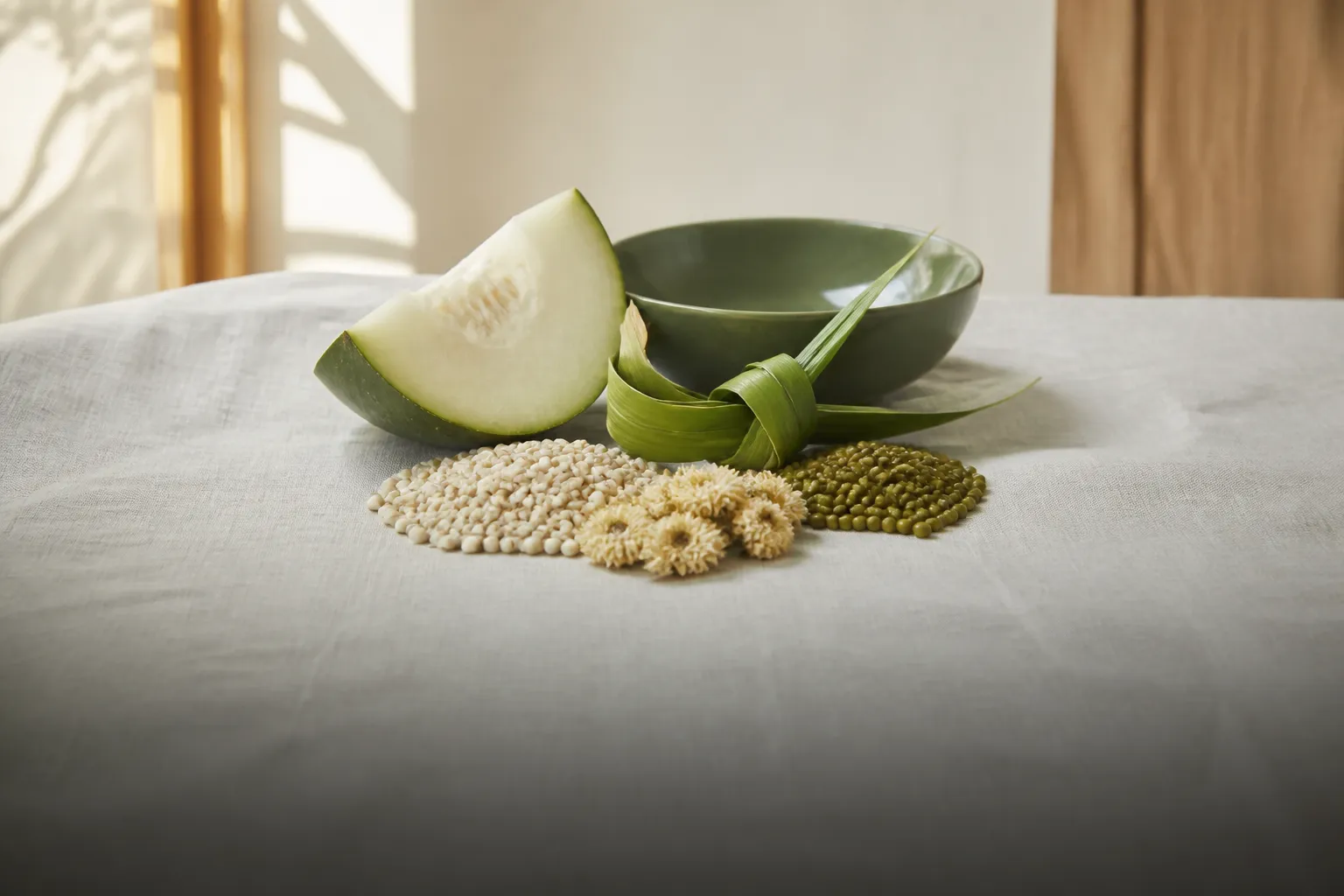
Winter melon, Chinese barley, and chrysanthemum for a TCM acne diet at PULSE TCM

Food therapy

Heaty, fried, and damp-forming foods often feed the same heat that shows as painful or cystic acne. Cooling or draining pots support the named pattern; they do not replace a consult.

TCM diet and acne
Adult jawline with mild redness during a TCM acne consult at PULSE TCM

Clinic care

Managing your acne with PULSE

Each imbalance has its own lesion shape and landing zone. If the picture is mixed or keeps returning, a physician can name the pattern and choose acupuncture, herbs, and food guidance to match it.

Dr Sim Beng Joo

Clinically reviewed

Reviewed by Sim Beng Joo

Advisor (Science & Strategy) / Consultant Physician · TCMPB T1303003A

MOH-licensed TCM physician and biomedical scientist, with clinical work in digestion, pain, sleep or fatigue, women's health, and skin-related internal patterns.

View full profile

Educational information based on clinical experience and TCM principles. Not a substitute for personalised consultation, dermatology care, or urgent medical attention. Tell both your dermatologist and TCM physician about herbs and medicines you take. Seek care for severe pain, spreading infection, cystic flares, or sudden systemic symptoms.

FAQs

Acne questions

Common questions before you change food, combine care, or book a first visit.

Does acupuncture help clear acne?

Acupuncture is often used alongside herbal medicine for acne. Herbs address internal patterns; acupuncture may help settle systemic inflammation, support hormone rhythm, and improve local circulation to the face. Stimulating specific points can also ease stress, a common trigger, and may reduce redness while active spots settle.

Can I combine TCM acne treatments with Western medications like antibiotics or Accutane?

Generally yes, but it must be managed carefully. Many patients use TCM to ease harsh side effects of Western acne medicines, such as severe dryness or liver stress from isotretinoin (Accutane). Tell both your dermatologist and your TCM physician about every medicine and herb you take, so herb-drug interactions can be watched.

Does TCM acne treatment involve a specific diet?

Diet is a pillar of TCM dermatology. Physicians typically advise easing off heaty foods (spicy, fried, durian) and damp-inducing foods (dairy, refined sugar, cold drinks). Those loads can feed the internal heat that shows as painful, cystic acne.

How long does it take to see results with TCM acne treatment?

TCM focuses on the internal pattern behind the breakouts, not only a topical fix. Some people notice less redness and inflammation within 2 to 4 weeks. A full skin turnover cycle takes about 28 days. For chronic or cystic acne, a consistent plan of diet, herbal medicine, and acupuncture often shows clearer change within 3 to 6 months.

Can TCM help with post-acne scarring and pigmentation?

The first job is stopping new breakouts. Acupuncture also improves local blood circulation and collagen activity, which can help fade post-inflammatory hyperpigmentation (PIH). Physicians may prescribe cooling herbs that invigorate the blood to speed healing of red and dark marks.

References

Selected sources

  1. Law MP, Chuh AA, Molinari N, Lee A. An investigation of the association between diet and occurrence of acne: a rational approach from a traditional Chinese medicine perspective. Clinical and Experimental Dermatology. 2010;35(1):31–35. PMID:19549242
  2. Chen HY, Lin YH, Chen YC. Identifying Chinese herbal medicine network for treating acne: Implications from a nationwide database. Journal of Ethnopharmacology. 2016;179:1–8. PMID:26721214
  3. National Center for Complementary and Integrative Health. Traditional Chinese medicine: What you need to know. 2019. nccih.nih.gov
  4. World Health Organization. Traditional, complementary and integrative medicine. who.int
  5. Ministry of Health Singapore. TCM practitioners (Healthcare Professional Portal). hpp.moh.gov.sg/tcm-practitioners
  6. Huang H, Liu Y, Wu S, Zhao D, Zheng H, Zhu M. Current state of research on acupuncture for acne: a scoping review. Frontiers in Physiology. 2025;16:1661850. doi:10.3389/fphys.2025.1661850
  7. Zhao C, Li GZ, Li F, Wang Z, Liu C. Qualitative and quantitative analysis of facial complexion in Chinese medicine. BioMed Research International. 2014;2014:207589. doi:10.1155/2014/207589
  8. Sheng Y, Zheng X, Xu J. Anti-acne mechanisms of Yuqingyan, a novel multi-herbal formula derived from traditional Chinese medicine. Journal of Ethnopharmacology. 2026;358:121002. doi:10.1016/j.jep.2025.121002

Next step

Ready for an acne pattern read?

Bring where breakouts land, how long they have lasted, and any dermatology notes. We will name the pattern in plain language and decide what belongs in your plan.

Hours
Most clinics daily 11:00 AM – 8:00 PM
Care
Physician-led consultation