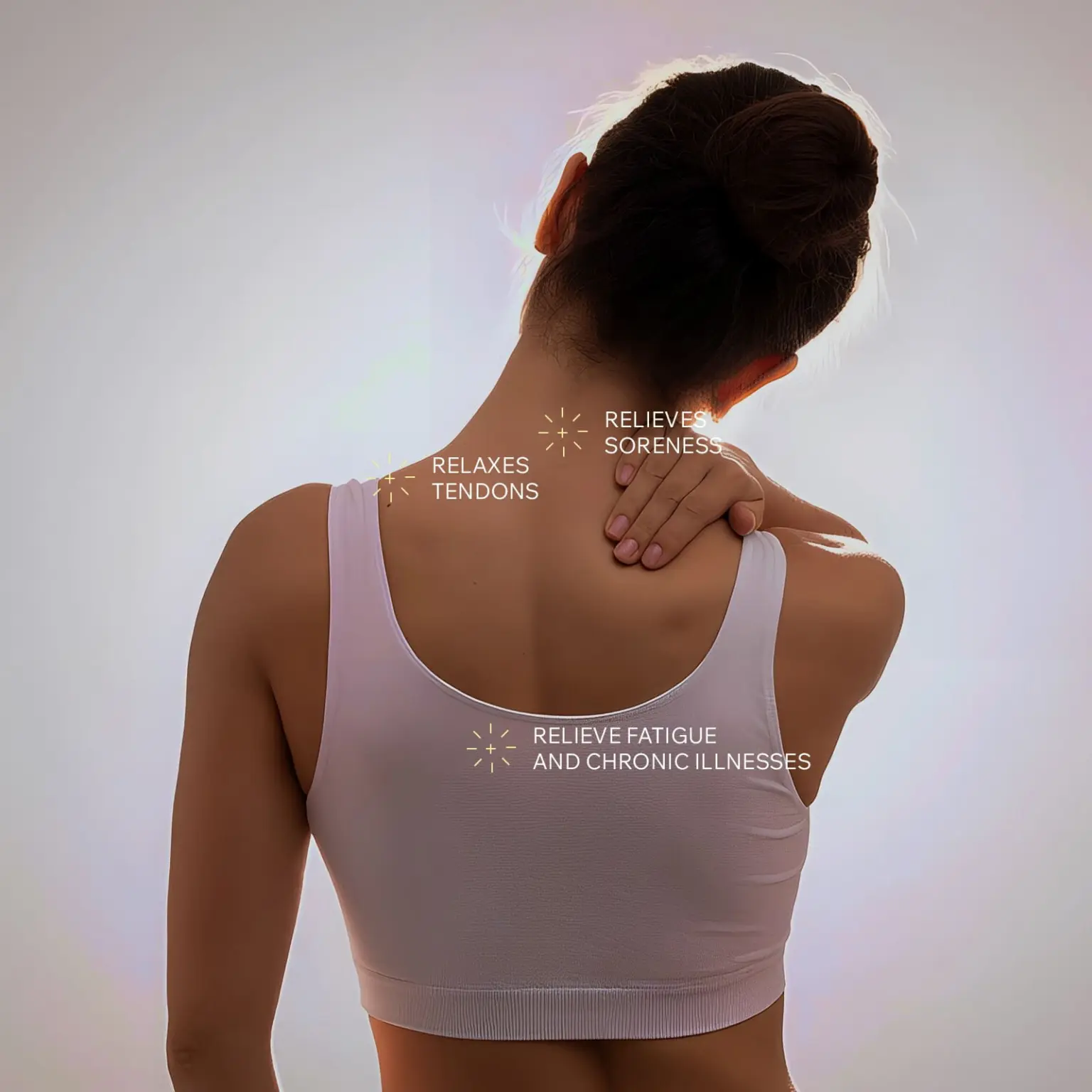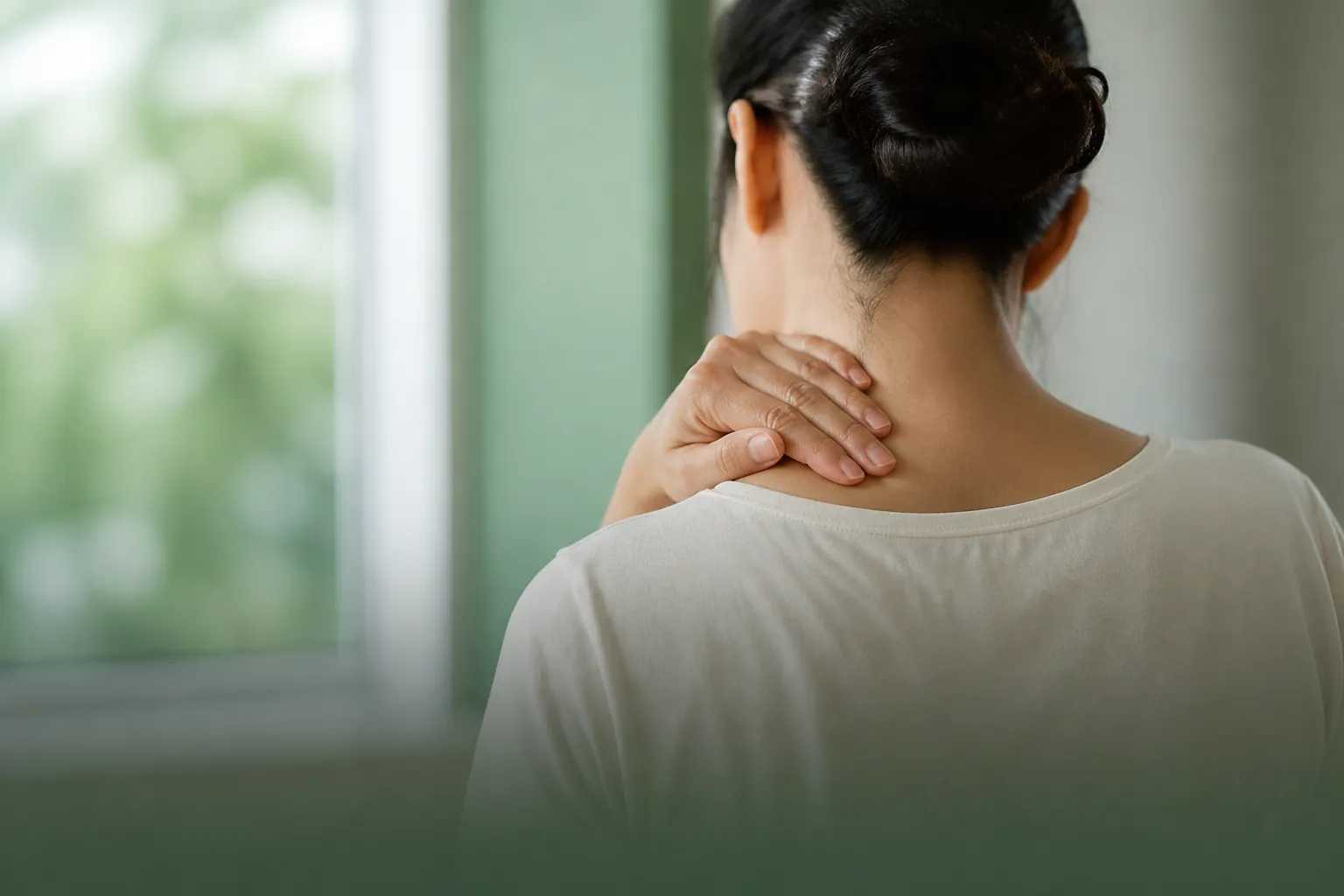
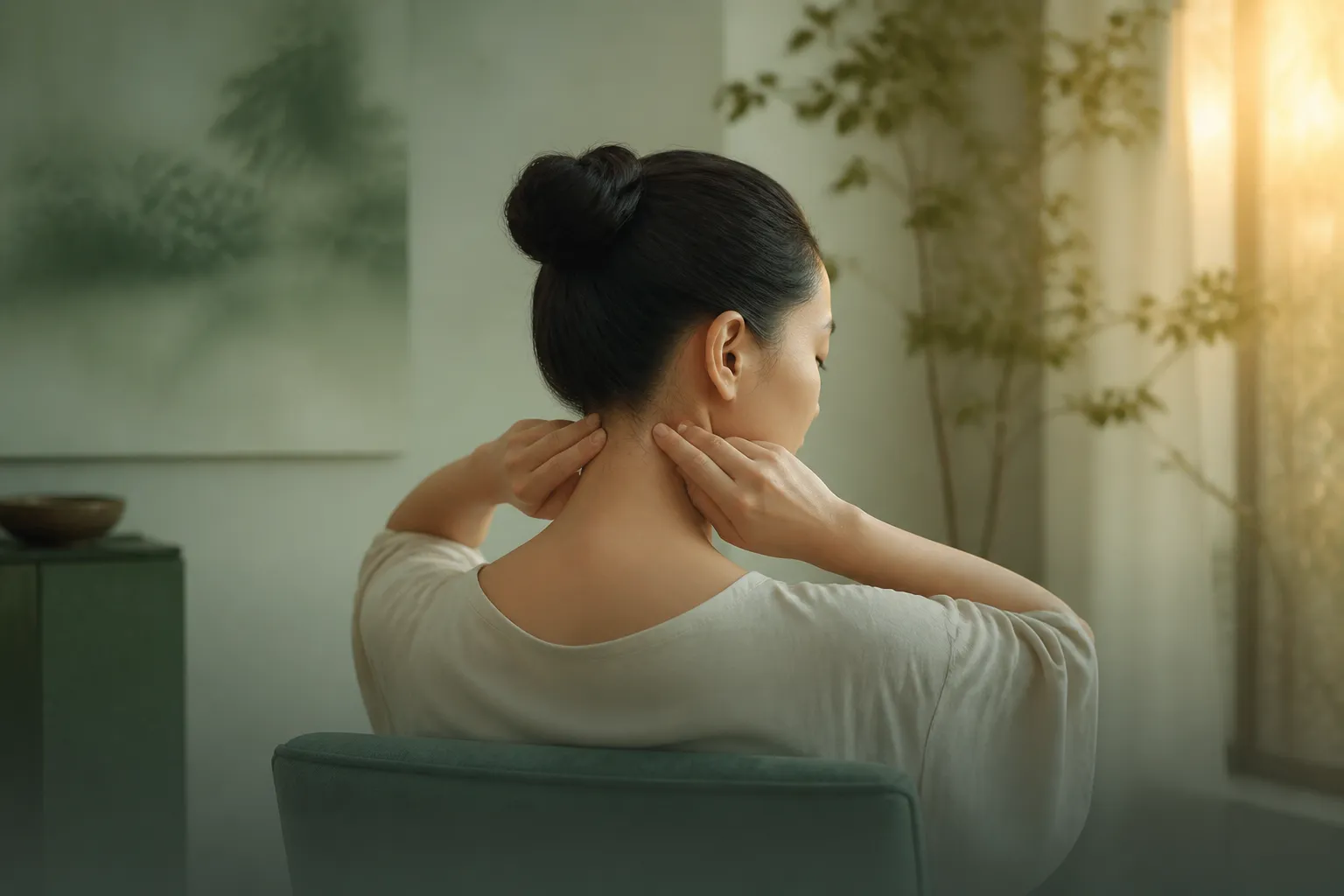
Adult pressing thumbs into the nape hollows for migraine self-care at a calm TCM clinic

Insights · Pain & Injuries

Beyond Pills: Chinese Medicine Tips for Migraine Relief

A one-sided headache with nausea or light sensitivity often needs load softened between visits. Diet and wind habits, three head points matched to where the pain sits, and when acupuncture and herbs join the plan.

In brief

A one-sided headache with nausea, blurred vision, or light and sound sensitivity often reads as migraine. Between visits, ease damp and heaty foods, keep the nape warm against AC wind, move regularly, and press Feng Chi (GB20), Si Zhu Kong (SJ23), or Er Men (SJ21) by where the pain sits, with He Gu (LI4) as a command point for the head. Heat-type migraines often throb with a red face; cold-type feels tight or heavy after cold air. TCM reads pathogenic wind, phlegm, and fire behind the pattern. Book when attacks keep stacking. Migraine 101 maps the five patterns in more depth.

01 · At a glance

What to try when migraine builds

A migraine is a recurring one- or two-sided headache often joined by blurred vision, nausea, and light or sound sensitivity. Match the tip to the trigger or where the pain sits.

Beyond-pills migraine tips at a glance
Cue Try first Detail
Heaviness after fatty meals or alcohol Ease damp-forming foods. Cheese, fatty plates, alcohol.
Throbbing, red face, chilli load Cooler kitchen; heat-type path. Spicy and heaty meals.
AC nape, iced drinks, desk hours Cover the nape; prefer warmth. Common Singapore wind-cold cues.
General migraine pain Feng Chi (GB20) at the nape. Nape hollows · about 1 min each side.
Eyes or brow involved Si Zhu Kong (SJ23). Outer end of the eyebrow.
Ears ache with the attack Er Men (SJ21). Depression in front of the ear.
Early attack building He Gu (LI4) or Taiyang to Yintang ice. Hand webbing · temple glide to brow.

02 · TCM view

The TCM perspective

Wind · phlegm · fire

Heat-type attacks often throb with a red face and irritability; cold-type feels tight or heavy and often follows air-conditioning or cold weather. TCM links migraine to wind, phlegm, and fire behind the pattern.

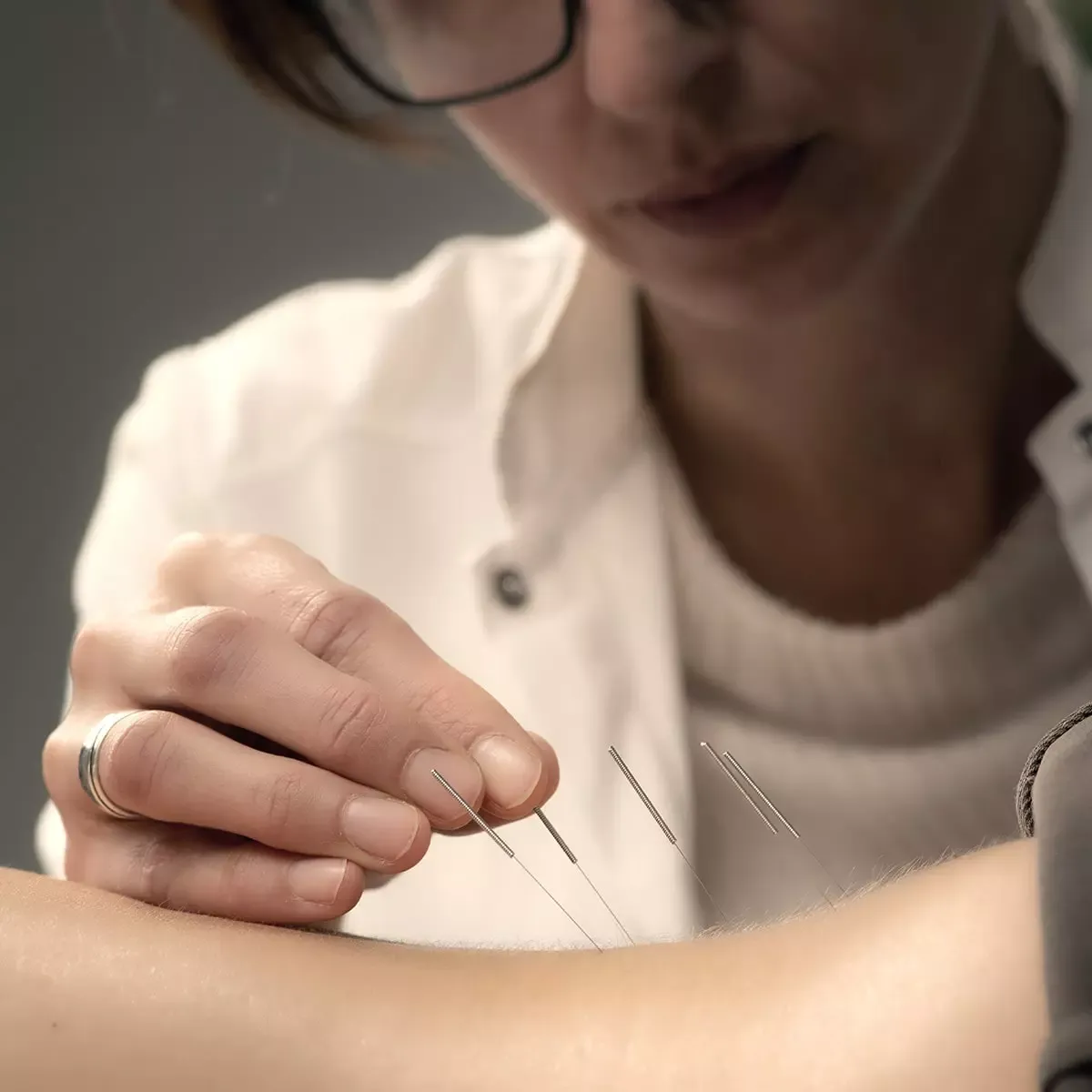
Herbal medicine and acupuncture are matched to the pattern after pulse and tongue, with the aim of clearing the disharmony that keeps attacks returning. Acupuncture is often used in pain care for its analgesic effect and to ease the head when Qi and blood are stuck.

For the five-pattern map, stages of an attack, and clinic methods such as tuina and gua sha, see Migraine 101: causes and TCM treatments.

03 · Type

Heat-type versus cold-type

Not every migraine is treated the same. Heat-type attacks often throb with a red face and irritability; cold-type feels tight or heavy and often follows air-conditioning or cold weather.

Heat-type and cold-type migraine at a glance
Type Common signs Home lean Clinic lean
Heat-typeLiver fire often leads. Throbbing pain, red face, irritability. Ease spicy and heaty foods; cooler drinks. Cooling herbs and drainage points.
Cold-typePathogenic cold often leads. Tight band or heavy head; AC or cold trigger. Cover the nape; hot neck compress; skip ice if cold signs lead. Warming care such as moxibustion.

04 · Habits

Diet and lifestyle that support care

Damp, heat, and wind loads keep many migraines firing. These habits sit beside prescribed care; they do not replace a consult.

1. Ease damp-forming foods

Cheese, fatty meals, and alcohol encourage damp accumulation for many people. Cutting back when attacks stack can lighten heaviness and nausea that sit with phlegm-type migraine.

2. Ease spicy and heaty foods

Spicy and heaty meals can feed liver fire. When throbbing pain, a red face, or irritability lead the attack, cooler kitchen choices often sit better than chilli-heavy plates.

3. Keep the body warm against wind

In Singapore, long hours facing air-conditioning, iced drinks on hot days, and a stiff nape after desk work are common wind-cold cues. Cover the neck and shoulders in cold indoor air, prefer warming drinks over constant ice, and dry hair after washing. Pathogenic wind enters more readily when the nape stays chilled.

4. Move regularly

Steady exercise supports blood circulation and psychological ease between episodes. Gentle stretch and outdoor walks often sit better during postdrome fatigue than hard intervals.

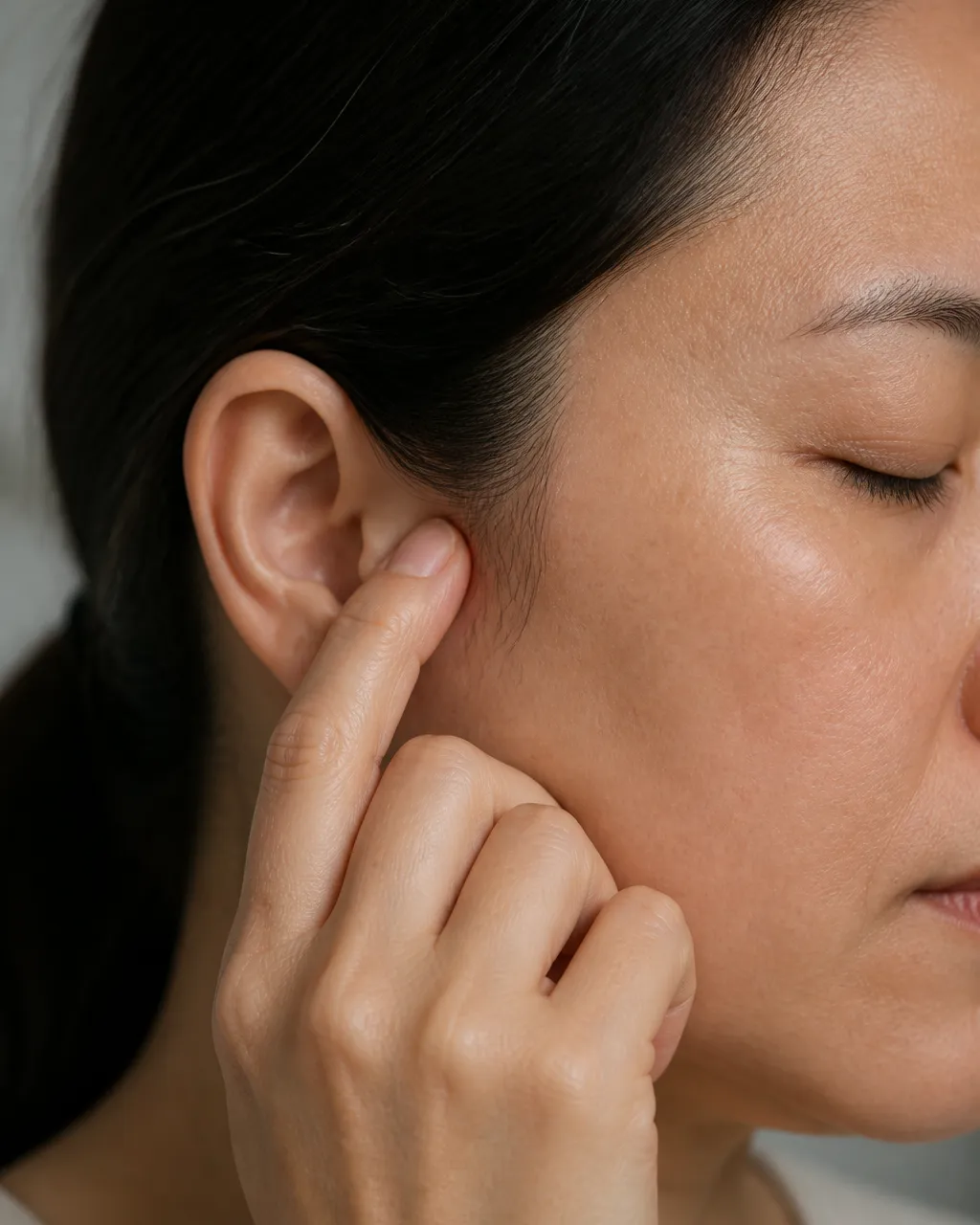
Adult pressing thumbs into Feng Chi GB20 hollows at the base of the skull for migraine acupressure

05 · Self-press

Home points matched to where pain sits

GB20 · SJ23 · SJ21 · LI4

Gently massage these points at home alongside prescribed care. Match Feng Chi for general migraine pain, Si Zhu Kong when the eyes ache, and Er Men when the ears are involved.

Caution

Soft pressure only around the eye and ear. Skip broken skin. Skip He Gu (LI4) in pregnancy. Seek urgent help for sudden worst-ever headache, vision loss, one-sided weakness, or headache after trauma.

Adult pressing thumbs into Feng Chi GB20 hollows at the base of the skull for migraine acupressure

Acupoint · three points

Feng Chi, Si Zhu Kong, and Er Men

Press GB20 in the nape hollows for generic migraine pain, SJ23 at the outer eyebrow end when the eyes are involved, and SJ21 in front of the ear when the ears ache with the attack.

Circle kindly for about one minute each side. Stop if pain sharpens.

See the three-point method
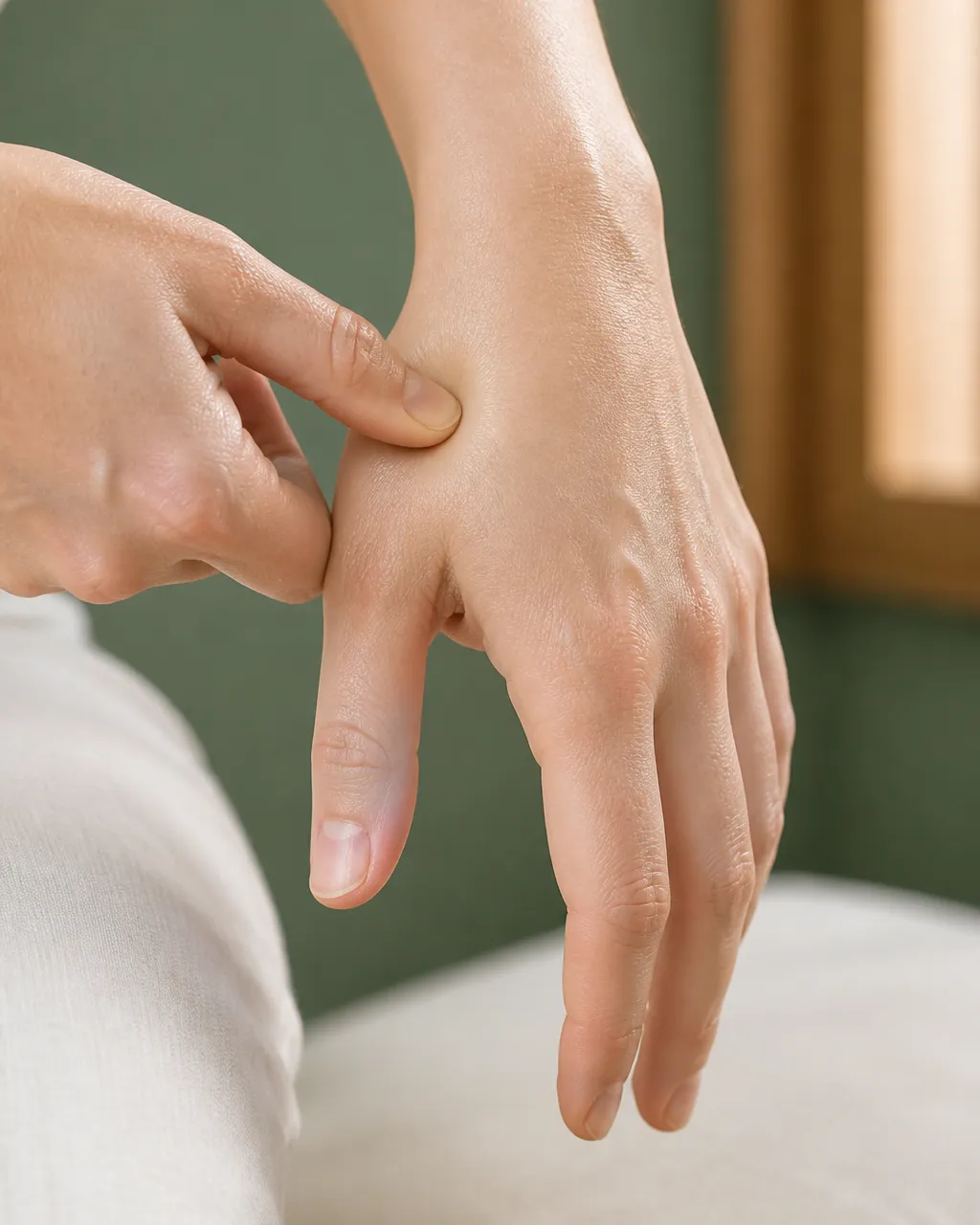
Thumb pressing He Gu LI4 in the fleshy webbing between the thumb and index finger

Acupoint · LI4

He Gu in the hand webbing

LI4 is a command point for the face and head. Thumb-massage the fleshy webbing between thumb and index finger in the early stage of an attack to disperse pain and wind.

If there's any chance of pregnancy, don't use this.

Press He Gu
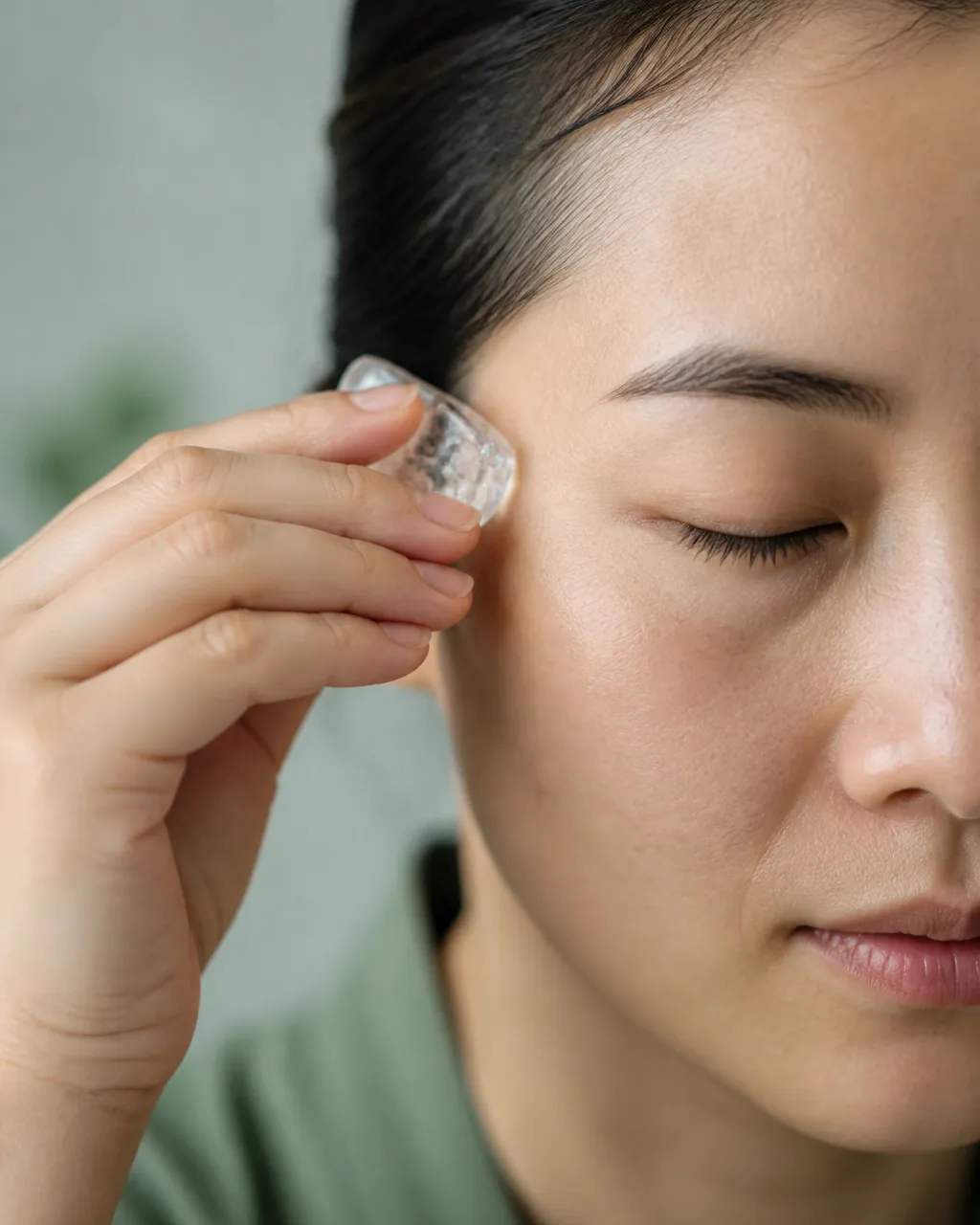
Hand holding an ice cube near the temple for Taiyang to Yintang migraine ice glide

Acupoint · ice glide

Ice from Taiyang to Yintang

Wrap an ice cube and glide from the temple hollow toward the brow midpoint when a migraine builds. Some Wind-Cold patterns prefer warmth on the neck instead.

Protect the skin; do not hold bare ice until it burns.

See the ice method
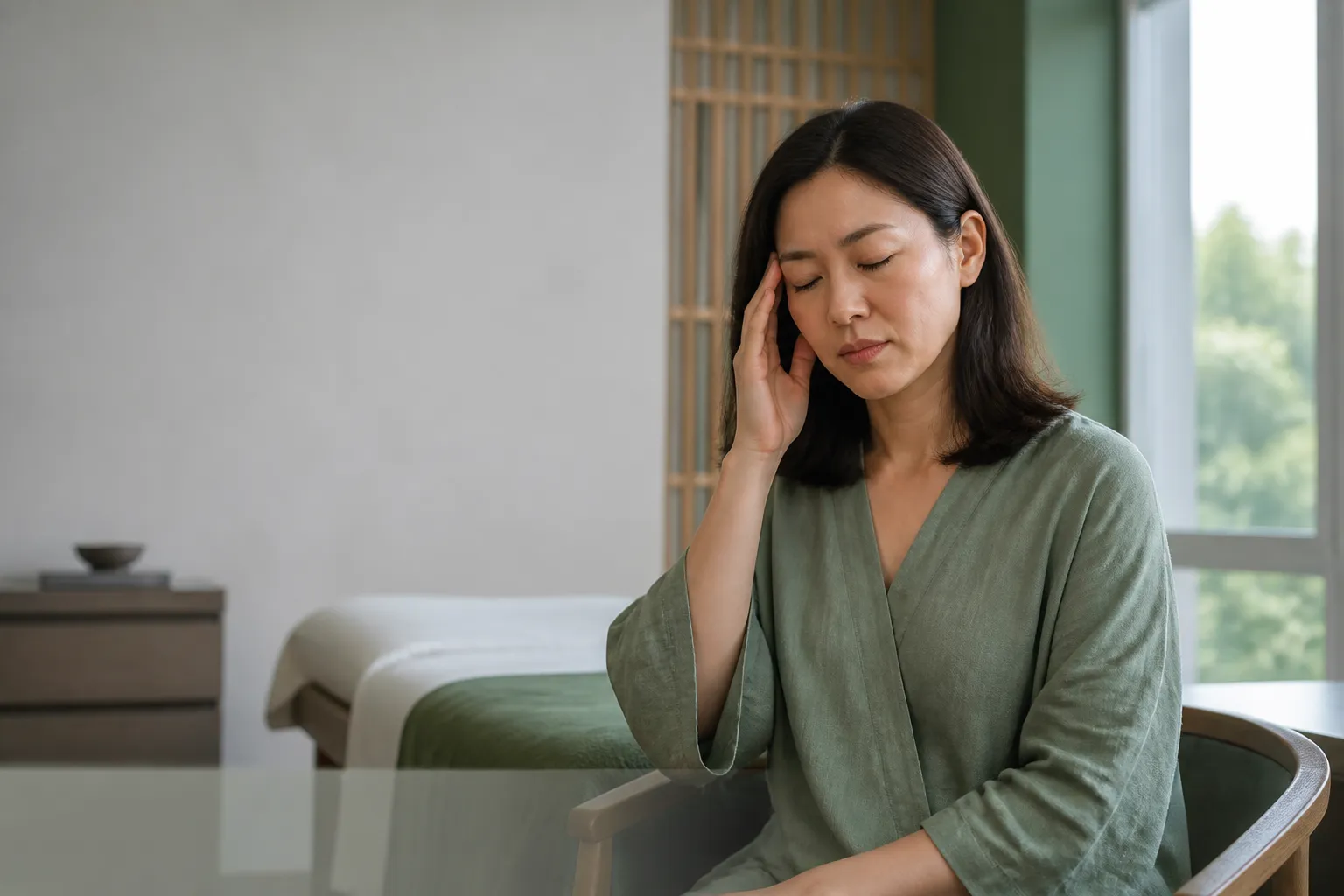
Adult pressing thumbs into the nape hollows for migraine self-care at a calm TCM clinic

Clinic care

When home tips are not enough

Book when attacks keep stacking, hormonal timing needs a plan, or you want herbs and acupuncture matched to heat versus cold type.

Dr Sim Beng Joo

Clinically reviewed

Reviewed by Sim Beng Joo

Advisor (Science & Strategy) / Consultant Physician · TCMPB T1303003A

MOH-licensed TCM physician, with clinical work in gastrointestinal syndromes, pain management, sleep / fatigue.

View full profile

Educational information based on clinical experience and TCM principles. Not a substitute for personalised consultation, medical care, or urgent attention. Speak with your physician before starting herbs, acupressure, or new self-care in pregnancy or with a chronic condition. Seek urgent care for sudden worst-ever headache, fever with stiff neck, vision loss, weakness on one side, confusion, collapse, or headache after trauma. TCM complements GP and neurology care; it does not replace emergency assessment. Do not stop or change prescribed migraine medication without advice from the prescribing clinician.

FAQs

Questions, answered

Common questions on acupuncture timing, hormonal migraines, heat versus cold types, home acupressure, and the postdrome hangover.

How long does it take for TCM to show results for migraine relief?

Some people feel ease of acute pain after a single acupuncture session. Chronic migraine management typically needs a course of six to eight sessions. TCM works on rebalancing Qi and blood circulation, so frequency and intensity of attacks usually ease over a few weeks as pathogenic wind or liver fire is cleared under physician care. Timelines vary by pattern and how long attacks have stacked.

Can acupuncture help if my migraines are triggered by hormones?

Yes. In TCM, menstrual-related migraines are often linked to Qi and blood deficiency or stagnation. Acupuncture and herbal prescriptions support regulation of the cycle and improve blood flow to the pelvic and cranial regions. For many people, treatments are timed three to five days before the menstrual cycle begins to reduce hormonal headache onset. Your physician sets the timing after pulse and tongue.

Is it safe to combine TCM with my current migraine medication?

Often yes, when coordinated. Tell both your GP or neurologist and your TCM physician what you take. Do not stop or change prescribed migraine medication without advice from the prescribing clinician. Herbs and acupuncture are usually planned as complementary care, not a silent swap for acute abortive or preventive drugs.

What is the difference between a "heat-type" and "cold-type" migraine in TCM?

Not all migraines are treated the same. A heat-type migraine often involves throbbing pain, a red face, and irritability (liver fire), and is matched with cooling herbs and drainage points. A cold-type migraine may feel like a tight band or a heavy sensation, often triggered by air-conditioning or cold weather, and is treated with warming therapies such as moxibustion to expel pathogenic cold.

Can I perform acupressure at home during a migraine attack?

Yes, acupressure is a useful self-care tool. Beyond the head points such as GB20, you can massage He Gu (LI4) in the webbing between the thumb and index finger. LI4 is a command point for the face and head in TCM and is widely used to disperse pain and wind in the early stages of a migraine. Skip LI4 in pregnancy. Soften pressure if pain sharpens.

Does TCM help with the "migraine hangover" (postdrome phase)?

The fatigue and brain fog after a migraine attack are often signs of Qi depletion. TCM focuses on tonifying the Spleen and Heart systems to restore energy and mental clarity. Specific herbal soups and gentle acupuncture can shorten recovery time in the postdrome phase for some people when matched to the pattern.

References

Selected sources

  1. National Center for Complementary and Integrative Health. Traditional Chinese medicine: What you need to know. 2019. https://www.nccih.nih.gov/health/traditional-chinese-medicine-what-you-need-to-know/
  2. World Health Organization. Traditional, complementary and integrative medicine. https://www.who.int/health-topics/traditional-complementary-and-integrative-medicine
  3. Ministry of Health Singapore. TCM practitioners (Healthcare Professional Portal). https://hpp.moh.gov.sg/tcm-practitioners/
  4. Zhang, X., Chen, Q., Liu, Y., Li, J., Nie, L., Miao, Q., Fu, F., Lyu, T., Tan, Z., Kong, Y., Li, B., & Liu, L. (2026). Acupuncture for Migraine Without Aura and Connection-Based Efficacy Prediction: A Randomized Clinical Trial. JAMA Network Open, 9(1), e2555454. https://doi.org/10.1001/jamanetworkopen.2025.55454
  5. Yang, C., Wu, M., Luo, Q., Xu, G., Huang, L., Tian, H., Sun, M., & Liang, F. (2024). Acupuncture for migraine: A systematic review and meta-regression of randomized controlled trials. Complementary Therapies in Medicine, 86, 103076. https://doi.org/10.1016/j.ctim.2024.103076
  6. Liu, A. R., Zhu, Q., Li, J., Cao, Y., Pei, T., & Shi, L. (2025). Efficacy of Acupuncture and Pharmacotherapy for Migraine Prophylaxis: A Systematic Review and Meta-Analysis. Journal of Pain Research, 18, 2521–2540. https://doi.org/10.2147/JPR.S519846

Next step

Ready for a migraine pattern read?

Bring how often attacks hit, which foods or AC drafts precede them, and any GP or neurology notes. We will name the TCM pattern in plain language and decide what belongs in your plan.

Hours
Most clinics daily 11:00 AM – 8:00 PM
Care
Physician-led consultation