
Physician assessing the abdomen during a TCM constipation consult at PULSE TCM

Insights · General Health

TCM for constipation

Hard, infrequent stools with straining are often a pattern, not only a fibre gap. TCM reads heat, stuck qi, or deficiency so food, points, and clinic care can match the type.

In brief

Hard, lumpy stools with straining and a stuck empty feeling often read as constipation (generally fewer than three bowel movements a week). TCM splits excess types (heat-induced and qi stagnation) from deficiency types (blood and qi). Food, acupuncture, and herbs match the type. Zhi Gou (SJ6), Shen Men (HT7), and Tian Shu (ST25) are the home-press set; skip belly massage during diarrhoea.

01 · Definition

What is constipation?

Frequency · form · emptying

Hard, infrequent stools with straining often read as constipation. Normal frequency can range from three times a day to three times a week; fewer than three movements in a week is the usual cut-off.

Chronic constipation is infrequent stools, or difficulty passing motion, that lasts several weeks or longer. Other signs include straining, abdominal distension, hard or lumpy stools, and a sensation of incomplete emptying. In Singapore, desk holding, iced drinks, and chilli-heavy meals often sit on top of that picture.
02 · Assessment

How TCM names the type

Stool count is the start. Form, heat signs, and how you feel after passing name the pattern. Mixed pictures are common. Pulse and tongue decide.

1. Stool form

Dry pellets or hard lumps often read heat or blood deficiency. A sense of incomplete emptying, with distension, more often reads stuck qi. Soft stool that still will not pass more often reads qi deficiency.

2. Heat or deficiency tells

Thirst, bad breath, aversion to heat, and dark urine lean heat. Pallor, dizziness, palpitations, or forgetfulness lean blood deficiency. Breathlessness or fatigue after passing leans qi deficiency.

3. After passing

Still full, with burping or flatulence, points to qi that has not descended. Winded and spent points to not enough push. The same weekly stool count can be either picture.

03 · Types

Four TCM types of constipation

Chinese medicine splits constipation into excess (heat or stuck qi) and deficiency (blood or qi). Food and points follow the type, not a single fibre rule.

TCM constipation types
Type Typical signs May help
Heat-induced (热秘)Excess. Dry heat in the intestines. Dry, hard stools; aversion to heat; dry mouth; frequent thirst; bad breath; dark-coloured urine
Qi stagnation (气滞)Excess. Qi does not descend. Dry stools; incomplete emptying; abdominal distension; frequent burping; flatulence; low appetite
Blood deficiency (血虚)Deficiency. The intestines lack moisture. Dry stools; pale complexion; dizziness; palpitations; forgetfulness
Qi deficiency (气虚)Deficiency. There is not enough push. Difficulty passing; lethargy or breathlessness after; panting; easy fatigue
  • Oats, brown rice, morning toilet
  • HT7

Excess · 热秘

Heat-induced constipation

Dry heat in the intestines

Cooling food restores moisture while heat is still in the intestines.

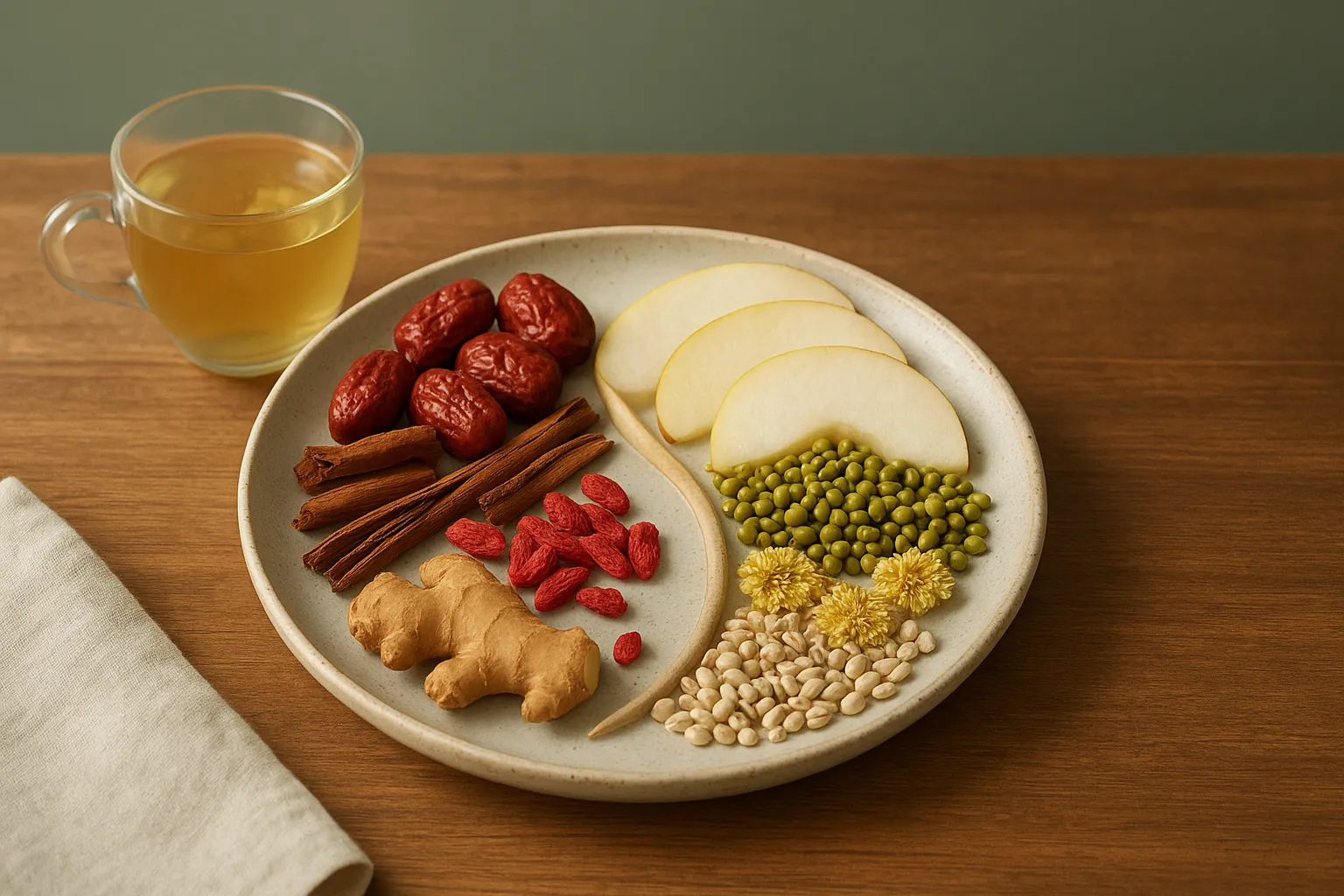
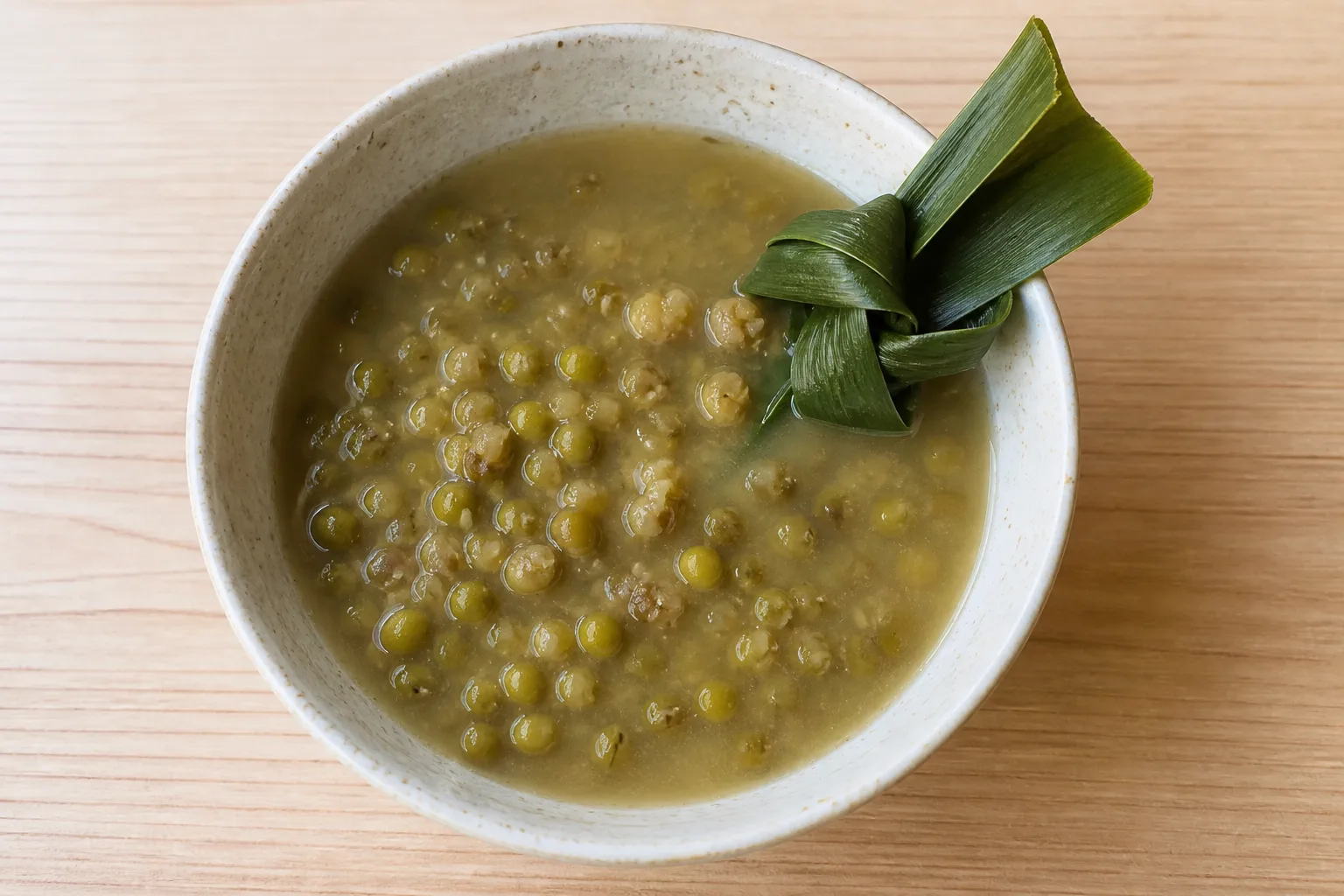
Bowl of mung bean soup with pandan

Heat · 热秘

Cooling mung bean soup

Mung beans (green beans) have cooling properties traditionally used to ease Stomach fire and support bowel movement.

Ease off or stop if stools loosen.

Make the mung bean soup

Excess · 气滞

Qi stagnation

Qi does not descend

Desk holding and long sitting keep qi from descending. A walk and abdomen points help it move down.

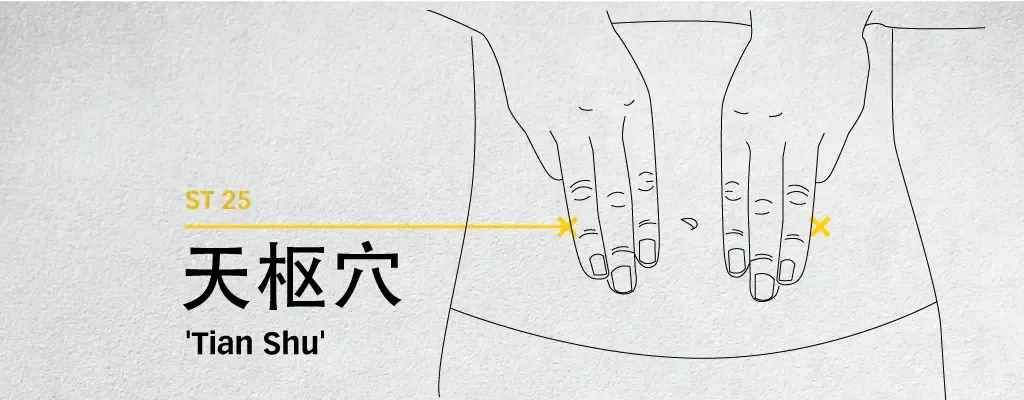
Find ST25 and tummy circles

Deficiency · 血虚

Blood deficiency

The intestines lack moisture

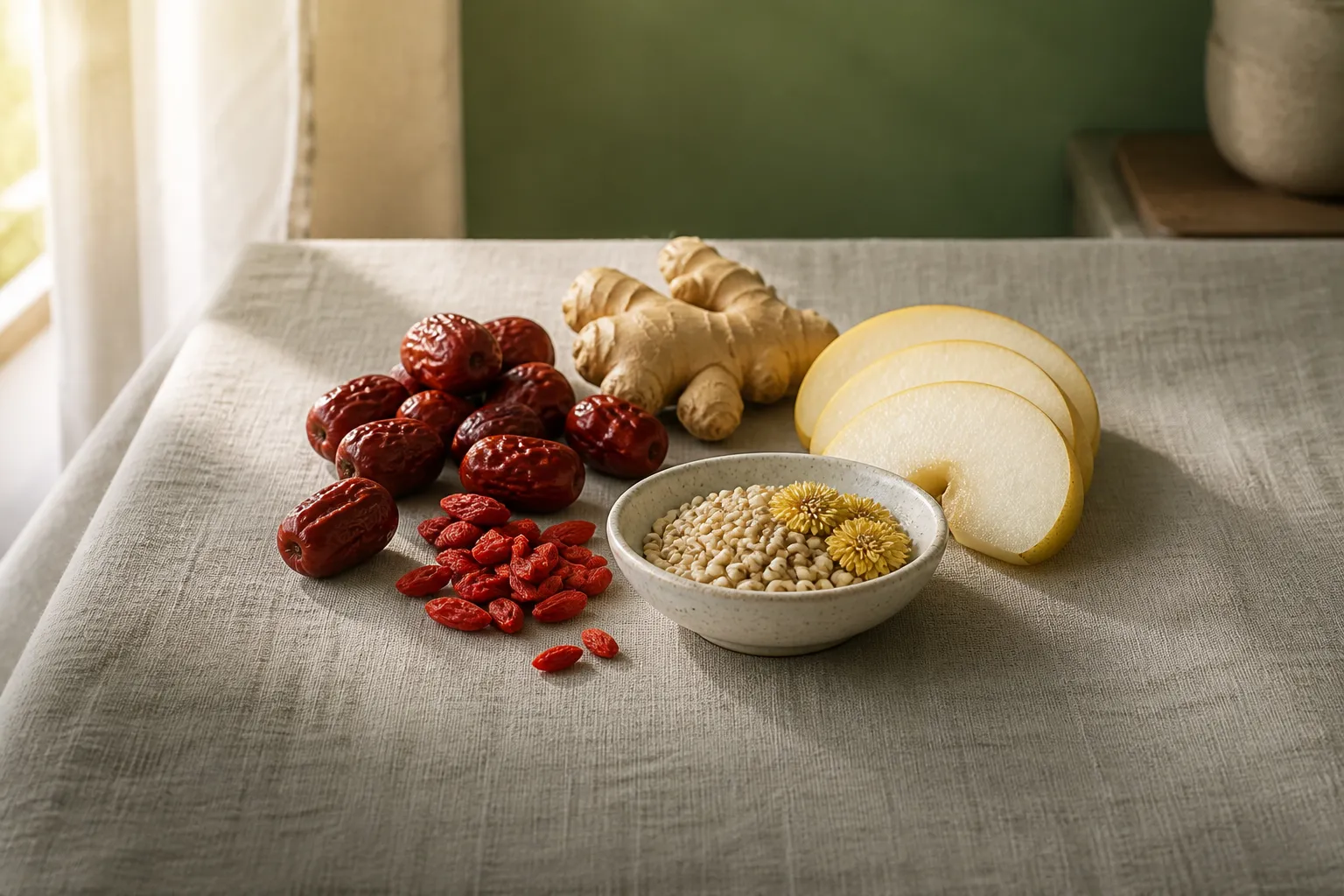
Oil-rich nuts and black fungus moisten dry stools without adding more heat.

Food by type

Deficiency · 气虚

Qi deficiency

There is not enough push

Bulk grains give the bowel something to move when the push is weak. Icy drinks make that push weaker.

Find HT7 on the wrist

04 · Causes

Some possible causes

Fibre and habit sit beside medicines and medical conditions. These do not name the TCM type on their own.

1. Inadequate fibre and water

Low bulk and low fluid make stools small, dry, and slow to move.

2. Repeatedly ignoring the urge

Holding the stool trains the bowel to wait. The urge then comes less clearly. Desk days in Singapore make this easy to miss.

3. Endocrine or neurological conditions

Thyroid disease, Parkinson’s disease, or stroke can slow motility. These need a proper medical review.

4. Blockages in the colon or rectum

A physical obstruction needs urgent Western care.

5. Certain medicines

Calcium supplements, iron supplements, and antacids that contain aluminium or calcium are common slows.

6. Travel, pregnancy, or a diet change

Routine, hormones, and food all shift stool timing. Pregnancy needs a physician before belly press.

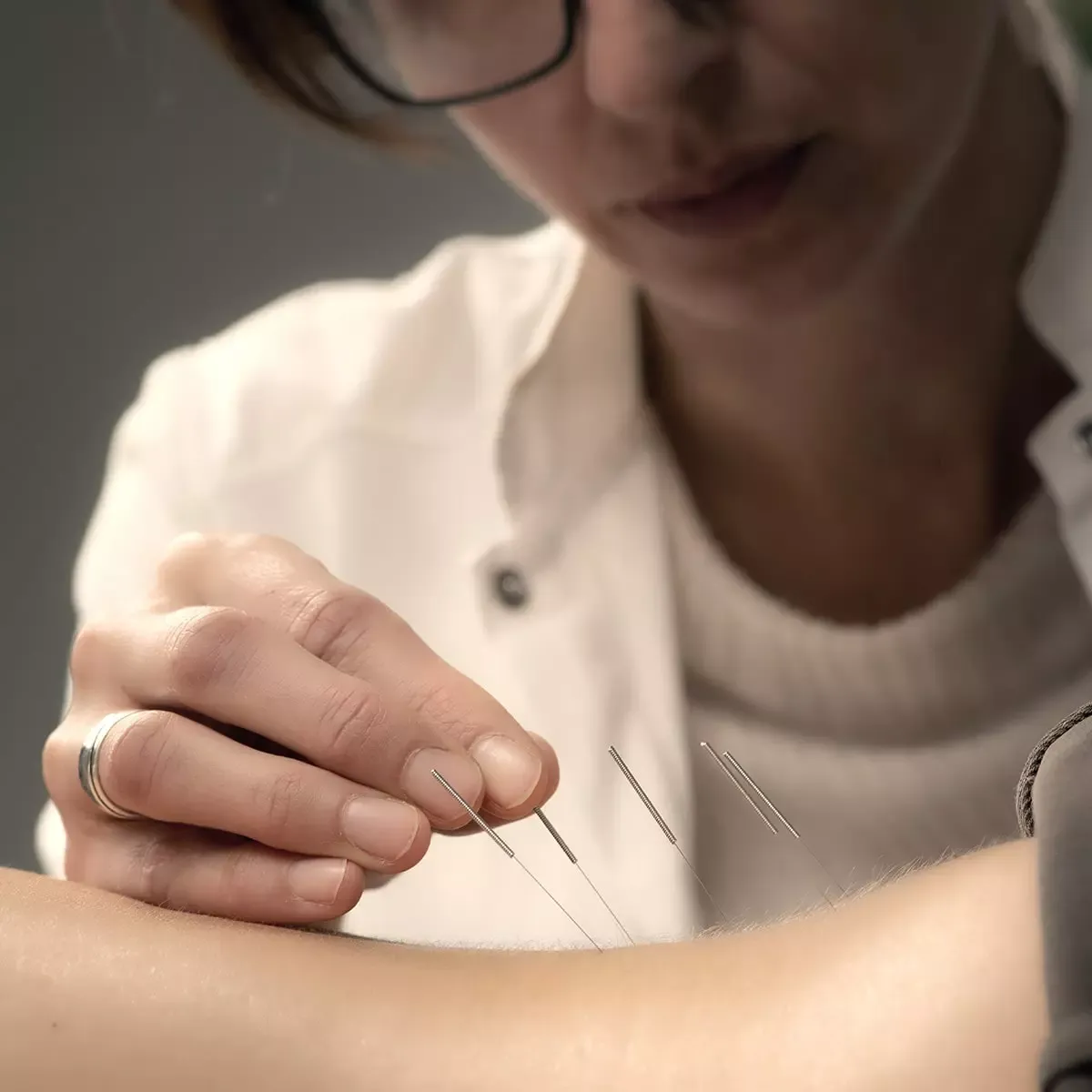
Fine acupuncture needle at a point on the hand

05 · Clinic care

How TCM treatments can help

Acupuncture · herbs

A physician names the mix of heat, stuck qi, or deficiency, then matches points and herbs to that pattern.

  • First visit: pulse, tongue, and a stool history name the mix before needles or herbs.
  • Acupuncture: abdomen points such as ST25, plus SJ6 on the forearm, are common when the bowel is slow. The set follows the type.
  • Chinese herbal prescription: heat-clearing and moistening herbs for dry pellets; qi-moving herbs when the belly stays full; qi- or Blood-tonifying herbs when there is not enough push or moisture. Dosing is clinic-only.

When to book for lingering constipation

Bring how long it has lasted, what the stool looks like, and any GP notes. We will name the pattern in plain language.

06 · Self-press

Acupressure points for sluggish stools

Zhi Gou (SJ6), Shen Men (HT7), and Tian Shu (ST25) are the home-press set. Skip belly work during diarrhoea.

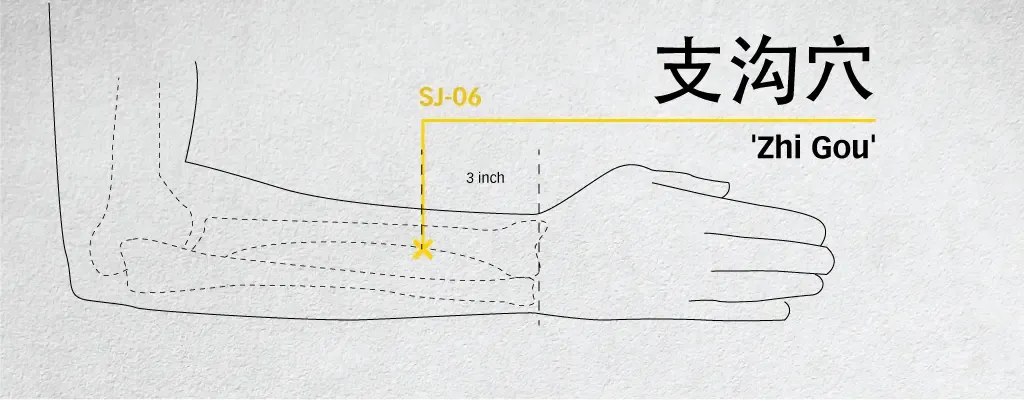
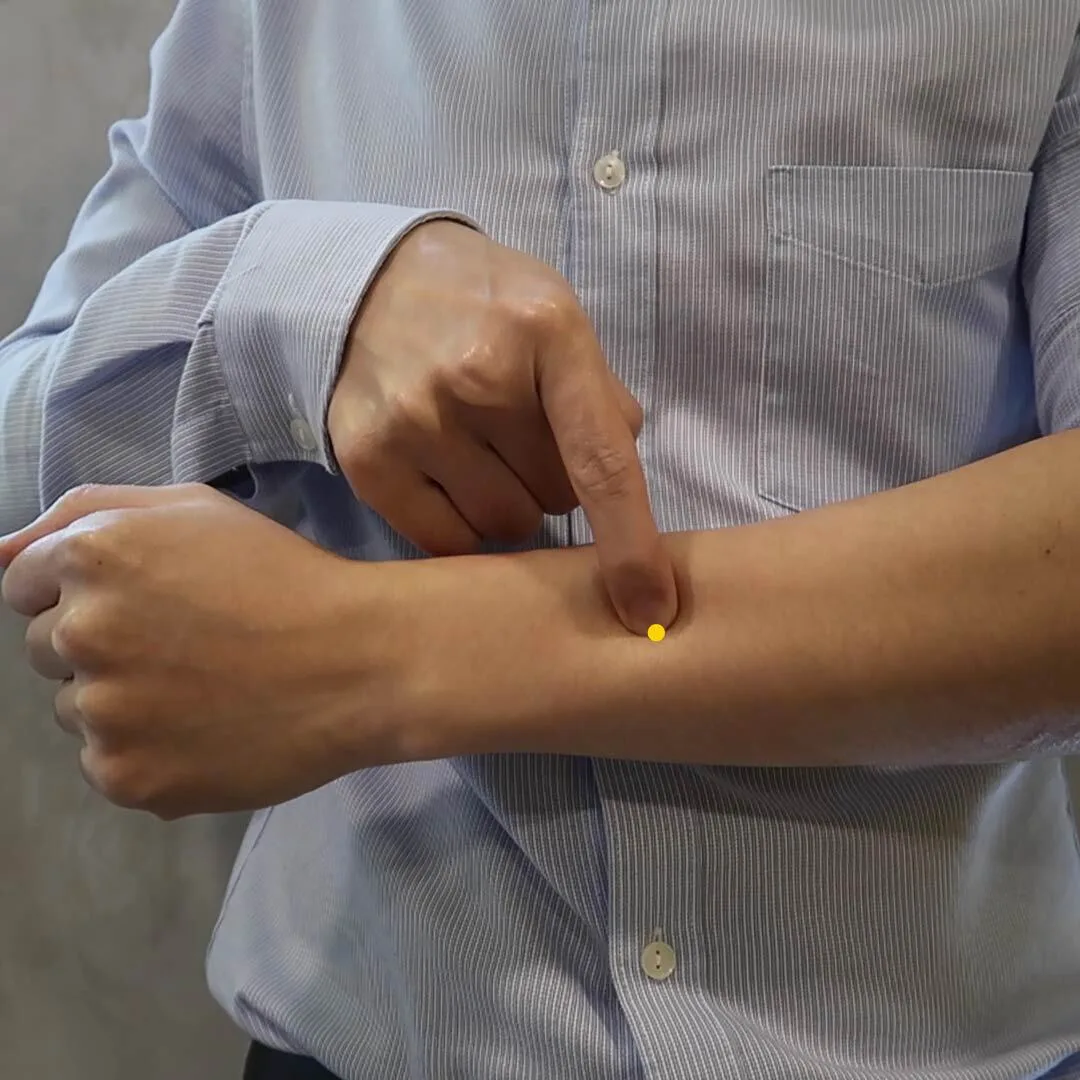
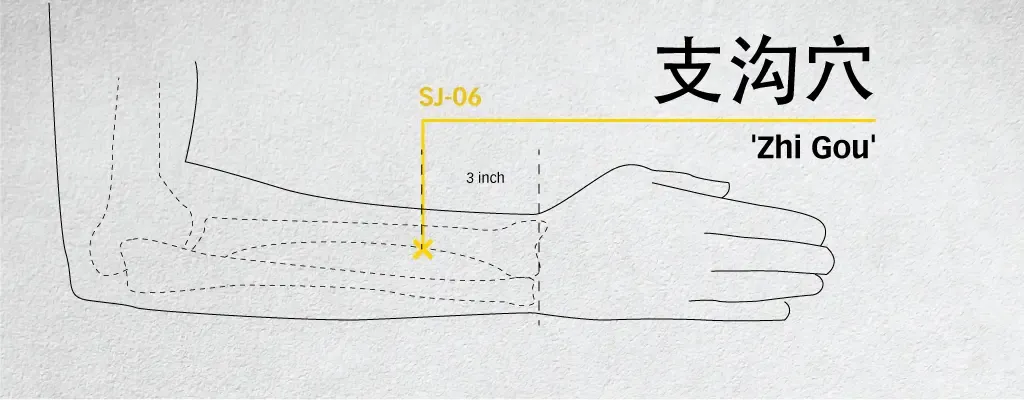
Line diagram locating Zhi Gou (SJ6) on the dorsal forearm

Zhi Gou (SJ6)

支沟穴

Dorsal forearm, about 3 inches (four finger-widths) proximal to the wrist crease, in the depression between the radius and ulna. Two minutes. You can also press SJ6 while passing motion when the stool is hard to start.

Zhi Gou (SJ6) locate & press

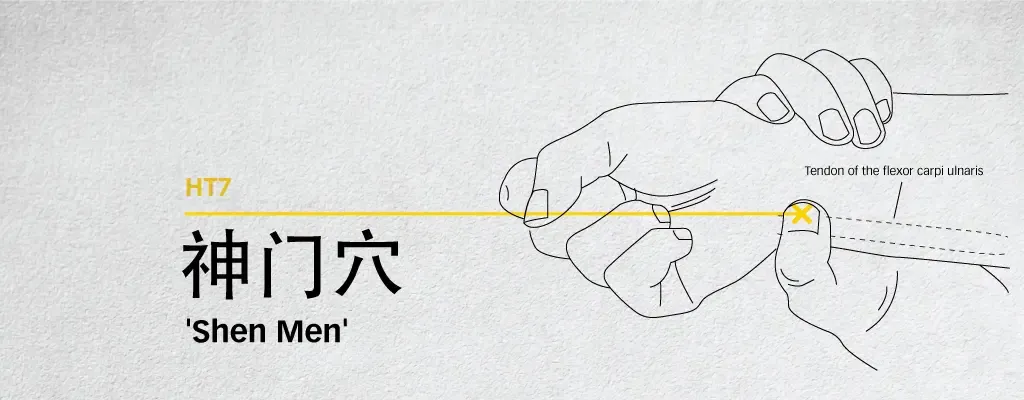
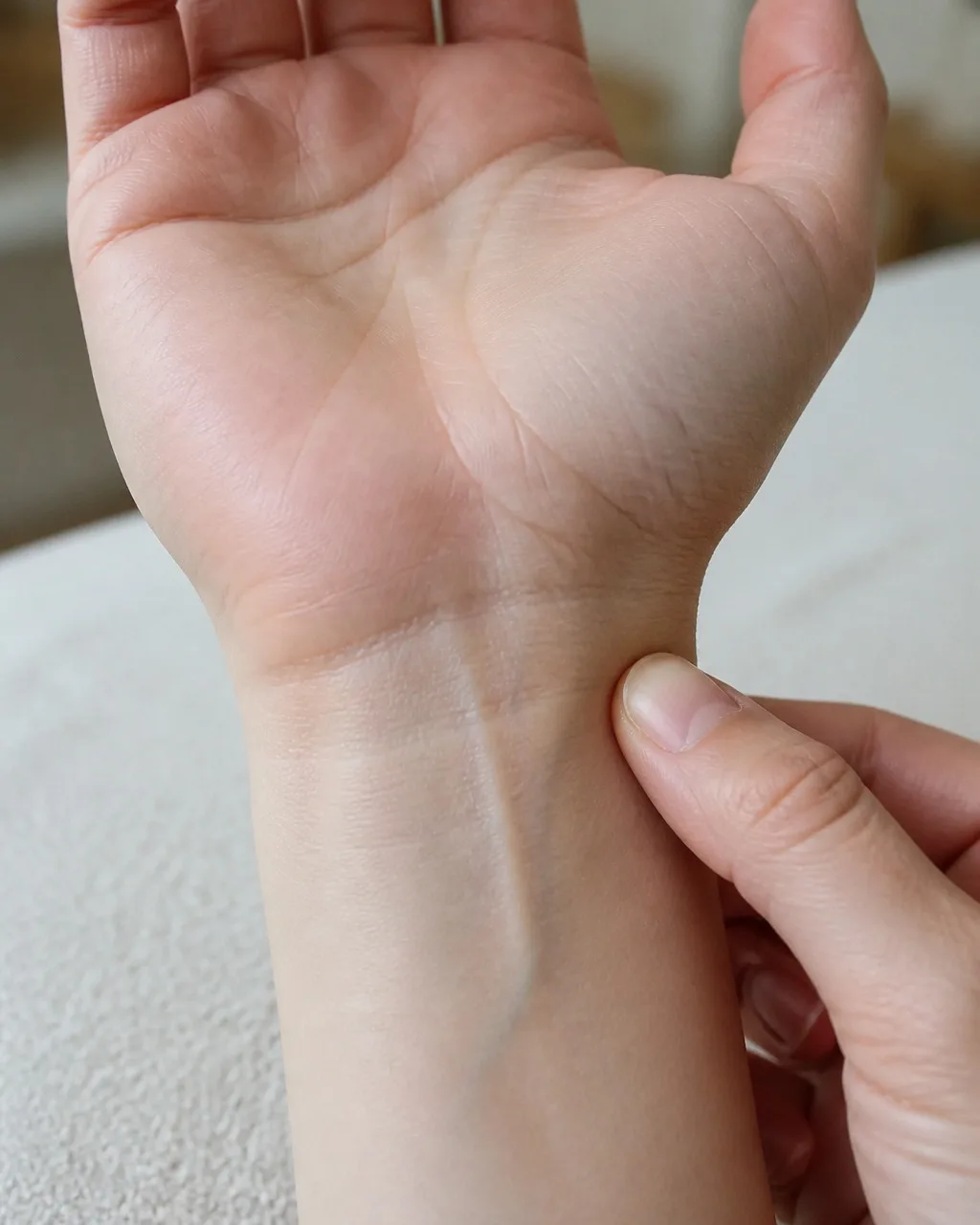
Shen Men (HT7)

神门穴

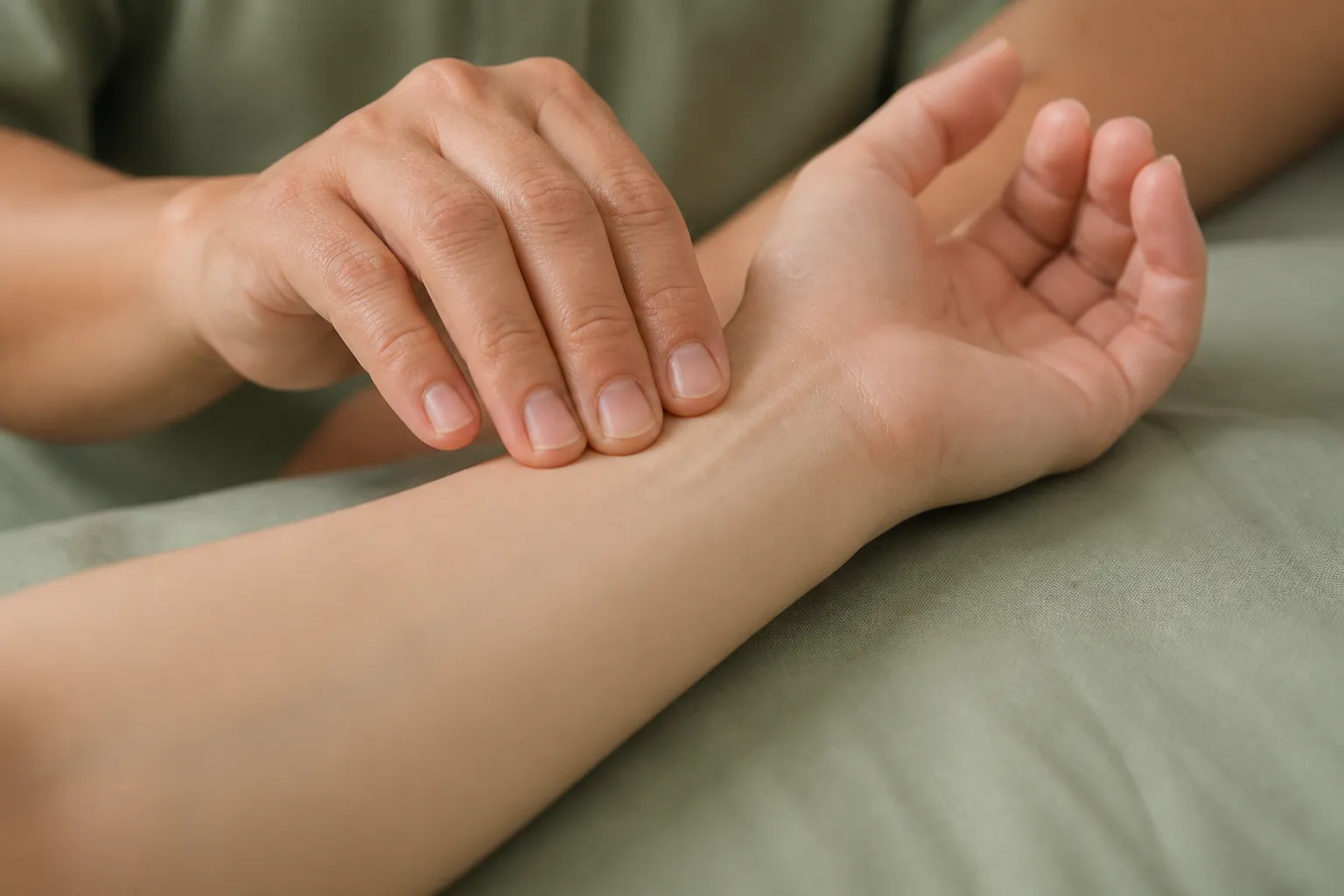
Palmar wrist crease, radial to the tendon of flexor carpi ulnaris. Two minutes. Often used when constipation has lingered.

Shen Men (HT7) locate & press
Line diagram locating Shen Men (HT7) on the palmar wrist crease
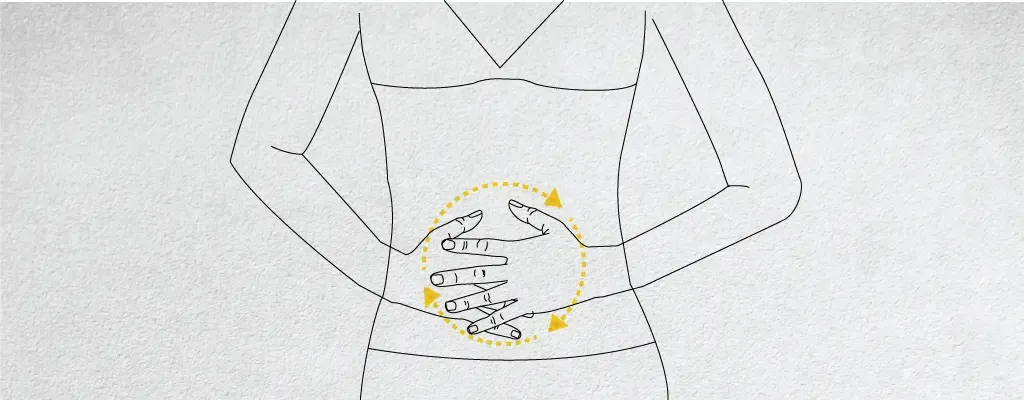
Line diagram of clockwise circles around the navel

Clockwise tummy circles

Lie on your back. Place one hand above the navel and the other on top. Move both hands together in a light clockwise circle around the navel, 36 times. Useful before sleep or on waking in bed.

Skip during diarrhoea

Tummy circles and ST25 promote intestinal motility. Avoid them while stools are loose.

07 · Food and habits

Food and habits that match the type

Fibre and water help most people. Food nature still follows the type: cooling for heat, moving for stuck qi, moistening for Blood, bulk for weak push.

Food and habits by TCM type
Type Eat Ease off
Heat-inducedCooling. Mung bean soup; apple, banana, orange, carrot, potato Fried, spicy food
Qi stagnationMoving. White radish, orange; a daily walk Holding the stool; long sitting
Blood deficiencyMoistening. Black fungus; almonds, sesame, walnuts; apple, banana Very spicy or drying meals
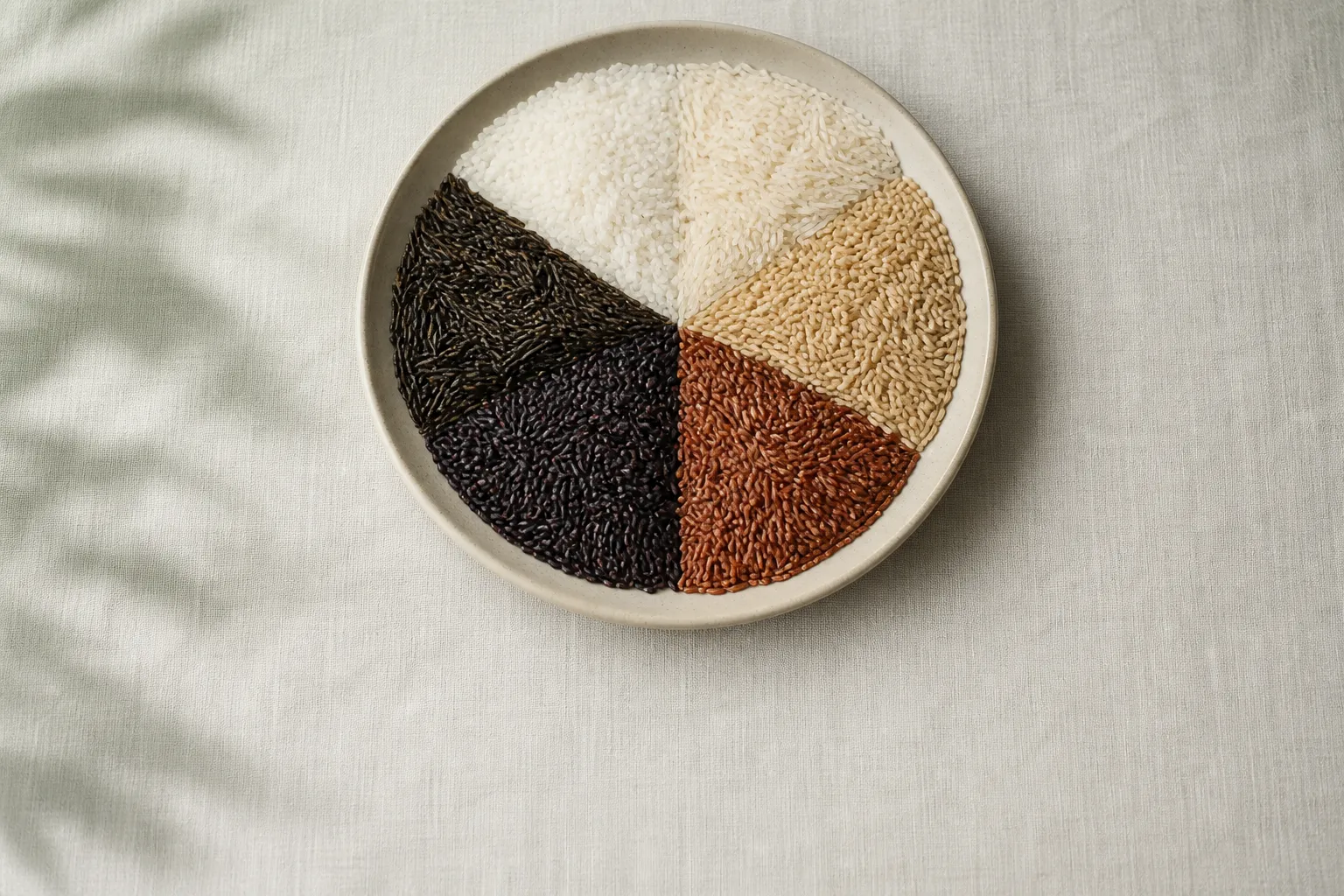
Qi deficiencyBulk and routine. Oats, brown rice; morning toilet at a set time Icy drinks and cold food

Across types: drink at least two litres of water a day unless a doctor limits fluids; honey may sit with that water. Keep a set morning toilet time. Skip the phone or a book in the toilet, which can distract you from passing. A daily walk or other movement you already do helps motility.

Dr Sim Beng Joo

Clinically reviewed

Reviewed by Sim Beng Joo

Advisor (Science & Strategy) / Consultant Physician · TCMPB T1303003A

MOH-licensed TCM physician and biomedical scientist, with clinical work in gastrointestinal syndromes, pain, sleep or fatigue, and constitution patterns that show as sluggish stools or heaty versus cold signs.

View full profile

Educational information based on clinical experience and TCM principles. Not a substitute for personalised consultation, medical care, or urgent attention. Speak with your physician before starting herbs or new self-care in pregnancy or with a chronic condition. Seek urgent care for blood in the stool, severe abdominal pain, vomiting, or a sudden inability to pass gas or stool.

FAQs

Constipation questions

Common questions before you change fibre, points, or book a first visit.

How does TCM view constipation compared with a Western diagnosis?

Western labels often start with stool frequency (two or fewer movements a week) and duration. TCM still uses those facts, then names a pattern: heat, stuck qi, blood deficiency, or qi deficiency. Pulse, tongue, and accompanying signs decide the type, so two people with the same stool count can need different food and points.

What are the four TCM types of constipation?

Excess types are heat-induced (dry hard stools, thirst, bad breath, dark urine) and qi stagnation (incomplete emptying, distension, burping, low appetite). Deficiency types are blood deficiency (dry stools with pallor, dizziness, palpitations) and qi deficiency (straining, breathless or tired after passing). Mixed pictures are common.

Which acupoint helps constipation?

Zhi Gou (SJ6) on the dorsal forearm is the general home-press, including during a difficult pass. Shen Men (HT7) on the wrist is often added when constipation has lingered. Tian Shu (ST25) sits either side of the navel. Clockwise tummy circles can sit with ST25. Skip belly work during diarrhoea.

What should I eat for constipation in TCM?

Food follows the type. Heat-type stools often fit cooling food such as mung bean soup; skip fried and spicy meals. Stuck qi often fits white radish, orange, and a daily walk. Blood deficiency often fits black fungus, almonds, sesame, and walnuts. Qi deficiency often fits oats and brown rice, and icy drinks make the push weaker. Across types, drink at least two litres of water a day unless a doctor limits fluids; honey may sit with that.

Can acupuncture and Chinese herbs help constipation?

Acupuncture is used to rebalance qi and stimulate points that support bowel regularity. A physician may also prescribe herbs with a moistening or qi-moving action that matches the type. Home press and fibre habits sit alongside that plan; they do not name the pattern on their own.

When should I see a doctor rather than try home TCM tips?

Seek urgent Western care for blood in the stool, severe pain, vomiting, a sudden inability to pass gas or stool, or unexplained weight loss. Thyroid disease, Parkinson’s disease, stroke, colon blockage, and some medicines (iron, calcium, aluminium antacids) also need a proper medical review. Pregnancy changes the picture; book rather than self-press ST25 as a first step.

References

Selected sources

  1. National Center for Complementary and Integrative Health. Traditional Chinese medicine: What you need to know. 2019. https://www.nccih.nih.gov/health/traditional-chinese-medicine-what-you-need-to-know/
  2. Ministry of Health Singapore. TCM practitioners (Healthcare Professional Portal). https://hpp.moh.gov.sg/tcm-practitioners/
  3. World Health Organization. Traditional, complementary and integrative medicine. https://www.who.int/health-topics/traditional-complementary-and-integrative-medicine
  4. Liu Z, Yan S, Wu J, et al. Acupuncture for chronic severe functional constipation: a randomized trial. Ann Intern Med. 2016;165(11):761-769. doi:10.7326/M15-3118. https://pubmed.ncbi.nlm.nih.gov/27618593/
  5. Original article author: Physician Kang Ting.

Next step

Ready for a constipation pattern read?

Bring how long it has lasted, what the stool looks like, and any GP notes. We will name the pattern in plain language and decide what belongs in your plan.

Hours
Most clinics daily 11:00 AM – 8:00 PM
Care
Physician-led consultation