
01 · Causes
What commonly fills the belly with gas
Habits · food load · FODMAP
Most people describe bloating as tight, full, uncomfortable, or swollen in the abdomen. Gas in the gut often sits with burping, wind, or pain, and it can change how the belly looks as well as how it feels.
- Irregular meal timing
- Overeating or eating too fast
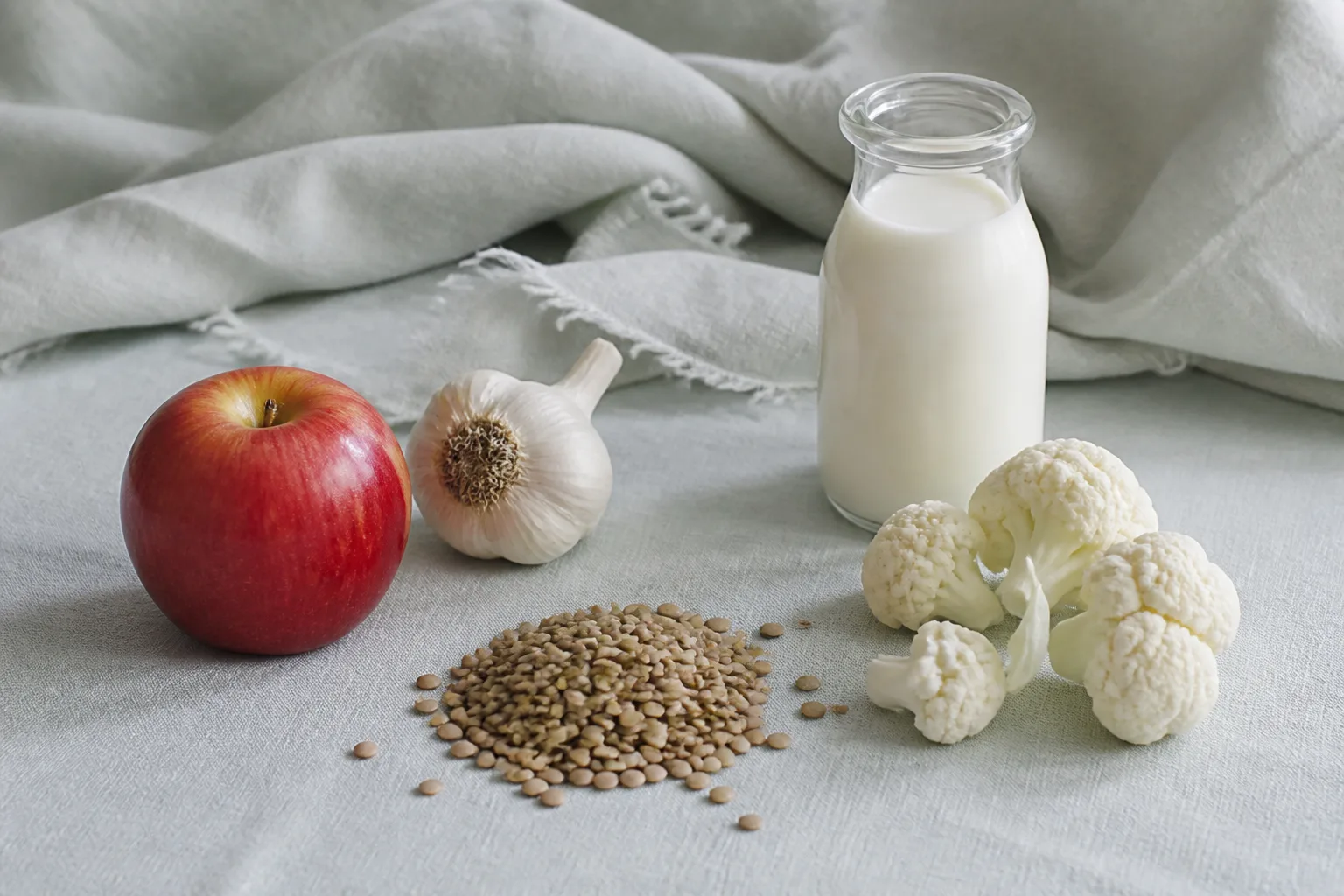
- Legumes, cruciferous vegetables, garlic, onion, and carbonated drinks
- Wheat allergy or lactose intolerance
- Constipation
- Premenstrual and menstrual weeks (about one to two weeks before and during the cycle)
- Foods high in FODMAPs
In Singapore, iced drinks, cold salads, and long air-conditioned days often stack cold load on top of irregular meals, which can weaken how the Spleen transforms food and fluids. FODMAP stands for fermentable oligosaccharides, disaccharides, monosaccharides, and polyols: carbohydrates and sugar alcohols that many people digest poorly. When those carbs reach the distal gut, hydrogen-producing bacteria can ferment them. Excess hydrogen links to bloating, wind, constipation, or diarrhoea in sensitive people. A food diary helps name personal triggers; it does not replace a TCM pattern read. Unguided low FODMAP diets carry nutrient and disordered-eating risks; the 3-in-1 IBS Insight covers supervised dietetics with psychology and TCM.